





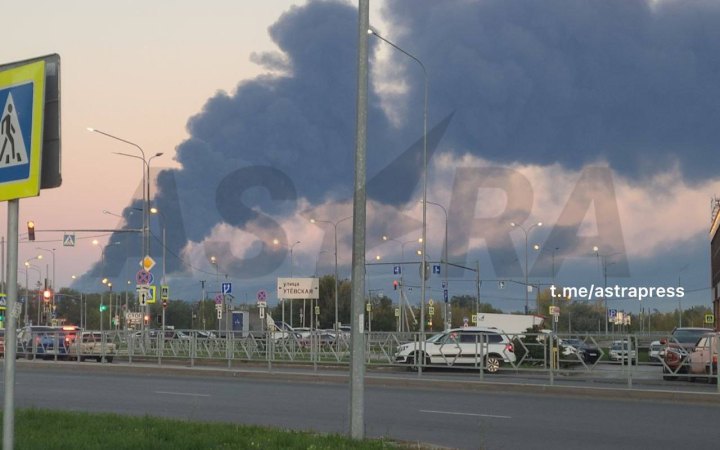
As of the end of September 2026, 15 of Russia’s 38 major oil refineries had been taken out of operation, and a further 12 had reduced output of petroleum products. As reported by the Main Intelligence Directorate of Ukraine’s Ministry of Defence, Ukraine’s “long-range sanctions” are delivering tangible blows to Russia’s refining sector.
As a result, total refining volumes at these facilities fell by 55.4% compared with the start of the year.
The most difficult situation for the aggressor has emerged in the Volga, Central and Southern federal districts, where the shutdown of refineries has affected the capacities of PJSC “Slavneft-YANOS”, LLC “Kirisineftegazsintez”, JSC “Ryazan Oil Refining Company”, JSC “Gazpromneft-Moscow Refinery” and LLC “Lukoil-Permnefteorgsintez”.
The combined share of these facilities is about 33% of Russia’s total refining volumes.
At the same time, refineries located in remote regions of the Russian Federation continue to operate. These include JSC “Gazpromneft-Omsk Refinery”, JSC “Achinsk Refinery”, LLC “NefteKhimService”, JSC “Khabarovsk Refinery”” LLC “Mariy Refinery” and LLC “Vanino Refinery”.
In September 2026, total refining volumes at these facilities amounted to 906,000 barrels per day. That is 147,000 barrels more than at the start of the year. Thus, these refineries accounted for about 24% of all refining in the Russian Federation.
Intelligence officials say that the operation of remote facilities allows the Kremlin to temporarily offset the fuel shortfall. However, the scope for such substitution is limited by the facilities’ geographic location. Deliveries of petroleum products are complicated by a shortage of railway rolling stock and road tankers.
In addition, in 2027 output at these refineries may decline because technical works planned for this year have been postponed to that period.
“The seriousness of the situation is also evidenced by the Kremlin’s decision to restrict access to information on refining volumes. The relevant changes are provided for by Putin’s decree of 28 September No. 686. This makes independent monitoring of the sector impossible and creates conditions for the spread of unreliable data, including on diesel fuel production volumes, among countries interested in purchasing Russian oil,” the Defence Intelligence Directorate reports.
Precision strikes by Ukraine’s Defence Forces on facilities in Russia’s oil industry have inflicted losses of more than $23.2bn on the aggressor state’s economy. This is almost equal to the sector’s total revenue for 2025, which amounted to $26.6bn.
At the same time, Russia is facing growing difficulties in repairing and servicing damaged facilities due to international sanctions and the high cost of the necessary equipment. The cost of replacing damaged equipment could exceed $20bn.
The Defence Intelligence Directorate concludes that, despite attempts to redistribute the load among surviving facilities, Russia is unable to fully meet its own needs for petroleum products while also fulfilling export commitments.
- Ukraine cannot fail to respond to Russian attacks on energy infrastructure and the killing of Ukrainians. And if the United States wants it to stop striking oil refineries in Russia, then the Russians must abandon strikes on the energy system, President Volodymyr Zelenskyy said.