





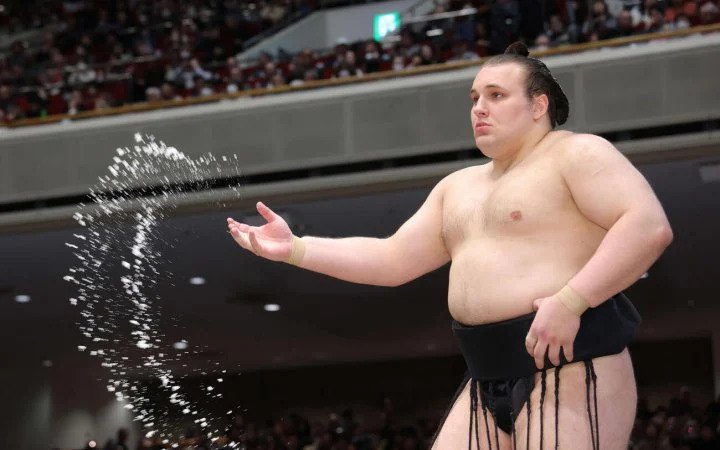
I’ve been in sport since I was six, but I’ve never had injuries this serious
Danylo, what stage are you at now in your preparations for the November grand tournament, the Kyushu Basho, which starts on 8 November?
We’re stepping it up. The tournament starts on 8 November. Up to the 6th we’ll have normal training sessions, then one day off, and then we’ll start competing.
Have you managed to recover from the injury? How is your left leg now?
It’s much better now — I’m undergoing treatment. I wouldn’t say I’ve fully recovered, but it’s much better than it was at the previous tournament (Aki Basho, — Ed.). There are still two weeks to go. I think I’ll be able to prepare well and show high-quality sumo.

Have you returned to training bouts?
We travelled all over Japan with exhibition performances, and my body was tired, so we’ll start gradually.
2026 has been unpredictable in your career. You started with the prospect of reaching the rank of yokozuna, but then you were injured and lost your ōzeki rank… What was the hardest part of that period?
I’ve been in sport since I was six, but I’ve never had injuries this serious. This was my first one, so I didn’t know how to behave properly, how to treat it properly — that was the hardest part. I couldn’t step onto the dohyo (the sumo ring, — Ed.), I couldn’t fight.
Was there a moment when you were afraid for your career?
More for my rank. I understood that if I missed a full tournament, I would drop to the rank of sekiwake (the third-highest rank in sumo, — Ed.). As for my career, I’m 22. There’s still time to recover and climb back up again if needed.
Was it hard to miss a tournament, knowing it would guarantee a demotion?
I got injured at the March tournament and couldn’t show my sumo. Then I missed the exhibition tours around Japan, underwent treatment, and everything was going well. My leg was recovering, but a week before the May tournament I got injured again. I understood that to keep the ōzeki rank I needed to win eight bouts. I looked at my capabilities, at my leg, and it was clear that would be very difficult. I assessed the situation realistically and realised it was better to sit out the tournament, recover, and then try to climb back up again.
Of course, I discussed everything with my coach, and we made that decision. Now we can say it was the right one.

How different is your mindset now, comparing the period before the Kyushu Basho with the September Aki Basho?
If we’re talking about the injury, I feel better — I can do many more exercises and movements. Mentally, before the Aki Basho I was worried about how everything would go. Now I can focus more on training and not think about the injury or anything else. So I think my mindset is better.
From the very start of my career, my coach has believed in me more than I have in myself
Japanese media wrote that Ajigawa-oyakata (Danylo’s coach and the head of the stable, — Ed.) sent you a message after you lost three times in a row at the Aki Basho. What did that mean to you?
For me, losing three in a row is unusual. In my whole career, maybe it’s only happened two or three times. I started thinking it was all because of the injury, that I hadn’t prepared enough. Unnecessary thoughts crept into my head, so my coach wrote to me saying everything would work out — this isn’t all you’re capable of. Those words stuck with me. I thought: that’s really true. After that I won eight bouts. I lost at the end, yes, but that’s sumo: you can lose in a second. Still, I managed to fight for the cup despite, in truth, not having very good preparation.
After a performance like that — three losses and then fighting for the cup — were you disappointed or satisfied with the final result?
I wasn’t deeply disappointed. At that moment I did everything I could, but my opponent was stronger, so I didn’t get upset. We don’t have that here. For example, in professional boxing, if you have two or three fights and lose, you think about it constantly for months, half a year. In sumo, a new tournament starts in two months. There’s no time to think about it. It was a good lesson for me. You just need to train and become stronger — only that!
In the final bout at the Aki Basho you lost to yokozuna Onosato. In your view, what are his strengths and how do you counter them?
His size: he’s taller and heavier than me. Despite his weight, he’s quite fast and mobile. He also has a good start. I’m completely outmatched in terms of size, so I need to reach his belt with my left or right hand. In the last bout I tried to grab the belt, but it came loose, so I couldn’t stop his initial charge.
But you’ve already beaten him at the Nagoya tournament, when it seemed the situation was critical because both your legs were bandaged. It’s hard to imagine how difficult that was in those conditions…
Yes, but when you look at the result, your legs stop hurting.
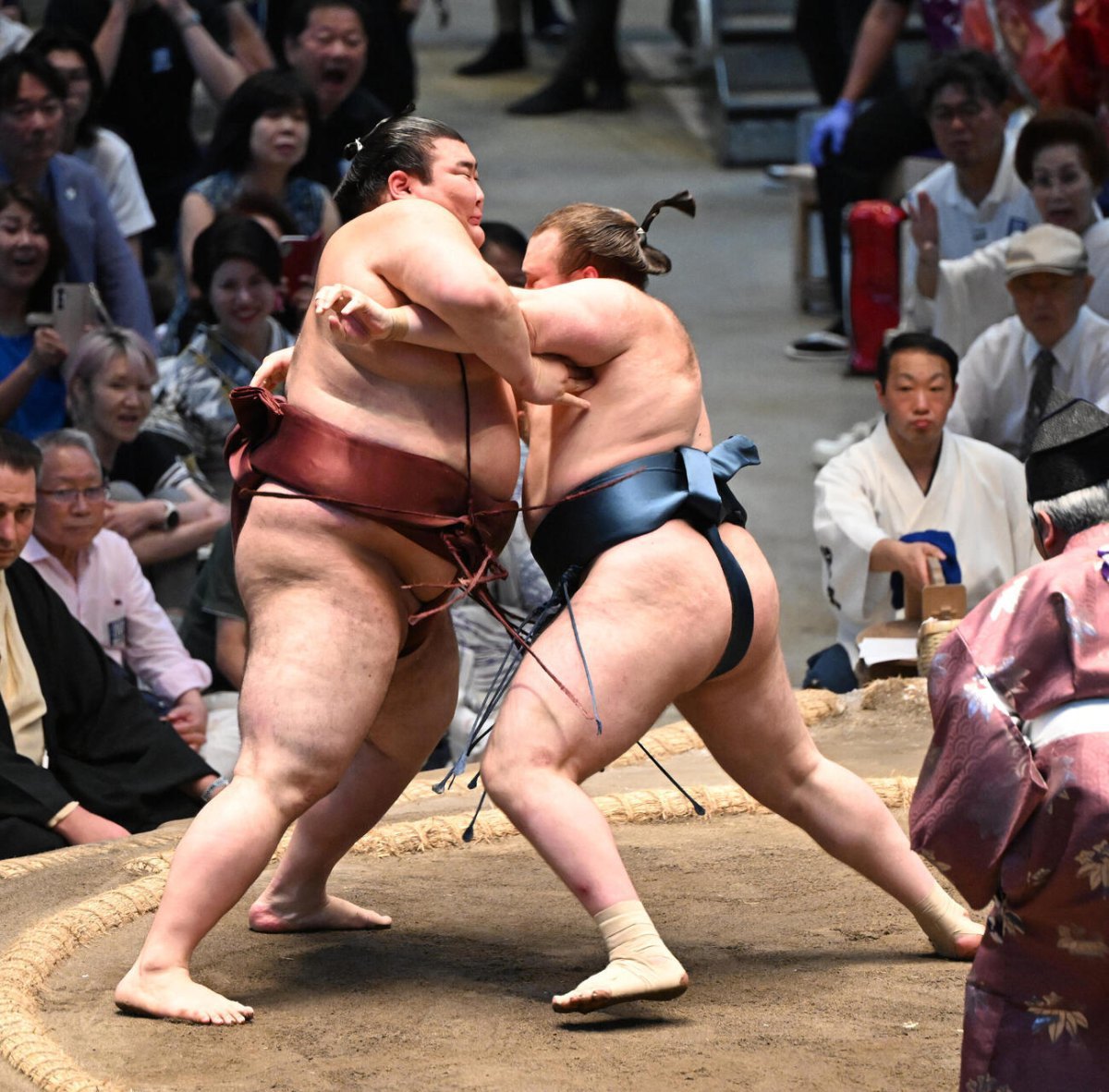
In the play-off then you beat Atamifuji and Kirishima. The first weighs 195 kilograms. How did you manage to beat him with injured legs?
I want to ask myself how it happened too. To be honest, that last play-off was intuitive — pure grit. When I watch the video, I understand what I was doing, but right after the bouts there was no time to think about what had happened.
Then there was the bout with Kirishima, when you both fell off the dohyo. You also landed awkwardly on your shoulder. Were you badly hurt?
My shoulder ached, but I went to the doctor. There was nothing serious.

Over the years since you started doing sumo in Japan, you’ve had to compete against many opponents. In your view, who is the toughest?
The toughest opponent for me is myself. I always fight with that philosophy. If you can’t overcome yourself, you won’t be able to beat your opponent.
Was there a period during a tournament when your oyakata believed in you more than you believed in yourself?
It seems to me that from the very start of my career he has believed in me more than I have in myself. Usually he tells me everything will be fine — and it turns out that way — so there’s no point in me not trusting him.
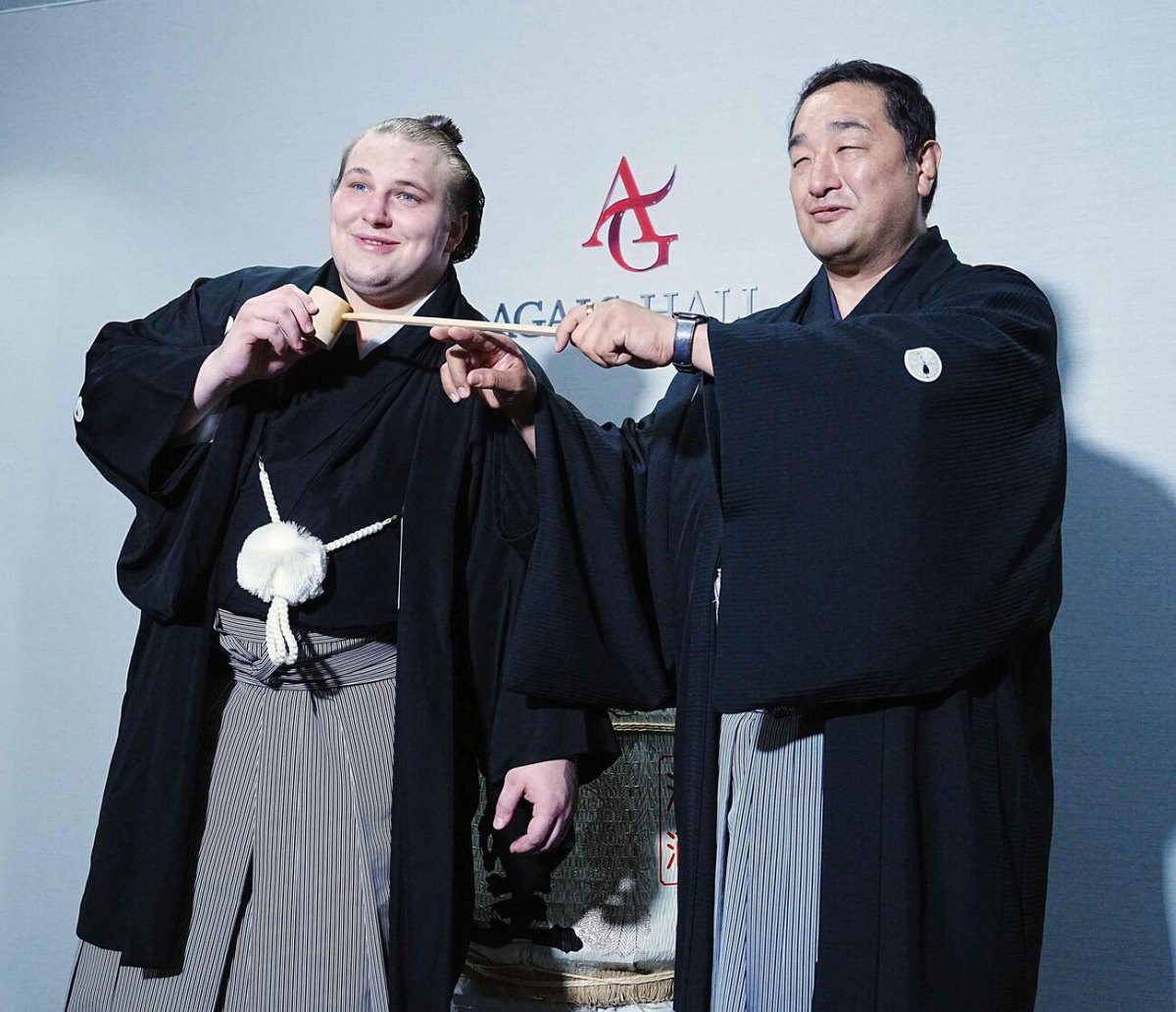
How would you describe your relationship with your coach?
He’s someone I can talk to not only about sumo. We can talk about anything. When I first joined the stable, I constantly watched him: how he behaves, how he speaks to people. He became a role model.
You are now the leading sumo wrestler in the stable, since you have the highest rank. Is that prestigious for you, or is it an additional pressure because you have to set an example for the other wrestlers?
When you go out on the street, it’s more a matter of prestige, because more people know you. But when you step onto the dohyo, you think only about training. In sumo you have to prove your rank. If you lose two tournaments, you drop. I haven’t become a yokozuna yet, so for me that’s the main motivation right now. I want to rise to that rank, so I don’t think about anything other than sumo.
Read also“Gods Fighting for the Japanese Islands”. How Ukrainians Aonishiki and Shishi Became Sumo Stars
You reached sumo’s top division — makuuchi — very quickly and broke a lot of records. How much have you changed in that time?
I think there are things that have changed and things that have stayed the same. It’s hard to talk about yourself. I think the people around me know much more. If we’re talking about sumo, I’ve gained more weight, become more technical, and added strength. Through injuries and trials over the course of my career, it feels like I’ve become mentally stronger as a person.
How do you keep your feet on the ground?
My oyakata won’t let me get big-headed. In sumo, if you win a tournament, in two months you’ll already have to prove your status again.
When I win a tournament, what sticks in my mind most is the first night. For example, I can’t sleep — I’m on an energy high. After that you wake up and realise the world hasn’t changed: trains still run, fish still swim in the sea, so you need to pull yourself together and prove your status at the next tournament.
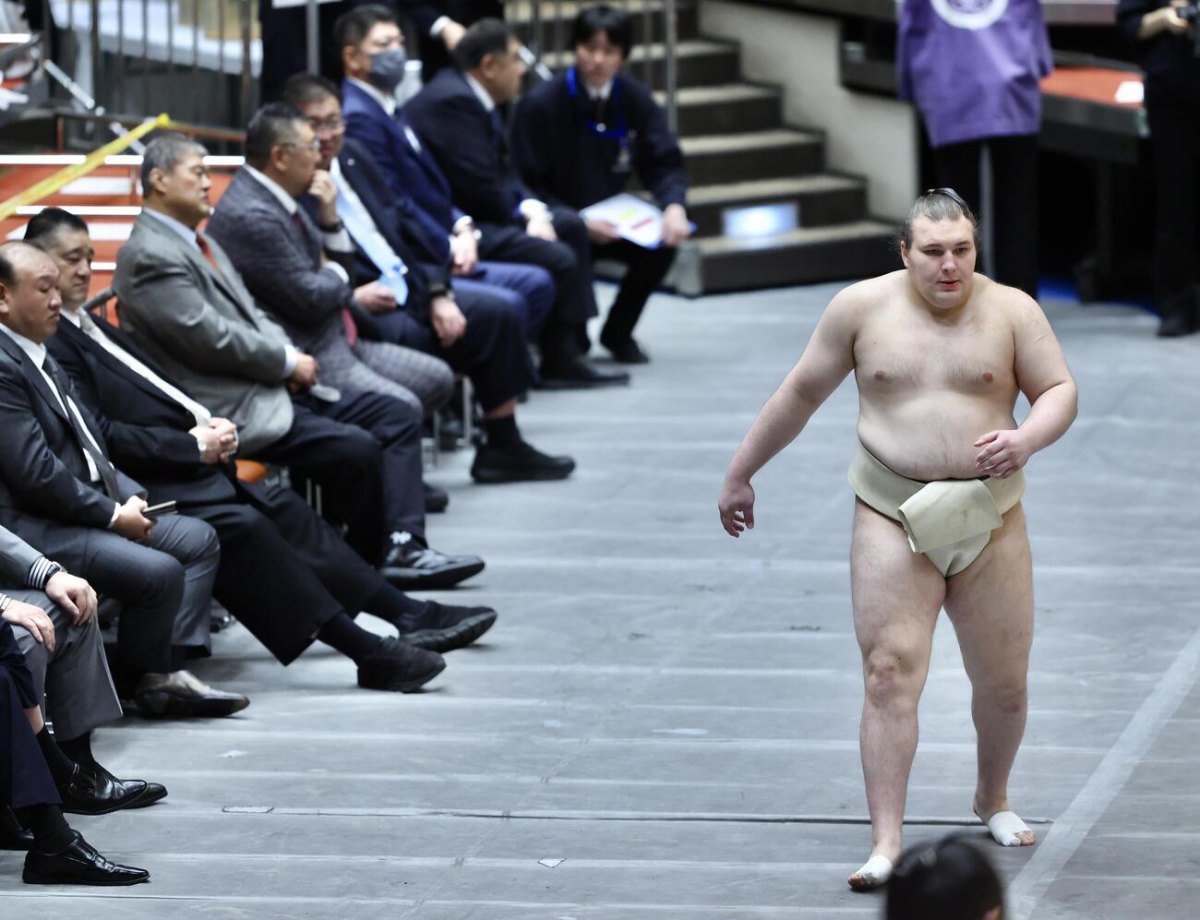
Sumo has a strict hierarchy within a stable. Is it the same at Ajigawa, or are the stories somewhat exaggerated?
The hierarchy is there, of course. In sumo everything starts with rank — it’s your passport. When we sit down to eat, it starts with the oyakata, and then it goes by rank. Lower-ranked wrestlers bring you food and water while you eat. It’s the same with taking turns in the shower. Yes, it exists. We’re a fairly new stable, all young lads. I can say that in our stable nothing is overly harsh.
Just so we’re clear: when you first arrived, you were also the lad bringing water and food?
Of course — everyone goes through that. I believe it’s an important time, your foundation in sumo.
Japanese media emphasise that you mastered Japanese very quickly and use it confidently. Share the secret of how you managed it.
The secret is not being afraid to make mistakes when you speak Japanese. The more you communicate, the faster you learn it. When I joined Ajigawa, there were only Japanese people around me. Even if you don’t want to learn it, you still hear conversations around you and little by little you pick it up. I think the main thing in any language is practice.
If a lorry and a bicycle crash, the lorry won’t even feel it
In one interview you said you wanted to put on a bit more weight, but then there were a few defeats. Critics claimed you’d lost speed because of the weight. How true is that?
Right now my focus isn’t on gaining weight, but on not letting it drop. I haven’t always been this healthy. You have to eat quite a lot every day to maintain it. Right now I’m 142–143 kilograms. I feel good; I don’t think my speed has decreased. I think I can calmly add another 2–3 kilograms and it won’t affect my speed. We’re not just gaining weight — it’s not just fat. When you gain weight and train, it doesn’t slow you down.
Yes, yes. Those are mostly critics’ opinions.
Yes, yes — they definitely know better than I do (smiles, — Ed.).
Why do sumo wrestlers eat so much? Why gain weight?
The simplest example: if a lorry and a bicycle crash, we understand the lorry won’t even feel it. It’s hard when someone weighing 190 kilograms comes out against you and you weigh 100. The dohyo is only 4 metres 55 centimetres in diameter. It’s not that big — there’s nowhere to run. For there to be balance, you need to gain weight. I think the average weight in makuuchi now is around 150 kilograms. Besides, you’re not fighting just one bout — it’s 15 days in a row. If everyone is heavier than you, it’s very hard on your body and the risk of injury is higher.
You’ve said yourself that you train a lot and like going to the gym. Do you remember what you bench press?
I’ve done 220 kilograms for one rep. I weigh 140 kilograms. If we’re talking percentages, it’s not that much, but I don’t have a goal of lifting a lot. The main thing is to have strength.

How do you spend your free time?
I go out with my assistants somewhere to eat, to the sauna. That’s basically it. When they say tomorrow is a day off, the first thing everyone wants to do is sleep. We usually have morning training. When there isn’t any, everyone catches up on sleep and then rests. Usually we have one day off a week. After a tournament there can be a week off. Then you can go somewhere, see something. Our coach says: a day off is for the body to rest.
I know you like anime.
Yes, I watch it, but less lately.
What sport interests you besides sumo?
Boxing and MMA. I follow it. If there are any tournaments in Japan, I go to watch.
I want to become a yokozuna in the near future and make everyone happy
The Kyushu Basho is ahead — the tournament where you first won the Emperor’s Cup. Do you think you can improve on that result? What does it take?
The main thing is training. If you train, you get results. In sumo, at tournaments you fight for two weeks, but it’s not limited to one bout a day. From early morning you wake up, train, eat and think about the bout. It’s constant nerves. For everyone, during that period there are days when you get up and your head hurts, your body feels heavy… At all the tournaments I’ve won, I won in a play-off. I’d like to win without those heart-stopping play-offs — improve my result to 13–2, 14–1, 15–0.

They say another yokozuna will return for this tournament. Does the fact that the banzuke (the official ranking of sumo wrestlers, — Ed.) is filling up motivate you, or does it add anxiety?
I always prepare for a tough fight — I understand it’s never easy. I don’t need to look at others to motivate myself. I’m my biggest critic and I know my weaknesses best.
Do questions about when you’ll become a yokozuna annoy you?
No. It doesn’t affect the chances of becoming a yokozuna in any way. Even if people say it to you a lot, it still doesn’t add wins for you at the tournament. At the same time, I’m pleased that people follow me. I want to make them happy as soon as possible.
Are you ready for all the challenges that come with the rank of yokozuna?
I don’t know. I think you learn that when you rise to the rank of yokozuna. Sometimes you plan things, but everything happens differently. Then you take an emotional dip. So I don’t want to guess now. I need to fight and gradually move closer to the goal.

What would you like to say to your Ukrainian fans?
First of all, thank you for your support. I feel it before every tournament and after it. I want to become a yokozuna in the near future and make everyone happy.