







Intelligentsia versus the KGB
In mid-June, the Cinema House in Kyiv was filled to capacity with people: artists, activists, human rights defenders, diplomats — dozens of intrigued eyes awaited the screening of the film. Olivier Jacquot, representative of the French Embassy in Ukraine, took the stage.
“At that time, the authorities did not take sufficient action in this case (Plyushch), probably because the leaders of my country at that time were afraid of the Soviet Union. Secondly, and most importantly, civil society can achieve great and powerful things when everyone unites around a common goal, and this is what this film shows: that thanks to civil society, many things have become possible. And I would like to once again thank everyone who worked on this film," he said.
Director Mathieu Schwartz was visibly nervous before taking the stage. His film is not just a movie about some distant topic, but a family story in which his great-uncle Laurent Schwartz, together with his colleagues, changed the course of world events.
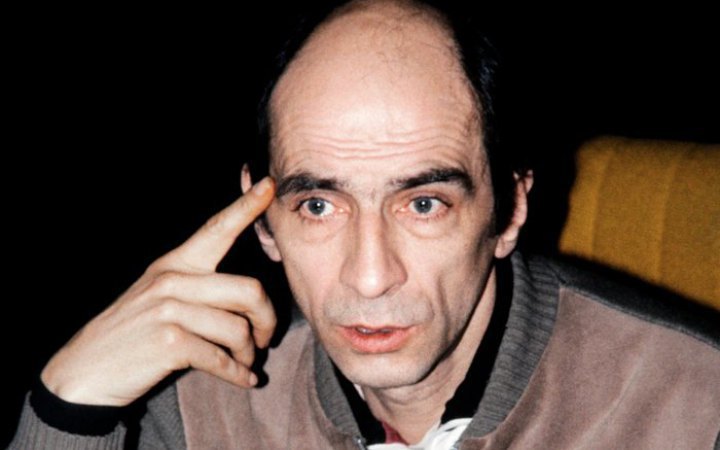
It happened in the 1970s. At that time, the Soviet authorities decided to crack down on the overly talkative mathematician Leonid Plyushch, who also considered himself a Marxist. And since sending him to a camp was somehow inappropriate, the regime came up with a worse punishment — sending him to a mental hospital. As Leonid himself would later say, this was to ‘destroy his spirit.’ Plyushch became the person whom punitive psychiatry planned to turn into a disabled person, safe for the regime, in order to get him out of the way.
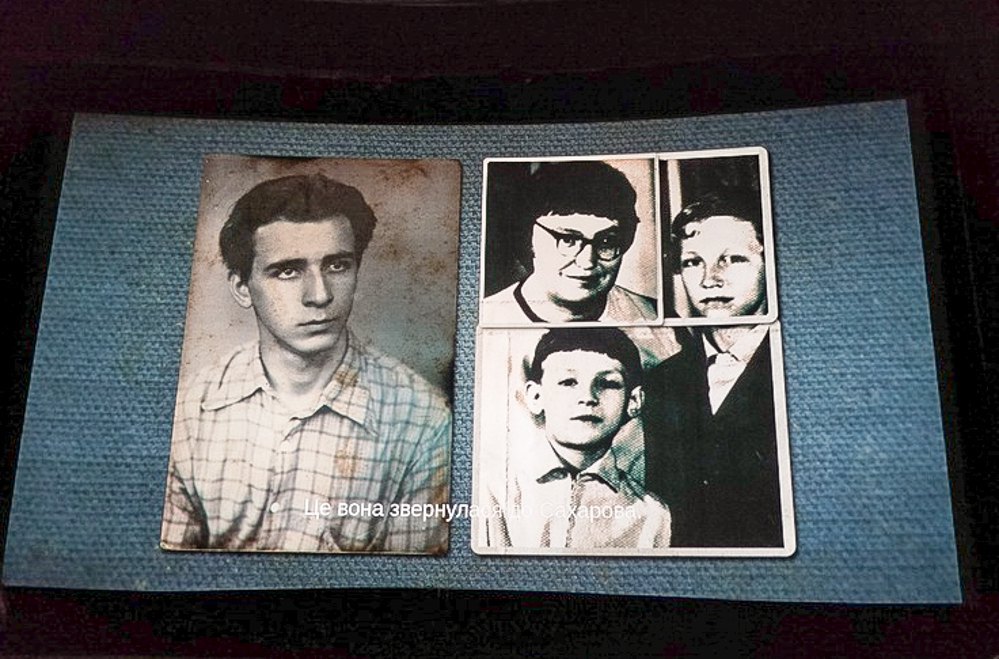
At that time, there was an association of mathematicians in France that promoted science and did not interfere in political affairs. Until the arrest of Leonid Plyushch. The West learned from Russian physicist and Nobel Prize winner Andrei Sakharov that two mathematicians, Leonid Plyushch and Yuriy Shykhanovych (born in Kyiv, worked in Moscow), had been imprisoned by the KGB for ‘anti-Soviet’ propaganda in 1972 and that their lives were in danger. He informed French psychologist Tanya Maton, who was of Russian origin, who then contacted Laurent Schwartz, who was already well-known at the time. French mathematicians then joined an almost unrealistic campaign to free their Ukrainian colleague. They created the Committee for the Release of Leonid Plyushch, headed by Laurent Schwartz, Henri Cartan and the young Michel Broué.
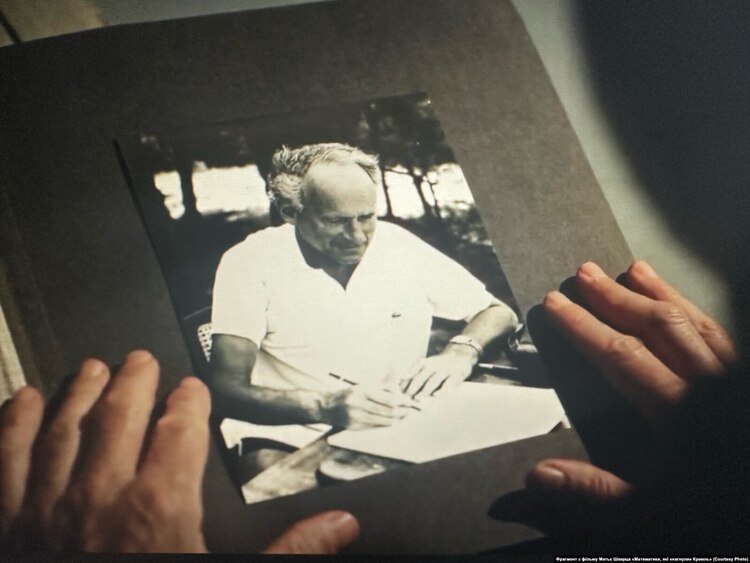
An attempt to act officially, through the Soviet embassy, failed — they pretended not to know who he was talking about.
Director Mathieu Schwartz did not know the story of his great-uncle for a long time. But after his death, while researching his family history, Mathieu came across the case of Leonid Plyushch — and the puzzle began to fall into place. That is how he learned about Leonid's heroic wife, Tetyana, who fought the KGB for her husband virtually single-handedly.
Tetyana Plyushch and her departure to the West
So, Tetyana Plyushch managed to get visits to her husband. She was under constant pressure — they threatened to increase Leonid's medication if she did not sign papers stating that Plyushch was insane. She categorically refused.
Meanwhile, a committee for Leonid's release was already working in France. During the International Congress of Mathematicians in Canada, French scientists organised a rally in support of Plyushch. One after another, publications appeared in the press. Laurent Schwartz, a well-known figure in the scientific world, played a major role in this process. In fact, the whole of France united for the release of the Ukrainian scientist. Tetyana Plyushch learns about this campaign. She writes to the West, asking the Soviet authorities to release her husband and allow him to leave the USSR.
Without any social networks or the internet, many communities in European countries stand up for Plyushch. Now physicists, psychotherapists and human rights activists are all supporting him.
When it comes to the French Communist Party, it stays out of the process, divided into two camps: some believe that no one should be placed in a mental hospital and destroyed mentally and physically for their views, while others do not want to quarrel with the Soviet Union.
But when Tetyana wrote a letter to the leader of the French Communists, Georges Marchais, and thus slapped the USSR in the face, official Moscow reacted negatively, but Brezhnev had no choice but to release Leonid Plyushch.
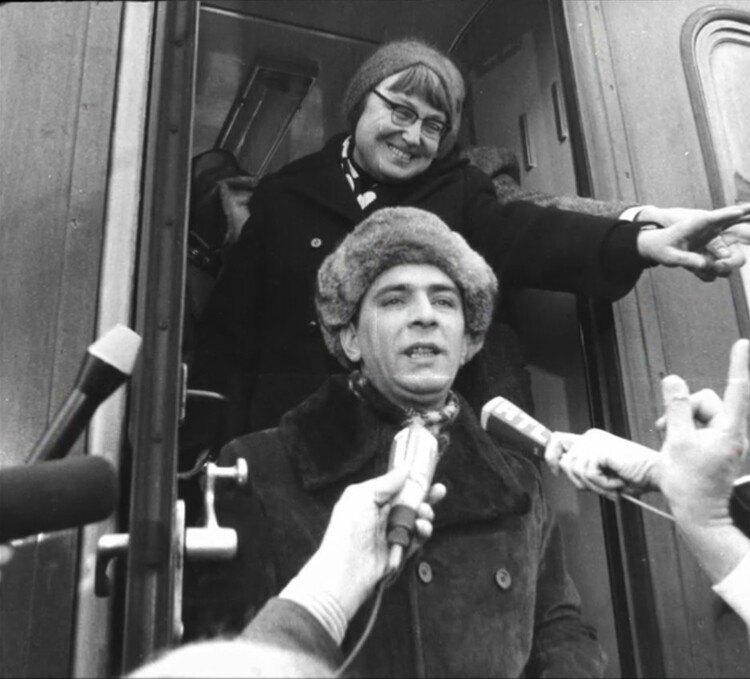
Finally, the family moved first to Austria, then to France, where Leonid needed quite a long period of rehabilitation, as he felt extremely weak. In France, he gave up mathematics and took up literary studies and psychology with the same precision, studied shamanism and openly called himself a mystic.
The family history and the Plyushch family's new home
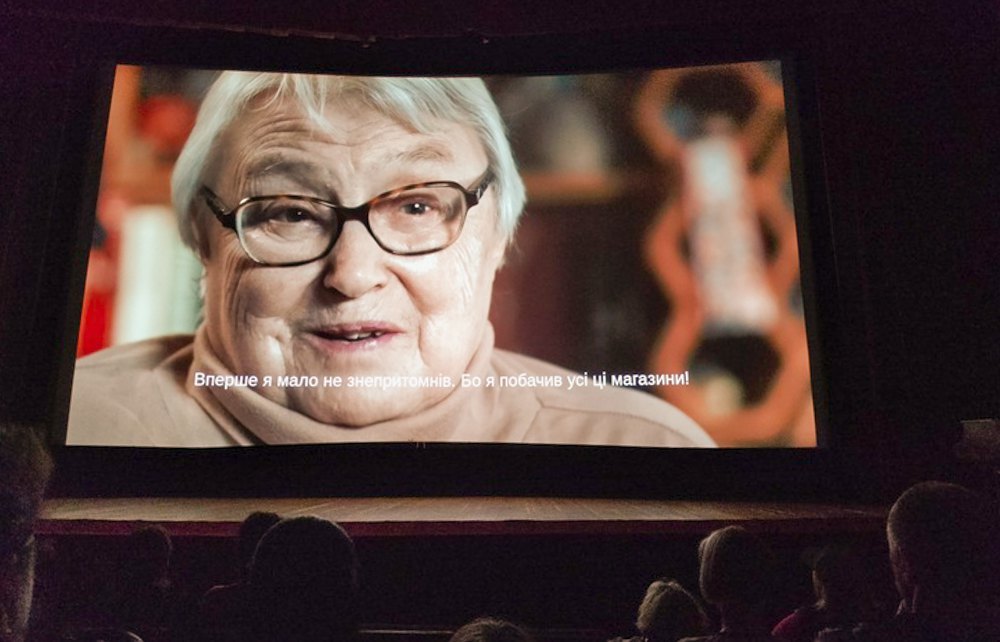
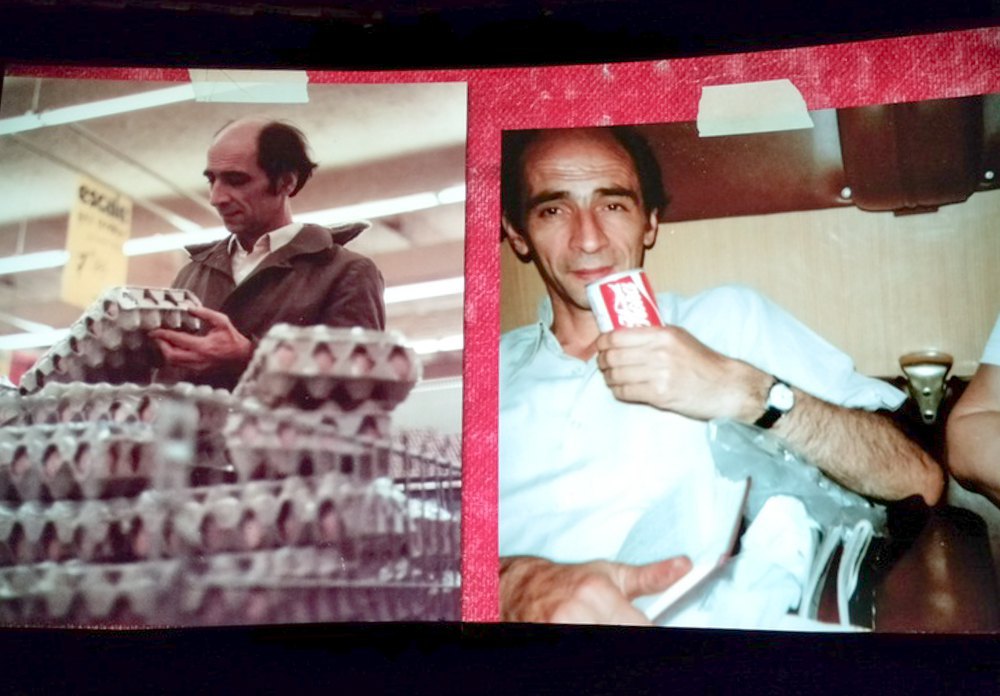
Mathieu Schwartz began working on the documentary six years ago. The footage consists of photographs, archival videos, and publications in the press of the time. Mathieu managed to interview Tatyana Plyushch, who was already very ill but continued to visit her husband's grave. Footage from this interview was also included in the film The Mathematicians Who Bent the Kremlin.
Leonid Plyushch wrote an autobiography titled Carnival of Stories, first published in 1979 — and get this — simultaneously in five languages: Ukrainian, English, French, Italian, and Russian. Then, in 2018, the publishing house Komora reissued it.
Cultural diplomacy
A large team of people worked to bring the film to Ukraine, creating cultural diplomacy with their own hands. Among them were writer Oksana Zabuzhko, who was a long-time friend of the Plyushch family, wrote extensively, and held joint meetings; filmmaker and founder of the PROSVITA association Oleksandr Krystalovych; the family of Taras Shamayda and Liliyana Vezhbovska; filmmakers; private businesses; and the French Embassy in Ukraine.
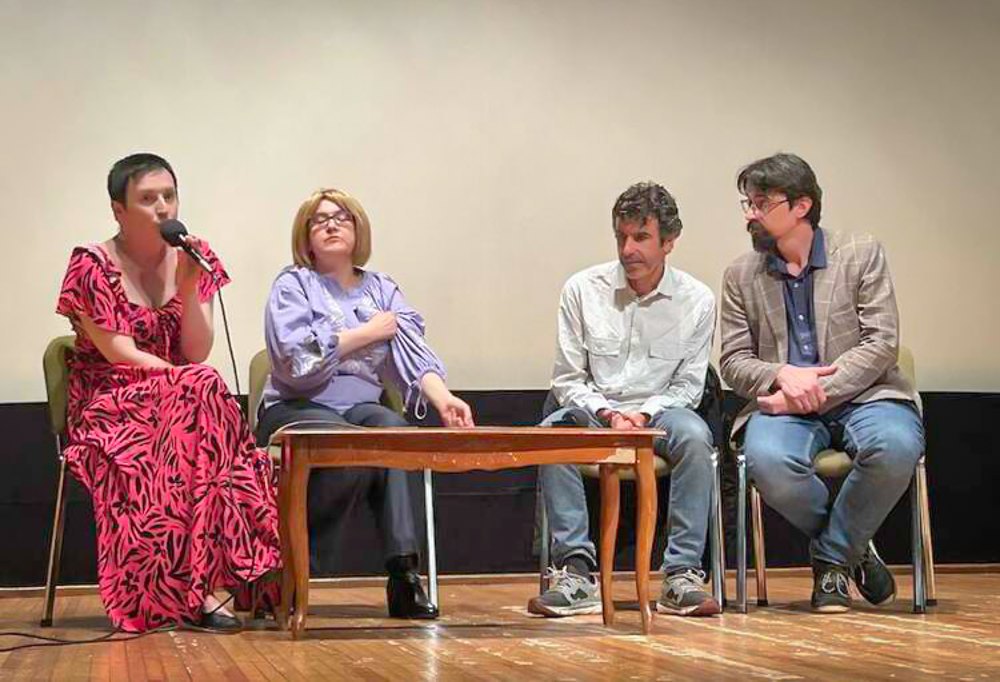
After the screening, there was a discussion between director Mathieu Schwartz, writer Oksana Zabuzhko, and cinematographer Oleksandr Krystalovych, moderated by Irina Plekhova, director of the Lira cinema. Among other things, the question of future distribution was raised. The film, which was created for a Western audience, turned out to be no less relevant in Ukraine, as it primarily tells the story of our dissident Leonid Plyushch. Later, writer Oksana Zabuzhko wrote:
"Regarding Mathieu Schwartz's film about Plyushch's case, which was shown yesterday with great success (a 5-minute standing ovation!) at the Kyiv Cinema House, there were many questions about when this film would be released in Ukraine. The answer is: when a Ukrainian distributor buys the rights to it. The fact is that the producers of the film The Mathematicians Who Bent the Kremlin did not intend to show it outside the EU — in France, it was shown on TV and has since been (in the original French version) has been available on YouTube — but the Ukrainian subtitled version that Kyiv residents saw yesterday must first be officially PURCHASED in Ukraine in order to be shown in Ukrainian cinemas or on TV. And there is no way around it. (I don't know if there were any potential ‘buyers’ in the audience yesterday, but at least I did everything in my power to ensure that this film was seen by as many people as possible who, by virtue of their occupation, should be interested in it).
The story of Leonid Plyushch and this important victory for civil society has been unfairly overlooked in our experience, but given the current war and the political situation in general, it is relevant again.
"Because this is not only French history, it is also Ukrainian history — that chapter of our shared history with France in the 20th century which we missed during the Soviet era and have not yet caught up with: the story of the liberation in 1975–76 by left-wing movements in the West of the Ukrainian (at that time) mathematician (later philosopher and literary scholar) and dissident Leonid Plyushch from a Soviet mental hospital. A detailed recreation of the main political detective story of the 1970s, which marked the beginning of the fall of the Berlin Wall, but also a lesson for today's humanity on how it is possible — and necessary! — to work together to escape from the mental hospital into which the servants of evil are dragging our civilisation headlong.
It is essential to know this story. To learn it in less than an hour in one fell swoop, like a lightning bolt, an aesthetic shock (M. Schwartz's film is also simply a very good film), and then to ask the director questions — a privilege granted to Kyiv residents once," wrote Oksana Zabuzhko.