







How to compare drones – and where the comparison becomes misleading
The first issue, according to a representative of a drone manufacturer that produces long-range UAVs, is that the journalist compares drones belonging to different categories.
The SkyFall drone cited by Yuriy Nikolov is not classified as a mid-strike UAV. According to its published specifications, it has a range of 600 kilometres, placing it in the deep-strike category under the classification outlined by Ukraine's Defence Ministry.
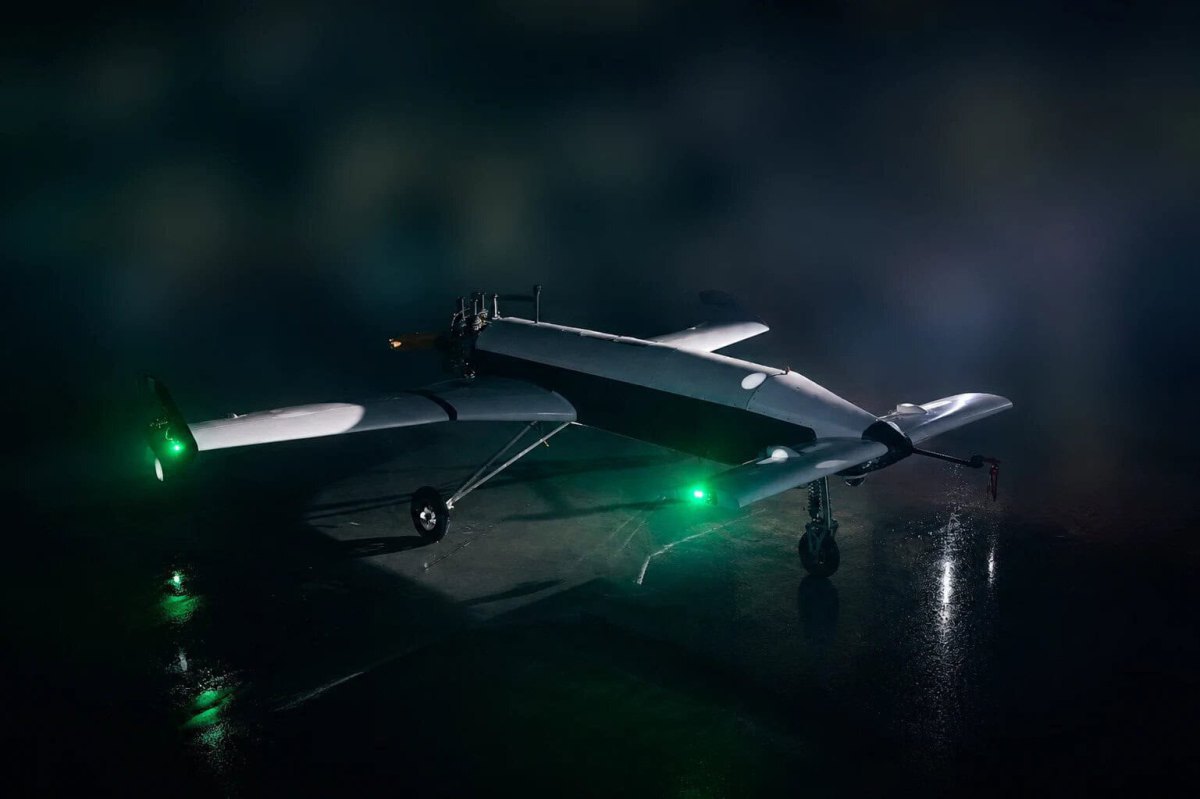
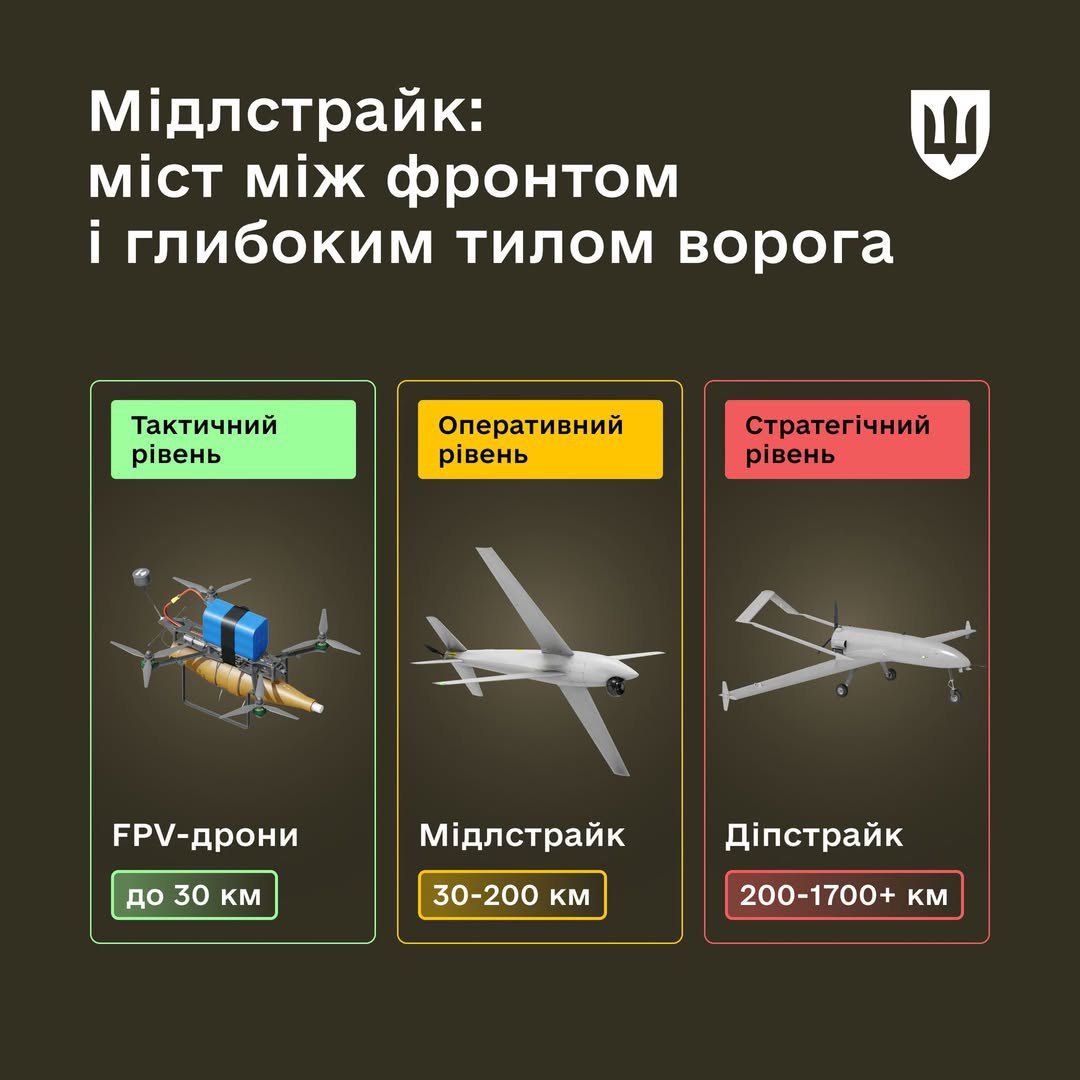
Background: Mid-strike drones are strike UAVs designed to operate at operational depths ranging from several dozen to several hundred kilometres. They fill the critical gap between FPV drones used on the front line and deep-strike UAVs that target sites deep inside Russia. Mid-strike drones are used against air defence systems, radar installations, ammunition depots, command posts, logistics hubs and oil and energy infrastructure. They operate in occupied Crimea, other Russian-occupied territories and Russia's border regions. During the final stage of flight, they can operate autonomously by scanning the terrain and identifying targets on their own.
Deep-strike drones, by contrast, are designed to hit targets inside Russia at distances of more than 200 kilometres, including submarines, strategic bombers, defence industry facilities, ports, oil refineries and military bases.
"Fire Point's FP2 is a mid-strike drone capable of carrying a payload of up to 200 kilograms. The FP1 is the primary deep-strike drone used by Ukraine. It has a range of 1,500 kilometres and carries a payload of around 100 kilograms," the source said.
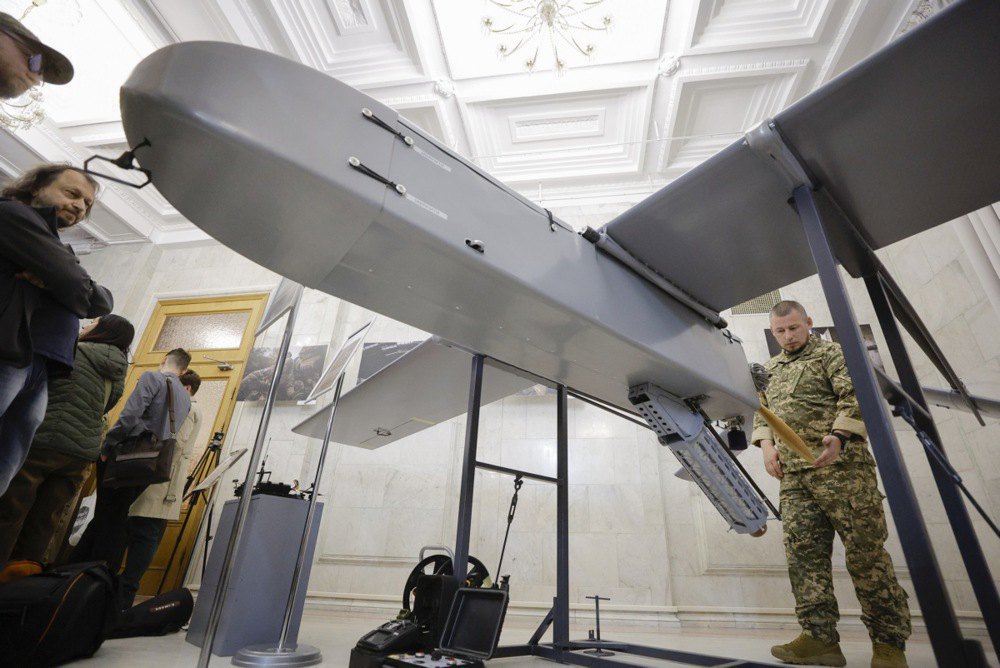
Even if the SkyFall drone costs US$30,000, as claimed, Fire Point's FP2 is priced at around US$43,000–45,000, according to figures cited by both Serg Marco and the manufacturer we spoke to. However, it carries a warhead that is four to five times heavier. The weight of the payload directly affects the aircraft's design, including its wingspan, propellers and engines.
The source also noted that the SkyFall drone uses landing gear for take-off, which is a less expensive solution. Today, drones with similar ranges are more commonly launched using a catapult or booster, as take-offs from landing gear carry a higher risk of revealing the launch position. Fire Point's FP1 is launched without landing gear, using a booster instead, making the systems inherently different in cost. The expert therefore described the comparison as misleading.
"You need to compare actual technical and tactical characteristics, including range, payload capacity, communication system and launch method. Landing gear should be compared with landing gear, boosters with boosters and catapults with catapults. Simply taking a screenshot from the media and drawing sweeping conclusions is outright manipulation," the manufacturer said.
Specifications of the drones mentioned:
SkyFall drone
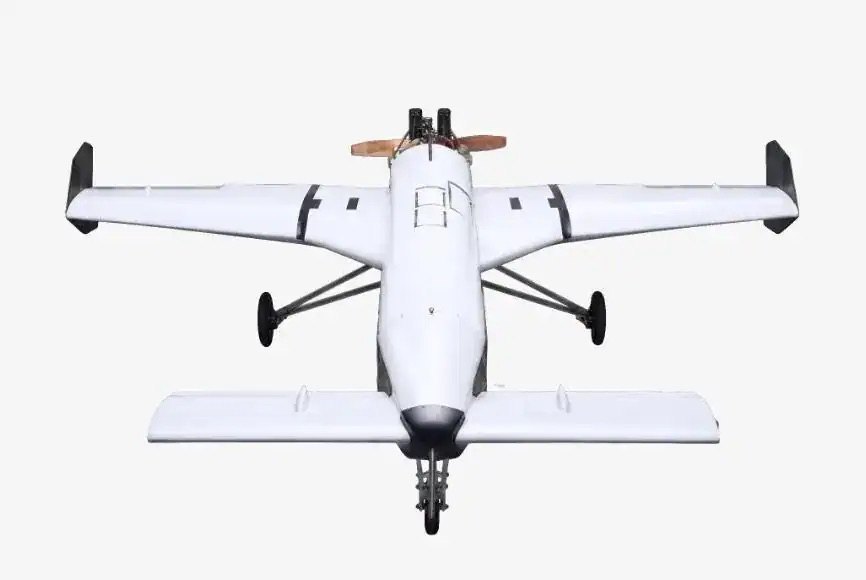
Wingspan: 3.5 mWarhead: 40–50 kg, depending on the missionRange: up to 600 kmSpeed: not disclosedClaimed price: US$25,000–30,000, depending on the configurationWarhead type: fragmentation, high-explosive fragmentation or other variants, depending on the missionLaunch method: not disclosedCommunication system: not disclosedAI-assisted guidance: not disclosedEngine: not disclosedThe manufacturer said it plans to increase production to 1,000 drones per month by the end of the year.
The company also said it will later publish an official release with the drone's name and full specifications.
Fire Point FP-1
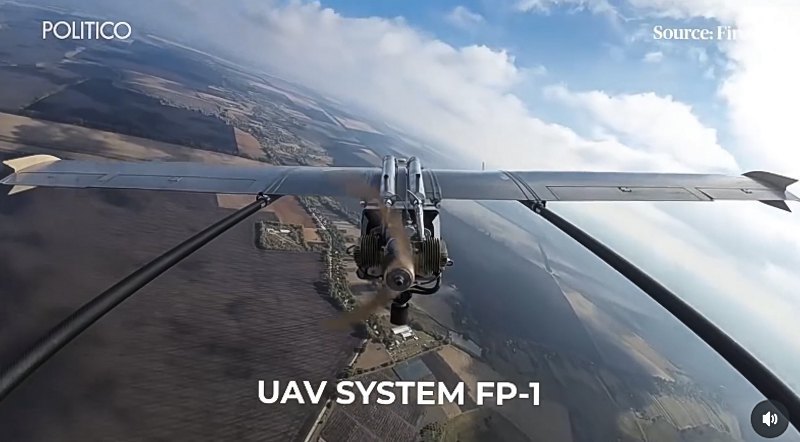
- Wingspan: 6 m
- Warhead: 60 kg (according to data from December 2025; following the upgrade announced in July 2026, the payload weight has not been specified)
- Range: 1,600 km (December 2025); up to 3,400 km (July 2026)
- Speed: 205 km/h (claimed maximum); 140–180 km/h (cruising speed)
- Claimed price: US$55,000–75,000 (July 2026)
- Warhead type: not disclosed
- Launch method: rocket-assisted launch from either a fixed platform or a truck-mounted mobile launcher, without the need for a conventional runway
- Communication system: Starlink (controlled mode up to 500 km; autonomous mode without communications for 1,200–1,300 km), according to Fire Point chief designer Denys Shtilerman
- AI-assisted guidance: claimed by the manufacturer, with no further details provided
- Engine: twin-cylinder petrol engine
- Production scale: according to CEO Iryna Terekh, the company manufactures hundreds of FP-1 and FP-2 drones per day.
Fire Point FP-2
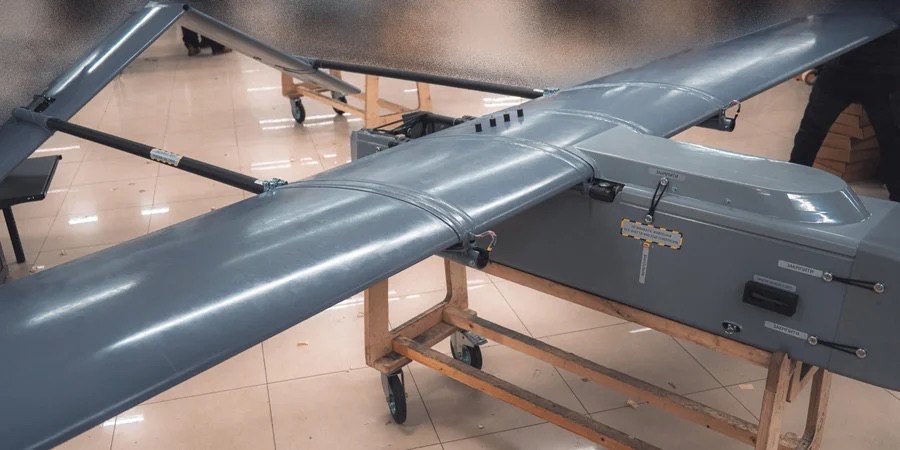
- Wingspan: 6 m
- Warhead: up to 200 kg (following the July 2026 upgrade); previously 100–105 kg
- Range: 200 km (as of October 2025); up to 700 km after the July 2026 upgrade in the standard configuration; 370 km in the configuration carrying the maximum 200 kg warhead
- Speed: 205 km/h (claimed maximum); 140–180 km/h (cruising speed)
- Price: US$43,000–45,000, according to sources
- Warhead type: not specified; the manufacturer has disclosed only variants equipped with additional unguided S-5 rockets
- Launch method: rocket-assisted launch from either a fixed platform or a truck-mounted mobile launcher, without the need for a conventional runway
- Communication system: not disclosed
- AI-assisted guidance: claimed by the manufacturer, with no further details provided
- Engine: twin-cylinder petrol engine
- Production scale: according to CEO Iryna Terekh, the company produces hundreds of FP-1 and FP-2 drones per day.
In May 2026, a Fire Point drone was documented operating as a Starlink-connected carrier platform for FPV drones.
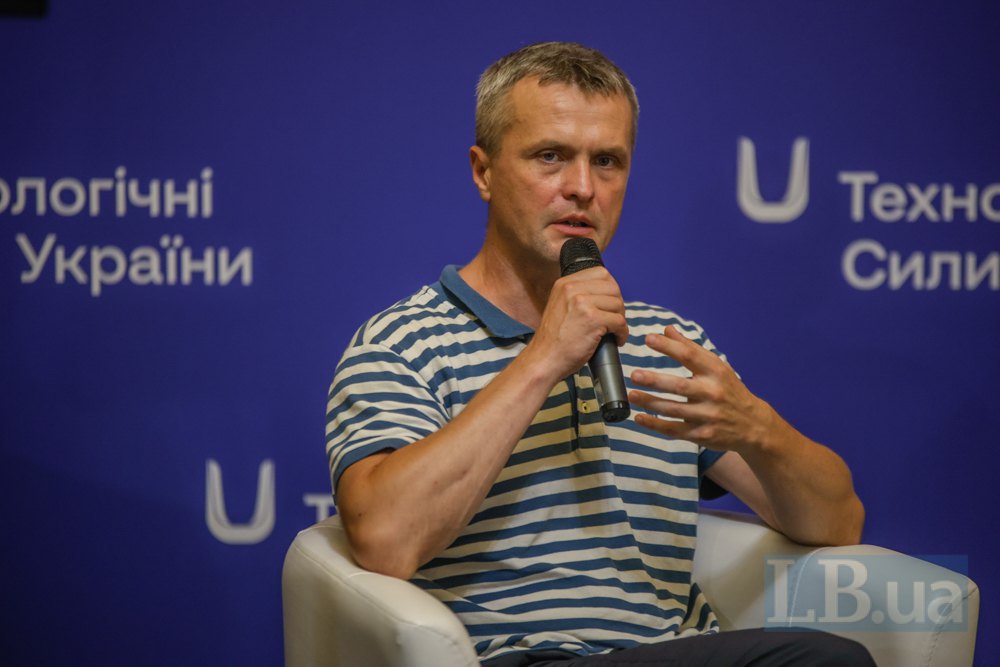
According to Ihor Lutsenko, a serviceman and co-founder of the Centre for Support of Aerial Reconnaissance, the social media debate is being driven by people who have no experience manufacturing the specific classes of drones whose prices they are discussing.
"That should probably have been the end of the discussion, but it keeps going. What we need is informed public opinion capable of distinguishing amateurs from genuine experts who actually understand the subject," Lutsenko said.
How is a drone's price determined?
To sell a drone or other defence product, a manufacturer must have its price validated through a product valuation (commodity appraisal) conducted by an authorised expert institution. The company submits a detailed breakdown of all production costs, in line with a methodology established by the Cabinet of Ministers.
The documentation specifies, for example, which components the drone consists of – such as the airframe, engines and communications equipment from specific manufacturers – together with the cost of each component. It also includes labour costs, manufacturing overheads (including utilities, rent and administrative expenses) and a profit margin of up to 25%. Administrative costs are calculated separately and are not included within that 25% profit cap.
"The authorised institutions must verify every item and issue an expert opinion establishing a price range. They determine that a drone with these specifications and these components can reasonably cost between a minimum and maximum amount. The commercial offer submitted for a procurement contract must fall within that range," one drone manufacturer said.
In the manufacturer's view, comparisons should be based on products that are already being sold under actual contracts rather than on prototypes or exhibition models. A drone may be presented at a trade show with one price, only for production costs to rise later – for example, if a Chinese-made engine has to be replaced with a Czech one or manufactured in-house.
According to Ihor Lutsenko, manufacturing drones in Ukraine is particularly challenging because production costs are highly unpredictable. Current legislation does not allow companies to formally include research, design and development expenses in the production cost of a drone.
"In practice, everyone does include those costs, because otherwise the economics simply don't work. But I believe the absence of a legal mechanism allowing this is extremely harmful. Manufacturers are forced to work around the problem in different ways," Lutsenko said.
Real estate costs are also factored into pricing. These often reflect the expense of protecting production facilities from Russian strikes and concealing their locations.
"Not every landlord is willing to lease property to drone manufacturers. It can be difficult to find a discreet location that is less likely to be targeted, where no one notices what's happening or reports you, and where the owner is still willing to rent the premises," the serviceman said.
Another factor is whether a company has been designated as a critical enterprise. Not all manufacturers are able to secure this status for the proportion of their workforce they require. As a result, some resort to legal workarounds to ensure key employees cannot be mobilised while continuing to work for the company.
"I don't know how things work at large companies, but this is definitely a problem for smaller manufacturers. The criteria for critical-enterprise status are unpredictable because the legislation keeps changing and remains imperfect. At the same time, we know there have been plenty of abuses – at one point even circuses were granted protected status," Lutsenko said.
Manufacturers also face significant costs and risks associated with importing foreign-made components. These include exchange-rate fluctuations, customs-related issues and supply-chain uncertainties. Although a number of tax and customs exemptions have been introduced, they do not always resolve these problems.
Lutsenko added that manufacturers are effectively selling an engineering service as much as a finished product, constantly redesigning drones to meet the evolving needs of military units. This ongoing development inevitably adds to production costs.
"There are virtually no cases where a manufacturer goes an entire year without upgrading its product. If that happens, it's the exception – and not a healthy one. The product has to evolve in response to the customer's requirements. The tactical situation changes constantly. No two large-scale strikes against Russia are exactly the same. Something always has to be modified, added or removed."
According to the co-founder of the Centre for Support of Aerial Reconnaissance, manufacturers also need to build the cost of continuous upgrades into their pricing. However, this is difficult to do directly because profit margins are capped at 25%.
Read alsoF-Drones unveils F-CAPTAIN mid-strike drone. What are its capabilities?