





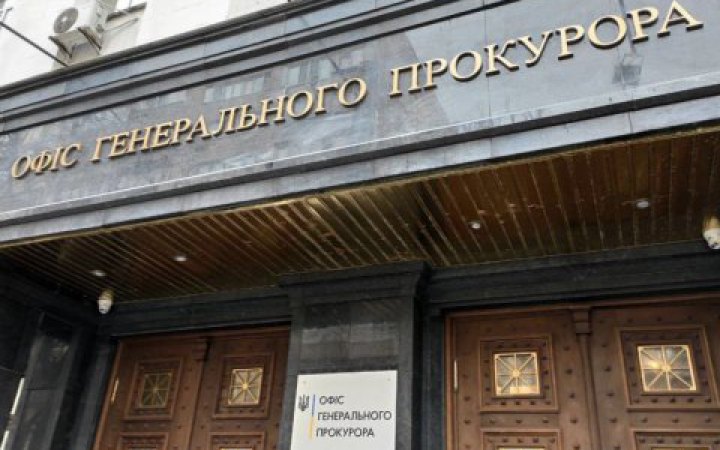
The Prosecutor General’s Office (PGO) said the overnight searches carried out by NABU detectives in the offices used by the Prosecutor General, the First Deputy Prosecutor General and other PGO staff require a separate legal assessment.
This is stated in a PGO statement.
The PGO stressed that it supports the investigation into possible unlawful activity by one of its employees, but demands compliance with procedural safeguards and the limits of court warrants.
The Prosecutor General’s Office said the public discussion of the situation covers two separate issues.
First. Checking the possible involvement of a PGO employee in unlawful activity linked to the operation of fraudulent call centres.
Second. The overnight searches of offices used by the PGO leadership and other staff. During these investigative actions, NABU detectives, according to the PGO, also gained access to materials from other criminal proceedings.
As for the prosecutor’s office employee who features in NABU’s investigation, the Prosecutor General’s position, the statement says, is unequivocal.
“Using one’s position, status as a prosecutor’s office employee or official capabilities to cover up or facilitate any criminal activity is unacceptable and will be punished in accordance with the liability provided by law,” the PGO said.
The issue of dismissing this employee from the prosecution service is currently being decided. An internal inquiry has also been launched.
The PGO said it will provide the investigation with the necessary information and assist in conducting the inquiry.
At the same time, the Prosecutor General’s Office said that at around midnight NABU detectives carried out investigative actions in offices used by the Prosecutor General, the First Deputy Prosecutor General, as well as other staff and structural units of the PGO.
“The scale of these investigative actions, their factual justification and the list of materials to which access was obtained require a separate legal assessment,” the PGO stressed.
In particular, among the documents accessed during the searches were materials from another criminal proceeding concerning possible unlawful actions by close associates linked to the leadership of the Specialised Anti-Corruption Prosecutor’s Office (SAPO).
“Among the documents accessed during the searches were materials from a criminal proceeding concerning possible unlawful actions by close associates linked to the leadership of SAPO. This proceeding was investigated under the procedural supervision of the Prosecutor General’s Office. SAPO’s leadership was aware of its existence and the course of the investigation,” the PGO stressed.
In addition, detectives gained access to materials from another criminal proceeding, including information obtained through covert investigative (search) measures regarding possible unlawful activity by NABU and SAPO employees.
“In these circumstances, the PGO considers it necessary to establish whether the actual scope of the detectives’ access corresponded to the subject matter of the criminal proceeding within which the searches were conducted. This concerns solely the legal assessment of specific procedural actions: which materials were accessed, whether they were examined, copied or seized, and whether this was covered by the relevant court warrants,” the PGO added.
This includes, in particular, exactly which materials the detectives accessed, whether they were examined, copied or seized, and whether these actions were covered by the relevant court warrants.
A separate part of the statement is devoted to the materials of the court ruling used to justify investigative actions concerning the PGO leadership.
The Prosecutor General’s Office drew attention to conversations cited in the ruling involving a PGO employee that relate to everyday matters.
In particular, it mentions “dark tiles” in one of the rooms used by the Prosecutor General, as well as the installation of an alarm system and internal sensors.
“On the basis of these conversations, the materials then advance a version of a possible link to funds which, according to the investigation’s assumption, may have had an unlawful origin.
At the same time, the materials cited in the ruling contain no direct data indicating that the Prosecutor General gave any instructions to facilitate the activities of call centres, obstructed their exposure or investigation, warned anyone about planned investigative actions, received money from such activity or an improper benefit, or paid for renovation works, the installation of an alarm system or any other services using funds of criminal origin,” the agency’s statement says.
The prosecution service believes the link between everyday conversations and possible criminal activity in the materials is substantiated mainly by assumptions.
“This is also evidenced by the wording used in the ruling: ‘probably’, ‘possible awareness’, ‘does not rule out’, ‘may be’. That is why, in our view, the sufficiency of such data for conducting investigative actions in the offices used by the Prosecutor General requires a separate assessment,” the PGO added.
Another argument in the court ruling materials was a conversation by a PGO employee about possible amendments to Order No. 309 “On organising prosecutors’ activities in criminal proceedings”.
Paragraph 169 of the ruling cites a conversation in which the PGO employee allegedly relays an agreement with the “boss” — by which the investigation understands the Prosecutor General — regarding amendments to this document, the statement says.
The PGO said the Prosecutor General did not sign any such amendments. They were not adopted and did not enter into force.
Thus, the prosecution service stresses that this was a discussion of a possible managerial decision that was not, in fact, implemented.
Separately, the PGO commented on materials concerning First Deputy Prosecutor General Mariia Vdovychenko.
According to the prosecution service, the conversations cited in the ruling concern the coordination and conduct of investigative actions in criminal proceedings related to call-centre activity.
The materials use the term “implementation”, which the court links to the possible carrying out of searches at call centres.
“This discussion is subsequently used as one of the elements of a version about possible facilitation of those same individuals. Thus, the preparation of investigative actions against call centres that are lawful by their legal nature has effectively been given the opposite criminal-law meaning: it has been used as an argument to confirm possible facilitation of the activities of the targets against whom these investigative actions were being prepared.”
At the same time, in the prosecution service’s view, this discussion is subsequently used as one of the elements of a version about possible facilitation of those same individuals.
Other conversations cited in the ruling concern systematising countermeasures against call centres, concentrating the relevant criminal proceedings within a specialised track, and ensuring unified coordination of this work in the regions.
The PGO believes these circumstances should be assessed in full context and with regard to actual managerial and procedural decisions.
The Prosecutor General’s Office said it does not question NABU’s right to check the PGO employee’s financial situation, contacts, possible links and other circumstances that may be relevant to the criminal proceeding.
All these circumstances, according to the prosecution service, must be thoroughly verified in the manner prescribed by law.
At the same time, the PGO stressed that an investigation into a specific official must be conducted within the relevant criminal proceeding and with observance of the procedural safeguards established by law.
The PGO said it respects the institutional independence of NABU and SAPO and is interested in professional co-operation among all law enforcement agencies.
At the same time, a possible overstepping of the limits of lawful access to materials from criminal proceedings unrelated to the subject of the search is to be examined within the framework of a criminal proceeding.
“Every established circumstance will receive an appropriate legal assessment,” the PGO said.
The Prosecutor General’s Office’s position is consistent: any facts of possible unlawful activity by prosecution service employees must be investigated without exceptions.
At the same time, all investigative actions, regardless of the body conducting them, must take place strictly within the law and the powers granted by the court.
“This is the same standard for all law enforcement agencies,” the PGO stressed.
NABU and SAPO special operation “Carthage”: what we know
- NABU and SAPO on 4 September announced a special operation to expose a criminal organisation “headed by an official of the Prosecutor General’s Office of Ukraine”.
- According to NABU and SAPO, members of the organisation may be involved in providing “protection” to a network of fraudulent call centres and in laundering assets.
- The Prosecutor General’s Office responded to the possible involvement of one employee in work with fraudulent call centres. It said all circumstances must be established by the investigation.
- According to the investigation, NABU and SAPO say that in 2025 one of the heads of a structural unit of the Prosecutor General’s Office created and led a criminal organisation.
- Members of the organisation provided “protection” to fraudulent call centres, earning millions as a result. Five people are under suspicion.
- NABU’s video features the organiser — a PGO official referred to as the “Chancellor”. It also mentions the “Boss”, the “Muse” and other participants in the scheme.
- Overall, NABU reported exposing five individuals in proceedings under Article 255 of the Criminal Code of Ukraine (creation and leadership of a criminal organisation, as well as participation in it) and Article 209 of the Criminal Code of Ukraine (legalisation (laundering) of property). They face up to 15 years’ imprisonment.