





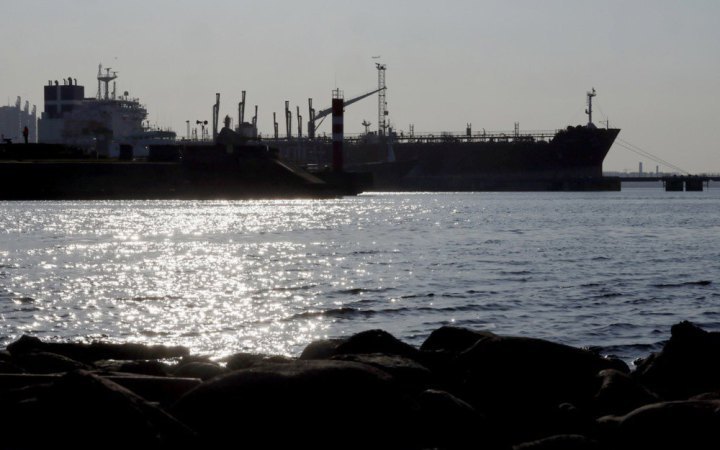
Russian oil tankers from the so-called “shadow fleet” have begun fitting nets, metal structures and rubber tyres to protect themselves from attacks by Ukrainian drones.
The Wall Street Journal reports this.
According to the newspaper, since August Russian tankers have been passing through the Bosphorus in Istanbul almost every day. Nets, metal cages and tyres can be seen on the vessels, intended to protect them from drone strikes.
The newspaper analysed photographs of the ships provided by Istanbul-based maritime analyst Yoruk Isik. By his count, since August at least 60 tankers with such protective measures have passed through the Bosphorus. Almost all of them are under US and other Western sanctions for transporting Russian oil.
Military analysts who reviewed the images believe the structures are being installed in haste to protect the most vulnerable parts of the vessels, including the engines. Rubber tyres are also being hung from the deck around the engine and rudder area. These measures are meant to prevent drones from hitting the ship and disabling it.
Similar metal structures have previously been used on Russian and Ukrainian military equipment to protect against FPV drones. They have also been used by the Israeli military to counter drones.
Isik noted that the appearance of such protective measures points to growing threats to Russia’s fleet in the Black Sea.
“This is yet another vivid proof that the Russian fleet has lost control in the Black Sea. For Russia, earning foreign currency is under serious threat,” the analyst said.
The WSJ notes that attacks on tankers are part of a broader Ukrainian campaign of economic pressure on Russia. Ukrainian forces are also striking oil refineries and data centres, seeking to limit Moscow’s financial capacity to wage war.
The newspaper stresses that Russian tankers may be less protected than military facilities, which have already strengthened their defences against drones.
Ukraine has previously reported strikes on Russian vessels using sea drones, and now the “shadow fleet” is trying to protect itself from medium- and long-range aerial FPV drones as well.
Samuel Bendett, an analyst specialising in military robotics at the CNA Institute for Security Policy, believes the use of nets and metal cages could become a common way to protect ships.
“This will become a global trend. It’s the cheapest and simplest way to protect a ship from drones,” he said.
- Earlier, the Financial Times wrote that Russian “shadow fleet” tankers in the Black Sea transmit false coordinates to conceal their real routes in order to avoid Ukrainian attacks