





If I were writing a synopsis for this film, it would be: ‘A privileged white man tries to take his next award-winning shot amid the ruins of frontline Ukraine, carefully incorporating corpses into the composition according to the rule of thirds.’
But here is the actual synopsis: ‘Over four seasons, lone wolf Eddy van Wessel travels along the Ukrainian front. Now, as the most decorated war photographer in the Netherlands nears the end of his successful career, he wants to take the best shot one more time — an image that will sum up the entire conflict and justify all the struggle, trauma and setbacks he has endured.’ Yes, this is not a joke.
I watched the film as part of the Advocacy Coalition programme in Luxembourg, where a number of embassies and the NGO LUkraine jointly organise monthly events to draw attention to Ukraine and, so to speak, keep it in people’s line of sight. This screening was organised by the Embassy of the Netherlands in Luxembourg.
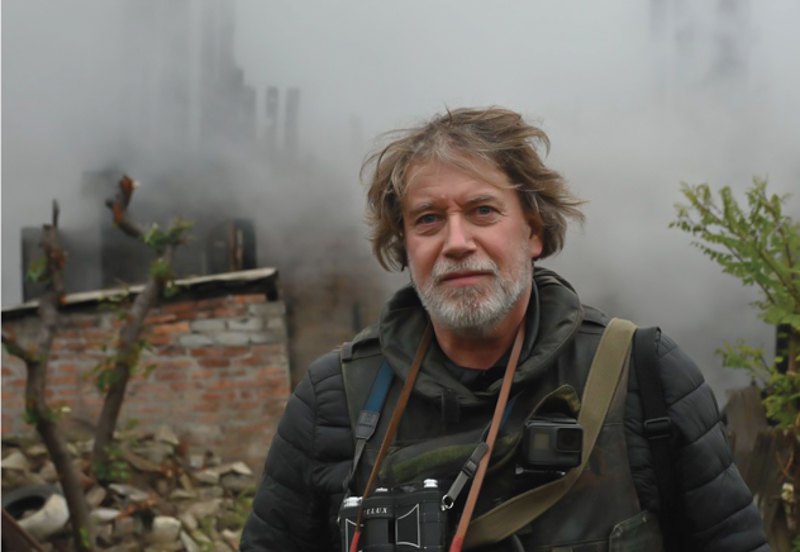
Here are just a few quotes from the film that I managed to remember: ‘I’m trying to show the human side of war’, ‘I’m not indifferent, I’m still very sensitive, because otherwise my photos won’t be good’, ‘I want to raise awareness, to tell the story’…
Meanwhile, he photographs people who are shouting at the camera not to film them. He photographs (and the film crew records the process on video) a grieving family (most likely without their consent) burying two little daughters. He takes his time, carefully constructing the best possible composition around a body decomposing on the ground.
Photography, by its nature, objectifies, but seeing how meticulously he does it in the film made my skin crawl. A superficial affect, callousness, a lack of empathy, an absence of remorse or guilt, and fearlessness in the face of danger — these are the symptoms I saw. You can make the diagnosis yourself.
Another quote from the film: ‘I’m trying to remain neutral. I’m neither for nor against Ukraine, I’m neither for nor against Russia, I’m against war.’ How nobly put. So what caused the war, Eddy?
The film shows the frenzied, incomprehensible hardships of being on the front line, where, for one reason or another, civilians still live. Nature destroyed. Many dead bodies. Debris. Ruins. Tears. Funerals. Nothing throws Eddy off course. Not sudden explosions, not a dead woman lying on a bench on the porch of a house he has just entered. I was curious whether we would see any emotion at all in Eddy’s stoic figure. And we did.
Eddy’s greatest discomfort is the lack of action. He swears and paces nervously when a medical evacuation team refuses to take him out because their vehicle is full of the dead and the wounded. What a shame! ‘That’s a good shot. It could have been the one that shows the whole story. FUCK!’ Thank you to the editors for leaving that in the film. We were finally able to see his human side, his sensitivity.
Russia’s destruction of Ukraine is a red curtain in front of which Eddy modestly stands, receiving yet another ‘Silver Camera’ award for the best photograph of this horrific war. But if there were no wars, Eddy would have no work.
I know how a photographer’s brain works. I’ve been taking photographs myself for more than 15 years. So I know for sure that you can remain empathetic and emotionally intelligent without sacrificing the quality of your work. I also know that there is no such thing as ‘the perfect shot’ or ‘a shot that contains the whole story’.
I also worked in a major newsroom in Ukraine and saw many foreign photographers and journalists who came to eastern Ukraine and returned with exactly the same motives as Eddy: to make a name for themselves. So it doesn’t surprise me. And I’m not naive enough to think it has stopped.
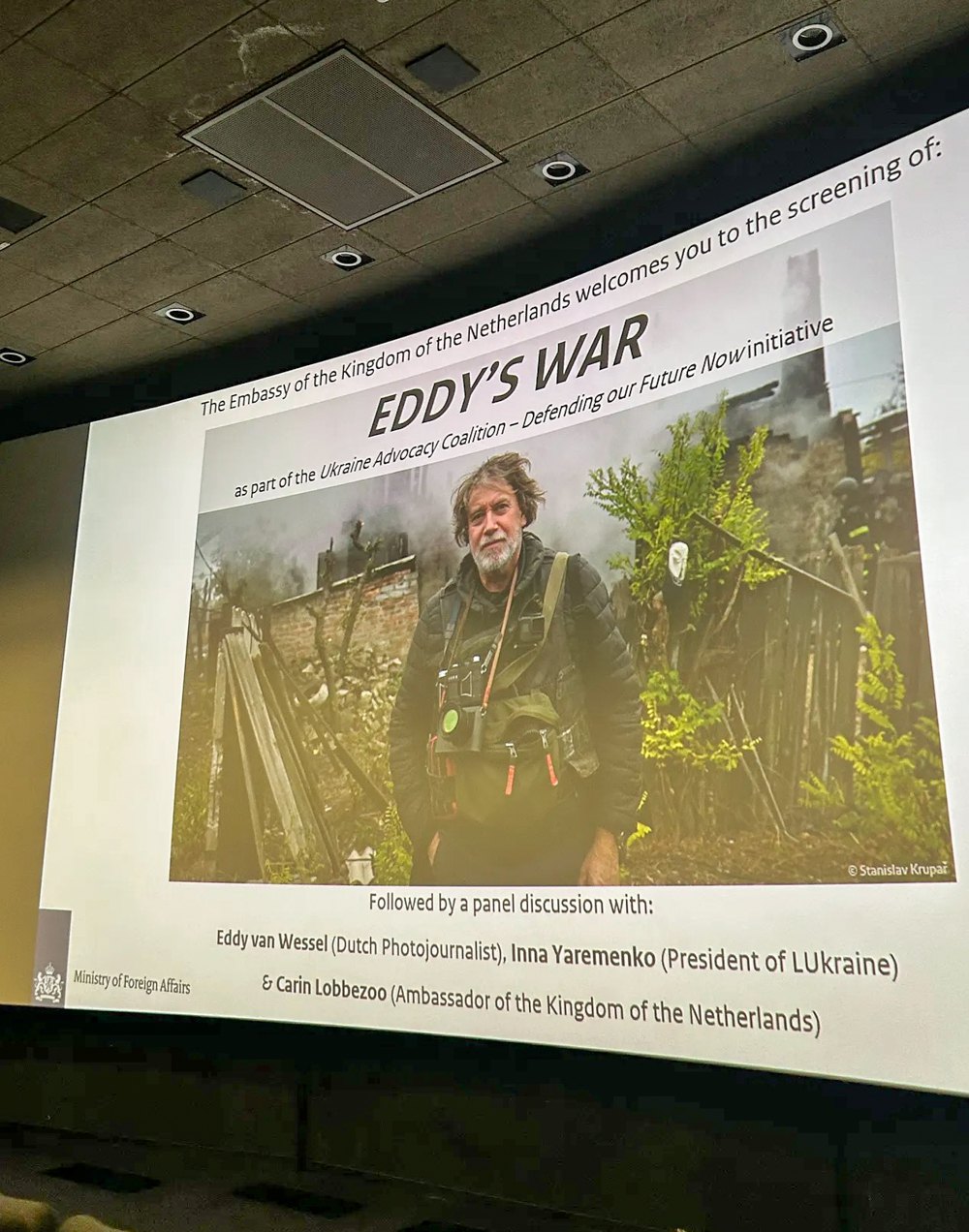
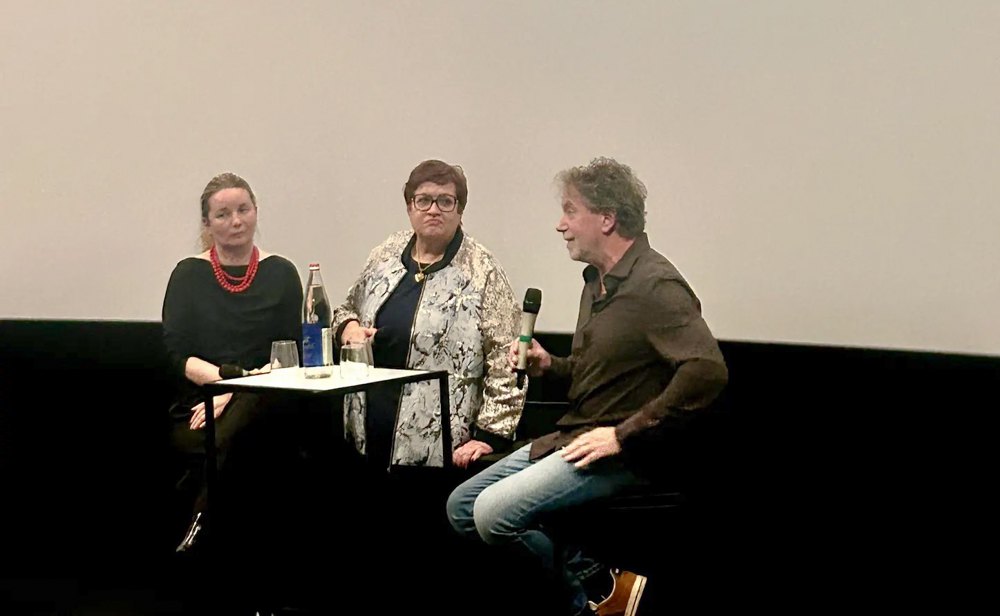
But what surprises me is that this film was shown as part of the ‘Advocacy Coalition’ in support of Ukraine. I would say that evening was advocacy for Eddy. I learned very little about the war, let alone what caused it. It could have been any other war. And yet the whole hall applauded and congratulated Eddy, who came to the Q&A session at the end. The word ‘heroic’ was used about him several times.
His final quote completed the picture the film had painted in my head: ‘I would go and shoot on the Russian side too if I could, but Russia would take me prisoner, and Ukraine would revoke my accreditation. Maybe when the war is over, I’ll be able to talk to a colleague “on the other side”, and we’ll be able to combine our photos into one story.’
I am writing my dissertation precisely so that this does not happen, or is not seen as acceptable in intellectual circles.
It makes me sad that this is what the ‘Advocacy Coalition’ and the Embassy of the Netherlands decided to do together with LUkraine — an organisation representing Ukraine in Luxembourg. Ukraine was in every frame, and yet, somehow, it wasn’t in the room.
P.S. The title ‘Eddy’s War’ is rage-bait in itself. When there is a flood in the Netherlands, I’ll go and photograph it and call it ‘Ira’s Flood’. Same logic, right?
This text was first published on Iryna Yeroshko’s blog on the Substack platform. The original version is available via this link.