





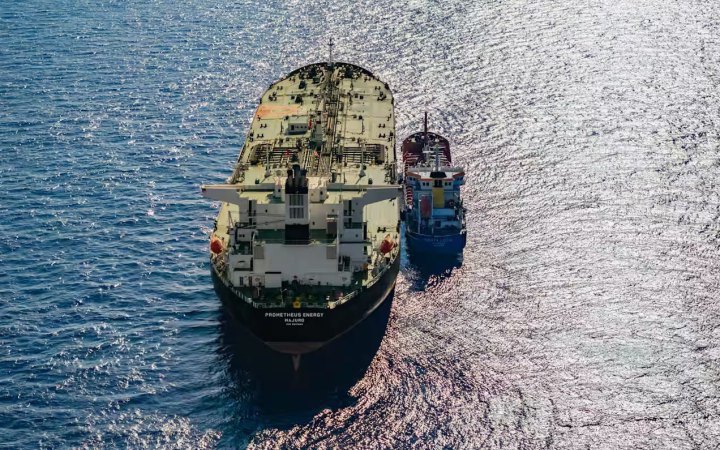
The value of older oil supertankers has, for the first time, exceeded the prices of new vessels. Shipowners are trying to capitalise on record rates for transporting oil from Persian Gulf countries to Asia.
The Financial Times reports this.
It concerns supertankers (VLCCs) that can carry around 2 million barrels of oil. According to the newspaper, charter rates on the Middle East–Asia route have reached about $1.2 million per day.
Against the backdrop of high profitability in shipping, tanker prices have surged. Over the past week, several vessels built before 2016 were sold for $150 million or more. Meanwhile, the average price of a new vessel is about $135 million.
Overall, tanker values have risen by roughly a third compared with the same period last year.
One recently built tanker owned by Dynacom, the company of Greek billionaire George Prokopiou, was sold for $200 million with the option of a rapid handover to the new owner. This is one of the highest prices recorded in the market. Another vessel, due to be delivered in October, was sold for $169 million.
Brokers note that the price is now increasingly influenced not by the vessel’s age, but by how quickly it can be handed over to the buyer.
One of the main drivers of demand has been the desire of state oil companies in Persian Gulf countries to control their own tanker fleets. This, in particular, gives them greater scope to export oil through higher-risk regions, including the Strait of Hormuz.
According to maritime consultancy Drewry, the UAE state energy group ADNOC has acquired at least six supertankers over the past two months. Market participants also cite Kuwait’s national oil company and buyers planning to transport Iraqi oil.
High charter rates allow owners to recoup the cost of buying vessels quickly. At the same time, the supply of tankers on the market is shrinking, as many shipowners are in no hurry to sell their vessels and want to benefit from current profitability.
Market participants also warn of a possible sharp fall in rates if a peace deal is reached that would allow normal shipping through the Strait of Hormuz to resume.
At the same time, some industry representatives believe that even after that, rates may remain higher than in previous years.