




A Direction Considered a Diversion
In early August 2022, all the Armed Forces’ efforts were focused on the Kherson Region. The offensive operation there had already been under way for a month, with delays.
“The President of Ukraine contacted me and suggested preparing an offensive operation in the Horlivka area with the forces we had—in Khortytsya. And we didn’t really have any,” said Oleksandr Syrskyy. At the time, the Defence Forces were fighting holding actions on the Bakhmut, Siversk and Avdiyivka axes.
Syrskyy proposed a different option—to strike where the chances of success were higher. The calculations pointed to the Kharkiv Region, the Balakliya area: the enemy did not expect an offensive there. Although 12 battalion tactical groups were stationed around Izyum, and another 11 in Russia’s Belgorod Region.
The strike grouping consisted of three brigades: the 92nd Mechanised, the 25th Airborne, and the 80th Air Assault. It took a month to concentrate and prepare them, because the battalions were scattered across different sections of the front. In addition, units and sub-units of the Defence Intelligence of Ukraine, the Territorial Defence Forces, the National Guard of Ukraine, and the National Police of Ukraine were brought in to support the brigades’ actions.
But when the troops were redeployed on 29 August, there was nothing to attack with. Artillery, the general said, accounted for up to 80% of all strikes at the time, and shells were in such short supply that for every 12–15 enemy shots, they could respond with one. When this was reported, the President instructed the then Deputy Prime Minister and Minister of Infrastructure, Oleksandr Kubrakov, to find ammunition.
A Month of Night Work and Five People in the Know
The terrain near Balakliya offered limited options for movement—only two or three routes.
“For a month to a month and a half, we laid routes at night, cleared mine after mine, day after day, so that the troops could move directly up to the forward edge,” said Anatoliy Barhylevych.
The second component was absolute secrecy. Only five officers and generals were allowed into the preparations. Commanders received a clear task only when their unit was already moving into the concentration area.
“They knew they would be conducting some kind of offensive actions, they were preparing, but they received a clear task when they were moving into the area,” Syrskyy explained.
The third element was freedom of action on the ground. “Commanders were given latitude: after breaking through the enemy’s forward edge, to advance as far as possible and carry out combat tasks,” Barhylevych said.
On the first day they broke through the defences and advanced 15 kilometres; on the second, another 29. On the fifth day, they encircled Izyum. Barhylevych called those first days a colossal success and noted that it was the only operation that began early in the morning and ended three to five days later at exactly 8 p.m.—that is how precisely everything unfolded.
Participants in the Operation
All elements of the Defence Forces took part in the offensive, including the Territorial Defence, the National Guard, the Security Service of Ukraine and the police. One episode was the seizure of the 65th arsenal in Balakliia—the enemy was not allowed to blow it up.
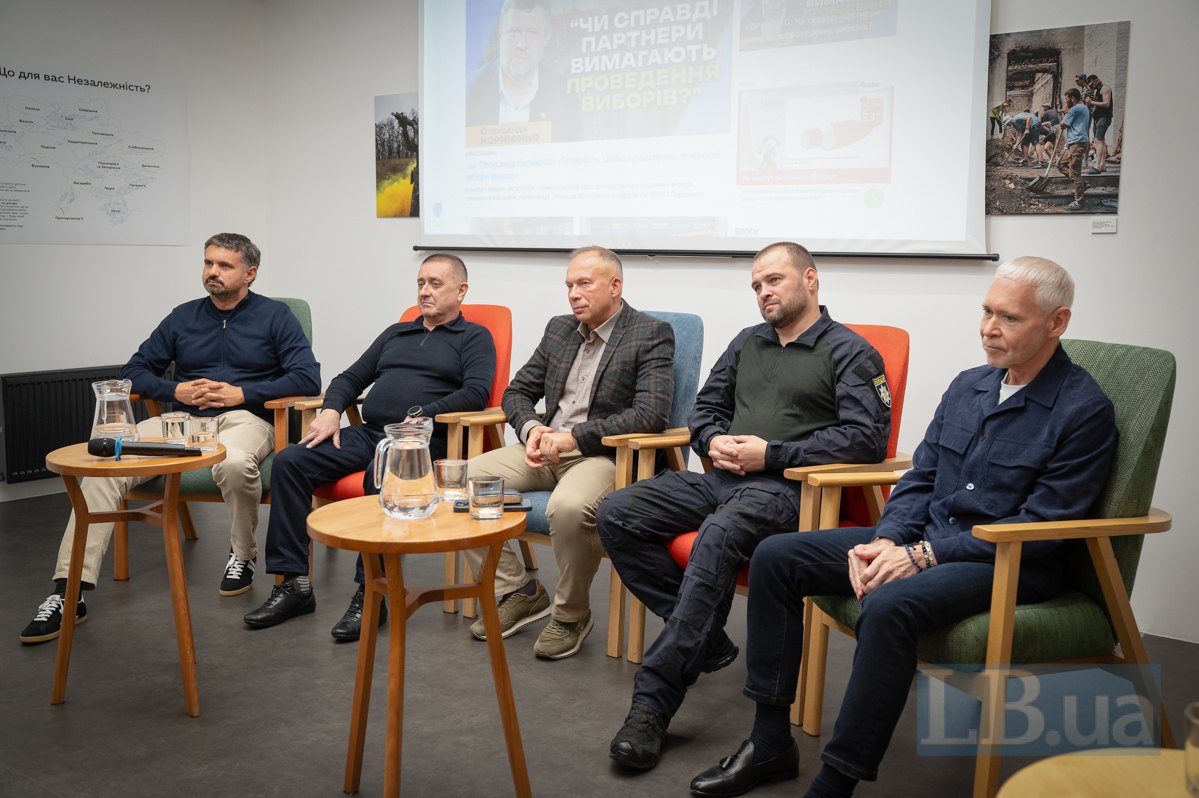
Police units did not merely enter liberated territories; they took part in the liberation itself.
“The task was to move police units into the grouping that could carry out tasks not only to restore law and order, but also to take part directly in liberating settlements,” said Oleksandr Fatsevych.
The advancing brigades bypassed villages, while the police, together with the National Guard and the Security Service, cleared house by house. They also carried out assault tasks, including during the liberation of Verbivka. At the time, police units had neither artillery nor heavy equipment.
Then came the second stage—stabilisation measures: screening, searching for collaborators, restoring the work of administrations. “Nobody likes to talk about them, but it’s true,” Fatsevych noted.
Because the result exceeded expectations and the number of liberated settlements grew faster than planned, additional battalions had to be brought in.
What This Operation Changed
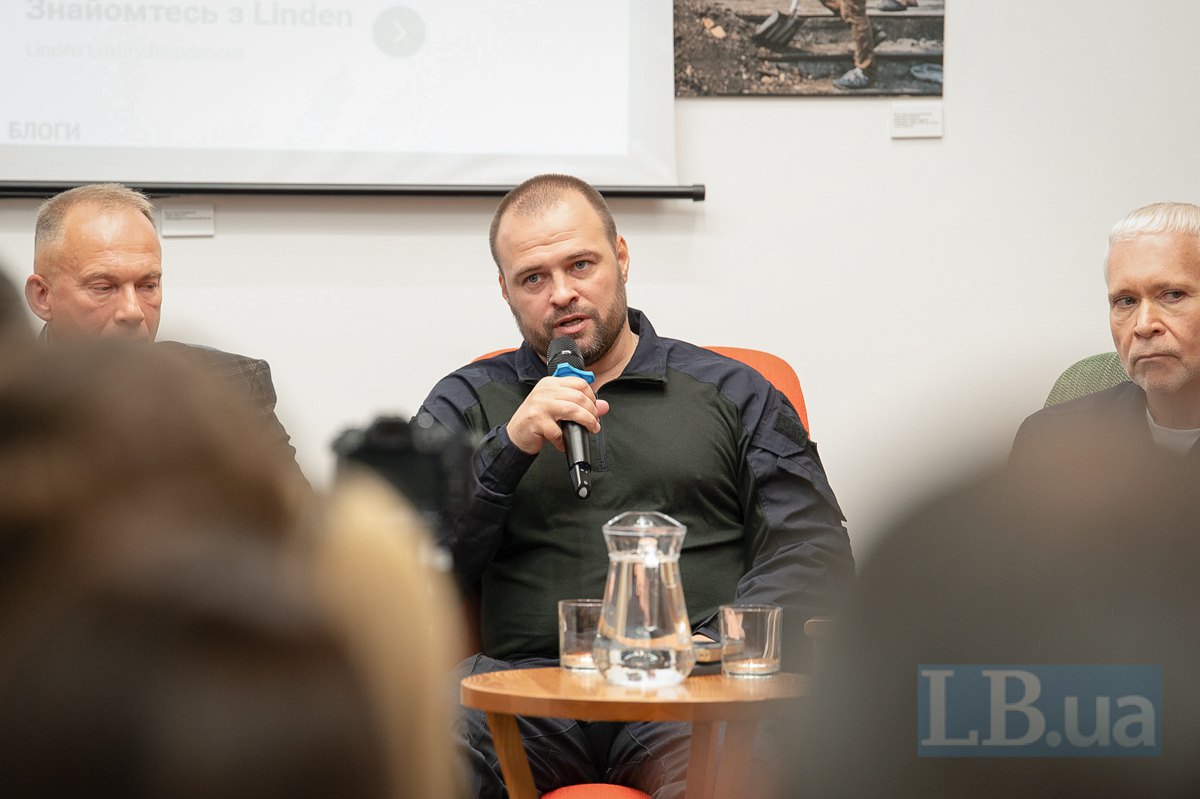
“Very often, under the pressure of dramatic events, we even underestimate how important this operation is,” said Ihor Liski.
In his words, Hostomel gave Ukraine a chance, Azovstal bought time, and the Kharkiv operation changed the war mentally.
“It was only during the Kharkiv operation that we got rid of the inferiority complex. For the first time on the international stage, people began to say that Ukraine can not only avoid losing—it can win. An entire nation that was being destroyed for 300 years suddenly sheds that complex,” Liski said.
The experience of the operation, Syrskyy said, was repeated every year afterwards—particularly in the 2024 Kursk operation. The same principles: advancing in armoured vehicles, bypassing strongpoints, pushing deep. In response, the enemy was forced to redeploy naval infantry and airborne units to that direction—almost 70,000 personnel.
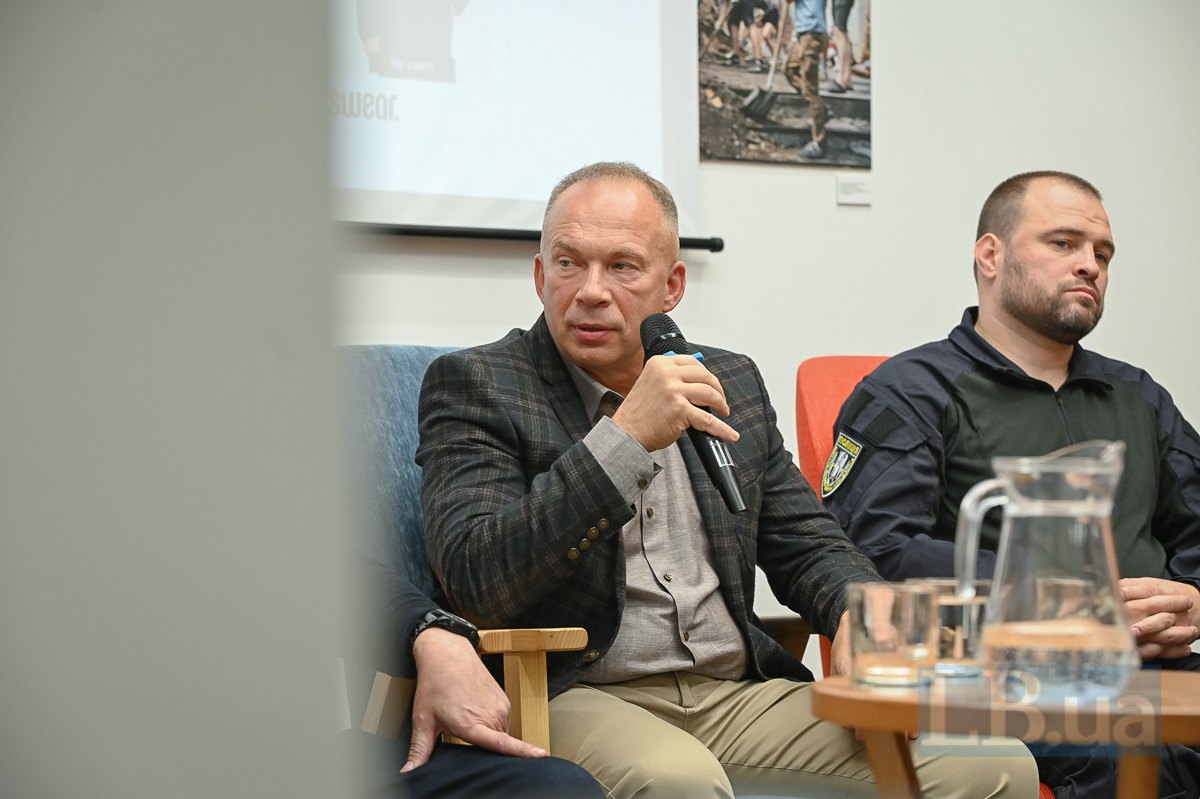
“Absolute silence in the mass media,” he called the unchanging condition. The most recent such operation was carried out in 2026 on the Oleksandrivka axis: the offensive began on 29 January, and the President was persuaded not to publicise it in the media.
“Of course, we make allowances for technologisation, for the fact that drones effectively dictate and control the situation both on the ground and in the air. But the main principle remains,” Syrskyy added.
Cities’ Survival
“With the development of technology and strike capabilities, the boundaries have been erased; the forward edge has effectively been erased. The enemy, like us, can strike practically across the entire territory,” Barhylevych said.
This changed everyone’s role—including that of cities. Kharkiv, Ihor Terekhov said, has gone through the full evolution of Russian weapons: artillery, Iskanders, guided aerial bombs, then Shaheds, jet-powered Shaheds, Banderols, and then fibre-optic drones.
Together with the military and engineers, the city developed countermeasure systems that now cover part of Kharkiv. But on the day the discussion took place, there were two strikes in the city—already by FPV drones using a radio channel.
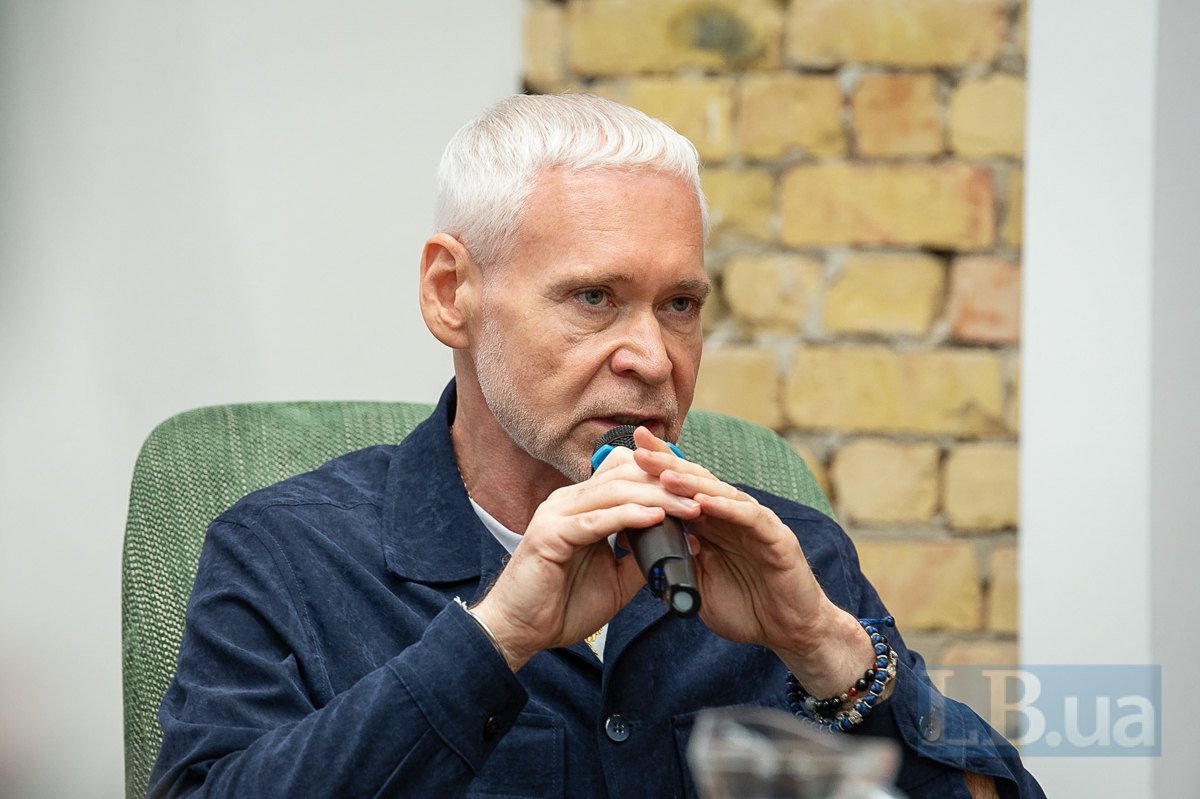
A year and a half ago, Kharkiv set up a situation centre: there they can see online what is flying where and into which district. The time to detect an impact has been reduced from five minutes to a matter of seconds.
In just four years of the full-scale invasion, 14,000 buildings in Kharkiv have been damaged or destroyed, including 10,000 residential ones. 160,000 residents have been left without a roof over their heads, the mayor says.
The work of the police has also changed; now the key task in frontline areas is evacuation.
“During evacuations we lose civilians we are taking out, and children, and police officers—everyone in the evacuation group,” Fatsevych said. A decision has been taken on forced evacuation of children, and it works as a motivator for families. But not always. Recently, families with children returned to Druzhkivka, passing a number of checkpoints while hiding them from the police. “We found them in a shed, hungry.”
How to Shoot Down What’s Coming
Syrskyy called the organisation of air defence the main issue in protecting civilians. The situation with partner-supplied missiles for Patriot is difficult, and the only way out is a domestic anti-ballistic system.
“The creation of a domestic missile to fight enemy aircraft and cruise missiles is already at the final stage. It’s literally a matter of one or two months; the final tests are already under way,” he said.
The next step is jet-powered drones. Here, he said, procurement of light aircraft capable of countering them is being delayed: the Ministry of Defence is making decisions, and the process has moved off the ground. A large number of MANPADS are also needed as a relatively cheap way to fight drones, as well as modernisation of conventional strike means.
Liski called ballistic missiles Putin’s main trump card: “Until we take that trump card away, they will keep the idea that they can squeeze us through.” Syrskyy confirmed that work on creating a ballistic missile is under way, but it is a matter of resources and funding.
Separately, he mentioned a development that could bring armoured vehicles back to the battlefield. In General Syrskyy’s assessment, in the contest between means of attack and defence, drones are currently winning. But both sides are working on active protection systems for armoured vehicles, and the latest Ukrainian developments have shown results: 60 to 80 per cent of FPV drones were shot down by active protection systems for armoured vehicles.
“When these measures are brought to full refinement, then the question of using armoured vehicles will become relevant again and the tempo of offensives will change,” the general said.
As for robotisation, Syrskyy predicts the saturation of troops with different types of unmanned ground systems, including humanoid ones, and the appearance of exoskeletons in the infantry. But this will not replace a human being. As an example, he cited the fact that in the 1990s the Americans predicted that by 2020, 70% of their combat aviation would be unmanned—yet it is still piloted.
Artificial intelligence, he said, is already used everywhere—in weapons and in operational planning: “The task is not to lose control over it.”
Passing on Experience
“At the end of 2025 and the beginning of 2026, all representatives of the armed forces of partner countries, including Britain, France and others, acknowledged that they now need to learn from us,” Syrskyy said. If previously they trained Ukrainian soldiers, now they come to study our experience.
Cooperation with partners has become more pragmatic, Barhylevych added: where it used to focus on quantitative indicators, it now focuses on qualitative ones.
Fatsevych pointed out that exchanges take place at the strategic and operational levels, but the most valuable remains overlooked—the tactical: “Every battalion commander has a technology and explosives laboratory where they refine drones for a specific direction, for a specific task. Very smart people sit there—programmers, technicians.” That is where manufacturers get feedback, and then quickly improve their systems.
“Why are we improving more than NATO partners? Because there is this interaction. But do partners understand it? I think not yet,” he said.
Liski concluded that the world is going through major changes, and Ukraine has found itself at the very epicentre.
“I am sure a different story must be born, in which the Armed Forces of Ukraine will be the foundation. Having shed the inferiority complex, we must set a new framework. Very often we do not realise this—and we must grow into being able to shape this new architecture,” he said.