





Preparing for winter / backup heating
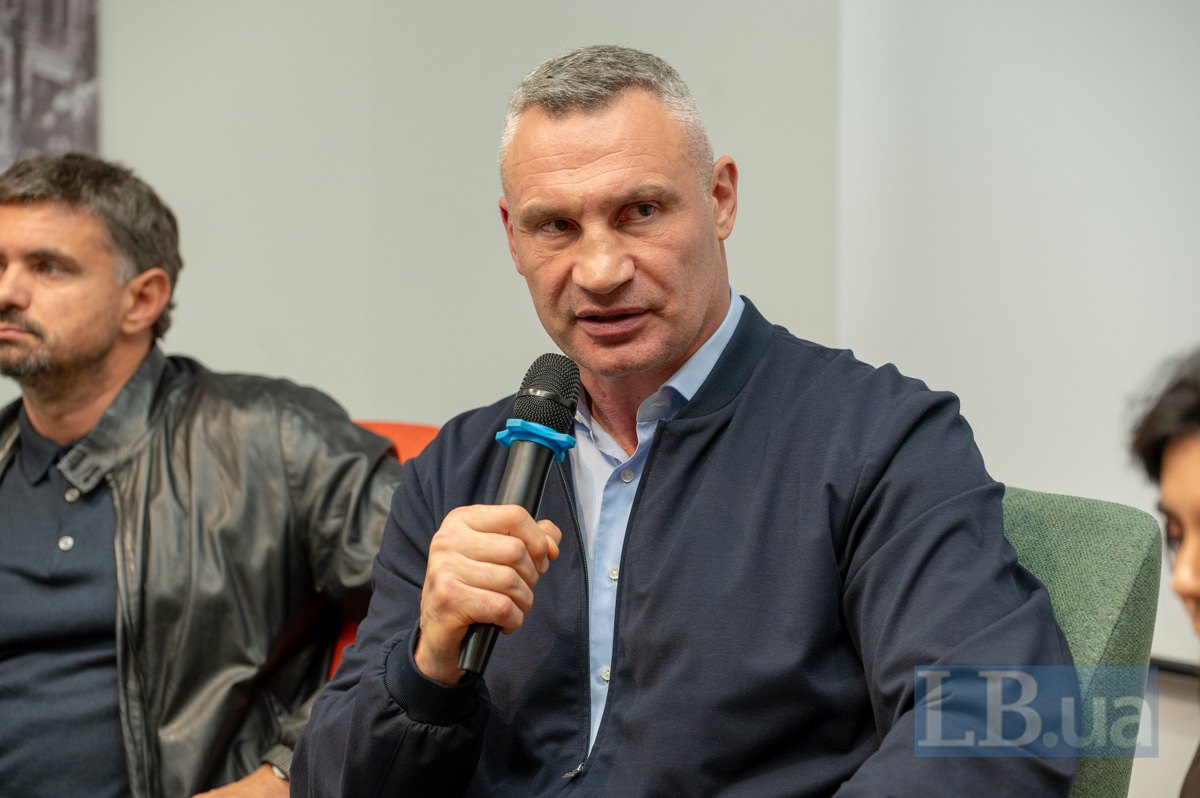
Kyiv began preparing for the heating season immediately after the previous one ended, Mayor Vitali Klitschko says. As of today, he stresses, the key combined heat and power plants are 100% ready for winter.
However, their ability to operate depends directly on whether critical facilities can be protected from shelling, because the Russians have not abandoned their plans to leave Kyiv residents in darkness without water and heat, Klitschko emphasises.
The city is now preparing a backup heating system in case the central one is destroyed, the mayor said. Its capacity will be 1,600 MW, with the state and the city splitting the funding 50/50.
“We have presented the plan for a duplicate heating system three times: first at a meeting of the Kyiv City Council before the deputies. Twice — at the National Security and Defence Council. It was approved. And we are moving according to this plan to provide Kyiv with a backup heating system in the event the central one is destroyed.
I would also like to remind you that the central heating system was built over decades after the Second World War. Dozens of institutes worked on it. And now we have a challenge with an asterisk — given the constraints on finances, human resources and, crucially, time — we need to build, in the period between the end of winter and the start of the next heating season, what took decades to build,” Klitschko said.
Work on building the backup system is planned to be completed in December. It should be ready to launch from the beginning of next year.
But this process, the mayor says, is significantly complicated by a shortage of workers, constant alerts during which workers must stay in shelters, and the fact that a large amount of work is being carried out at combined heat and power plants that the enemy has already managed to damage.
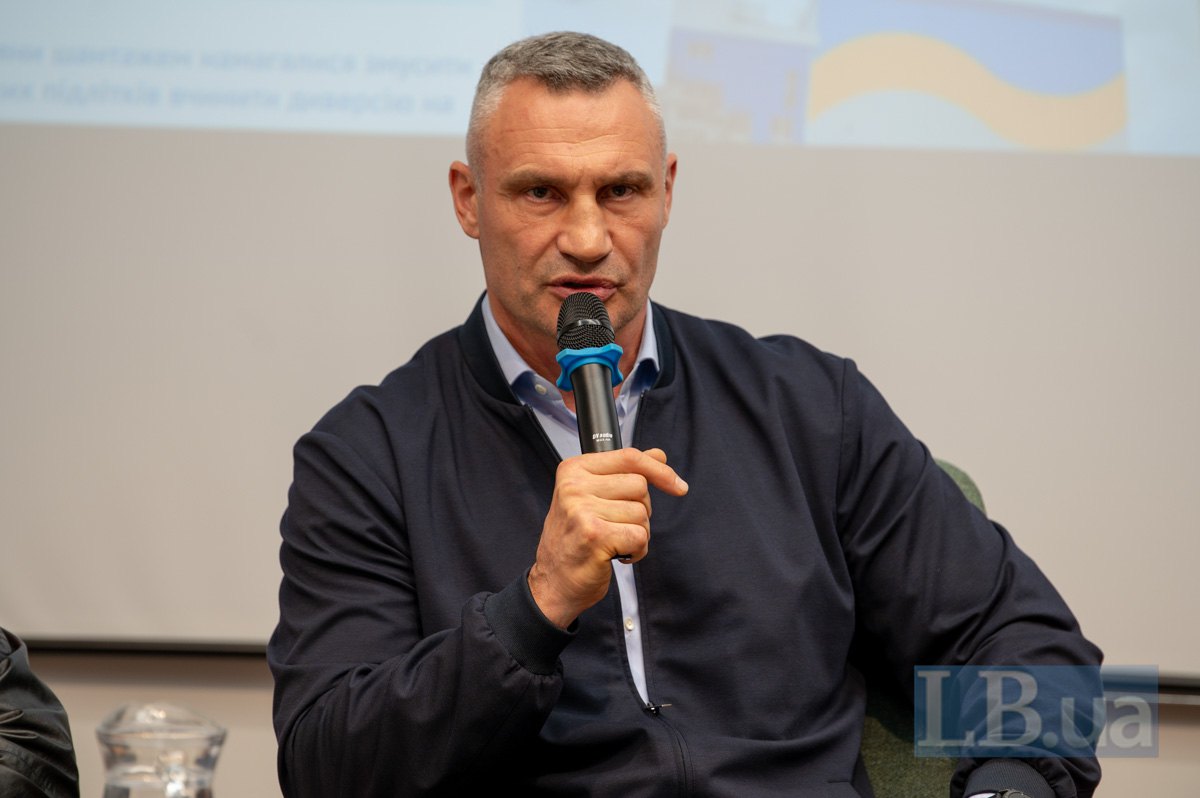
“And one of the most important challenges is funding problems. The money has been allocated, contractors have started work, but the Treasury has blocked the accounts (due to a lack of money in the budget, the government has halted funding for capital expenditure. — Ed.). For a month we have been unable to use the money earmarked for the duplicate system for winter preparations,” Vitali Klitschko complained. “I can even give an example. We took out borrowing from a bank — a loan. The money arrived in the Treasury’s accounts, but for a month it has not released it. I understand that contractors are working with their own money (according to Klitschko, the city has отказалося from advance payments: the contractor carries out the work with its own funds, and the city then pays based on certificates of completed work that pass state expert review. — Ed.), how long that will last is another question. Continued work depends on funding, as does the purchase of equipment manufactured abroad. A billion in borrowed funds has been blocked, and while the money sits frozen, the city already has to pay the bank 13 million in interest.”
By the way: at the time of publication of this text, the government had unblocked payments for certain projects under Kyiv’s Resilience Plan. These include backup heating, the construction of cogeneration stations, and uninterrupted power supply for water utility facilities.
The electricity supply situation
On 8 October, the Kyiv metro and electric public transport came to a complete halt, something that was rare even during prolonged blackouts. The mayor said the reason was a lack of voltage in DTEK’s networks.
“I would like to remind you that the city of Kyiv depends on the state’s electricity supply. Unfortunately, Kyiv’s own generation has been destroyed,” Klitschko noted. So the situation with electricity in the city depends entirely on Ukrenergo’s capabilities.
“We live in wartime conditions and are trying to do everything to provide services. Public transport is one of the key ones. We are doing everything possible, but we depend on many circumstances related to military action,” Klitschko says.
“It is no secret that the city of Kyiv has been and remains the enemy’s key target. In terms of the number of cruise missiles, ballistic missiles and drones, it cannot be compared with any other city, even those near the front line. And the stability of the social and economic situation in Kyiv determines stability in every city, town and village in other regions of Ukraine.
Therefore, the enemy, having no success at the front right now, has changed tactics and is destroying the city as much as possible with the key aim of sowing depression, doing everything to ensure the city is in decline, creating social tension, and breaking the spirit of Ukrainian resistance. That is why they strike at the heart of the country — the city of Kyiv,” Klitschko added.

According to the mayor, more than 4,000 buildings have already been destroyed in the capital, and almost 1,000 residents have been killed.
As for how many buildings have been restored, the mayor did not give an exact figure, saying “dozens”, but many more are still in the process of being rebuilt.
“We pay funds to every family from destroyed buildings; at present, 1,702 families receive money to rent housing. The amount of payments to Kyiv residents related to strikes since the beginning of the year is half a billion hryvnias.
…As for replacing windows and roofs, we do it as quickly as possible. To avoid social tension, in ‘Kyiv Digital’ each resident can view the roadmap for their building, because we need to carry out an inspection, then draw up repair documentation, run tenders and hire a contractor. This takes some time,” Vitali Klitschko says.
The mayor acknowledges there is dissatisfaction with the pace of restoration, but points to the significant destruction, the large volume of work, and the regulations that must be followed.
On bridges and links between the two banks
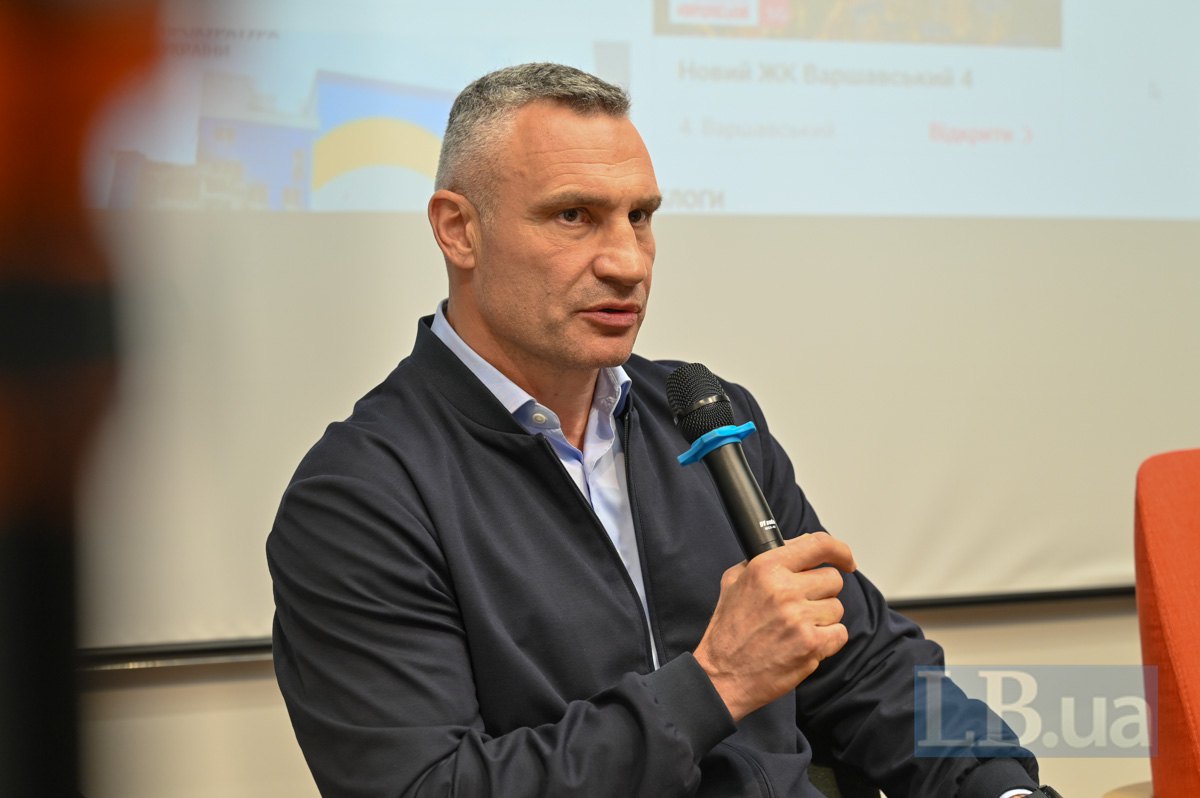
Destroying bridges is not so easy, Vitali Klitschko stresses. But he adds that various options are being discussed, including building pontoon crossings.
“Minister Kalashnyk (the minister for recovery, infrastructure and transport. — Ed.) has already said that we are not ruling out pontoon crossings either, so we must be ready for different scenarios. But no pontoon crossing can replace bridges in terms of traffic moving from the left bank to the right bank,” the mayor noted.
The mayor also commented on the appearance of nets on the capital’s bridges, saying it was the work of the State Emergency Service.
“I am not an expert on protection with nets and the standards that exist in the state regarding criteria for protecting particular facilities. The nets that are now on the bridges are a decision of the State Emergency Service; we provided full access for their installation.
We take steps solely on the basis of the expert opinion of military specialists regarding protection. We communicate with the military and act in accordance with their recommendations,” the mayor said.
But real protection for bridges, Klitschko stresses, can only be provided by air defence forces.

“Whatever we do, whatever nets we put up, no one can replace the work of air defence. So when there is an air-raid alert, I appeal to God; to our air defence troops to work effectively, because the city’s functioning depends on their work; and to our international partners, because air defence is one of the key components of survival this winter,” the mayor of the capital says.
He also recalled how he was criticised for the supposedly unnecessary construction of the Podilsko-Voskresensky Bridge.
“They said it was a bridge to nowhere, that it was not needed, an outdated project, and so on. It is very good that we put it into operation and it is performing its function.
Now there are similar discussions that there is no need to build the metro (to Vynohradar. — Ed.). I would like to emphasise: the metro is one of the key transport arteries of our city. The metro also serves a dual purpose — as protection for Kyiv residents. Tens of thousands of Kyiv residents stay in the metro during air-raid alerts because underground is much safer than in other places.
The work continues. I hope the contractor is fulfilling the task. As far as I know, by the end of the year, European Union Avenue in Vynohradar will be opened to traffic, and all work will then take place underground,” the mayor said.
Read alsoThe Headless Horseman: Why Kyiv’s Authorities Are Only Now Taking Off the “Rose-Tinted Glasses” — and Where the Head of the Kyiv City Military Administration Has Gone
On relations with the authorities and uncompensated tariffs
Kyiv depends on the state in a great many ways, Vitali Klitschko notes, and he hopes for effective cooperation with the government.
“My message is always that we must unite our efforts. It looks very strange when people start pointing fingers, putting obstacles in someone’s way, liking or disliking someone. Uniting our efforts is the key to victory or restoring peace in Ukraine. We must be strong. The strong are respected; the weak are ignored. By uniting our efforts, we can be strong, and local self-government is a reliable partner,” Klitschko said.
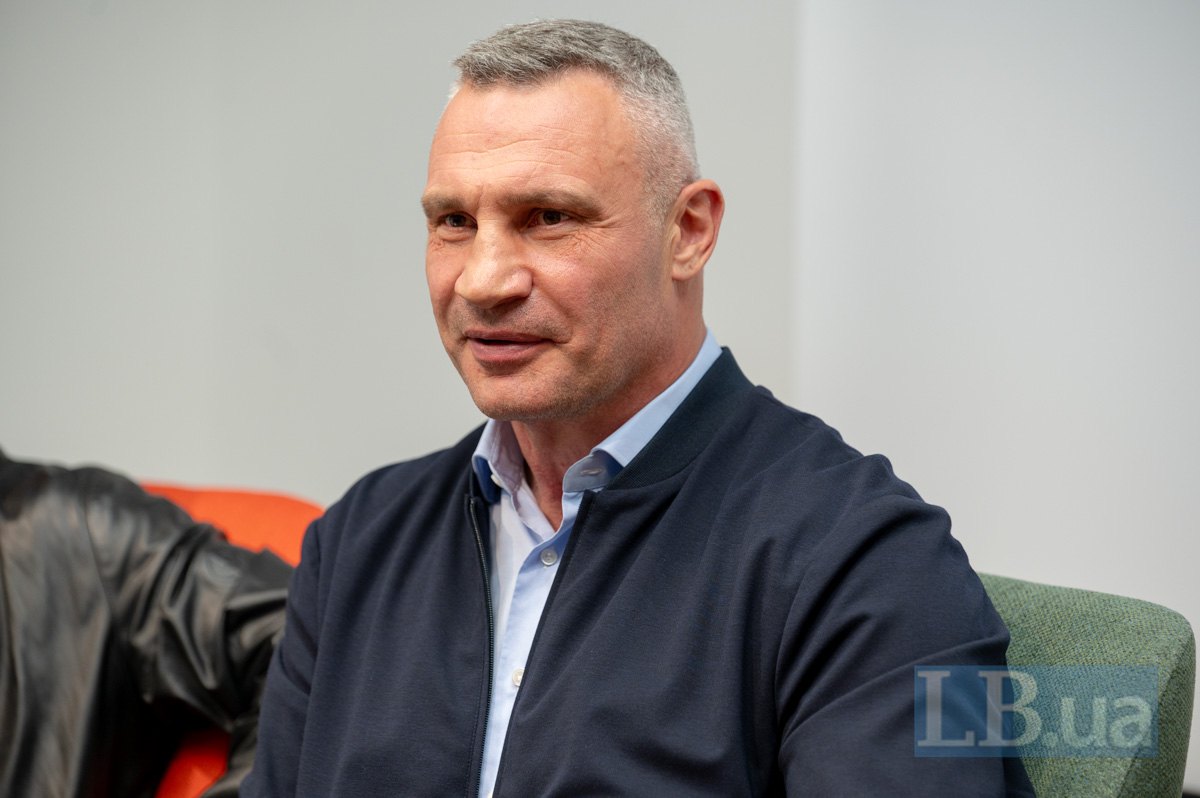
He joked about the special attitude towards him as mayor from the central authorities. But he reminded everyone that the government blocked spending for all cities, not only Kyiv. And this is a threatening situation, because the Association of Ukrainian Cities, which Klitschko heads, has received complaints that some communities have no money for fuel for ambulances or for rubbish collection.
Vitali Klitschko also hopes the government will pay local self-government 85 billion in outstanding funds for compensation of heating tariffs, in line with the signed memorandum.
And also for concessionary travel on municipal transport, since it costs the city budget 10 billion hryvnias a year, and every second passenger is entitled to concessions, the mayor claims.
“The state defines who is entitled to concessions, does not compensate billions of hryvnias in arrears, and we carry them for free. I hope that one day we will get through to them.
But we perform our functions. Each of us wants to travel in modern transport, and we need to pay wages to drivers and the staff who maintain it. Despite the difficult conditions, we do everything to keep transport running, so raising fares was a forced step,” the mayor said.
Businesses operating during alerts
Under Cabinet of Ministers Resolution No. 1128, from 4 December businesses will not be able to operate during either yellow or red alert levels if they do not have shelters or a properly equipped safe space.
Vitali Klitschko believes such a decision by the authorities will harm the economy, because small businesses are unable to meet these conditions and will simply close.
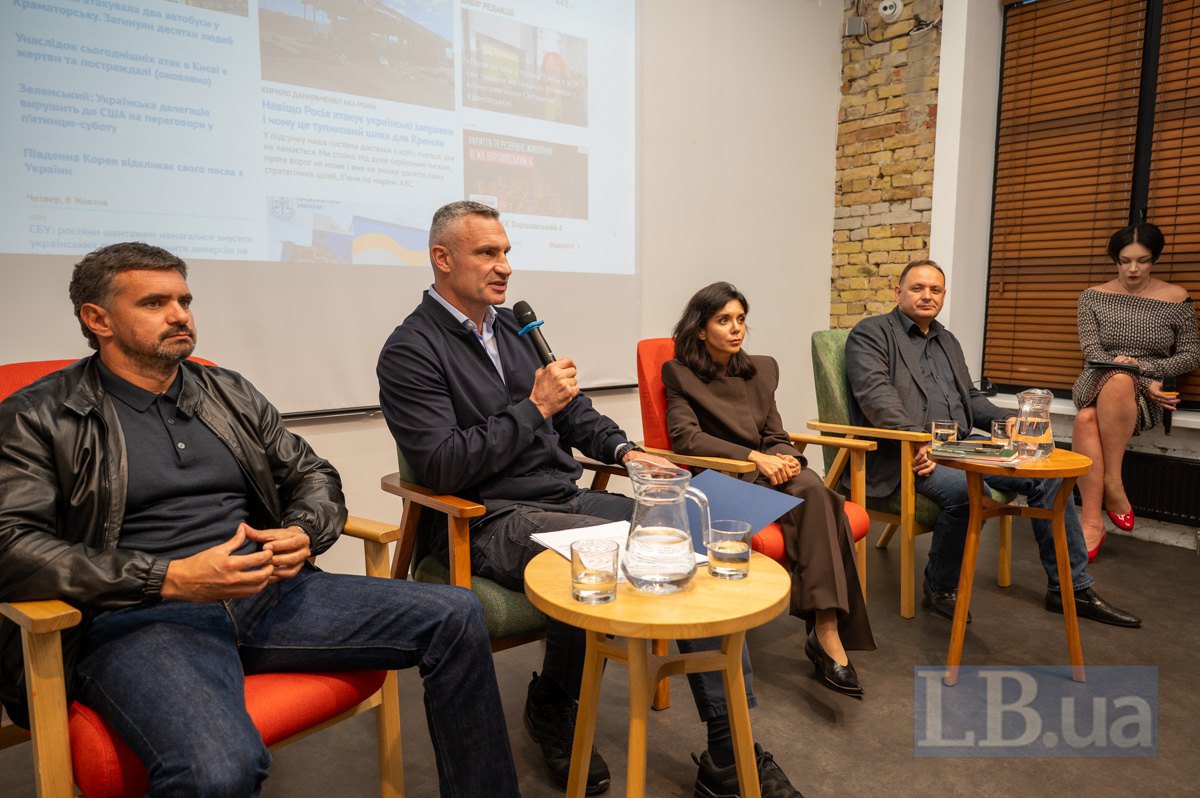
“We met with representatives of big business, invited more than 30 companies and spoke with them. They are ready, within the timeframe announced by the state leadership, to equip shelters so that business can operate. But, frankly, many medium-sized or small businesses will not be able to do this. And here we need to look for a solution, because it will mean the destruction of business. People will be left without jobs. Social tension and unemployment will rise. And that is what Russia wants. Its tactics are linked to this.
You remember: previously there were massive attacks once a week, but now they launch one drone, then 15 minutes later another, and another. And so continuously. So that the economy stops and chaos begins,” the mayor of the capital says.
He recalled that 4,300 shelters of varying levels of protection are operating in Kyiv. And he believes the authorities should not, at their own discretion, shift onto businesses the need to build additional shelters, so the resolution should be refined.
“A Solomon-like decision is needed, because a large number of businesses are simply incapable of doing this,” the mayor concluded.