





During the crowd surrounding of the building used by the 1st Corps of the National Guard in Petropavlivska Borshchahivka, 29 streamers were at the scene at the same time, sharing video on social media. Information about what was happening spread very quickly, and those involved in the incident included, among others, children and young people below mobilisation age.
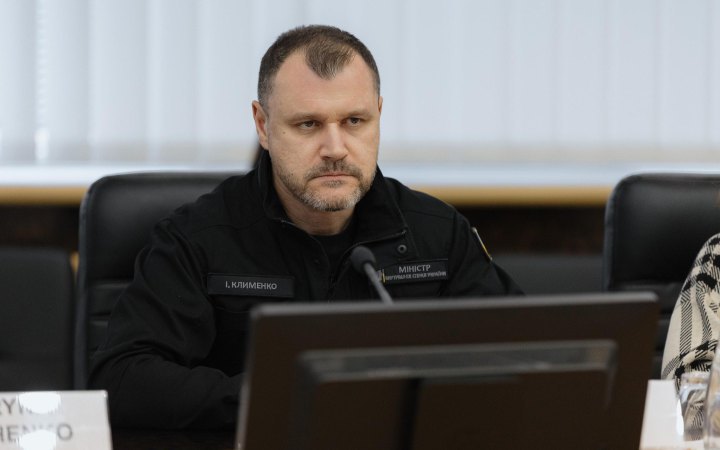
RNBO Secretary Ihor Klymenko said this on 6 November while speaking to journalists, in response to a question from an LB correspondent. He noted that the issue of mobilisation remains one of the most sensitive for Ukrainian society.
“It quickly inflames society. Unfortunately, in information terms, over all this time we have effectively lost the mobilisation narrative. Who exactly? Probably all of us together. And against this backdrop, groups like this so-called ‘doctor’ appear. These are people who simply make money. In other words, an order comes in and they carry it out. These are fairly well-organised groups. The state definitely needs to do better at identifying and preventing such provocations, especially during wartime,” Klymenko said.
Context
In the village of Petropavlivska Borshchahivka, unrest broke out near a building where servicemen from a unit of the National Guard of Ukraine were staying. Law enforcement officers arrived at the scene, and later NGU Commander Oleksandr Pivnenko came. Inside the building were mobilised personnel and several servicemen who had returned after going AWOL.
A crowd quickly gathered outside the building with the servicemen because calls to help “injured” mobilised men were being actively spread on social media. It emerged that the call to the police reporting that access was being denied to a citizen was made by a woman who introduced herself as an ambulance medic, but she was not one. The aim was to “extract” one of the servicemen who had returned after going AWOL.
The crowd demanded that the mobilised servicemen on the premises be handed over to them. After being refused, they tried to get inside without authorisation, and clashes with law enforcement followed. Some people behaved aggressively, including towards Commander Pivnenko. The head of the President’s Office, Kyrylo Budanov, came to look into the situation. Pivnenko took people who introduced themselves as relatives of the mobilised men into the building and showed them that there was no “torture chamber” there, as had been claimed on social media. The conflict continued until late at night.
The woman who posed as an ambulance medic and made a report alleging that people were being tortured in the basement was detained. It emerged that three days before the incident she and a driver had carried out reconnaissance of the area near the building used by the NGU. This woman had purchased an ambulance vehicle in advance and dressed in a medic’s uniform.
President’s Office head General Budanov said that by the time he arrived, three cars had already been smashed and a crowd of around 500 people had gathered. He said there had been outside influence on these events.
The 1st Corps of the NGU condemned the unlawful actions against NGU servicemen, while also warning citizens against obstructing the work of military units.