





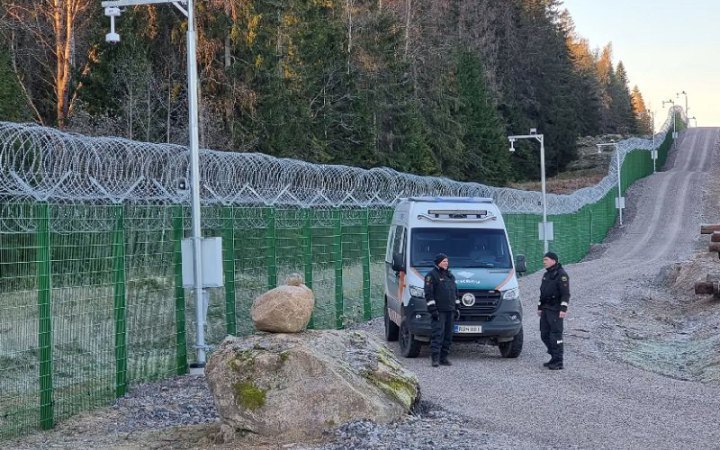
Finland is exploring the possibility of installing anti-tank obstacles modelled on those used in Ukraine to strengthen the defence of its border with Russia. This is part of efforts to reinforce NATO’s eastern flank as Russia rebuilds its military potential.
Finland’s Army Commander, Lieutenant General Pasi Välimäki, said this in an interview with Bloomberg.
According to him, Russia has already begun rebuilding its military capabilities, even as the full-scale war against Ukraine continues. At the same time, Ukraine’s experience shows that extensive defensive lines and anti-tank obstacles can significantly slow an advance. Välimäki said neither side in the war has yet found a reliable way to break through such fortifications and restore large-scale manoeuvre operations.
Finland shares a 1,340-kilometre border with Russia. That is roughly half of NATO’s land border with the Russian Federation. However, the Finnish military must take into account the specifics of the local climate and soils.
"Conditions in Finland are more challenging. If we build fortifications and dig anti-tank ditches or obstacles to the same depth as in Ukraine, how long will it take for nature to turn them into artificial ponds?" the commander said.
Välimäki also noted that Russia is gradually replenishing its weapons stocks. In particular, T-90 tanks, BMP-3 infantry fighting vehicles and 2S19 self-propelled howitzers are being delivered to storage sites.
According to the commander, Finland cannot stop Russia’s rearmament, but it aims to deter an attack by convincing Russia’s military leadership that such an assault would fail.
After the start of Russia’s full-scale war against Ukraine, Finland raised its combat readiness and over two years held training call-ups for 60,000 reservists. The country is also continuing to develop its conscription system and territorial reserve. In the event of war, the Finnish armed forces could mobilise around 280,000 troops.
Finland is currently carrying out a major reform of its land forces that will run until the end of the 2030s. It includes modernising equipment, force structure, combat readiness and the ability to sustain combat operations over a long period.
In addition, the country is expanding its fleet of K9 self-propelled howitzers, upgrading heavy multiple-launch rocket systems that will be able to strike targets at a range of almost 500 kilometres, and preparing to replace BMP-2 infantry fighting vehicles.
The commander stressed that the war in Ukraine has also demonstrated the scale of the air and missile threat. He said it is not enough to simply shoot down missiles and drones — it is important to have the ability to hit the enemy’s launchers before they fire. For Finland, this is a difficult issue, as it involves strikes on targets on Russian territory.
- The President of Finland and the Foreign and Security Policy Committee discussed the issue of banning Russian citizens from entering the country.