






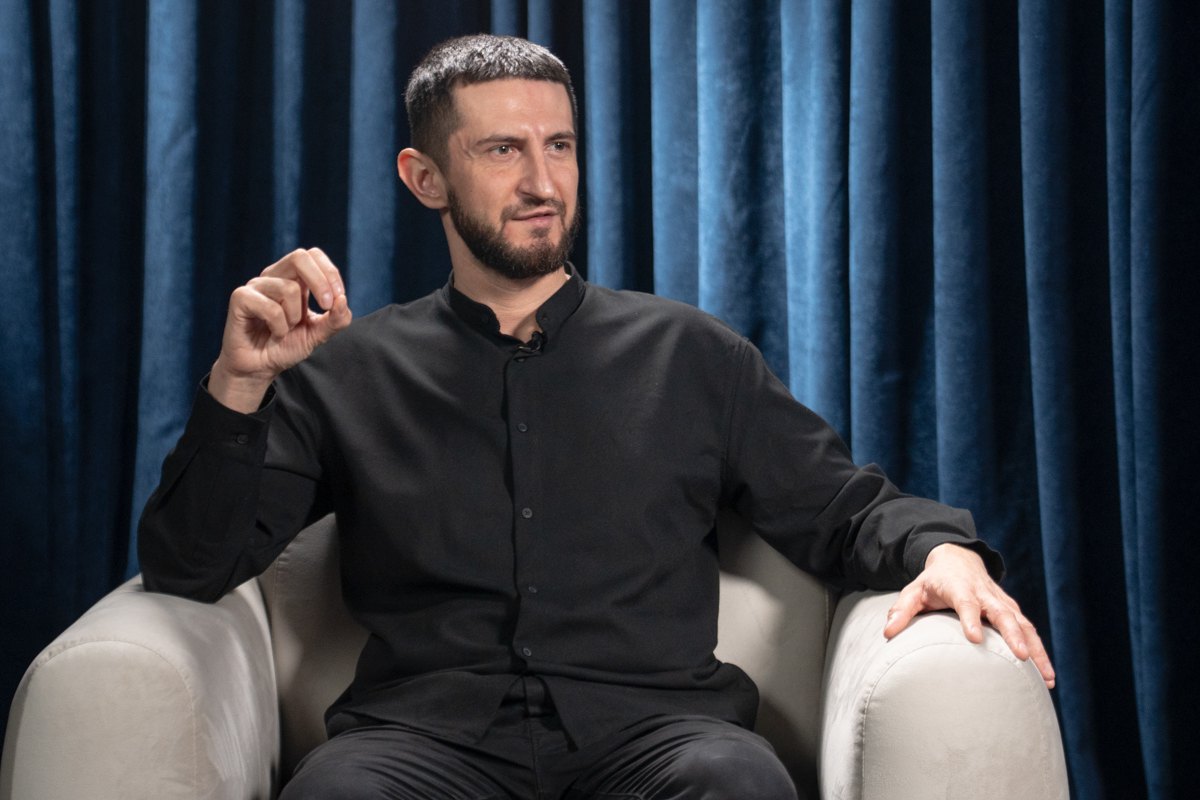
“We speak too little about population replacement in Crimea”
Russia’s occupation of Crimea has lasted more than 11 years. What key phases would you highlight? What trends have emerged as a result of the aggressor’s actions? And what strategic tasks does this create for Ukraine?
If we look at Crimea over these 12 years, the occupation is essentially a recolonisation of the peninsula. This is not the first time Russia has tried to colonise Crimea and turn it into “primordially Russian” land — which is exactly how they try to sell it abroad and to their own citizens.
Since 2014, we have seen several stages. The first is the militarisation of the peninsula. In 2014, they began reactivating military bases that had been unused under Ukraine, bringing in military equipment and regular troops.
How does this affect Crimea? The Tavrida highway, which they continue to build across the peninsula and boast about, is needed, among other things, to move heavy military equipment.
In the new residential areas appearing in Simferopol, Sevastopol and other Crimean cities, the newcomers are mostly military personnel, FSB officers, and bureaucrats in local administrations who arrive to work in Crimea.
If we look at the overall picture of repression, most of it falls on Crimean Tatars. Russia is deliberately shaping a clear image of Crimean Tatars as terrorists and extremists. I always say that before 2014, there was not a single terrorist or extremist incident in Crimea. These incidents appeared only after the terrorist state arrived and occupied Crimea.
After the full-scale invasion, the repressions have also changed. Many administrative and criminal cases now fall under the charge of so-called “discreditation of the Russian Armed Forces”. Completely absurd and bizarre things happen — administrative cases can be opened against waitresses who danced to Ukrainian songs, someone who listened to Ukrainian music, and so on. Anyone marking their identity or expressing it as part of their Ukrainian identity can be targeted.
Today, the issue of population replacement is crucial in the context of Crimea — and one we actually speak too little about.
Around 70–80 thousand Crimeans have left — not an extremely large outflow. It was a brain drain: young professionals, students, entrepreneurs, politicians, artists, journalists, IT specialists, and others left.
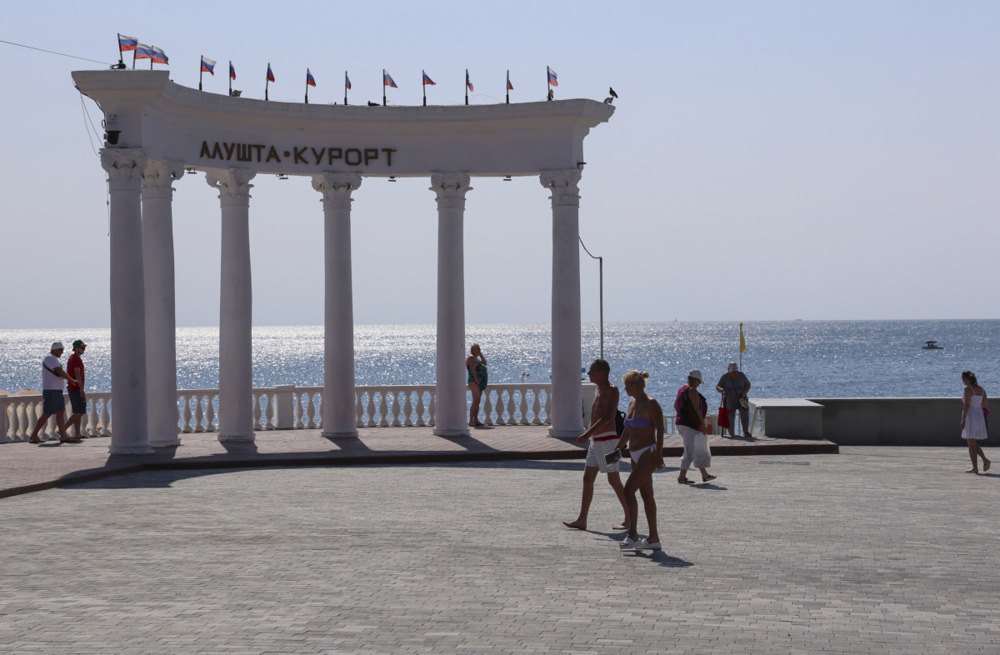
About 800,000–900,000 new residents have entered Crimea. These include security personnel, people trying to build businesses on the peninsula, and a strong Chechen presence. There are also doctors and teachers — Russia has federal programmes that offer them relocation payments, high salaries, and housing if they move to Crimea. And there are pensioners, mostly from Russia’s cold regions, who say: “We want to spend our old age here because of the climate, the sea, the sun.” This, too, is part of the colonisation of the peninsula.
I often joke that every Crimean Tatar — like every Ukrainian today — has to be a historian to explain the roots of the war and their country’s context. Before the first annexation of Crimea by Catherine II in the 18th century, 95% of the population were Crimean Tatars. Now it is 13–15%.
Are Crimean Tatars leaving occupied Crimea? What migration waves have there been since 2022, and what caused them?
Yes, there has been an outflow. After the first major wave in 2014–2016, another significant wave came in September 2022, linked to the covert mobilisation of residents of occupied territories into the Russian army.
Crimean Tatars — mainly young people and couples — left for other regions of Ukraine and abroad. Today we can say that new Crimean Tatar communities have emerged in Ireland, Germany, Canada, and, naturally, Türkiye, which has had the largest Crimean Tatar diaspora since the 19th century.
By 2025, we are seeing some people return to Crimea. It is very difficult to rationalise this. Family ties, emotional bonds, and what I call “Crimean Tatar-ness” play a major role. You can fully feel like a Crimean Tatar only in your homeland, where you have an ecosystem for understanding and speaking your native language, where you are immersed in your culture and cultural practices, and where the strength of the community and the nation is present.
Another factor is family. Young people return because it is important for them to live in the same shared space as their parents. This does not mean the same house necessarily, but the same city, village — the same Crimea.
If we look deeper, we see the trauma that Crimean Tatars still have not fully processed — the 1944 genocide, the deportation, when all Crimean Tatars were expelled from the peninsula and resettled across different regions of the Soviet Union. I, for example, was born in Uzbekistan. Returning was extremely difficult.
Today, if Crimean Tatars leave en masse again, there is a real fear that our homes will once more be taken over by new colonisers.
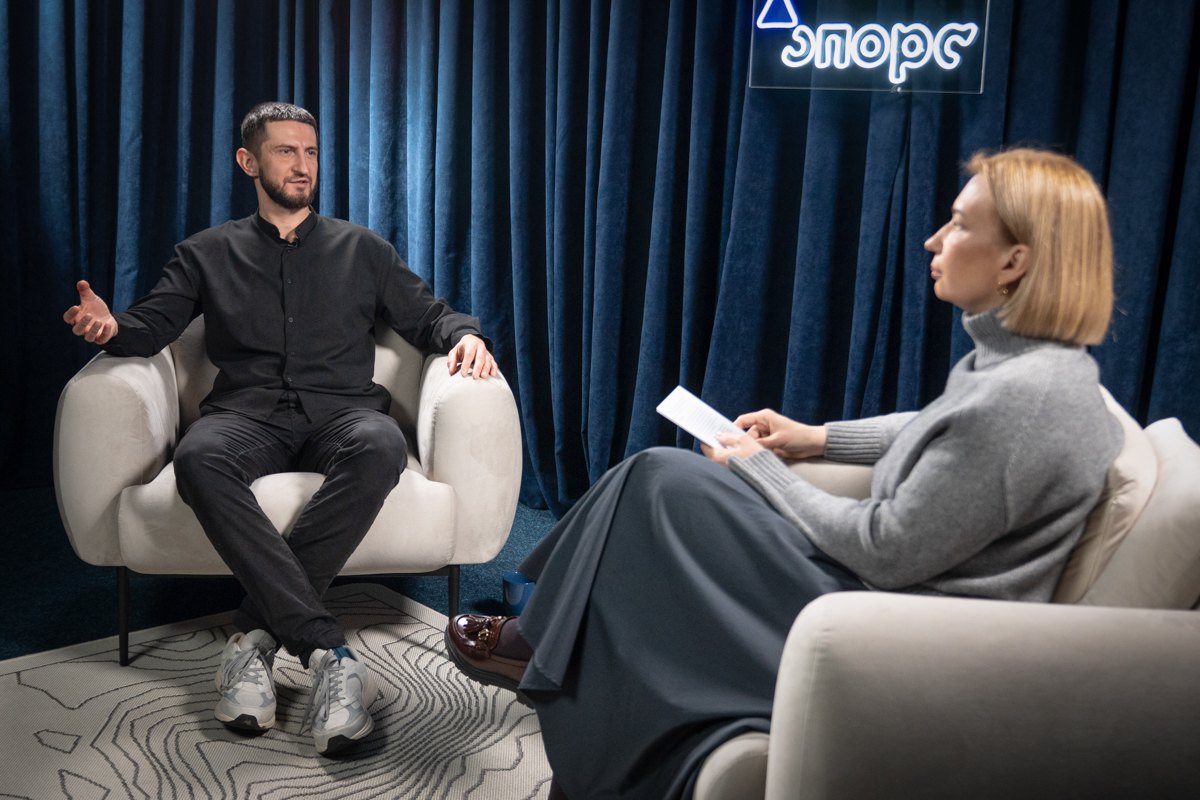
“Since 2014, Crimean Tatars have been constantly targeted with bribery, intimidation, and the insertion of Russian agents into their community.”
How do Crimean Tatars coexist with newly arrived Russians, and how do they cope?
Crimean Tatars may call them different things — “occupier,” “coloniser” — but they understand that these are people they will never be able to trust.
Occupation destroys trust and human connections, planting fear between people. That is why Crimean Tatars mostly rely on their own close circle and prefer to deal only with their own community. “One of ours to one of ours!” — this principle shapes everyday life for Crimean Tatars on the peninsula today. Crimean Tatar businesses, teachers, doctors — it is a system where you can trust only your own. It is hard for us even to imagine, but life under occupation, under an authoritarian machine, is a constant struggle for survival.
Do you see attempts by Russia to undermine the unity of Crimean Tatars through intimidation, bribery, and the integration of agents? How noticeable are the consequences? Why must we resist this?
I understand that time is working against us. Crimea and mainland Ukraine — the free parts of it — are living in increasingly different realities. This is something we must take into account.
If we don’t maintain strong connections with the peninsula, then after de-occupation, when we return to Crimea, it will be extremely difficult to synchronise again.
I really don’t want my fellow citizens, after de-occupation, to perceive me as some sort of new coloniser or outsider arriving to tell them how to live. That’s why, for me personally, it is crucial that our projects involve local experts — and the best ones, especially in cultural and educational fields, are mostly in Crimea.
Since 2014, there has been a constant effort to bribe, intimidate, and embed agents into the Crimean Tatar community.
Can we talk about Crimean Tatar collaborators? Yes, obviously we can. But their number is very small — roughly half a percent of the entire nation may conditionally collaborate with or support the Russian authorities.
Why? Because there is historical continuity. Crimean Tatars don’t suffer from amnesia: we know what it means to live in a democratic country. If we recall Crimea in the 1990s and 2000s, the Mejlis, as the key Crimean Tatar institution, always cooperated with Ukrainian national-democratic movements, such as the People’s Movement of Ukraine. For a long time, the Crimean parliament even had a “Kurultai–Rukh” faction. It was the strongest pro-Ukrainian faction — opposing pro-Russian groups like “Sevastopol — Crimea — Russia” and “Russian Unity.”
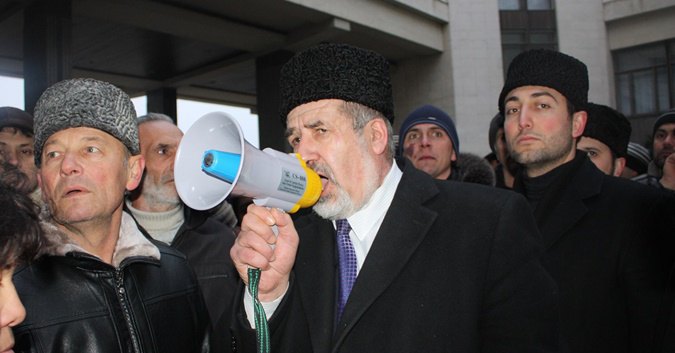
So some collaborators have in fact been marginalised by the Crimean Tatar community, because they engage in actions that run counter to the community’s values and priorities.
It is important to note that Russians are trying to saturate the Crimean information space with their own messages. The Russian occupation authorities have created a media holding that broadcasts Moscow’s propaganda in the Crimean Tatar language — with its own TV channel and radio.
They are doing the same with Ukrainian, publishing a Ukrainian-language newspaper. On the one hand, they pretend to uphold principles of multiculturalism; on the other, they are clearly pushing their narratives. That is why our work on shaping the information agenda is so crucial today.
“One of our key tasks here is working with the new generation in Crimea.”
Could relocating at least a small group of young Crimeans to Ukraine help foster future community leaders who, after de-occupation, will be able to communicate the Ukrainian idea more effectively, given that they also have lived experience of occupation?
This needs to be done now. In my view, one of our key tasks is working with the new generation in Crimea, because these are the people who will one day be making political, economic, and cultural decisions in and about Crimea.
Is the state actively pursuing this work? Unfortunately, no — and that is a major problem.
Sometimes NGOs take on this role, but after 2022 access has become extremely limited. In our projects before 2022, we regularly engaged Crimean residents and brought them to Ukraine. Today that is nearly impossible.
However, COVID taught us to rely on online tools. And now the question is whether we have enough high-quality, relevant, meaningful content to share with people in Crimea — and they do need it. There are social networks that people on the peninsula follow, and that’s how we stay aligned in our contexts and messages.
Turkey continues to support the position that Crimea is Ukraine. Do you see opportunities for cooperation between Ukraine and Turkey in this regard? Or does Turkey have its own interests that may not necessarily align with the Ukrainian perspective?
Today, Turkey has a Crimean Tatar diaspora that brings the Ukrainian context into the country’s internal political agenda. An important step was the appointment of Nariman Dzhelyal as ambassador to Turkey.
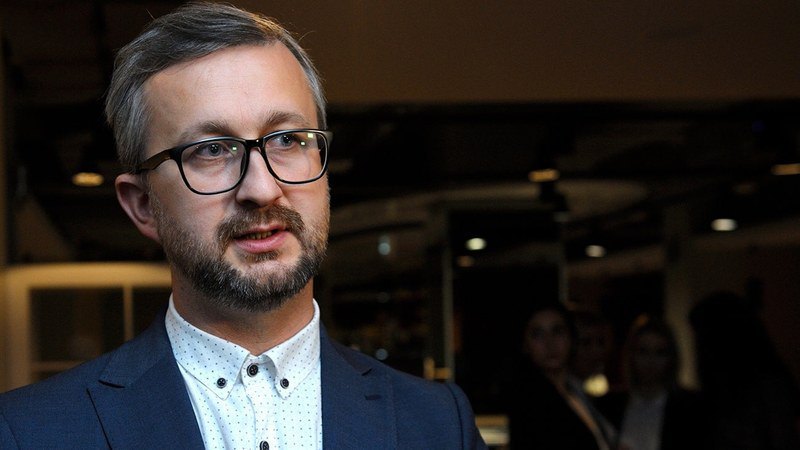
I also see how Turkey is trying to build ties with Ukraine while not severing its ties with Russia. And here, I believe the responsibility lies more broadly with Europe — in engaging the Turkish political agenda within the European one, and vice versa.
It is important for us not to lose Turkey. For Turkey, feeling like a regional leader matters. That is why the role of mediator is, I think, very comfortable for them today. When we speak about exchanges or various military matters, Turkey is involved.
At the same time, Turkish companies that manufacture drones — such as the well-known Bayraktar — not only publicly declare their support for Ukraine, but work directly with Ukraine, not with Russia.
What Turkey envisions for Crimea, what Ukraine envisions, and what Crimean Tatars themselves envision — these are important questions. I remember that before the occupation, we were often told that at the first convenient moment we would break away and want to join Turkey. Obviously not.
Looking at the history of Crimea, there were different periods involving the Ottoman Empire, which was also present on Crimean territory. So today, for Crimean Tatars, the most important thing is to bring back two flags to Crimea: the Ukrainian flag and the Crimean Tatar flag.
“For Crimean Tatars, one of the key challenges is preserving their identity.”
Could Turkey take part in the liberation of Crimea under NATO auspices?
I would very much like that. Turkey understands the situation of Crimean Tatars extremely well. It is actively engaged and is not afraid to state clearly that Crimea is an occupied territory. So yes — but, honestly, we have a lot of homework to do.
For Crimean Tatars, one of the key challenges is to preserve their identity: the language that is now being lost, the culture that is nearly impossible to develop under occupation, and the political institutions that are banned on the peninsula. We have to rebuild and reshape all of this here, on Ukraine’s free territory.
If we do not do this now — if we do not define, ourselves, a vision for the future of Crimea and the Crimean Tatars — someone else will once again do it for us.
This is a major task for Crimean Tatars, for the Ukrainian state, and for civil society engaged with Crimean issues, because time is working against us.
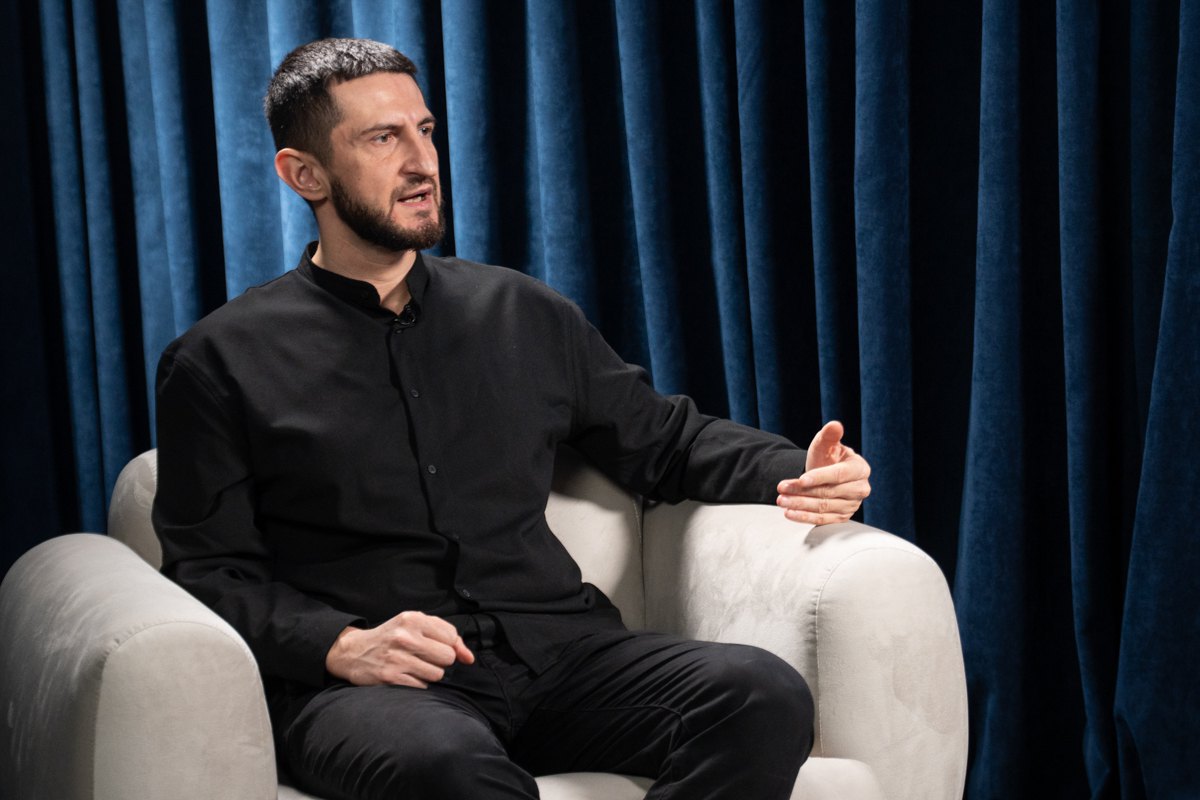
‘In some so-called Global South countries, the understanding of Ukraine is not just limited — it’s negative’
The Ukrainian Institute is exploring opportunities for cultural cooperation with countries of the Global South. How do you find common ground with them? How is Ukraine’s cultural diplomacy changing?
At the Ukrainian Institute, we have launched a major programme of work with countries in Asia, Africa, and Latin America. We deliberately avoid calling them the Global South, because they are extremely diverse. We began engaging with them at the end of 2023 — and that was late. As a state, we only started placing more emphasis on these regions after the full-scale invasion. Meanwhile, Russia had been working there throughout the entire period of Ukraine’s independence, shaping perceptions of Ukraine through its own lens.
When we begin systematic work in these countries today, we often enter an environment where the understanding of Ukraine is not zero, but negative. It is very challenging — but it is changing.
We are now presenting a series of studies. The first focused on Africa; the next will examine Latin America, India, and Indonesia.
Before working in any particular country, we must understand the local context, recognise red flags, know what people there understand about Ukraine, and identify what connects us. Once we started, we realised there were far more points of connection than we had expected.
In Brazil, for example, the issue of ecocide is extremely important. The deforestation of the Amazon is something that deeply concerns Brazilian society. We approached them through the theme of ecocide, explaining how the war impacts Ukraine’s environment and land — and, in my view, we built a very effective campaign. In South Africa, we can work with the topic of child deportations — it is a theme that resonates strongly there. In Indonesia, we focus on multiculturalism and talk about Ukraine as a country where a political nation is taking shape — something based not on ethnicity but on a shared vision for the country’s future. Such projects are understood quite naturally.
Ukraine has very limited resources, so we rely on two approaches. The first is to be present at key artistic, academic, and civil society platforms, ensuring that Ukraine’s voice is heard. The second is to foster collaboration between Ukrainian cultural actors, academics, educators, civil society — and local partners. In my view, this formula works rather effectively.
As for cultural diplomacy, it is certainly not about flashy moments like a concert tour by a Ukrainian band. It is about two-way engagement and building long-term relationships.
I have come to a simple formula for why we do this. People often say culture is a component of security. But many who say this still don’t fully understand it, because culture used to be seen as background, a façade, entertainment.
Today, cultural diplomacy — by building partnerships — changes how Ukraine is perceived and builds trust. And trust translates into assistance and support. I can see that this formula works. Resources are limited, but we still manage to find the places where our efforts matter most.
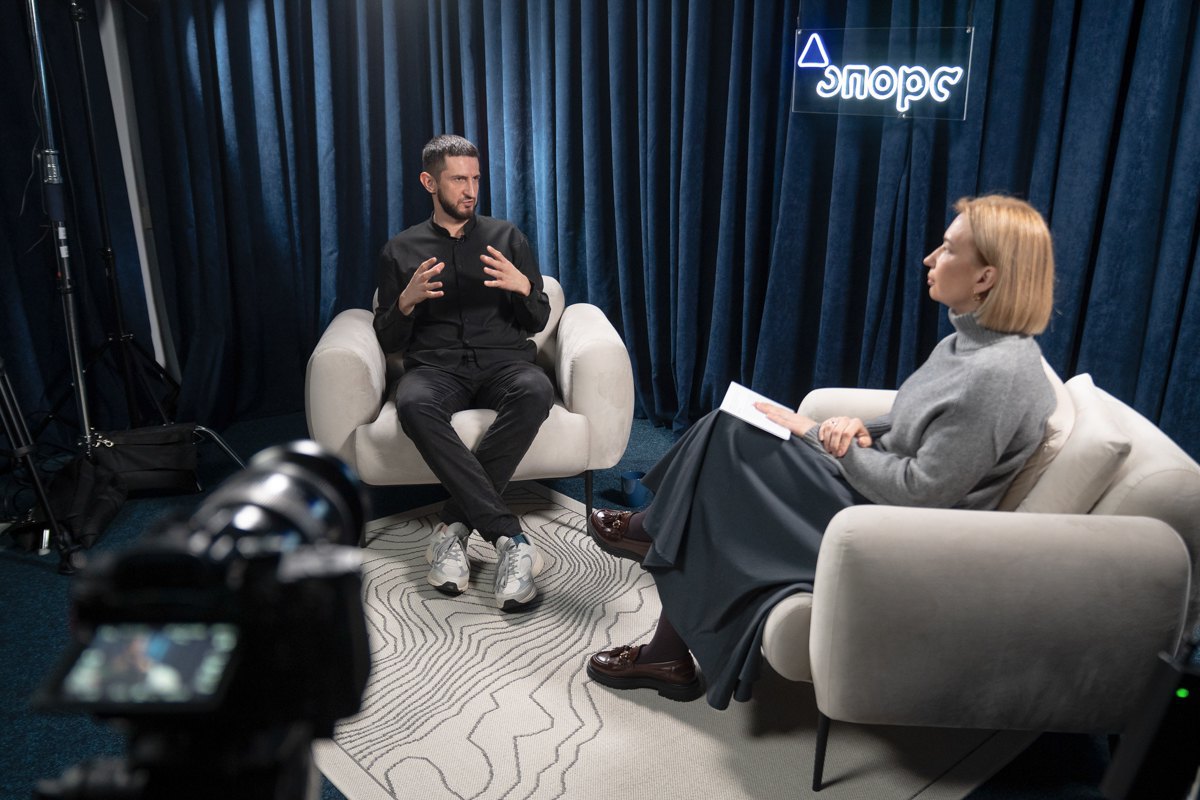
‘We are now fighting tooth and nail for our own agency’
Can Ukraine build cooperation with countries outside the European context on the basis of shared values, particularly democratic governance?
I believe this is fundamentally about values. We cannot — and should not — try to compete with Russia symmetrically.
So our actions must be asymmetric. We must look for local partners, align values, and acknowledge that although we are geographically distant, we are fighting for the same things many of these countries fought for a hundred, a hundred and fifty, even two hundred years ago. Today, values such as dignity and freedom — which we communicate to the world — are not empty words for us.
The countries we are talking about, those we work with, have fairly democratic governments, and they understand these values. But they have been told all their lives that Ukraine is racist, Nazi, entirely devoid of agency — a country permanently within Russia’s sphere. They never heard us; they perceived us only through Russia’s prism.
Now we are fighting tooth and nail for our agency. It is crucial to reclaim our voice there. That is why we look for historical figures or events that resonate both with us and with a given country.
At the same time, this does not mean we focus solely on those states — we also need to work more actively with our neighbours.
‘We are strengthening Ukrainian and Crimean Tatar studies abroad’
Do you sense a rollback in Europeans’ understanding of the dangers of Russian cultural influence? For example, the recent performances of Anna Netrebko — a representative of Putin’s cultural system — on leading European stages, despite widely known photos of her with Oleg Tsaryov and her support for separatists of the so-called DNR. What can be done beyond statements and protests? Is cancel culture so unacceptable for liberal democracies that everyone is given a platform — including Putinists?
To be honest, we expected this.
It is important to understand that Ukraine in 2022 and Ukraine in 2025 are two very different realities. In 2022, we fully separated Ukrainian culture and identity — in the minds of our European partners, our European family — from Russian culture.
«In 2022, cancel culture worked, but now it barely does. We understand this, so we’ve reshaped our approach. Back then emotions were the driving force. The further we go, the more we rely on reason.
In particular, the Ukrainian Institute studies so-called Russian cultural diplomacy. Recently we presented research on how Russia uses culture to influence the agenda in Germany and members of the Bundestag. Now we’re preparing similar research on France to explain our position with solid arguments. We’re working with a thousand different institutions worldwide.
Ukrainian cultural diplomacy and Ukrainian culture are values we transmit. Russian culture is a tool — followed by propaganda and militarisation. We demonstrate this clearly.
As for Europe, it’s crucial to work with academia and universities. When speaking about soft power, the hardest thing to change now is academic knowledge. Slavic studies have mostly been Russian studies; we remained in a blind spot.
Now, through the Global Coalition of Ukrainian Studies and the Ukrainian Institute’s programme supporting academic initiatives, we are strengthening Ukrainian and Crimean Tatar studies abroad. Because this is where future business, intellectual, and political elites are shaped — the ones who will tomorrow make decisions about Ukraine or Europe as a whole.
Returning to Netrebko and others like her, it’s important to show what narratives they bring in. Russians use their favourite “sandwich principle”: in 100% of their messaging, they offer 80% very correct, value-based European messages and 20% entirely Russian, Kremlin narratives.
How do we avoid losing to the “good Russians” who insist that Putin is to blame for the war, not Russians themselves?
Right now, it’s essential not to fear asking publicly — at platforms where “good Russians” are present — why they talk only about Putin as the sole evil and deliberately push the false idea that Putin created this society, and not the other way around, that Putin is a product of this society.
I believe Ukrainian civil society experts play a major role in articulating these questions at security, cultural, and social events where “good Russians” appear. We must be well-reasoned and ready for a tough discussion, because in the eyes of our European partners we must appear intelligent and rational. Emotions no longer work.
Therefore, it’s crucial to build horizontal connections and work with European institutions — this is part of Ukraine’s sovereign voice. If we act as victims, we’ll merely be pitied, and then ignored. What matters is gaining agency.»
«Is it possible to counter the growing influence of Russians in exile who publicly oppose sanctions and reject the idea of collective responsibility for the war and war crimes? How can we effectively convey to partners that there is no “other Russia”?
I believe we have a chance. We need to build strong coalitions. Fortunately, we’ve recently become more active with the Nordic countries, with whom we had no systemic cooperation before 2022. They believe that shaping a new understanding of European security must be discussed together with Ukraine.
The “good Russians” will definitely return, but again we must ask direct questions — from “Whose is Crimea?” to reparations. How do they envision genuine federalisation of Russia, if they do at all?
Because even when we talk with our European colleagues about federalisation and the agency of Russia’s indigenous peoples after the Putin regime, you can still see fear in their eyes.
“In difficult countries like Hungary, we can work through horizontal networks”
The Ukrainian Institute is successfully expanding cooperation in France, Germany, and the Netherlands. This creates opportunities to broaden Ukraine’s support landscape. How do you plan to scale the institution’s activities?
Culture decodes us in these countries, so building long-term ties is a priority. Not just arriving with a theatre production, but ensuring that Ukrainian theatres collaborate with Dutch ones or that Ukrainian voices are represented there.
Today, as we emerge from the shadows, European audiences see that Ukraine has its own brilliant music, cinema, literature. And this needs to be strengthened further. Physical presence of our cultural managers is key.
Obviously, we cannot open representative offices everywhere at once, but we are considering Poland and other European and non-European countries where the Ukrainian Institute’s presence is essential. When we have an office there, this means constant systematic work.
From December, for example, we will launch a major cultural season “Ukraine — France”. This is an important element of sustained visibility.»
«It is equally important to work with North America and to promote Ukraine and Ukrainian culture there. That is why I see expansion as essential.
We face the question of how to prioritise our work. There are key countries where we can engage and potentially open offices, because it’s not only about funding — it’s also about context.
But in difficult countries, such as Hungary, where the political agenda is openly unfriendly toward Ukraine, we can rely on horizontal connections — civil society, cultural actors. That’s how we operate there, and this is what shapes the future. Again, this is not about a bright flash that will impress today. We must learn to think long-term and play the long game. I wish this mindset to all of us — the state and civil society alike.
“Abroad, a new wave of diaspora brings the context of modern Ukraine”
How does the diaspora contribute to cultural diplomacy?
We see a great deal of capacity within our diaspora worldwide — both the older communities and the new wave. The diaspora essentially acts as a carrier of Ukrainian messages and narratives in other countries and societies.
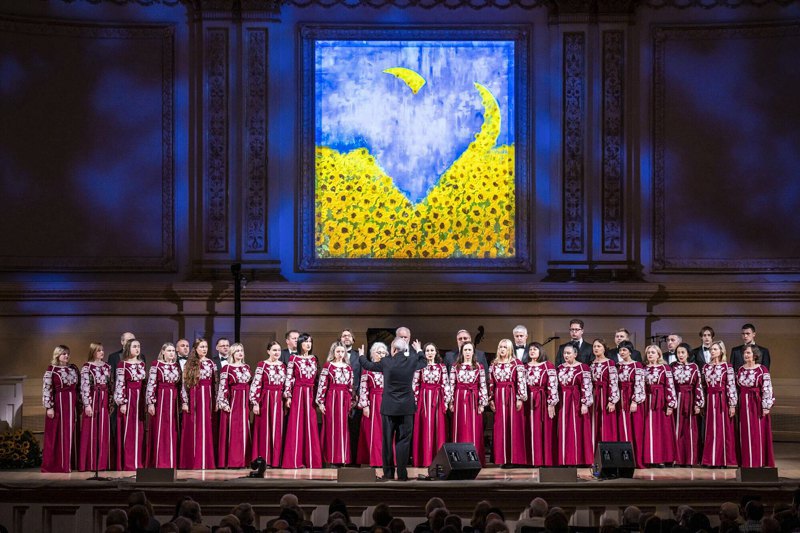
We work with the diaspora actively. For example, one of the biggest projects of 2022 — the return of “Shchedryk” to Carnegie Hall in New York — was organised together with the diaspora organisation Razom for Ukraine.
Recently I returned from Argentina, where we organised a major collaboration between DakhaBrakha and Argentine musician Chango Spasiuk at a key venue in Buenos Aires.
It also matters how the diaspora organises an event. What I appreciate is that they often don’t just say what needs to be done, but: “We are ready to help here, here, and here.” This partnership — which we lacked for a long time — is finally beginning to take shape. In part because a new wave of diaspora is emerging abroad, bringing with it the context of modern Ukraine.»
«If we speak about the older waves of diaspora — those who left in the early twentieth century — their focus is trauma, for example the Holodomor. You often visit diaspora organisations and see exhibitions, lectures — this is also important to maintain and preserve. But the new arrivals speak a great deal about the current war, about the challenges of occupation — the contexts expand, and there are more of them.
The diaspora also influences the political agenda through work with local parliamentarians and officials. I see how strongly this works, for example, in the United States. It can also work in Latin American countries and in European countries such as Poland.
Do cultural events abroad find their foreign audience?
For us, the key audience is not the diaspora. The diaspora is our partner, our amplifier of Ukraine’s messages. Our work is aimed primarily at local audiences.
When we organise events with local partners, they are not just cultural events — they are acts of cultural diplomacy.
We work, for example, with classical music. It is important for us that major concert halls and philharmonics perform Ukrainian composers. That is why we print, deliver, and donate scores by Ukrainian composers.
It is also important that Ukrainian films reach viewers in their native languages, so we promote them at various festivals.
The same goes for Ukrainian literature. We select those who already have translations and integrate them into major festivals where they are heard in the audience’s native languages.
Events with and for the diaspora are held in cultural or educational centres, but they are additional to our main work. Our core goal is to change how a country perceives Ukraine.
The project Territories of Culture is produced in partnership with Persha Pryvatna Brovarnia and explores the history and transformation of Ukrainian cultural identity.