






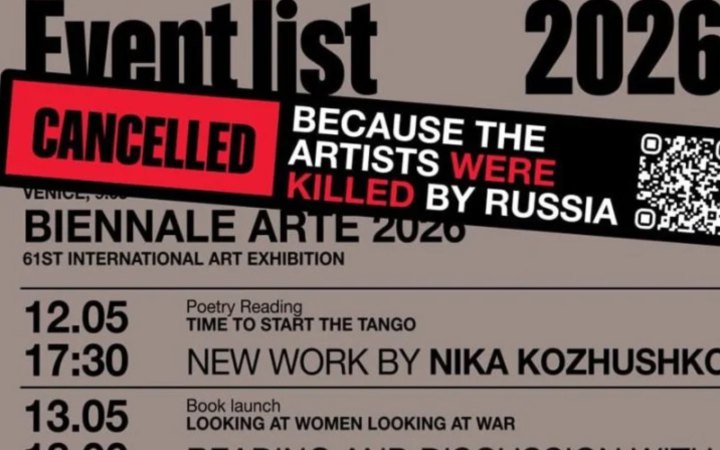
As part of the 61st Venice Biennale, the art project Invisible Pavilion was presented. The project consists of art events that will not take place because their creators were killed by Russia.
This was reported on Facebook by Ukrainian journalist, critic and fashion historian Zoya Zvynyatskivska.
“This is an alternative programme for the Biennale that could have taken place had the participating artists been alive,” she noted.
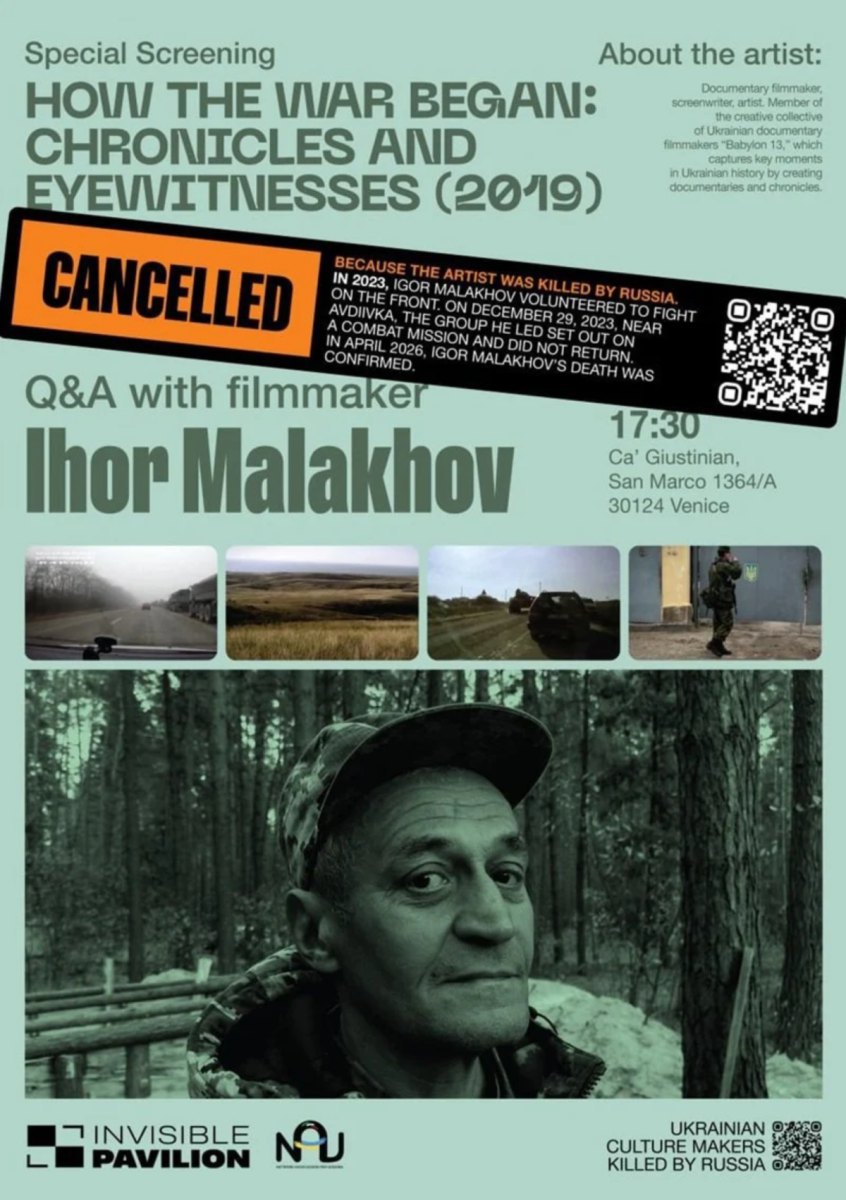
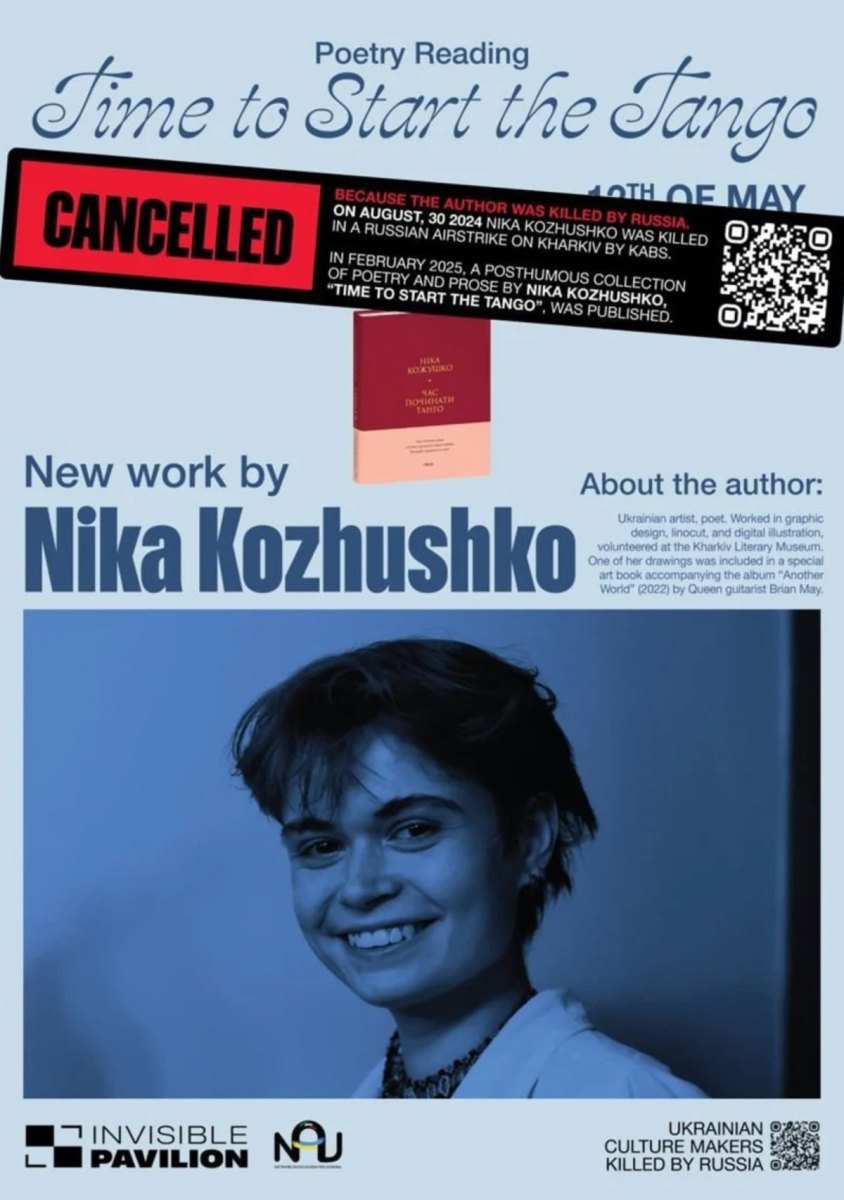
The project was initiated by NAU – Network Associazioni per Ucraina. Posters, styled to resemble advertisements for cultural events – exhibitions, film screenings, discussions and presentations – have been placed in various locations across Venice. Each one lists the artists’ names, the event format and the date, but all are marked “CANCELLED because the author was killed by Russia”.
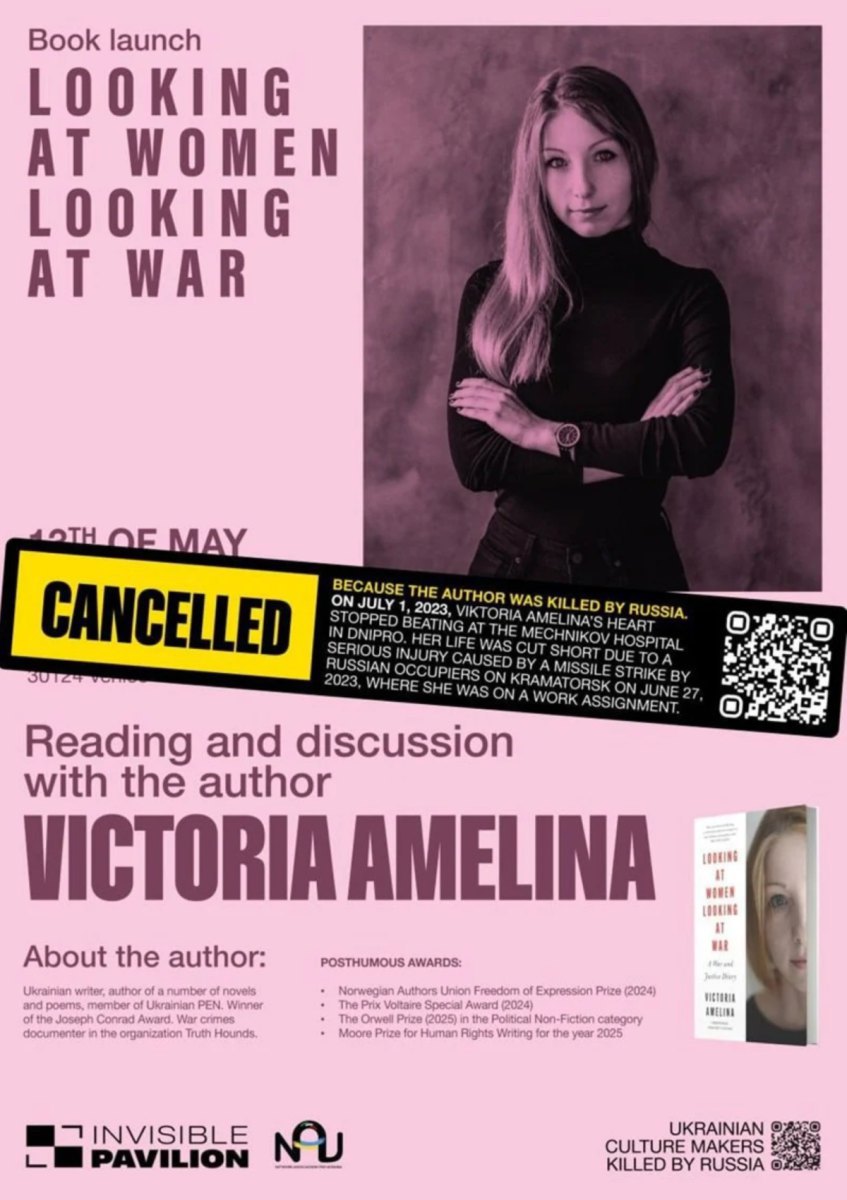
According to Zvynyatskivska, the project is an Invisible Pavilion, which has no physical space and is not marked on the Biennale map.
“This is an imaginary parallel programme of the Biennale, consisting of events that will never take place,” she added.
The project is dedicated to Ukrainian artists, writers, poets, directors and musicians who have died during the full-scale war.
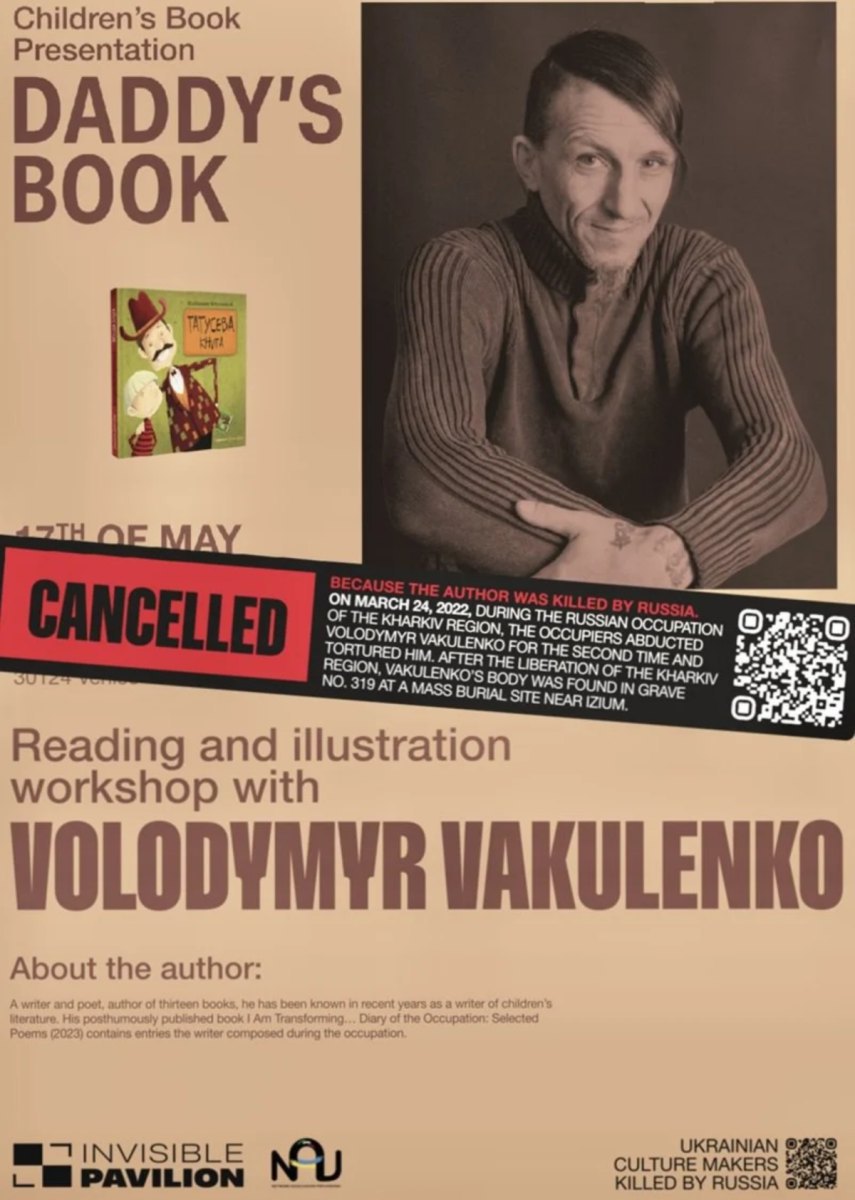
The posters appeared in Venice during the Biennale’s press preview (6–8 May) and form a dispersed installation across the city. The project has no physical pavilion: QR codes on the posters lead to a digital archive containing the artists’ stories and their works.
Ukrainian PEN is compiling a list of deceased Ukrainian cultural figures. Currently, the list contains over 270 confirmed names.
- This year, for the first time since the start of the full-scale war, Russia has been included in the official list of participants at the Venice Biennale. The Russian Federation’s national pavilion will present a project featuring over 50 young musicians, poets and philosophers from Russia and other countries, including Argentina, Brazil, Mali and Mexico.
- One of the themes of the exhibition, A Tree Rooted in the Sky, will be the idea that ‘politics exists in temporal dimensions, whilst culture communicates in eternity’. The commissioner of the Russian project will be Anastasiya Karneyeva — the daughter of retired general and deputy director of one of the largest defence corporations, Rostec, Nikolai Volobuev.
- Russia’s participation in the event, scheduled to open on 9 May, is viewed in Brussels as a potential breach of sanctions. The concern is that such participation is funded by the aggressor state and could be used to promote narratives about the international legitimacy of Russian culture.
- Finland’s political leadership has stated that it will not attend the Biennale if the Russian pavilion is opened. However, some civil servants will still visit the exhibition to support Finnish art and culture.
- On 9 May, Europe Day and the official opening day of the Venice Biennale, a protest event titled Biennale of Dissent will take place in Venice, directed against Russia’s participation. This has been announced on the organisers’ pages – Europa Radicale, Associazione Radicale Certi Diritti, Radicali Venezia, Arts Against Aggression.
- Earlier, the European Commission informed the Venice Biennale of its intention to terminate a €2 million contract due to the decision to allow Russian participation.
- Meanwhile, amid the controversy, the Biennale’s international jury is resigning.