






How did you manage to achieve such results during the exercises?
Metys, an officer with the Training Directorate of the 1st Corps of the National Guard of Ukraine Azov: I served as commander of the combined group of the 1st Corps of the National Guard of Ukraine Azov, which comprised crews from the Lyubart and Bureviy brigades. We had a range of tasks during these exercises, but first and foremost, we were there to provide expertise on the development of unmanned systems in Ukraine, as well as to review and assess the unmanned systems used by Sweden and NATO partner countries, many of whose representatives were present.
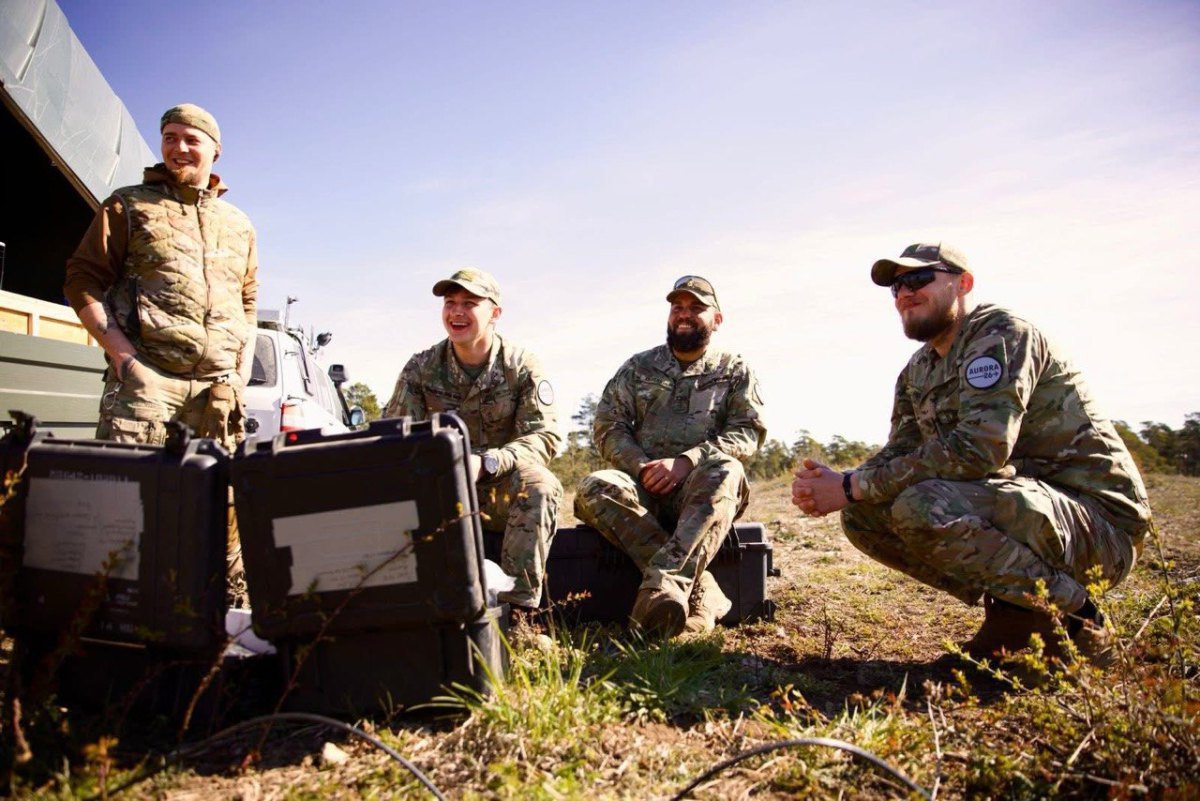
This was not a competition, nor was it about winning. However, we were able to demonstrate our capabilities thanks to a number of factors. Above all, these included our combat experience, the corps’ experience, its command-and-control system, and its soldier-centred approach. We established effective cooperation between our crews and the Swedish crews from the Unmanned Systems Centre. We formed a unified team and adapted the command-and-control system to the realities of modern warfare. This gave us a certain advantage.
Who was part of the simulated enemy team?
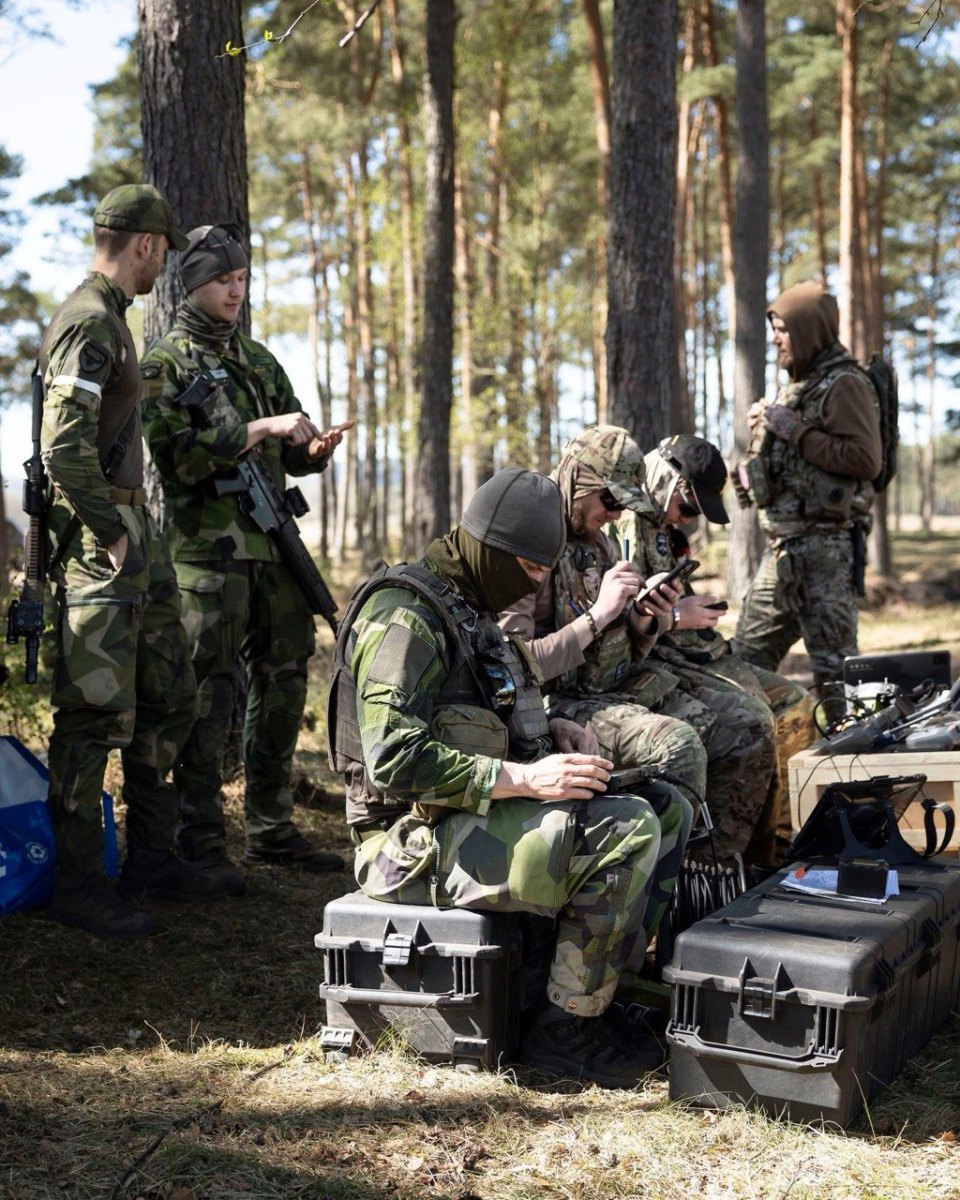
Metys: The participants were constantly rotated so that different sides could interact with one another. Therefore, it would be inaccurate to say that particular countries played the role of the enemy. The various teams, whether acting as the attacking or defending force, changed continuously. Each team included officers and sergeants serving as liaison personnel from different countries around the world. In our sector in southern Sweden, for example, there were air force units from the Netherlands, reconnaissance units from France and a number of other formations.
Did you choose which drones to work with? If so, why did you select those particular models?
Metys: The Ukrainian team arrived at the exercises with its own unmanned systems. It would be inappropriate to mention the commercial names. Our choice was guided by experience; the pilots selected systems with which they were already comfortable working.
Why did we not give preference to foreign systems? Simply because we do not have sufficient experience operating some of them. In certain cases, we do not use them at all, while others are unique to specific countries.
In your opinion, what is the overall level of training among the foreign personnel?
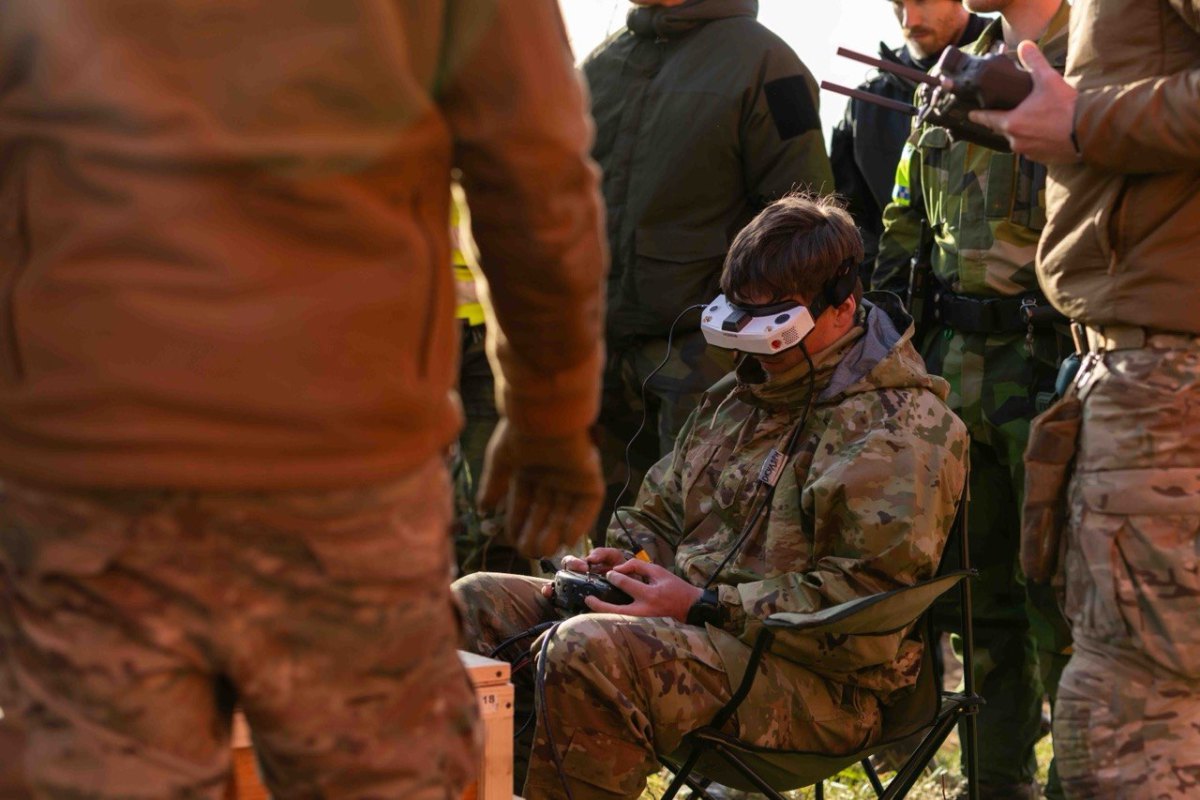
Kvita, commander of the reconnaissance UAV company within the Nachtigall Unmanned Systems Battalion of the Lyubart Brigade: We worked alongside them as one team. They, for example, knew the terrain better, whilst we had more practical combat experience. It was a genuine synergy. Our team structure was already in place, and we collaborated closely with their UAV operators.
What practical experience do foreign personnel have, given that there is no active combat on their territory?
Metys: Unmanned systems are not new to the world. The units we worked with were by no means inexperienced in this field. Sweden itself has participated in various peacekeeping operations abroad. As a result, our partner countries generally have a solid understanding of unmanned systems and their application, which is why we were able to establish common ground very quickly. We did not simply arrive and start from scratch.
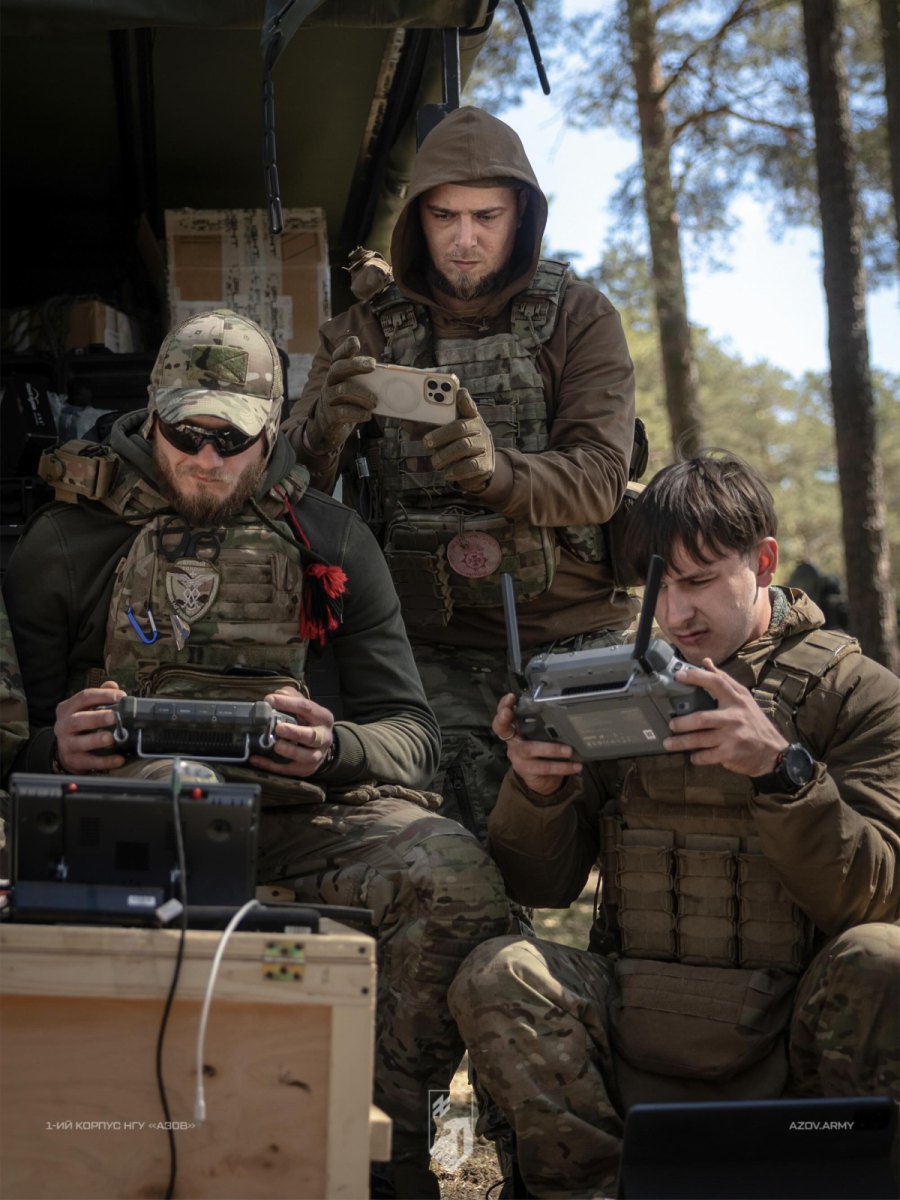
The Swedish personnel on our team, representatives of the Unmanned Systems Centre, were highly knowledgeable professionals. They communicated with us on a professional level. They deployed their drones successfully, we deployed ours successfully, and all of this took place under Ukrainian command during the exercises.
Everyone operated according to their own tactics and doctrine. The one element we shared was the command-and-control system, which was built according to the standards of the Azov Corps.
Do you see any attempts by partners to set up defences against Russian drone attacks in Europe? Do they plan to rely on the involvement of the Ukrainian military?
Metys: It would be better to ask the defence attachés of the various countries. But all countries are now engaged in comprehensive defence. Drones are a component of that defence. The development of unmanned systems in all countries and armies around the world is nothing unique. It’s just that the Russian invasion of Ukraine has shown that this transformation is inevitable.
You held a briefing for the Swedish military and other participants in the exercises, sharing your experience. What did they ask about, and what did they want to learn?
Metys: We held briefings on multiple occasions, with different levels of command. They were structured according to the After Action Review system, that is, a debriefing following operations. We discussed global issues to a lesser extent.
The Ukrainian command and control system and software differ somewhat from those of NATO countries; these are entirely different products. They were interested in how we are building this management system, the system for integrating drones into the military component. Not as a separate branch of the armed forces — unmanned systems — but in general. They have their own experience and approach, but to build the best system, you need to study everything, compare it and then build your own system.
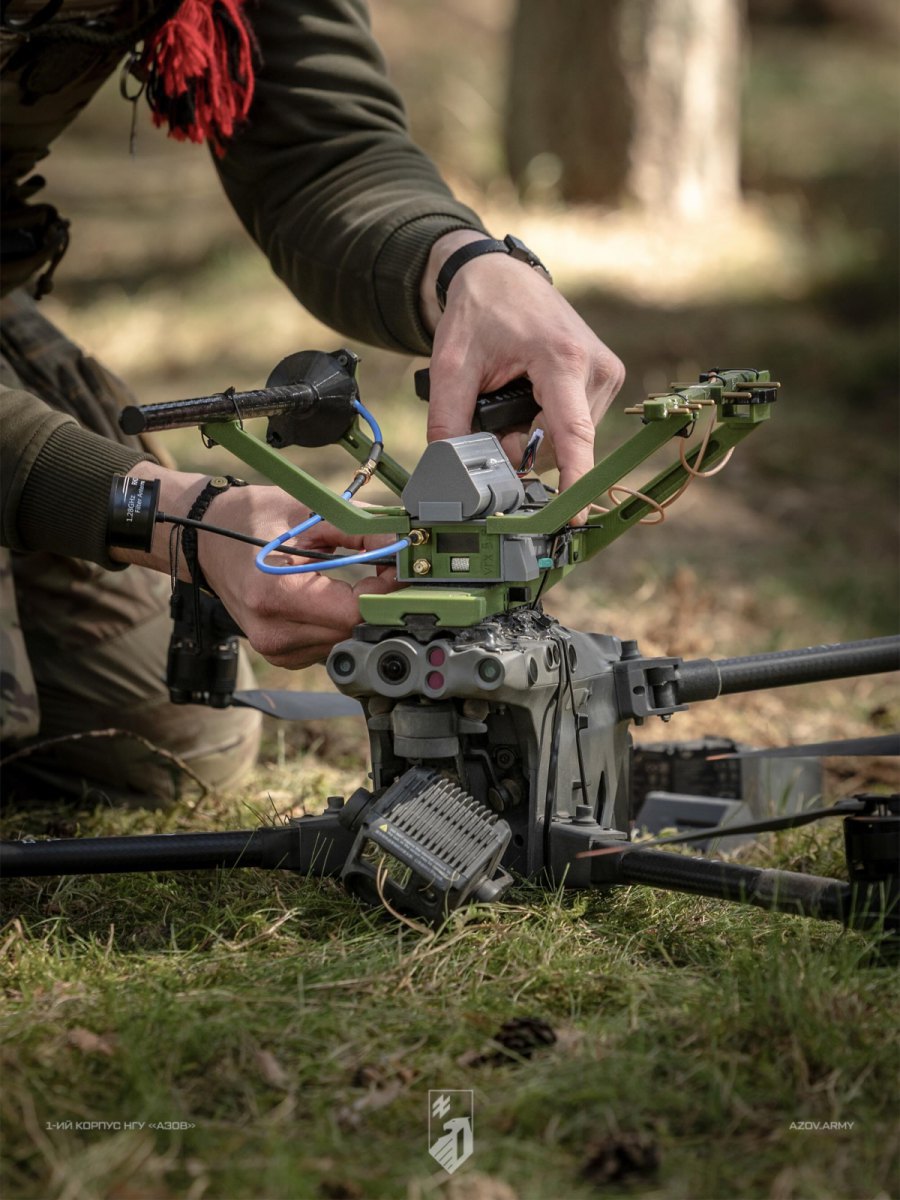
We discussed a range of topics: deployment, control, approaches, and counter-drone measures.
If a unified international system were to be created to defend against Russian attacks, would this involve only a unified control system, or could it also entail the use of identical drones?
Metys: It is difficult to talk about standardising the control system at the level of countries and armies, let alone military alliances such as NATO. That is more of a political decision. But standardisation is the main route to achieving a high level of cooperation, especially when it comes to cooperation between different countries around the world. It is no secret that NATO countries have achieved success thanks to their STANAG (Standardisation Agreement) approach. A simple example: compatible types of ammunition, compatible types of fuel for equipment, and certain planning approaches. Standardisation is what any military alliance needs.
Should identical drones be used? We must realise that there is a huge range of drones in Ukraine; I would even say a huge ‘zoo’. For example, in the sector of the 1st Azov Corps, the daily consumption of drones is extremely high. The Dobropillya sector, where we are fighting successfully, is one of the hottest sectors in the war in Ukraine. Therefore, if a single manufacturer were to supply all the troops in Ukraine, it would be an overwhelming burden. No capacity in the world could supply the front line. And when it comes to any standardisation of drones at the international level, we must be realistic: different countries will use different products. The issue is not about the names of UAVs at all.
This isn’t the first time the Ukrainian team has demonstrated its superiority: recently, fighters from the 412th SBS Brigade Nemesis recounted how they defeated NATO troops during exercises in May 2025. Do foreign teams take their mistakes into account, study your strengths, and analyse their actions? And what exactly does participation in such exercises offer the Ukrainians?
Metys: Regarding analysis — of course. Every country in the world that is in any way involved in international politics or the formulation of military doctrines does this. I’m not talking about North Korea. Although North Korea probably analyses both its own mistakes and the experience of other countries.
Only two countries are currently gaining experience of modern warfare — Russia and Ukraine. And we, as allies of NATO and our Western partners, are of course ready to share it. I think that discussions following the exercises may in some way influence the formulation of their doctrines or the direct use of drones.
For Ukraine, this is an excellent case study because, firstly, we acted as a Ukrainian mixed team from the 1st Corps of the National Guard of Ukraine Azov. I first met these lads who were with me in Sweden. We gelled very quickly, both amongst ourselves and with our Swedish colleagues. I see this as a great success and an indication that the only barrier to our collaborative work and joint task execution is language.
And such exercises provide an opportunity to demonstrate that Ukraine is a strategic and key element of the security system in Europe and the world. And that we are capable of carrying out tasks on a par with NATO countries and any Western partners. This is a demonstration of our strength, achievements and experience.
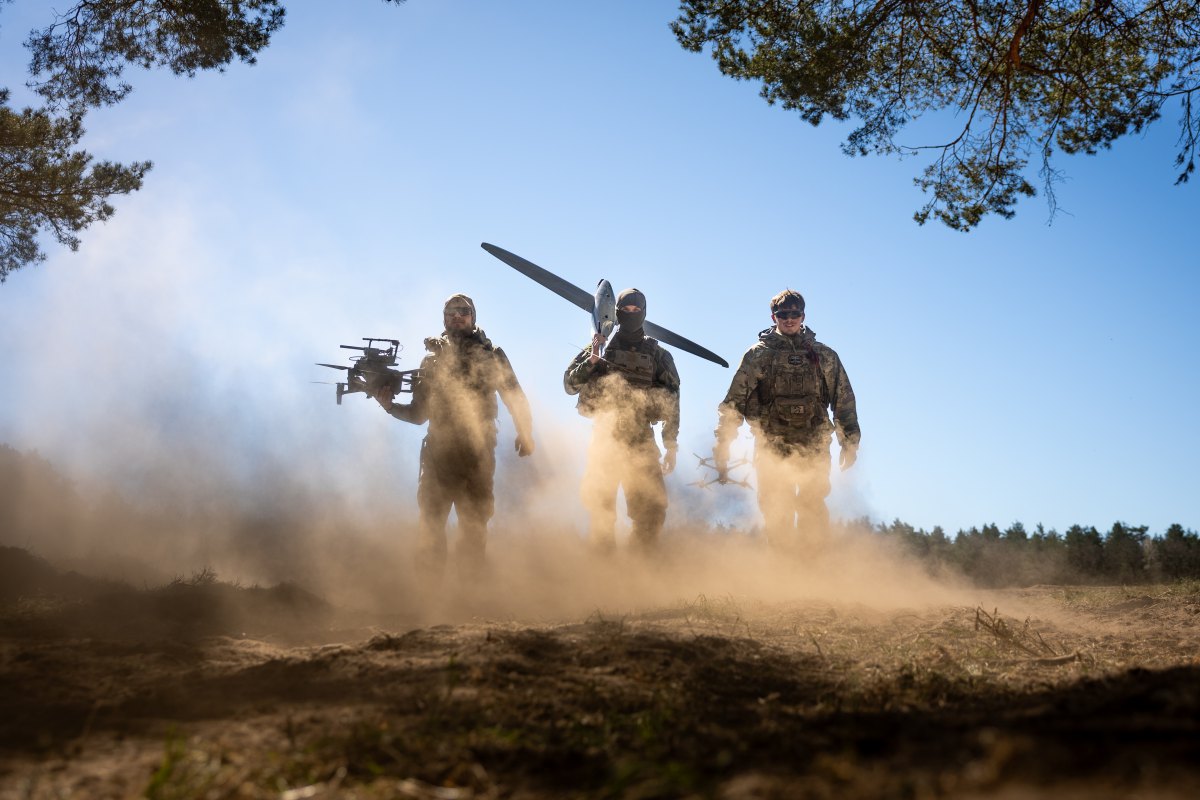
What are your overall impressions of the exercises?
Metys: My impressions are positive; the host country—Sweden—is wonderful, with wonderful people. We received a very warm welcome, and there is a positive attitude towards Ukraine. We were given a very warm welcome everywhere—whether at military bases or in civilian towns. Ukraine is respected and valued for its struggle. We’ve made many friendly contacts. And, of course, the fact that we’ve established ourselves as a corps, as a unit — that’s a very good experience, and I’d like to repeat it again and again.
Although we visited many regions of Sweden and worked with numerous units, we had absolutely no problems establishing cooperation. We were respected and listened to. If someone had told me: ‘Today you’re off to work with a brigade in Sweden to establish cooperation’, I would have been one hundred per cent certain that we would have succeeded in that cooperation.
Kvita: It was great working with the lads. It’s great that, even though we’re from different countries, we thought alike when it came to the tasks.
I was just a pilot; we carried out standard tasks, just like in a war. The lads there are just like us, soldiers, carrying out their tasks in the same way. I didn’t see any major difference between us and them, as people.