






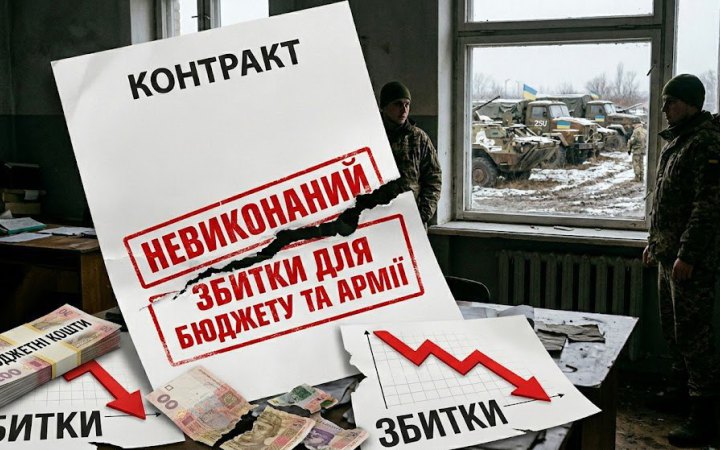
Well, not exactly magic. What we actually get are budget losses and problems at the front line. But they’re the sort that are very difficult to link to certain people, let alone find them guilty and prove intent in court.
Corruption differs not only in form, but also in consequence. There is the well-known post-Soviet principle of “stealing from profits,” where an enterprise remains operational and profitable while illicitly enriching a select group of people. And then there is the infamous “grab-and-run” corruption model, where the main objective is to secure an advance payment and then disappear, leaving the country without money, without products, and without accountability.
The story discussed here lies somewhere between these two extremes. On the one hand, we are dealing with a failed defence contract, losses amounting to hundreds of millions of hryvnias, and an army left without critically important products during an active phase of the war. On the other hand, had the executors possessed slightly more time, luck, and managerial competence, we might now be reading generously sponsored articles across major Telegram channels about a “unique Ukrainian innovation with no analogues in the world.”
So what exactly happened?
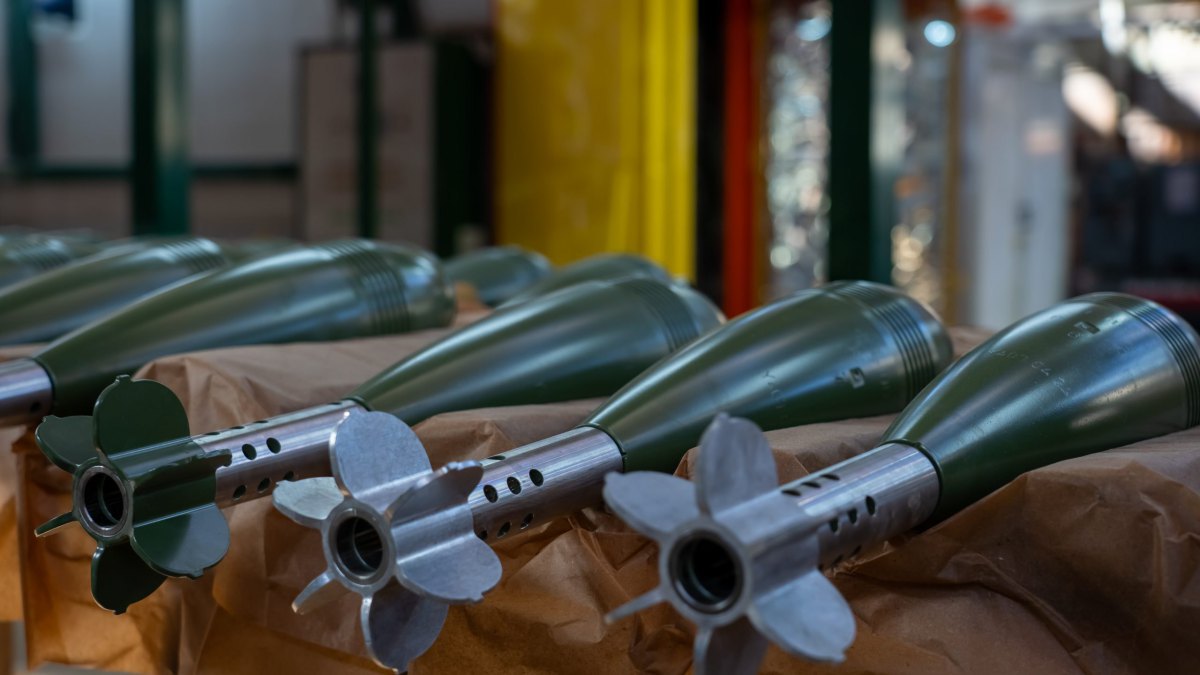
To put it briefly and without unnecessary drama, a state customer signed a contract with a private limited liability company for the production and supply of an “explosive device for defence purposes.” The interesting detail was that the company had not yet established stable production of the product in question, yet the product already had a specific name and technical characteristics that the customer effectively treated as the only acceptable solution. In practice, this meant that all other manufacturers on the market had no realistic opportunity to participate in the tender, because their products — despite having essentially identical functionality — were simply designated under different names or contained minor technical differences.
The contract allowed for an advance payment exceeding 50% of its value. The contractor received the advance and then requested state-supplied raw materials under a tolling arrangement. Eventually, the contract was terminated for non-performance. By the final delivery deadline, not a single unit had been delivered to the Defence Forces of Ukraine. In other words, the manufacturing company failed to fulfil its obligations — but at the expense of taxpayers’ money. The state customer initiated unilateral termination proceedings and demanded the return of both the remaining advance payment and the raw materials. Since this did not happen, the customer announced preparations for litigation. Which means the final legal conclusion to this story will probably arrive sometime around 2035, after appeals, cassations, and perhaps even proceedings in international courts.
But the devil, as they say, is not only wearing Prada — it is also in the details. And when the Public Anti-Corruption Council under the Ministry of Defence of Ukraine (PAC MoD) examined the reasons behind the collapse of this state contract, those details began to emerge. So much so that we’ve given this case the code name “the anti-budget mine.”
For obvious reasons, we cannot publicly disclose the actual designation of the product, the supplier’s name, or other identifying details. Therefore, we will continue referring to it in exactly those terms.
In a normal defence procurement system, procurement is not supposed to begin with the idea that “we must buy this exact product from this exact manufacturer.” This is a story about how the army needs a certain capability on the front line, whereas the state keeps searching for someone who is actually capable of providing it.
This is how the system is supposed to work:
1. The General Staff and the Ministry of Defence formulate a requirement based not on a specific product, but on a required capability. For example: a certain category of munition with defined characteristics, range, or operational effectiveness.
2. The Defence Procurement Agency (DPA) receives this requirement and conducts a market assessment: collecting proposals from multiple manufacturers and comparing capabilities, timelines, risks, and pricing.
3. Quality assurance and codification authorities verify whether the manufacturer is actually capable of fulfilling the contract: whether it possesses manufacturing capacity, stable production technology, necessary components, completed qualification testing, and readiness for serial production.
4. Only after these steps is a contract signed and the state advances financing for production. The transfer of customer-supplied raw materials should be an exception rather than a mechanism for dragging an unprepared manufacturer toward fulfilment of the contract.
5. And only after that do the products arrive at the front line and support combat operations of the Defence Forces. And only then do we see the motivational Telegram videos where Ukrainian-made systems destroy enemy targets to upbeat music.

Now let us compare this with what actually happened in the case of the so-called “Explosive Device for Defence Purposes – 1.The requirement was effectively formulated around a specific product from the very beginning — before completion of the full testing cycle and without a substantiated assessment of alternative manufacturers.
2. Codification and procurement procedures began in parallel with the ongoing refinement of the product itself. Mechanisms of preliminary codification and temporary approvals were used, despite the fact that such mechanisms were intended to remain exceptional rather than standard practice.
3. Conclusions regarding the manufacturer’s capability changed literally within days: first, the assessment stated that the contract could not be fulfilled within the required timelines; shortly afterwards, the same manufacturer was deemed “capable,” despite continued dependence on subcontractors and substantial operational risks.
4. After the contract was signed, the state effectively had to support the manufacturing process itself: supplying raw materials and advancing financing before any stable production capability had been demonstrated.
5. As a result, the system operated not according to the principle of “first verified capability, then contract,” but according to the opposite logic: the contract was signed in the hope that the manufacturer would somehow organise production during execution of the agreement itself. Yet not a single unit of the product was ever delivered. And instead of upbeat Telegram videos showing successful battlefield use, we most likely received additional losses at the front and even more red zones appearing on the DeepState map.
And it was precisely this initial decision — the decision to formulate the requirement around a specific product — that triggered the entire subsequent chain of failures, from a high-risk procurement process to the ultimate collapse of supply.
To introduce at least one positive element into this story, it should be noted that the joint intervention of oversight bodies, including the Public Anti-Corruption Council under the Ministry of Defence, made it possible to partially stabilise the situation and identify a workable — though far from ideal — solution. The explosive device will eventually reach the Defence Forces, albeit with delays, but at least under proper quality control procedures.
But this is not how the system is supposed to function.
The problem exists at the level of the broader state defence procurement system and the chains of decision-making within it. And that problem requires an urgent solution.
Of course, those directly responsible must be held accountable, and we will do everything necessary to ensure this happens. But something even more important must also happen: the system must be redesigned so that these individuals are not simply replaced by others hoping that next time “it will probably work.”
At a minimum, the principle must be established that military authorities formulate procurement requirements through functional characteristics and operational performance criteria — not through references to specific named products. Embedding a specific product directly into the procurement requirement should itself be unlawful and should expose responsible officials to criminal liability.
Because the approximately half a billion hryvnias the state lost — at least temporarily, pending the completion of litigation — in this case may ultimately prove insignificant compared to the long-term damage Ukraine may face if the practice of “branding the requirement” continues.
The consequences are obvious: corruption, monopolisation, suppression of innovation, and the inability of genuinely innovative products to enter state procurement because, at the tender stage, they will simply be pushed aside by a “well-connected” product carrying the “right” name.
P.S. The Public Anti-Corruption Council under the Ministry of Defence of Ukraine expresses its gratitude to the team of the Ministry of Defence of Ukraine and to individual representatives of the General Staff for their prompt and constructive response to this situation.