





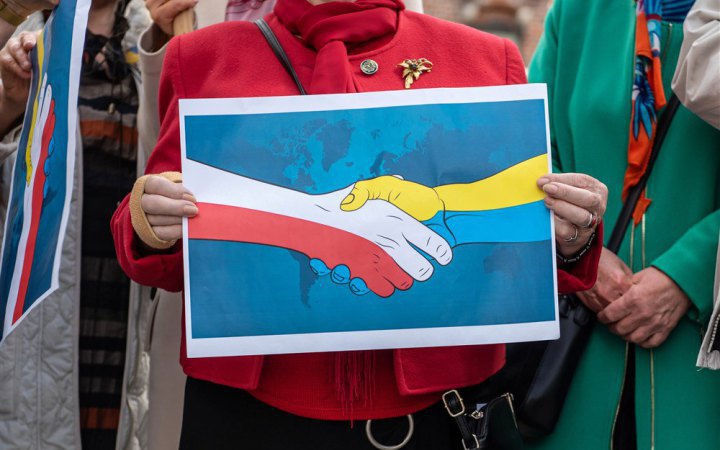
An overwhelming majority of Ukrainians (90%) support constructive engagement with Poland.
This is evidenced by the results of a survey published by the Kyiv International Institute of Sociology (KIIS).
In particular, 57% of respondents believe that every nation can have its own heroes and that other nations should not interfere in historical matters. Another 33% believe that a consensus view can be reached through joint commissions of historians rather than politicians. Only 1% of respondents believe that Ukraine should yield to Poland’s demands.
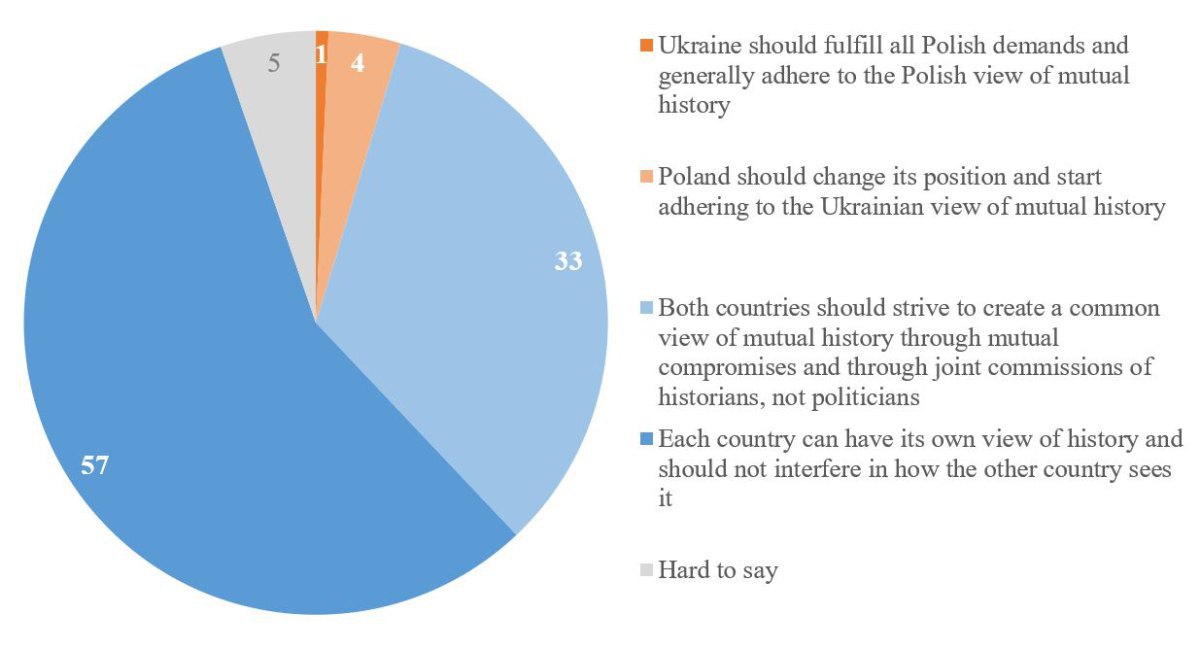
During the survey, respondents were asked: “Poland and Ukraine have disputes over historical issues. Which approach do you support most?” Four answer options were offered. Two of these were confrontational, in that they did not envisage a consensus and implied that one of the nations would have to concede:
- “Ukraine should meet all of Poland’s demands and, in general, adhere to the Polish view of our shared history” — effectively subordinating Ukraine’s historical policy to Polish demands and depriving Ukraine of agency in matters relating to its own history;
- “Poland should change its position and begin adhering to the Ukrainian view of our shared history” — conversely, this would deprive Poland of agency in historical matters.
The other two options were constructive and reflected either a more idealistic or a more pragmatic approach:
- “Both countries should strive to develop a shared view of their common history through mutual compromises and through joint commissions of historians rather than politicians” — an idealistic expectation that depoliticisation and the work of professional historians can help establish a consensus and a common interpretation of historical events;
- “Each country may have its own view of history and should not interfere in how the other country sees it” — a pragmatic approach reflecting the understanding that every nation can have its own heroes and that other nations should not interfere in such matters.
According to KIIS Executive Director Anton Hrushetskyy, the survey results indicate that Ukrainian society takes a constructive approach to historical disputes with Poland. At the same time, almost all Ukrainians oppose Poland imposing its interpretation of shared history on Ukraine.
Context
Karol Nawrocki decided to revoke the Order of the White Eagle previously awarded to Volodymyr Zelenskyy. The move came amid Warsaw’s dissatisfaction with the president’s decision to grant the SSO North unit the honorary title “named after the Heroes of the UPA”.
Zelenskyy described his Polish counterpart’s decision as a political move ahead of the 2027 elections. He stressed that the unit had independently chosen a name linked to historical figures whom its fighters respect.
Following the decision to revoke the award, the President of Ukraine sent it to Warsaw via Nova Poshta in Nawrocki’s name. Subsequently, Ukraine’s second, third and fifth presidents — Leonid Kuchma, Viktor Yushchenko and Petro Poroshenko — also declined the honour. Foreign Minister Andriy Sybiha likewise returned the order.