






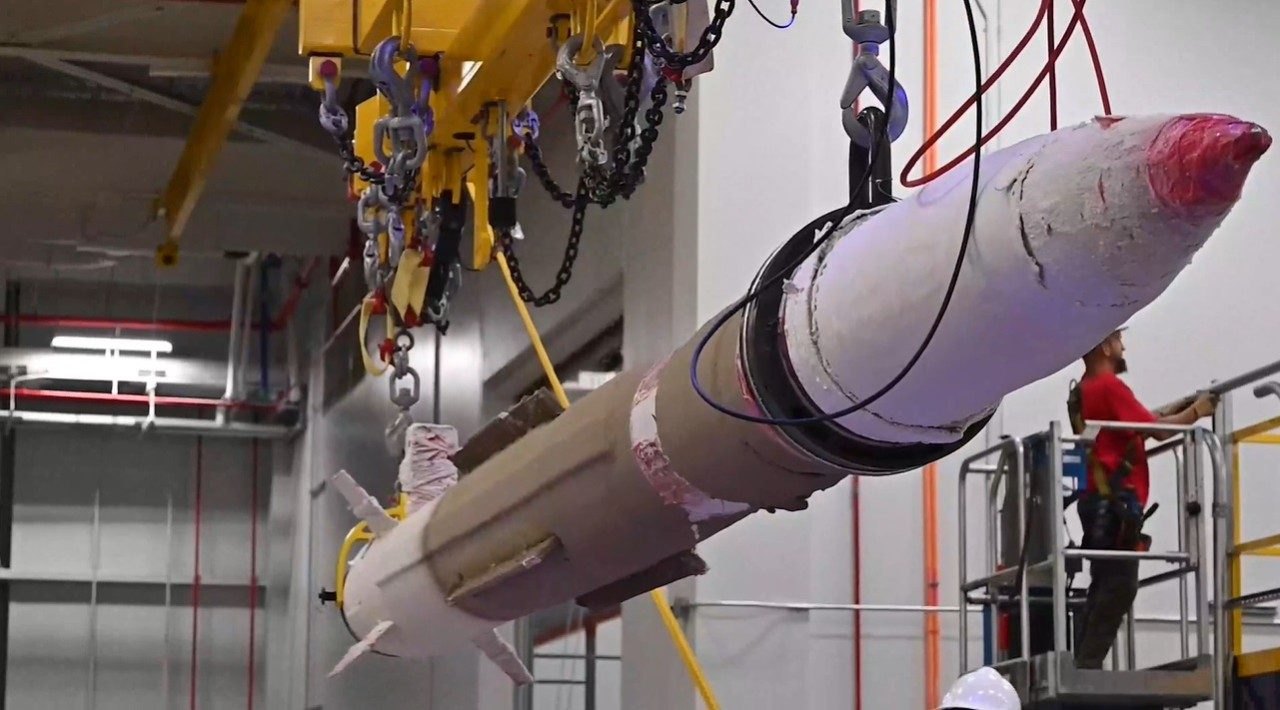
At the start of the year, we forecast what the Russian missile-and-air strikes would look like throughout 2026. Its industrial capacity and the way it organised combat employment at the time suggested that in June–July we should expect a certain pause against the backdrop of regular raids of 200–400 UAVs, aimed at wearing down Ukraine’s air defences, because in summer the Russians would focus their attention on Donbas. We also assumed a “super-raid” on Independence Day or a series of powerful strikes after a buildup period in the preceding months — 800–1200 UAVs and 60–100 missiles at a time.
By the end of June, the average raid was a combined attack of 200–400 strike UAVs and decoy drones, plus 5–30 missiles. The goal was to overload air defences and hit targets in the rear. The intensity was lower than in May, but the attacks remained regular and dangerous.
On the night of 4–5 July, Russia used an Kh-31P anti-radiation missile (from the Black Sea), three Kh-59/69 cruise missiles (from the temporarily occupied territory of Zaporizhzhya Region), and 125 strike UAVs. Air defences shot down / jammed 112 UAVs and three Kh-59/69 missiles (the Kh-31P did not reach its target and disappeared from radar — likely electronic warfare took effect).
Starting from 5–6 July, Russia launched 419 aerial attack assets, including 68 missiles of various types (ballistic, Kh-101 cruise missiles, Kalibr, Zircon, etc.) and 351 UAVs. Air defences shot down / jammed 363 targets — 37 missiles and 326 UAVs.
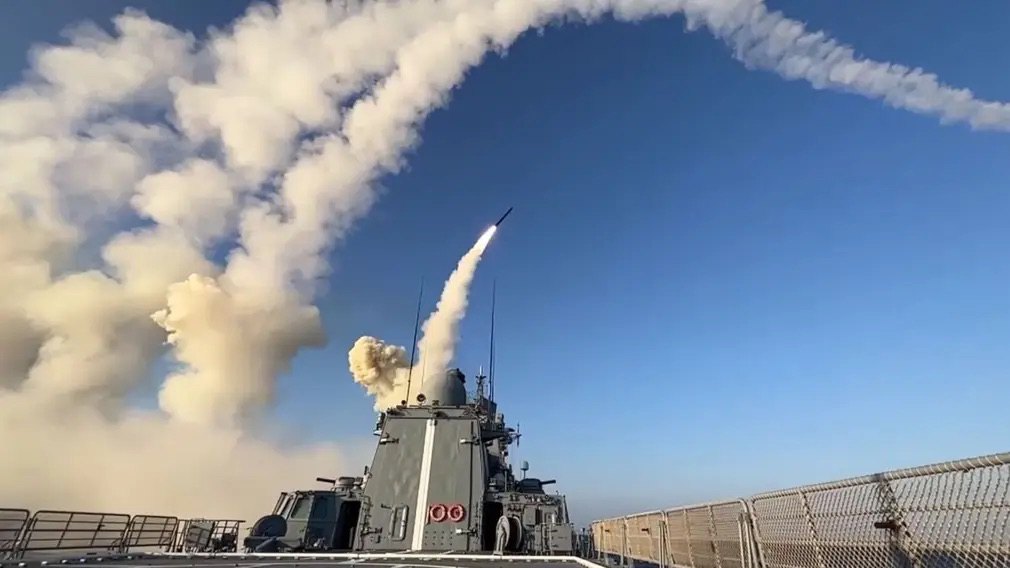
The last two strikes on Kyiv make it possible to say the Russian military is changing its strike tactics. There is suspicion it used unknown means. Four times it struck with ballistic missiles; it deployed missile units in positional areas while observing heightened security and camouflage measures, even though it was operating on its own territory.
According to Air Force command, during the raid the enemy used two Kh-31P anti-radiation missiles from the Black Sea — something previously typical of strikes on Odesa and the Region.
A lively debate in the professional community was sparked by fragments of the air-to-surface Kh-101 cruise missile engines: some experts claim the Russians stole from the Americans monocrystalline titanium 3D-printing technology; others argue Soviet engineers were developing this technology back in the 1970s. There is, of course, no consensus — but the fragments are genuinely interesting. If our researchers confirm the hypotheses, one could assume the Kh-101 is now capable of carrying a warhead weighing up to 1,000 kg to a range of up to 5,500 km. Not good news. But not confirmed.
These strikes laid bare the main problem — the extremely limited ability of our Air Force to repel ballistic-missile attacks.
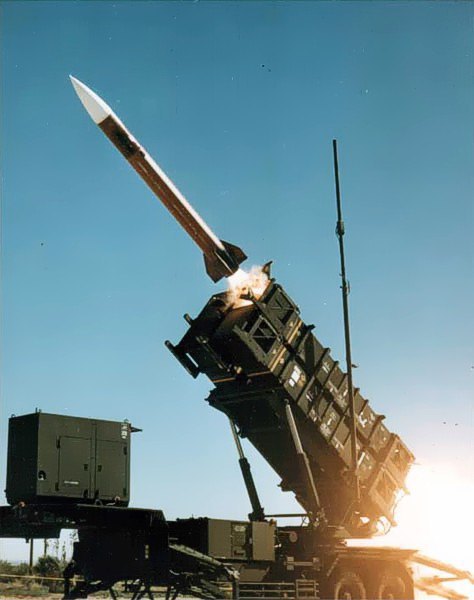
The only truly effective missile-defence tool is the MIM-104 Patriot surface-to-air missile system with the PAC-3 interceptor missiles (the MSE or CRI variants).
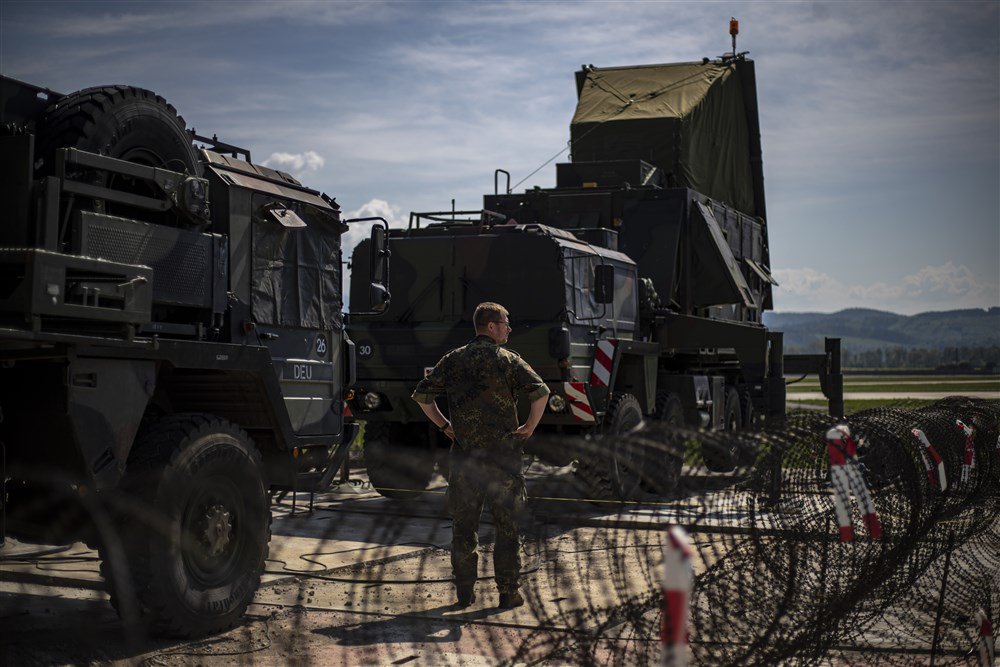
The lead developer and manufacturer of these interceptors — the U.S. company Lockheed Martin (plant in Camden, Arkansas) — is currently trying to increase annual output from 500 to 650 missiles. That means if Russia fires 30 ballistic missiles in a single strike, annual production is enough for 20 air-defence engagements. This does not take into account the need to maintain national air-defence capabilities at a level that guarantees repelling an attack and to supply interceptors under existing contracts. There are also manufacturers in Japan and South Korea, but we have not been able to reach agreements there.
The problem with producing the PAC-3 (Patriot Advanced Capability-3) interceptor is not some super-complex technology, but an extremely complex combination of high-tech components and specific manufacturing methods that cannot be sped up simply by extending shifts or adding more shifts.
To assemble a single missile, products from 400 manufacturers are involved.
The solid-fuel motor is supplied by Aerojet Rocketdyne. Production of composite propellants for solid-fuel rocket motors is in a global crisis overall. And here you must add the time required for polymerisation, which cannot be accelerated. You can bring in someone to help, but that means time, harmonising standards, deploying the necessary production lines and processes — and, ultimately, having to reveal your own technological secrets.
A separate issue is the ultra-strict control over the outcome of manufacturing such a motor. Many people remember a 9K79 missile hitting a residential building in Brovary. The cause was explosive burning of the solid-fuel motor, which, due to excessive storage time, had internal cracks that increased the burning surface area. The result was a motor explosion, the aerodynamic control surfaces tearing off, uncontrolled flight, a strike on a residential building, and loss of life. At Lockheed, rejected motors are simply sent for disposal. Not for repair — specifically for disposal. The manufacturer does not want to risk the lives of Patriot launcher crews.
The seeker head is a separate problem: using commercial components there will not work — at launch and during maneuvers the missile withstands 30–50 g overloads. This is clearly not a job for a tourist GPS! PAC-3 is a highly maneuverable hit-to-kill interceptor (it intercepts kinetically — physically rams a ballistic target) moving at speeds up to 6,170 km/h (about Mach 5+). Imagine the responsiveness of the components that control interception of a ballistic missile that is relatively small and flying at high speed. The seeker operates in the K-band (millimeter-wave), must be resistant to external electronic effects, and the microchips and other microelectronics are made to military standards. Put simply, it is impossible to bring in civilian manufacturers without deploying new processes and production lines — this is not a washing machine, and not even an electric car.
The motion of a shell fired from a gun is described by a system of 16 differential equations. A computer handles that without strain. Today even a tablet can do it. With missiles flying at up to three kilometers per second, everything is far more complicated: the onboard computer constantly searches for the intercept point, forecasting both the target’s trajectory and its own under conditions of constantly changing missile weight, center-of-mass position, and a colossal number of other factors. Otherwise you miss — and there is no second attempt. Can you assemble such a computer in a garage, for example? Or at some hypothetical Torgmash plant?
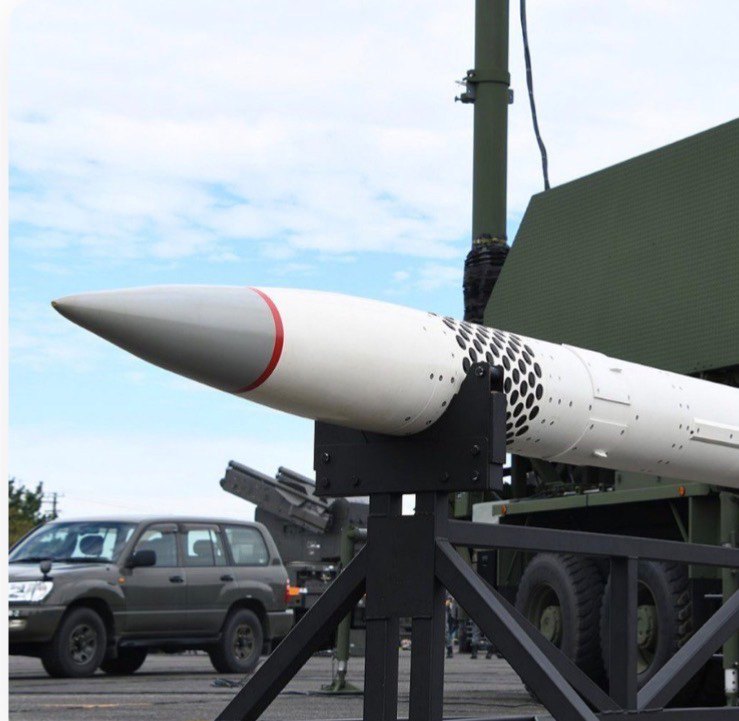
Before ramming a ballistic target, the PAC-3 fires a cloud of tungsten balls, increasing the kill area and destructive effect. That means the (Lethality Enhancer) initiation unit must work with extreme precision and at exactly the right moment. Clearly, bringing in, say, Rolex to manufacture a Lethality Enhancer is a foolish idea. Ukrainian defense contractors spent several years mastering electronic initiation boards for UAV munitions, and here everything is far more complex. And it’s not as if there are many candidates for subcontractors.
Another bottleneck is the flight-control mechanisms, because the missile maneuvers and intercepts along a fairly complex trajectory. In the nose section of the PAC-3 are aerodynamic control surfaces and 180 pulsed micro-motors (Attitude Control Motors) for rapid lateral maneuvering (divert) in the terminal phase. Without this, no hit-to-kill is possible. These micro-motors are solid-fuel (all the problems with this type of propellant have already been described above). The problem with installing them is the colossal amount of highly skilled manual labor and meticulous quality control. Installers with that level of skill do not come from the employment center, they are very expensive, and if the plant did not have enough of them BEFORE the contract, recruiting and training them will automatically extend the delivery timeline. When there are no orders, it is unprofitable for companies to keep such highly paid specialists on staff “just in case.” And before the war, there were not many orders.
A defect rate of a few percent in civilian production is not a tragedy, but in missile-defence production a zero-defect culture is the established norm. Engineers and inspectors who can maintain that bar are trained over generations. Meanwhile, in 2025–2026 Ukraine ordered the training of bachelor’s students in the knowledge field G “Engineering, manufacturing and construction”: electrical engineering (G3) — 2,590 state-funded full-time places, mechanical engineering (G11) — 2,012, automation, computer-integrated technologies and robotics (G7) — 1,948. How many enrolled is unknown, but these specialties have always had chronic under-enrollment, because mathematics is hard and kids supposedly don’t need it anyway because “there’s a calculator on the phone.” We will see these bachelor’s graduates in 2029. That’s exactly when the culture will be passed from generation to generation, sure.
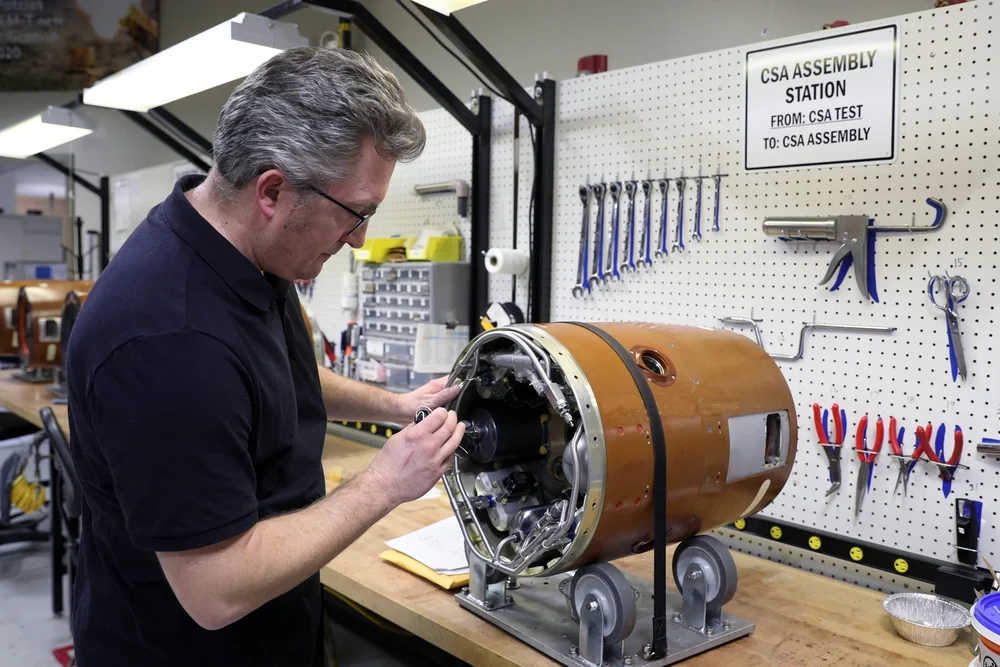
We won’t even dwell on the quality-control procedures for finished products. The Japanese, for example, tested their first missiles for six months to make sure they really knew how to assemble them. Before that, they spent 24 months setting up production. Japan can assemble as many as 30 PAC-3 a year at the Mitsubishi Heavy Industries plant.
A consortium of European countries is trying to launch production of PAC-2 GEM-T missiles (up to three thousand missiles per year), which are technically and technologically simpler than the PAC-3 MSE. This has turned into an exhausting multi-year financial-and-technology project costing more than five billion dollars. The company COMLOG (Germany) will assemble its first PAC-2 missiles in 2028, having started in 2024; the Polish group PGZ received a license to produce launchers and launch canisters for PAC-3 in 2018, but only began real production in 2023–2024.
The time between receiving an advance payment and a finished missile appearing in the warehouse at the Camden plant is 24 to 36 months. Translating from corporate language into plain terms: in 2026, missiles paid for in 2024 arrive in the warehouse.
And that’s without even getting into production organisation, which requires specialized machine tools with lead times of up to a year and a half.
So the announcement that Ukraine is being granted a license to produce missiles for the MIM-104 does not overcome the shortage of interceptors and will not do so in the coming years. Yet we still have to defend ourselves with something. We also leave aside the organisation of cooperation with subcontractors, which we mentioned above. And it’s not a given that all 400 are eager to work with five or six “effective managers.”
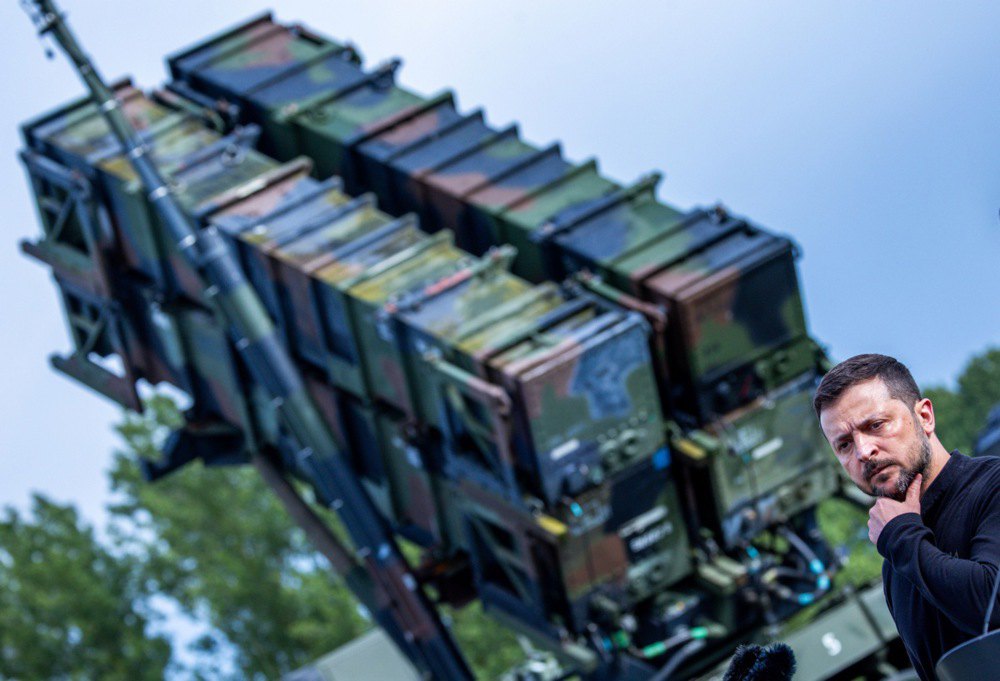
If you look at the problem relatively realistically, we are talking about investments of billions of dollars, full integration into the U.S. defence industry, and an organisational and preparatory period lasting five to ten years. We have none of that.
At the start of the year, our air defences proved they could reliably repel daily raids of up to 250 UAVs; with strain but manageable — 500–600 UAVs; at the edge of critical load but with all system functions preserved — 800–1000 UAVs. A thousand aerial targets today is the upper limit of our air defences.
We should expect raids of 1,200–1,500 UAVs and 60–100 missiles simultaneously over several consecutive days. Under such conditions, the number that get through will increase, and air defenses will have to choose priorities rather than cover everything according to plan.
Ukraine’s air-defence systems could be overloaded by a situation in which, over two to four days, the Russia strikes with more than 1,500 UAVs per day — but here everything depends on the capabilities of Russia’s defence industry and its accumulation of aerial attack assets. Such a strike would be extremely costly and no less difficult to repeat.
The acute shortage of interceptor missiles for the Patriot SAM system makes it clear that the number of situations where everyone hears the impact and the warning siren goes off a bit later will grow. Damage to critical infrastructure and civilian facilities will increase, because Ukraine does not have PAC-3 production technologies and creating them in a few months is unrealistic.
Everyone knows how to roll up any piece of paper into a tube — including a license to produce anything at all.