






What happened on stage?
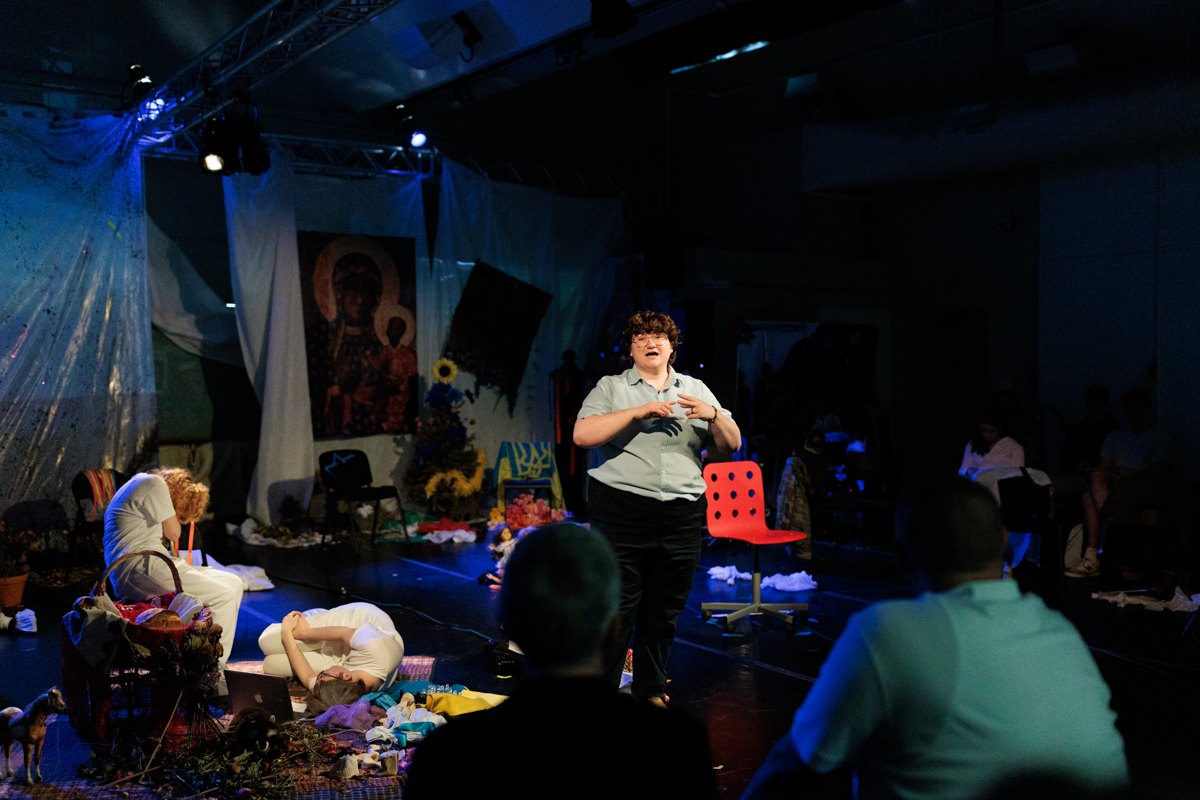
The events of Volodymyr Rafieyenko’s play Vertep for Homo Sapiens unfold in the Nativity cave—the place where Jesus Christ was born.
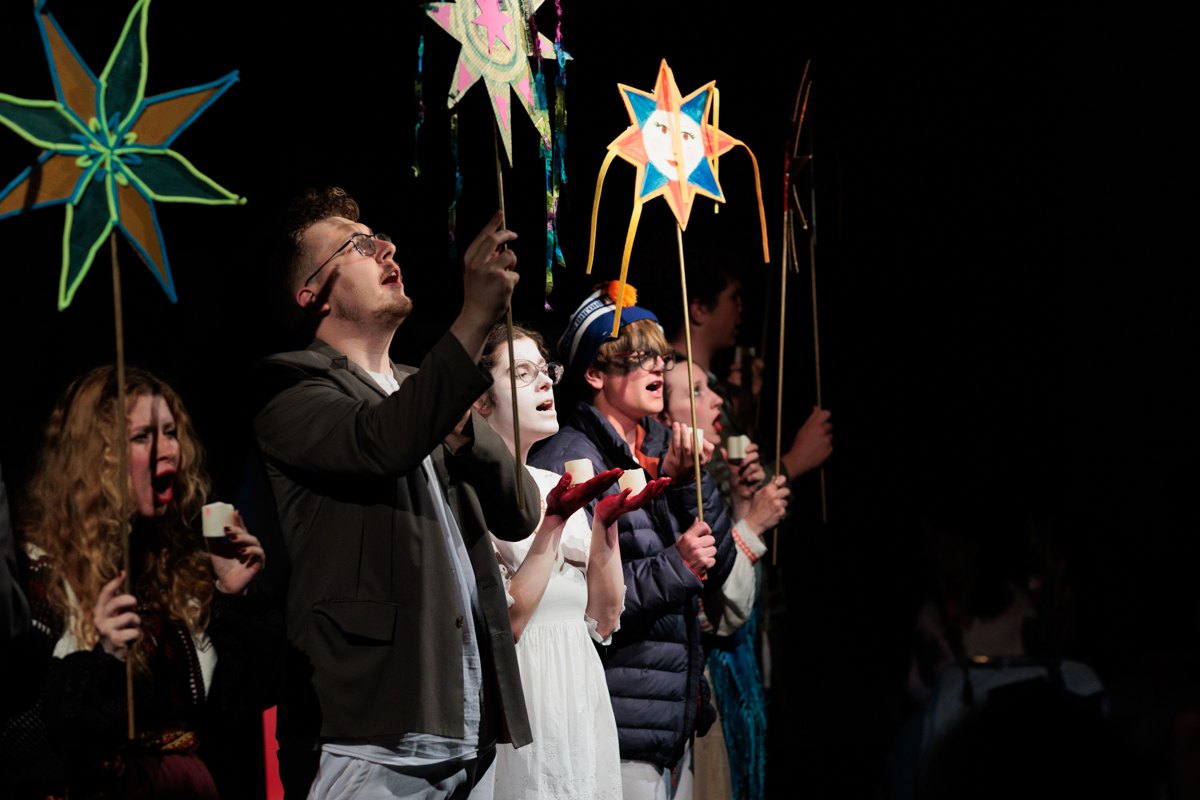
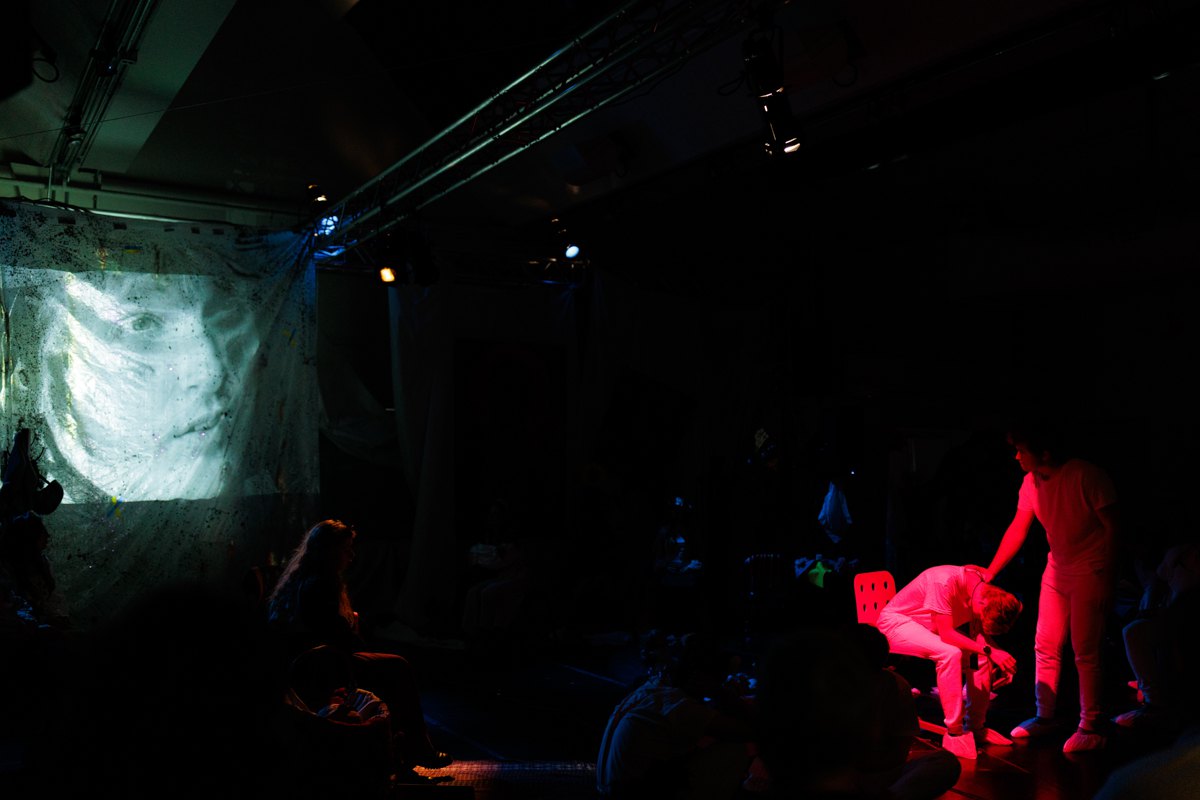
Throughout the performance, folk songs, dances, and the characters’ dialogues (sometimes humorous) alternated with black-and-white documentary video monologues containing tragic stories by Ukrainians about life during the war. At times, these scenes were interrupted by the sounds of shelling. The production ended with a performance of “Shchedryk,” after which an explosion from a Russian attack rang out.
“We wanted a contemporary Ukrainian play to be heard on an American stage—one that combines testimony about the full-scale war with a living Ukrainian cultural tradition,” Somova explains. “That is exactly how Volodymyr Rafieyenko's text is constructed: the stories of people living through the war are interwoven with different layers of Ukrainian culture—from carols, lullabies, and the Ukrainian vertep to the poetry of Vasyl Stus and Marianna Kiyanovska.”
Background
In 2023, Somova launched a Ukrainian language program at Dartmouth. From 2024, she brought theater into the curriculum. That year, staged readings took place. “Students in my ‘Beginning Ukrainian Language’ course translated and staged two short plays—A Prayer for Elvis by Maryna Smilianets and Vertep: Chronicles of War by Artem Lebedev,” Somova says.
After that theater project, the idea emerged to create a separate course devoted to translating and staging a contemporary Ukrainian play that did not yet have an English-language version: “Then each course would leave behind not only a new production, but also a new English translation that other theaters could use.”
Rafieyenko's play was just that—written at Somova’s request: “I told Volodymyr exactly what kind of play I was looking for for the course.” The production needed to be not too long (because translation and rehearsals are time-limited), with many roles, featuring young characters (because they knew many students would want to participate), and addressing the experience of the full-scale war.
As Somova notes, they were able to fund the production thanks to a Leslie Center Lab Course Development Grant from Dartmouth College, which supports innovative teaching formats.
Americans and Ukrainians
According to Somova, the course lasted an academic term (9.5 weeks) and was divided into two stages, during which they prepared the show’s premiere.
In the first stage, American students worked with native Ukrainian speakers in small groups. All groups translated the same excerpt in order to compare different versions and discuss specific words, idioms, rhythm, humor, and cultural references.
“Only after those discussions did we settle on a final version. Sometimes an entire class was devoted to a single line,” Somova explains.
At the same time, the folk songs on stage were performed in the original. “We deliberately kept all the songs in Ukrainian—from carols and lullabies to the final ‘Shchedryk,’” Somova notes. “Ukrainian students taught these songs to their American classmates, so the Ukrainian language was heard on stage throughout the entire performance.”
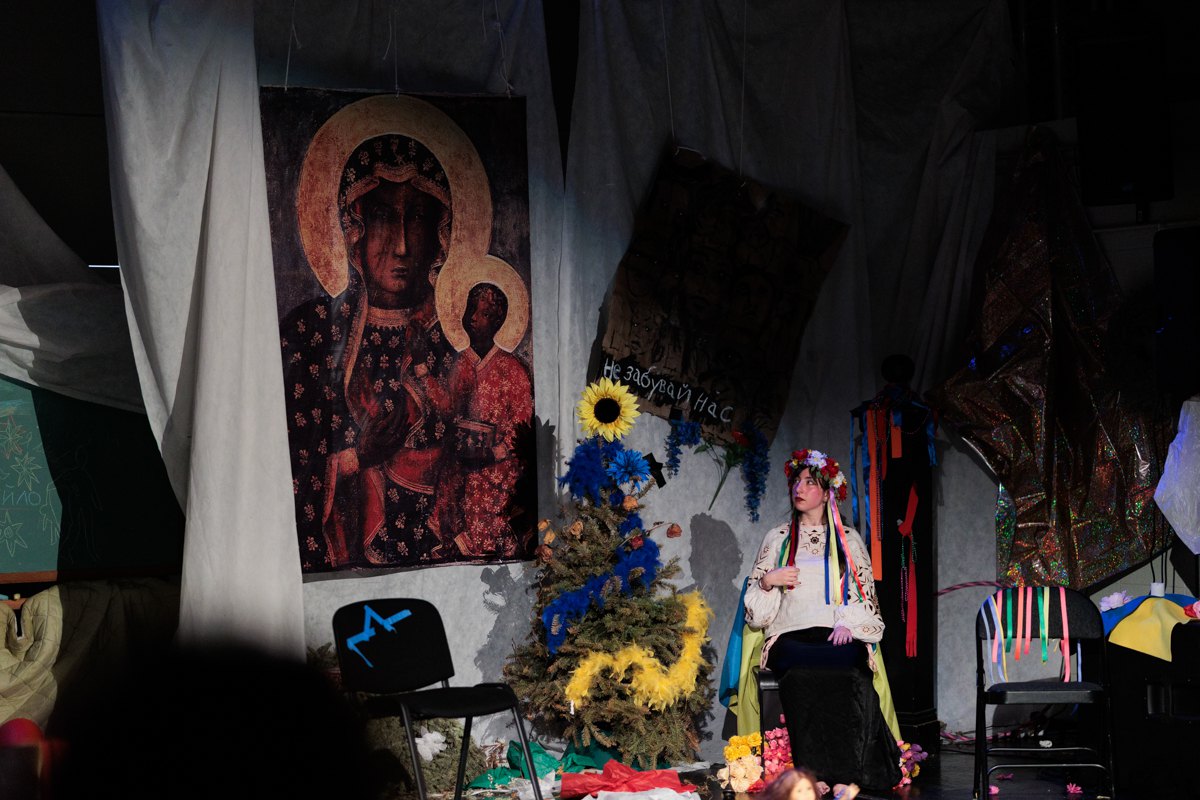
The work brought together American students who began learning Ukrainian after the program opened in 2023, as well as students from Ukraine who already speak it fluently.
In the second stage, rehearsals were held under the direction of director, actor, and playwright Peter Webster and Dartmouth theater program student Alex Campbell.
Students from Dartmouth’s theater program also took part in this creative work. They handled lighting, sound design, music, and video recording. In addition, two members of the local community joined as volunteers.
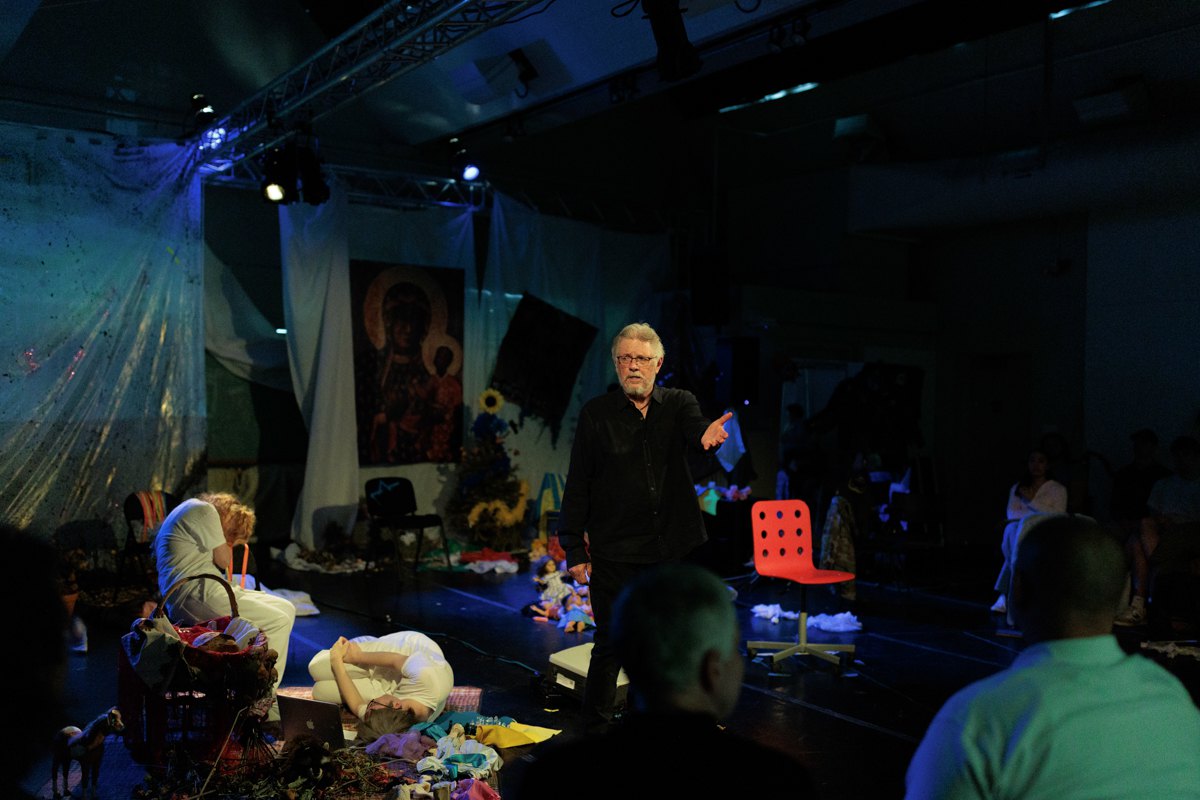
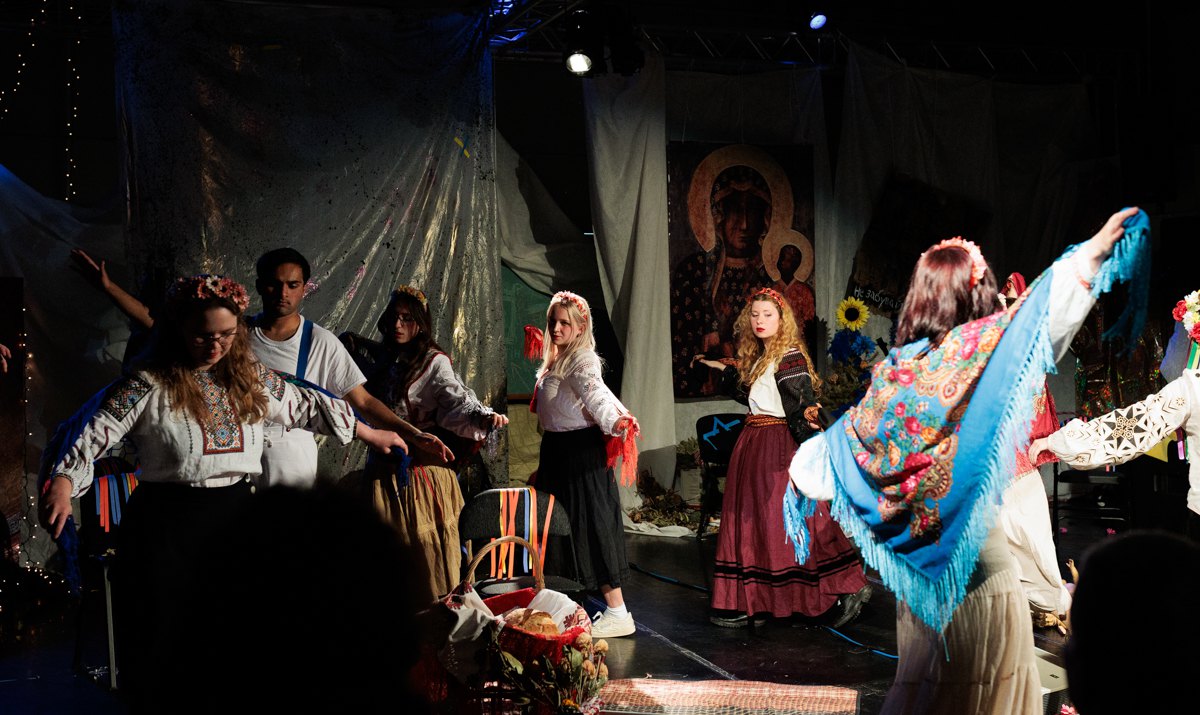
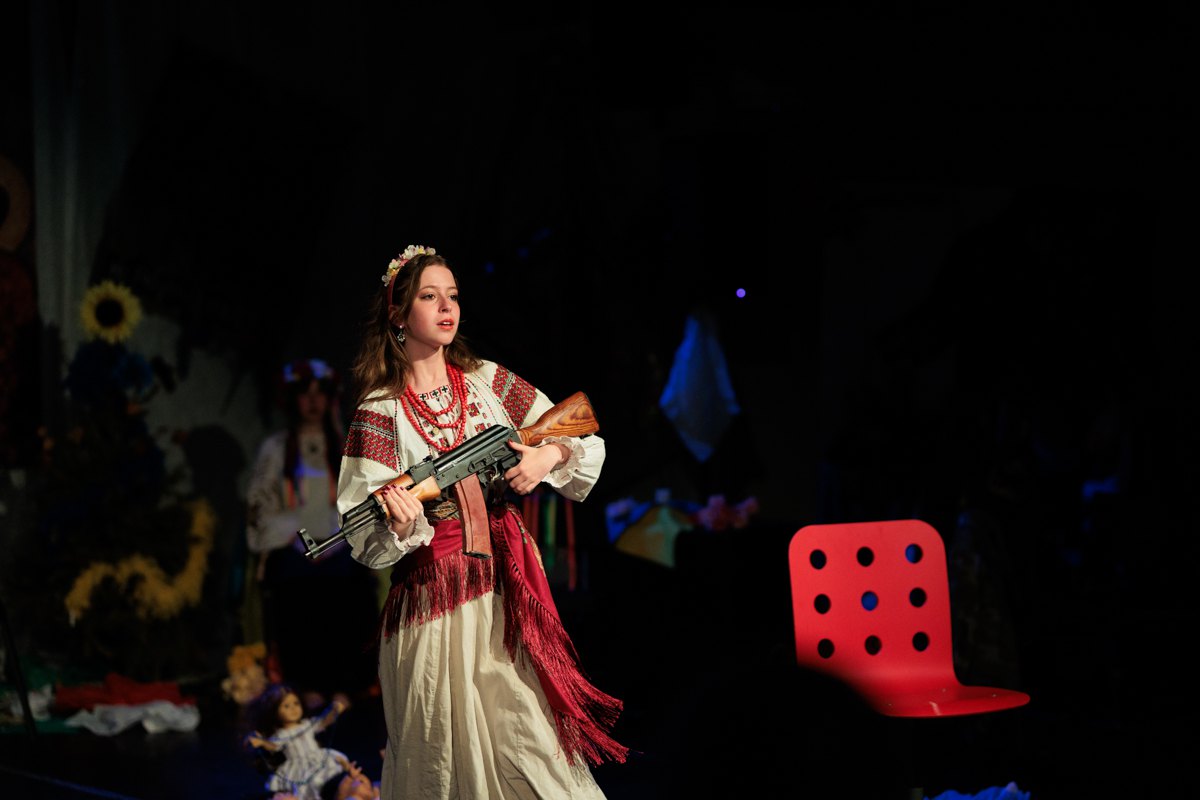
The production’s props reflected Ukrainian cultural elements. The characters were dressed in traditional Ukrainian clothing. The set included specially created reproductions of Eastern European icons. Students also recreated drawings made by Ukrainian children during the war—burning houses, crying children, and falling bombs.
The audience
Somova recalls that both performances played to a full house, and some people who wanted to attend had to be turned away due to a lack of seats. Most audience members were Americans—students, faculty, Dartmouth College staff, and residents of nearby communities. But there were also Ukrainians from the region.
At the same time, the performance was streamed online for Ukraine.
What’s next?
Because the production was created as part of a course at Dartmouth, this group will not be able to stage it again—students have already moved on to other classes, and several participants have graduated.
However, their translation can be used by other theaters, since the production was part of the international initiative Worldwide Ukrainian Play Readings (WUPR), founded by director and translator John Freedman.
“WUPR maintains a database of English translations of Ukrainian plays and makes them available to theaters in the United States and other countries,” Somova points out. “Our English translation of Volodymyr Rafieyenko's Vertep for Homo sapiens will also be included in this database.”
The status of Ukrainian Studies
In Somova’s assessment, after Russia’s full-scale invasion, American students’ interest in Ukraine has grown: “You can see this clearly at Dartmouth College. Courses devoted to Ukraine consistently attract many students. But even more important is that many don’t stop at a single course—they enroll in all the Ukrainian courses we offer.”
This year, the department where Somova works graduated its first student with a Ukrainian focus. “Ukraine became the main focus of his studies, and Ukrainian became his primary foreign language instead of Russian,” Somova notes.
Likewise, within student government there is the Dartmouth Student Alliance for Ukraine, founded on 24 February, 2022 by students from Ukraine, with American students joining early on. They organise cultural events and civic initiatives in support of Ukraine. “It was precisely through student initiative that in 2023 our Department of Russian Language and Literature was renamed the Department of East European, Eurasian, and Russian Studies,” Somova shares.
Ukraine has also become a more relevant focus at the level of scholarly research. “Significantly more academic work is devoted to Ukraine, more and more conferences include sections on Ukrainian topics, and more graduate students are choosing the history, literature, and culture of Ukraine and Eastern Europe as the subject of their research,” Somova comments.
Despite student demand, the university’s institutional environment changes more slowly. According to Somova, at many universities students can study Ukrainian and take a few courses about Ukraine, but opportunities to pursue Ukrainian studies systematically remain limited. At the same time, the academic development of the Ukrainian field in recent years is largely the result of the work of individual instructors.
To respond to students’ interest in Ukraine, universities need structural changes.
“First and foremost, this means opening new permanent faculty positions (tenure-track), as well as rethinking the structure of departments that historically formed around Russian studies. This is a necessary condition for the full development of research and teaching devoted to Ukraine and other countries of Eastern Europe,” Somova concludes.