





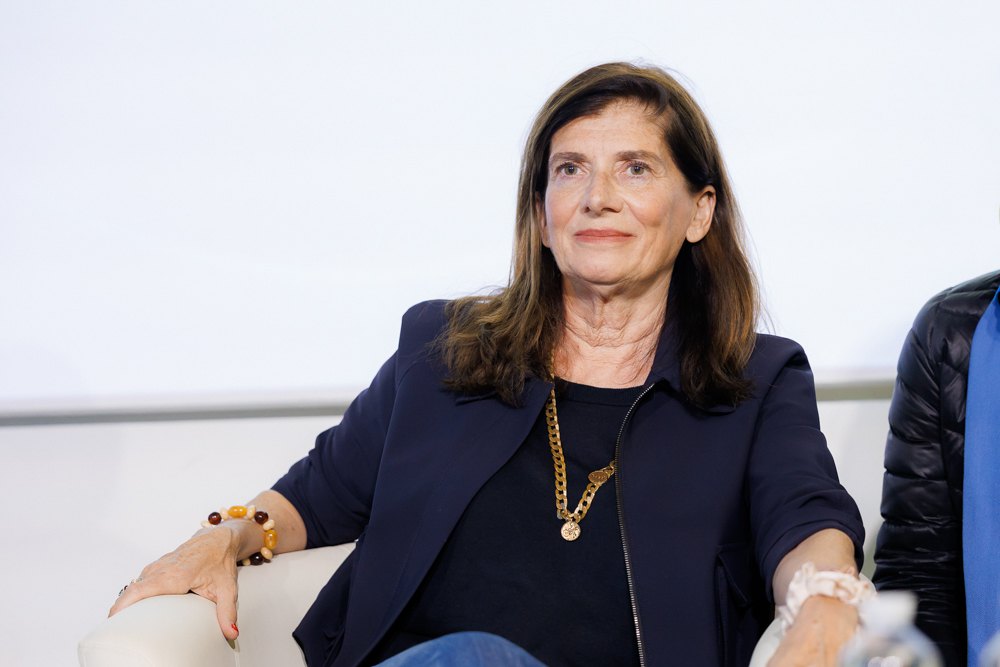
I’d like to begin our conversation by asking about your background, your professional interests, and what your work is focused on.
I’m a journalist working in the reporting department of France’s largest daily newspaper, Le Monde. I’ve always been interested in politics, particularly political investigations. I was interested both in what was happening in my own country and in what was going on in the world. That’s why I’ve always written about events in France while also travelling widely, bringing back features and reports from everywhere.
When did you first come to Ukraine? And what did you know about the Ukrainian context at that time?
The most interesting thing is that I have never been to Russia, whereas many Europeans with similar experience compare Ukraine with Russia when they first encounter it (consciously or not). Still, given my interest in international politics, I was always curious about how the Russian propaganda machine works and how it influences other countries—particularly the French political context.
We have to acknowledge that Russia has always had quite a serious political and propaganda influence in Europe. I remember that in 2014 (when I still knew almost nothing about Ukraine), there was a major domestic debate in France about the possibility of selling France’s Mistral ships to Russia. And I remember one of the arguments against that decision was: “What if, in a couple of years, Russia uses these weapons to attack, say, Mariupol?” At the time, I didn’t even know where Mariupol was. But the war was already underway, and Russia’s influence on Europe’s military and political context was already greater than one could imagine.
To return to your question about my first encounter with Ukraine: it was in 2022. When the full-scale war began, reporters at Le Monde were asked: “Who wants to go to Ukraine to cover the war?” I volunteered, though I had some doubts about whether I would be able to work with topics as difficult as the experience of war. Besides, I knew almost nothing about Ukraine as a cultural context.
But there was one thing that influenced my final decision to go to Ukraine. I belong to a generation of Europeans accustomed to thinking of war as something that happened in history—something that, of course, led to horrific consequences and changed the global paradigm, but could no longer happen in today’s reality. So in 2022, when I learned that Russia had launched a full-scale invasion of Ukraine, I didn’t feel fear or surprise—I felt anger, even rage.
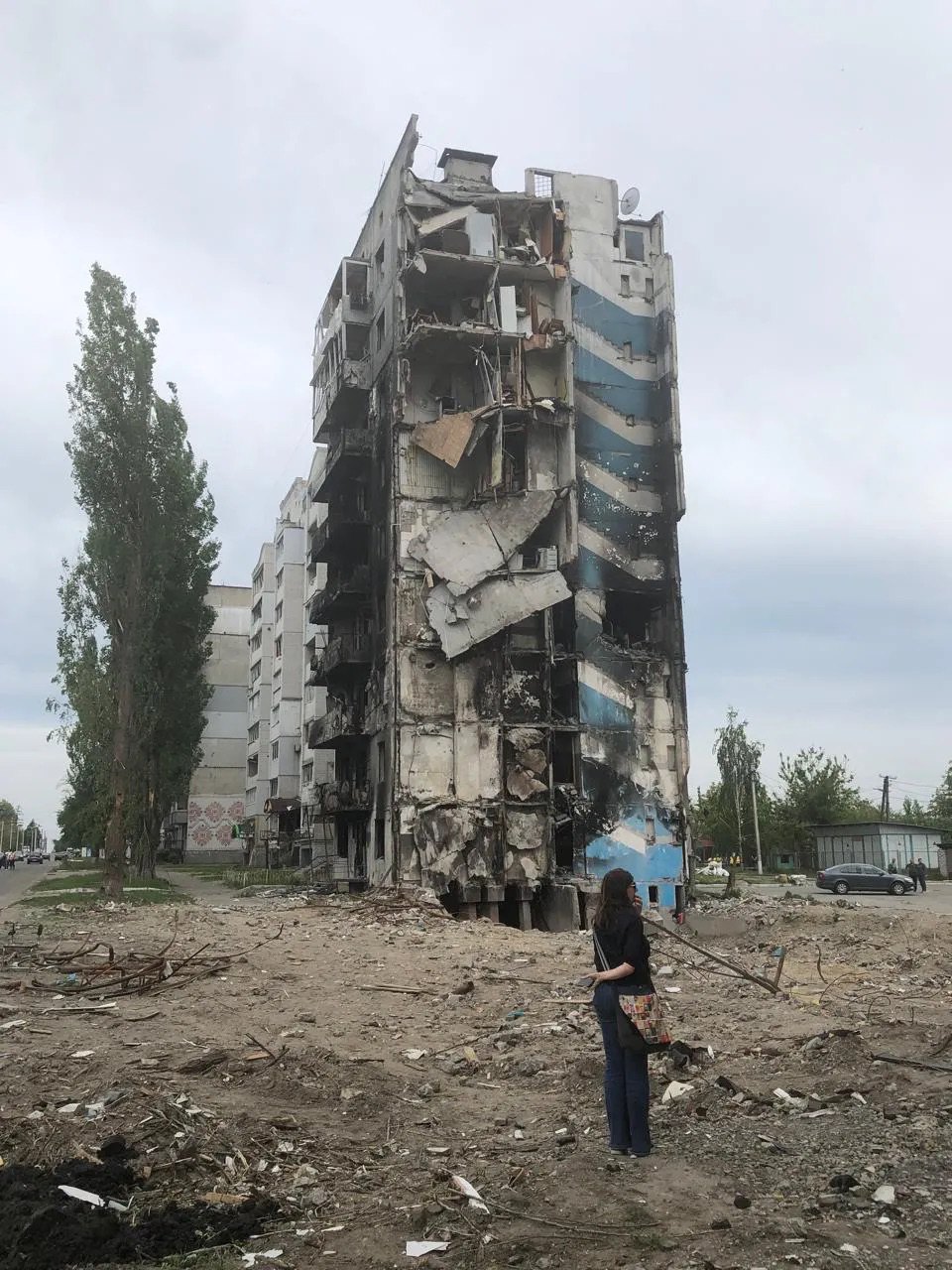
So in May 2022, I travelled to Kyiv for the first time. I was fortunate to come to Ukraine with French colleagues, some of whom had already been to your country and knew it well. We visited not only Kyiv but also the Kyiv Region (Borodyanka, Bucha, Andriyivka, and so on). One of my strongest impressions from visiting these towns in the Kyiv Region that endured Russian occupation in 2022 was a local school where I saw writing on the walls left by Russian soldiers, including the letter Z. For me, it was unimaginable—just like the locals’ accounts of torture and the killing of civilians, as well as other war crimes committed by the Russians.
That first visit left a deep impression on me. Since then, I’ve continued coming to Ukraine at least several times a year, and in total I spend about three months here annually—during that time, Ukraine and Ukrainians have already become part of my life.
You were in Ukraine again at the end of May; this visit was co-organised by the Ukrainian Institute as part of the Season of Ukraine in France. Where did you manage to go this time? And what were your main insights from the trip?
One of the main impressions from this visit for me was the Book Arsenal festival at the Mystetskyy Arsenal. I had never attended this event before, although at the end of 2025 I had already had the chance to visit the Mystetskyy Arsenal when it hosted an incredible exhibition dedicated to Vasyl Stus.
This time, I was able to immerse myself in the atmosphere of Book Arsenal. It was an extraordinarily interesting and intense experience. And not only because I was surprised to discover that this festival is even larger than Paris’s Festival du Livres de Paris. The Ukrainian festival is also younger than the Paris one, but above all I was struck by the atmosphere of Book Arsenal and by how the organisers built into the event’s architecture the possibility of spending a lot of time there, because so many interesting things are happening simultaneously both inside and outside.
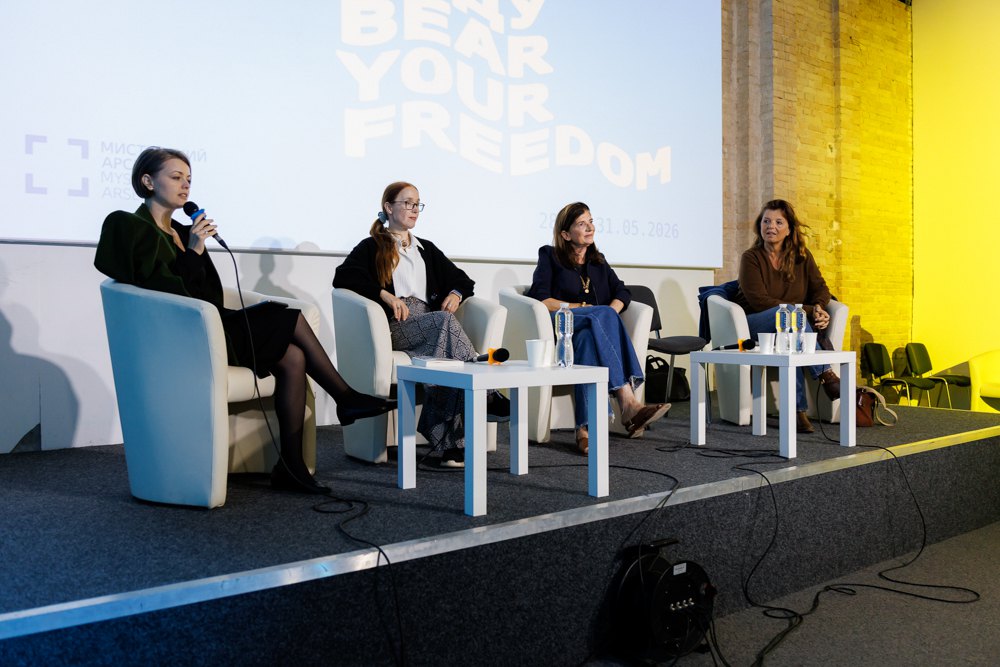
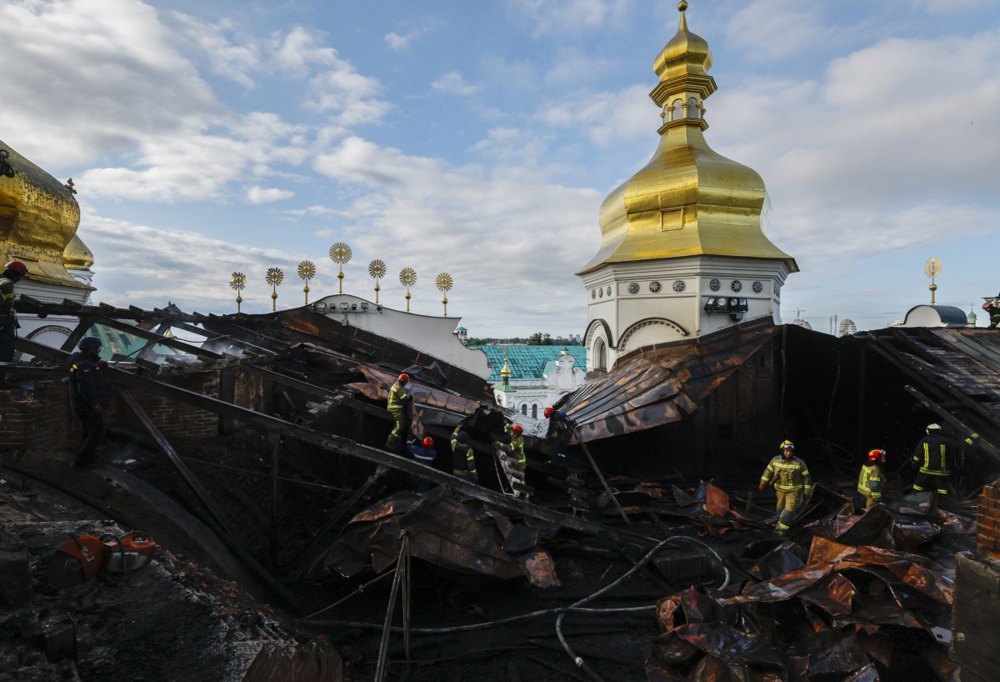
During our visit, we couldn’t avoid the air-raid alerts that are now frequent in Kyiv (as in many other Ukrainian cities). Of course, many visitors to Book Arsenal were, like us, upset that events had to be interrupted because of an air-raid alert. But in those days, fortunately, the part of Kyiv where the Mystetskyy Arsenal is located was spared strikes and destruction. Sadly, soon after, having already left Kyiv, I learned with sorrow that the Mystetskyy Arsenal building, as well as the Dormition Cathedral on the grounds of the Kyiv-Pechersk Lavra, were damaged during one of the subsequent missile attacks.
Your trip to Kyiv in May took place as part of the Season of Ukrainian Culture in France. Ukrainian cultural professionals and institutions—and Ukraine as a state—have been making great efforts in recent years to ensure that European countries know more about us and our culture. How has knowledge and understanding of Ukraine and its culture in France changed over the past four years?
Without a doubt, the level of knowledge and understanding in France has changed dramatically in recent years. If a young Ukrainian woman came to France, say, in 2020, and locals asked her, “Where are you from—Russia?”, and she explained, “No, I’m from Ukraine,” she might hear in response: “But Ukraine is part of Russia, isn’t it?” And then she would have to explain at length that Ukraine is by no means part of Russia.
After 2022, if a young Ukrainian woman comes to France (whether she is a war refugee or not), no one says that anymore. The French now know exactly where Ukraine is, and they understand that although it is Russia’s neighbour and the two countries share many difficult chapters of history, Ukraine is a sovereign democratic country fighting for its own existence and independence.
If that Ukrainian woman comes to France today, after she says she is from Ukraine, she is very likely to be asked: “Which region are you from?” And that shows how much the French (and other Western Europeans) have learned about Ukraine as a geographic and cultural context over the past four years.
And not only that—today in France, people finally know Ukrainian culture well; they know Ukrainian contemporary film directors, artists, writers, poets, and so on.
Before 2022, we have to admit, France knew virtually nothing about Ukrainian literature. Even well-known Ukrainian literary figures such as Serhiy Zhadan were practically unknown in France. Today, everything is different. And the Ukrainian cultural community, as well as Ukrainian institutions, have done an enormous amount to make these important changes possible.
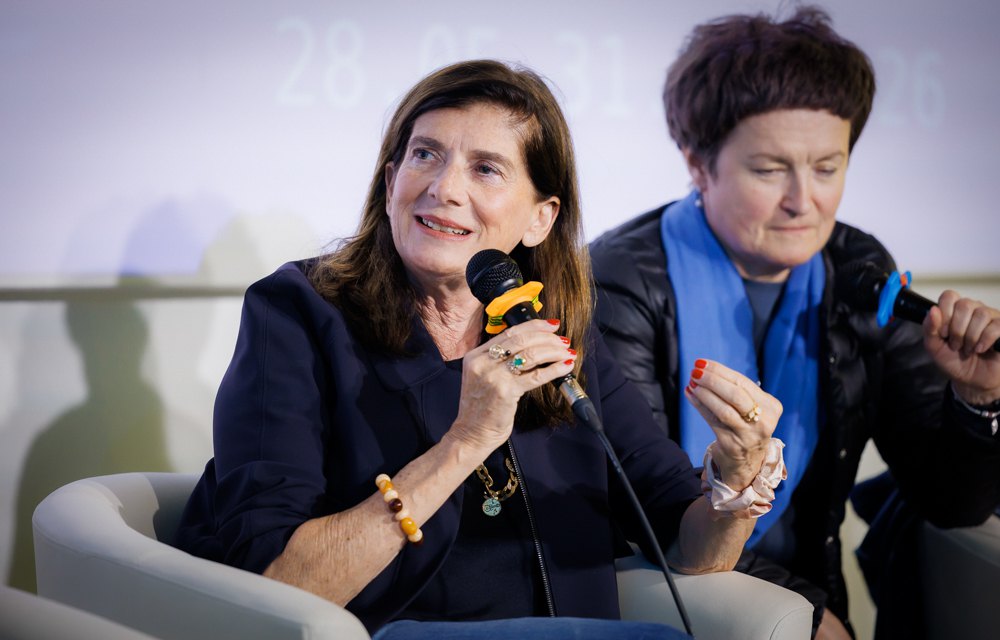
What about Europeans’ deeper understanding of the true nature of this war—colonial for Russia and decolonial for Ukrainians? Without that, it’s impossible to fully grasp the real meaning of everything that is happening. And it’s also impossible to get rid of the rather strong French sentiment toward Russia and its culture.
That is an extremely important question. In fact, what is hardest for the French to understand in this context is the issue of language. I mean: why have many Ukrainians spoken Russian for years if they have their own language—Ukrainian?
There is a very simple explanation for that—it lies in our historiography. It’s also worth noting that after 2014 (and especially after 2022), a large number of Ukrainians switched to Ukrainian.
Yes, I understand. But for many French people it was unclear, and it was very difficult to accept. Now that we know much more about the Ukrainian context and, as you rightly noted, Ukrainian history, we understand much better why Ukrainians use either their own language or Russian.
The second point I would emphasise is the sentiment you mentioned among French intellectual, cultural, and political elites toward Russian culture (especially literature). That has been the case for many decades, even centuries. Meanwhile, throughout all that time, France knew absolutely nothing (or almost nothing) about Ukrainian culture. And that, of course, had consequences.
What’s more, this also applied to leading French public politicians and even the country’s leaders. For example, former French President Nicolas Sarkozy has always held pro-Russian views. And unfortunately, this is not an isolated case: Ségolène Royal, who was the Socialist Party’s presidential candidate in 2007 (she lost that election to Sarkozy), is also a politician with pro-Russian views. As for Marine Le Pen, the leader of France’s far-right National Rally, there’s hardly any need to say more.
Unfortunately, the large number of people with pro-Russian views in French politics is a long-standing and very serious problem that existed in French society long before the war in Ukraine began. But fortunately, times are changing, and today France has plenty of politicians who clearly understand that Putin is a tyrant and that modern Russia is an aggressive autocratic country that poses a threat to global democracy. Still, it is important to understand that Russia’s influence on the thinking and views of French elites has historically been very strong, and getting rid of it quickly and definitively is extremely difficult. This process takes time, but it is happening now—and that is very important.
In our country today, both far-left and far-right political forces are active, and some of them are pro-Russian. All of this creates a very tense—and, I would say, dangerous—political situation. Next year, France is due to hold its next presidential election. And I am convinced that the Russia-Ukraine war will be an extremely important issue in that election context. Among other things, the French will ask themselves whether the person they choose as their next president will help Ukraine the way Emmanuel Macron is doing now.
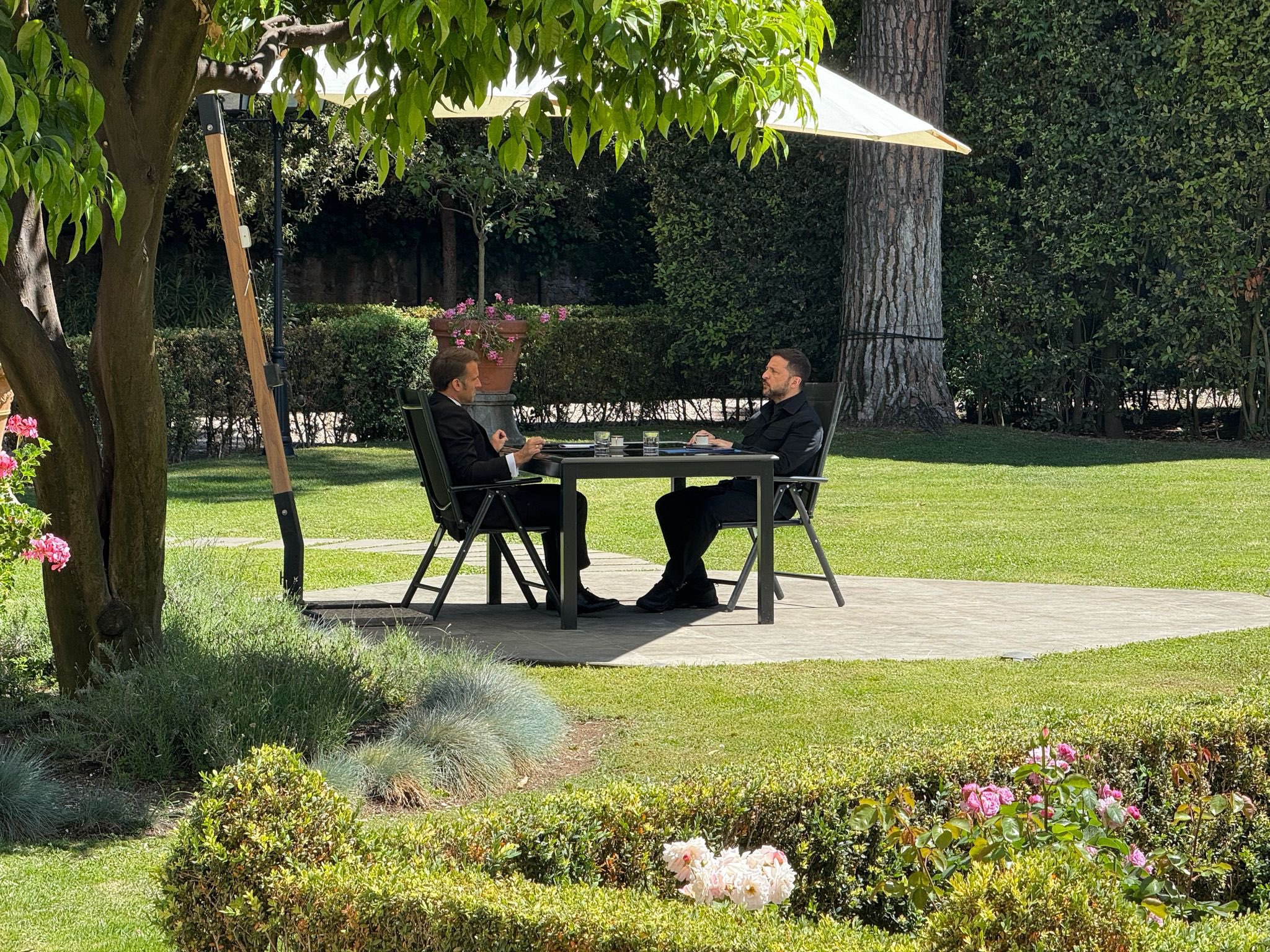
It’s remarkable how life comes full circle: the Russia-Ukraine war is becoming a factor that significantly influences socio-political processes in France. Who could have imagined that just a few years ago? And are the French themselves now rethinking the significance of the war in Ukraine in terms of their own prospects of becoming involved in this war?
It’s difficult for me to talk about this, because I’m a journalist and a reporter, not a politician or a sociologist. What I can say for sure, based on what I observe in France, is that the younger generation of French people is much more mobile than the older one, and they navigate the broader geopolitical context very well. But unfortunately, they are far more interested in what is happening in Gaza than in Ukraine. It’s painful to acknowledge, but it’s true.
Unfortunately, at the moment most young French people simply cannot imagine that in the coming years a war in Europe could take place anywhere beyond Ukraine.
What is that unwavering belief based on?
It’s hard for me to say, but in speaking with many French people every day, I clearly see that they do not believe in the possibility of a conventional war in Europe anywhere beyond Ukraine. It seems many Europeans are still blind in this sense.
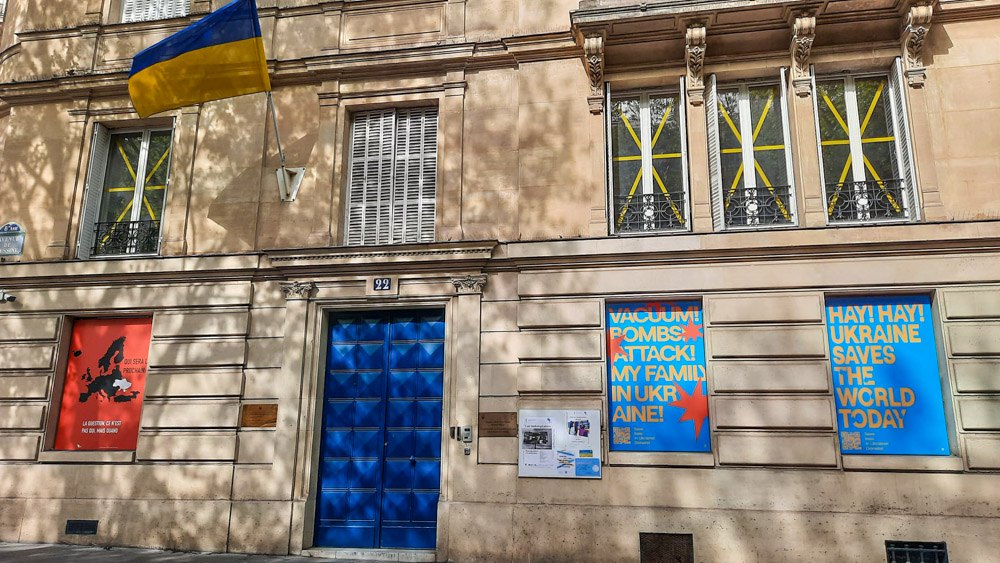
And that could be extremely short-sighted. How would you assess Europeans’ readiness—not military, but mental—for a war in Europe, which perhaps should no longer be discussed as possible but as impending? Is this topic part of an active public discourse?
No, I have to say that in France today this topic is not part of an active public discourse. The reality is that even when our president, Emmanuel Macron, says we must prepare for war with Russia, society does not believe it.
That’s astonishing. As someone who understands the danger in this context, do you try to talk about it with your French friends and acquaintances?
Yes, of course. And not only in my private life, but also professionally. The newspaper I work for, Le Monde, constantly writes about the war in Ukraine; for us it is an extremely important topic that we try to keep in the public spotlight in France. Our website has a dedicated section, “War in Ukraine”, where news about the events of the Russia-Ukraine war appears literally every hour.
When it comes to attention to the Ukrainian context, French society is indeed far more interested today in understanding what is happening in Ukraine—from news and military updates to refugee issues and other socio-political questions related to Ukraine. On this, the French are not closing their eyes; they truly are paying much more attention than they did a few years ago.
But when it comes to the possibility of war in Western Europe and, accordingly, preparing for such a war, it’s different. I’m sure that if you ask ordinary French people about the likelihood of such a war in the near future, the overwhelming majority will say it is zero.
What do you think awaits not only France, but all of united Europe over the next five years? How do you see this near-term horizon of the future?
To be honest, I don’t know what will happen in the next five years. But I will keep working and preparing for my next trips to Ukraine. I plan to continue coming to your country until the war ends, whenever that may be.