






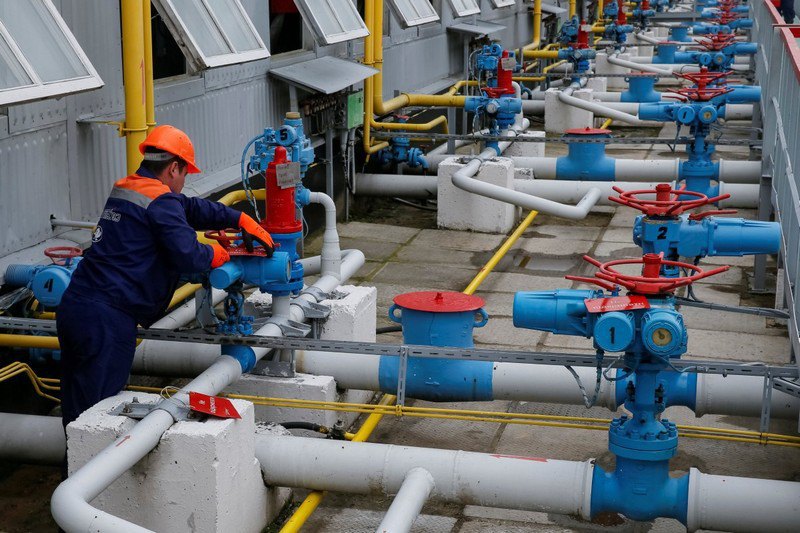
The 2019 deal that might not have happened
Paradoxically, it was Russia that opposed the signing of a new gas transmission agreement five years ago. In 2019, Moscow hoped to go the other way and completely oust Ukraine from the energy transit market.
At that time, the Kremlin, together with Germany, managed to complete the Nord Stream 2 project, which was supposed to be an alternative to the Ukrainian gas transmission system.
At first glance, the Kremlin's position seemed too firm to make concessions. However, the United States intervened and imposed sanctions against Nord Stream 2, which dramatically changed the course of events.
The European Commission joined the negotiation process to continue transit. At that time, the EU was not yet ready to give up Russian gas, especially Germany, whose economy was growing thanks to cheap gas from Russia.
On 30 December 2019, Naftogaz and Gazprom signed an interstate transit contract. During the term of the document, Russia pledged to pump 225 billion cubic metres of gas.
Russia was also forced to pay Ukraine almost $3 billion in compensation under the Stockholm arbitration. The court ruled that Moscow had violated the terms of the previous transit agreement and had to pay the money to Kyiv.
In return, Ukraine agreed to withdraw other gas lawsuits that were being considered by the courts at the time. However, this did not mean that Kyiv was prohibited from initiating new cases against Gazprom, as there was no such clause in the agreement.
Another achievement was the change in the principle of the transit agreement. While the previous one worked on a take-or-pay basis, the new one introduced a different combination — pump or pay. That is, regardless of the volume of transportation, Russia paid Ukraine a fixed amount.
And this clause played an important role in the future, as Russia constantly violated the terms of the agreement. In particular, it reduced the volume of gas pumped. The only exception was 2021, when the Russians pumped almost 2 billion cubic metres more gas than expected. At the same time, according to ExPro analysts, over the past five years, Moscow has pumped about 66% of the contracted volume.
"Putin desperately needs a transit route through Ukraine, because Scholz does not want to launch the surviving line of Nord Stream 2, and the Poles refuse to resume the Yamal-Europe gas pipeline. This means that Putin has only two gas routes to the EU: a direct route through Ukraine and a curved route across the sea via the second line of the Turkish Stream to the Balkans and from there via the low-powered Balkan Stream through Bulgaria and Serbia to Hungary. Of course, the direct route is better and cheaper, but Ukraine is closing it. There is only one and that is the crooked and narrow gas route to Europe via the Turkish route," stated Mykhaylo Gonchar, President of the Centre for Global Studies Strategy XXI.
What Ukraine will lose from transit stopping
Since the start of the full-scale invasion, Ukrainian officials have been repeating that there will be no new transit agreement with Russia. At the same time, the final decision to stop pumping from 1 January seems to have been made only in the last weeks of December. Since last summer, Ukraine and the EU have been holding consultations on whether Russian gas could be replaced with fuel from other countries.
One of the options was to involve Azerbaijan in transit. However, this country had no additional 15 billion cubic metres of gas. Therefore, on paper, it would be Azerbaijani fuel, but in reality it would be the same Russian fuel. But in the end, the negotiations failed and the transit was stopped. To understand whether this will harm Ukraine, it is worth considering three important points: technical, financial and security.
One of the fears — often fuelled by the Russians — is that without transit, the Ukrainian gas transmission system will not be able to operate in a ‘healthy mode’. However, both the Ukrainian government and most industry experts call this a myth. Ukraine has been preparing to operate without pumping Russian gas for several years. And in the end, Russia itself contributed to this by waging several energy wars against Kyiv.
"There may be some technical problems. Naftogaz, unfortunately, did not pump enough fuel into underground storage facilities. Therefore, in mid-February, it may be difficult to maintain pressure in the system. But I think this problem can be solved with additional imports," said Volodymyr Omelchenko, director of energy programmes at the Razumkov Centre.
"Ukraine has been preparing to stop transit since 2009. Because it has been stopped several times since then. There will be no technical problems. In recent years, transit has actually been going through one dedicated pipe — the Progress pipeline, which runs from Sudzha to Slovakia. And it does not actually affect gas supplies within Ukraine in any way," explained Serhiy Makohon, former head of Ukraine's GTS operator.
"Stopping transit will still bring financial losses to Ukraine. But they are not critical compared to Russia's revenues. On average, Gazprom paid Ukraine $800 million a year for gas transit, but about a third of this amount should be deducted. The state spent this money on technical support for transit. Instead, Moscow demanded a much larger sum for gas.
"On 30 December 2019, at 4:38 am in Vienna, I signed an inter-operator agreement between the Ukrainian GTS Operator and Gazprom, which was a prerequisite for signing the transit agreement.
At the time, we hoped that maintaining significant transit through Ukraine would protect the country from Russian invasion. Unfortunately, it did not. Now we must not allow the Russians to earn $6.5 billion annually by exporting gas to Europe through Ukraine. Because those funds then come back to us in the form of missiles and drones," Makohon said.
Stopping transit will affect the cost of gas transportation within the country. The tariff has already been quadrupled at the end of the year, with the decision made by the energy regulator, the National Energy and Utilities Regulatory Commission. The reason for the tariff change is clear: the GTS Operator's revenues will fall sharply next year. After all, 85% of the company's profits came from fees for the transit of Russian gas. Accordingly, domestic customers account for only 15% of the revenue, and these funds are not enough for efficient operation.
"This tariff increase is not even enough to fully compensate (for expenses), but we understand that the country's economy now needs balanced and fair decisions," said Dmytro Lyppa, CEO of the Ukrainian GTS Operator.
However, there is no need to overdramatise the situation with the quadrupling of the gas transmission tariff. On the one hand, the specific figures of the increase do not look that big - it is an additional 74 kopecks per cubic metre of fuel (while its market value is about UAH 16). On the other hand, this increase will not directly affect the population, as tariffs for household consumers remain stable, at least until the end of the heating season.
This means that only businesses will pay the new tariffs, which may cause dissatisfaction among industrialists. However, the cost of transportation services provided by the Ukrainian GTS Operator has not changed since 2019.
While Ukraine shouldn't face any significant problems from a technical and financial point of view after the transit is stopped, the security factor is much more complicated. The main question is: did the transportation of gas from Russia really protect the Ukrainian GTS from missile attacks?
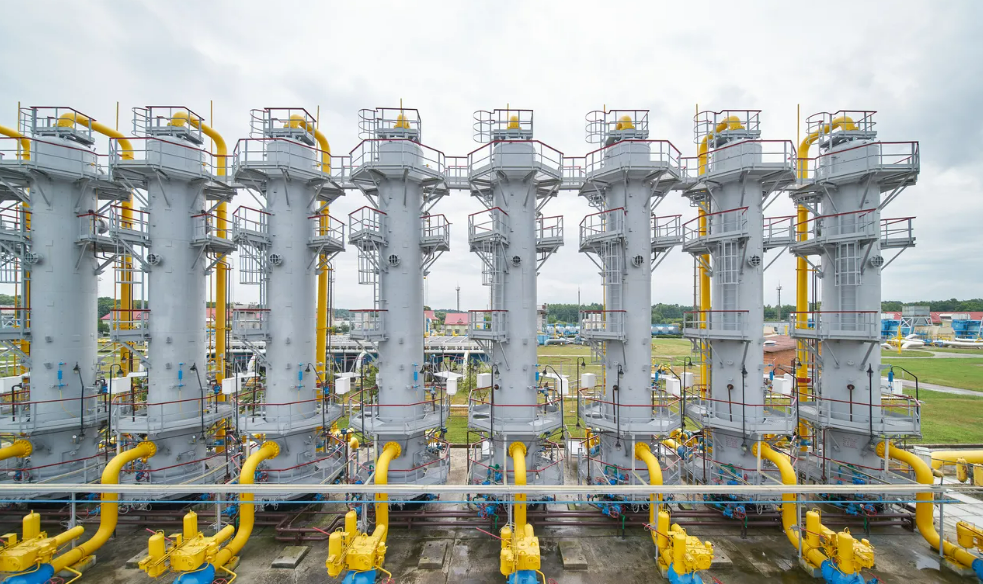
On the one hand, this assumption makes sense, as the country has not had massive and serious problems with fuel supplies over the past three years. But on the other hand, the Russians have repeatedly attacked both gas fields and underground storage facilities.
"I do not believe that transit was a safeguard against Russian shelling. Russia occupied part of our gas transmission system back in 2015. The shelling was and is ongoing. These are all manipulations to persuade Ukraine to continue transit," Omelchenko said.
The European Commission is ready, but Slovakia is not
The EU is prepared to stop the transit of Russian gas, but there is one exception - Slovakia. In general, the European Commission set out three years ago to stop importing fuel from Russia, and it has already made enormous progress.
Prior to the full-scale implementation, the share of gas from Russia in the EU's total imports was over 40%. Last year, however, this figure fell to between 8-15%.
Slovakia, Hungary, Romania, Poland, and Moldova were the main buyers of Russian gas transiting through Ukraine. But the full-scale invasion changed the situation dramatically. Since 2022, Poles and Romanians have stopped buying Russian fuel. Supplies to Hungary and Moldova have also significantly decreased.
Slovakia remained the largest buyer of gas from Russia. However, while in 2020 Bratislava bought more than 38 billion cubic metres from Moscow, in 2024 the figure dropped significantly to more than 13 billion. According to ExPro analysts, Slovakia accounted for 73% of all transit during the 2019-2024 contract period.
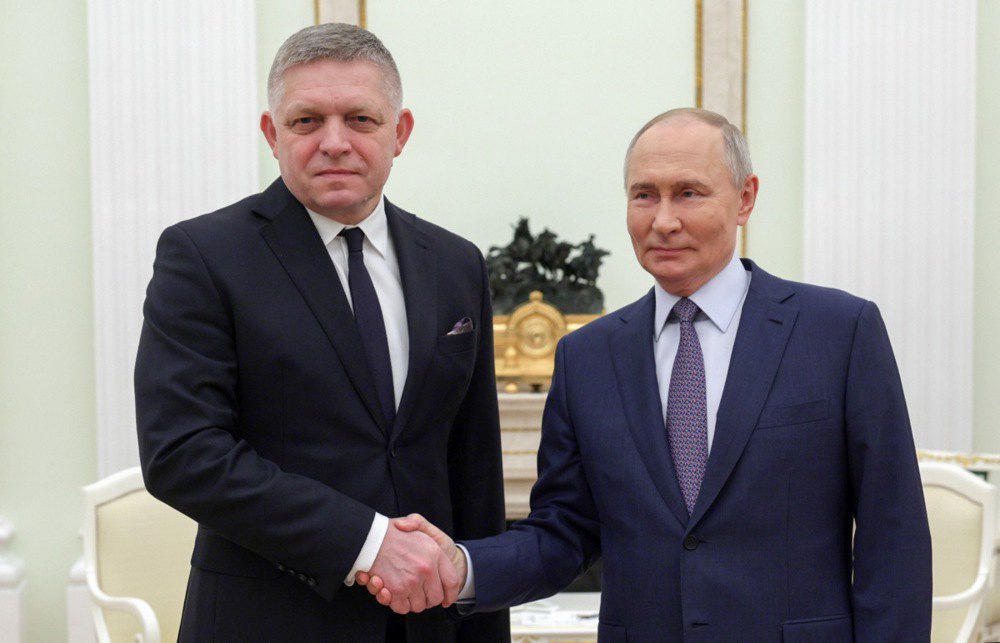
The government in Bratislava could not accept the halt in Russian transit until the last minute, even though the country has alternative supply routes from the European gas market. Prime Minister Robert Fico even threatened to stop selling electricity to Ukraine. In this case, Poland is ready to help Kyiv, promising to increase supplies to Ukraine in return.
Stopping the transit of Russian gas has created big problems for Robert Fico himself, first of all, economic losses.
"This gas has been an instrument of the Kremlin's economic and political influence on Europe for decades. For the past ten years, it has provided the most liquid channel for financing the Russian military machine that kills Ukrainian civilians, including women and children," said Viktoriya Voytsitska, Director of Energy Sector Advocacy at ICUV.
As for other buyers of Russian gas, they have managed to find an alternative — even Hungary has taken this path. It is not that Viktor Orbán has completely refused to cooperate with the Kremlin, but that Russian gas supplies have been redistributed to other routes.
The complicated "Transnistrian issue"
Moldova has introduced a state of emergency in the energy sector. The government is urging people to use electricity sparingly, especially in the morning and evening. The reason for such actions is the suspension of Russian gas supplies. The fuel was transported to Moldova's only thermal power plant, but it is located in occupied Transnistria. This thermal power plant provided 70% of the country's electricity needs.
The situation is absurd: Russia supplied gas to Transnistria, the separatist regime did not pay for it, and the Kremlin was charging the government in Chisinau for the debt. Meanwhile, the self-proclaimed government in Tiraspol sold the electricity it produced to Moldova. These funds constituted the bulk of the budget revenues of the so-called ‘PMR’ (Pridnestrovian Moldavian Republic).
The constitutional government of Moldova tried its best to get rid of this dependence, in particular by building a high-voltage line from Romania. But these measures have not been enough, so now Moldova is facing an energy crisis. And the Kremlin is taking advantage of it, strengthening the positions of pro-Russian parties. After all, Moldova is due to hold parliamentary elections in the summer of 2025.
Moscow is being cunning and trying to blame the energy crisis in Moldova solely on Ukraine. But in reality, it is Russia that is the cause of the crisis. Gazprom can supply fuel to Moldova via other routes (not through Ukraine), such as the route through Turkey and Romania. But Moscow has deliberately refused to do so, thus dealing a severe blow to President Maia Sandu in the first place.

If Russia had continued to supply gas to Moldova via the Turkish route, the energy crisis would have been avoided. But the Kremlin has once again started talking about Moldova's debts, which do not actually exist.
The Kremlin has used similar methods against Moldova many times before. Back then, Ukraine, Romania, and the European Union as a whole came to Chisinau's aid. It is possible that this time Moldova's closest neighbours will have to intervene.
There are several ways out of the situation. The first is to increase gas supplies from the EU through Ukraine and Romania, which is technologically possible. The only question is the price, because electricity for the population in Moldova is already expensive, with a kilowatt costing UAH 5-7 (depending on the supplier). The second option is that Moldova's only thermal power plant can also partially run on coal in addition to gas. By the way, Ukraine has more than 3 million tonnes of solid fuel in its warehouses. We do not need this amount because there is nowhere to burn it due to the destruction of thermal power.