





Largest Petrol Station Network in the Crosshairs
Russia has launched a new wave of strikes on Ukraine’s filling stations. The occupiers are trying to destroy petrol stations ever deeper inside Ukraine’s rear. For the first time, an attack has taken place in the west of the country — in Rivne Region. Strikes have also been recorded in Zhytomyr Region and in Kyiv. Since Thursday, the total is almost a dozen petrol stations.
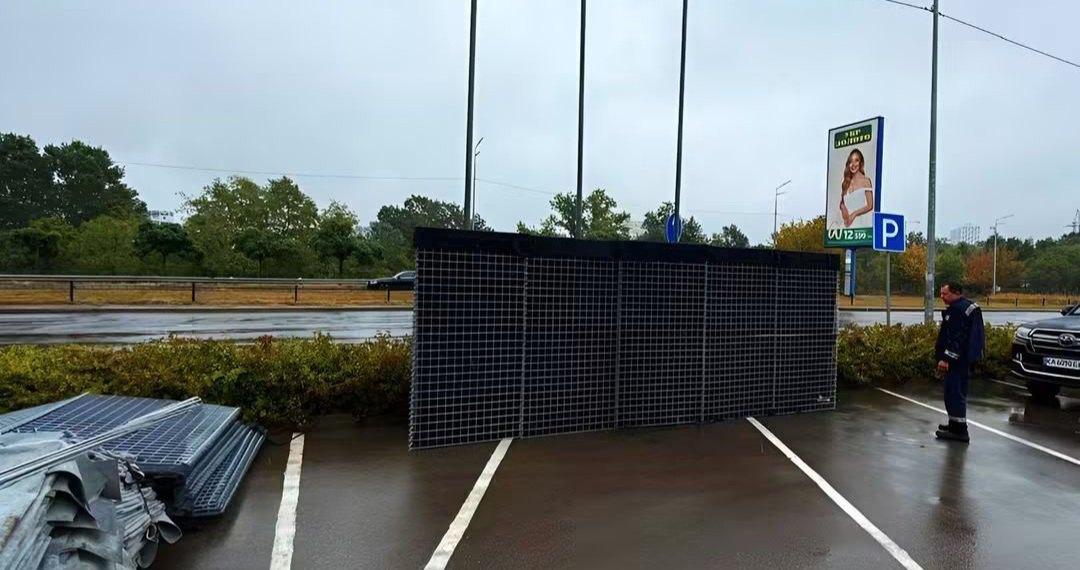
The state-owned network Ukrnafta has suffered the most damage. The company’s management reported that they have begun building gabions on the grounds of fuel complexes. The protective structures will be placed along pedestrian crossings and roads, in an effort to protect passers-by from flying shrapnel and debris.
“By the way, all these stations used to be Glusco — the de facto owner was Nisan Moiseiev, a friend of Viktor Medvedchuk. Before him, they were stations of the ‘TNK in Ukraine’ network, which belonged to Rosneft. They are hitting state-owned filling stations that used to be Russian. ‘If I can’t have it, no one will?’” — writes Oleksandr Holizdra, head of the Energy Development League of Ukraine.
Large petrol stations around major roads and busy junctions are in the enemy’s sights. The situation is threatening, so the government convened a special meeting with industry representatives and officials. The Cabinet says it is important to protect people and ensure stable fuel supplies.
The government has again raised the idea of a special alert system to warn filling-station staff about drone threats. A similar innovation was supposed to be tested in Kharkiv Region last month, but what came of it is currently unknown.
“Safety rules in wartime are written in blood. Filling stations are retail outlets. The enemy strikes them because it has an overall strategy of genocide against the Ukrainian population. The military must provide maximum protection. But we understand that civilians in such conditions must also look after their own safety and not ignore the risks,” says military expert Ivan Tymochko.
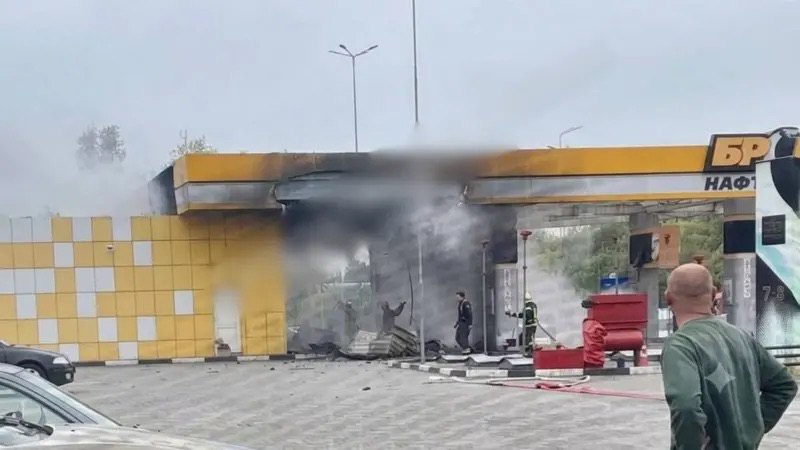
A list is circulating online of petrol stations that the enemy allegedly plans to destroy in Kyiv. All these sites broadly fit the Russians’ logic — they are located near major transport hubs and serve large numbers of vehicles. Incidentally, the filling stations previously damaged in Kyiv are also on this list.
LB.ua sources in the General Staff say the enemy may indeed have been conducting reconnaissance of these particular sites. However, it is still impossible at present to speak of the list’s reliability.
“Note this: when rescuers arrive at a filling station, there is no fire. That’s because the fuel tanks are underground. Now imagine what would happen if it were a so-called mobile filling station, which is essentially a fuel tanker with a dispensing nozzle. That is precisely why 80% of filling stations are being restored,” explains Serhii Kuiun, director of the A-95 Consulting Group.
Russians mostly strike Ukrainian filling stations with ‘Geran 4 Seeker’ drones, explains Oleksandr Kovalenko, a military and political observer with the Information Resistance group. Russians first began using this type of UAV against Ukraine back in 2024.
“Our problem is that we still plan poorly for threats from the enemy. What the Russians are doing to Kyiv is not an experiment — it is already an approach,” the expert believes.
Will Kyiv Face a Fuel Shortage?
In the capital, Russians have hit about 1% of the total number of filling stations, says Oleksandr Sirenko, an analyst at the NaftoRynok consulting company. The expert adds that, for now, this does not affect the city’s fuel supply. Sirenko calls the Russians’ actions yet another serious strategic mistake.
“Because knocking out filling stations does not lead to any kind of collapse. Although it does indeed cause inconvenience. First: when something hits from above, all the infrastructure and fuel remain underground. Second: the Russians knocked out three stations, but the city has up to three hundred,” the analyst says.
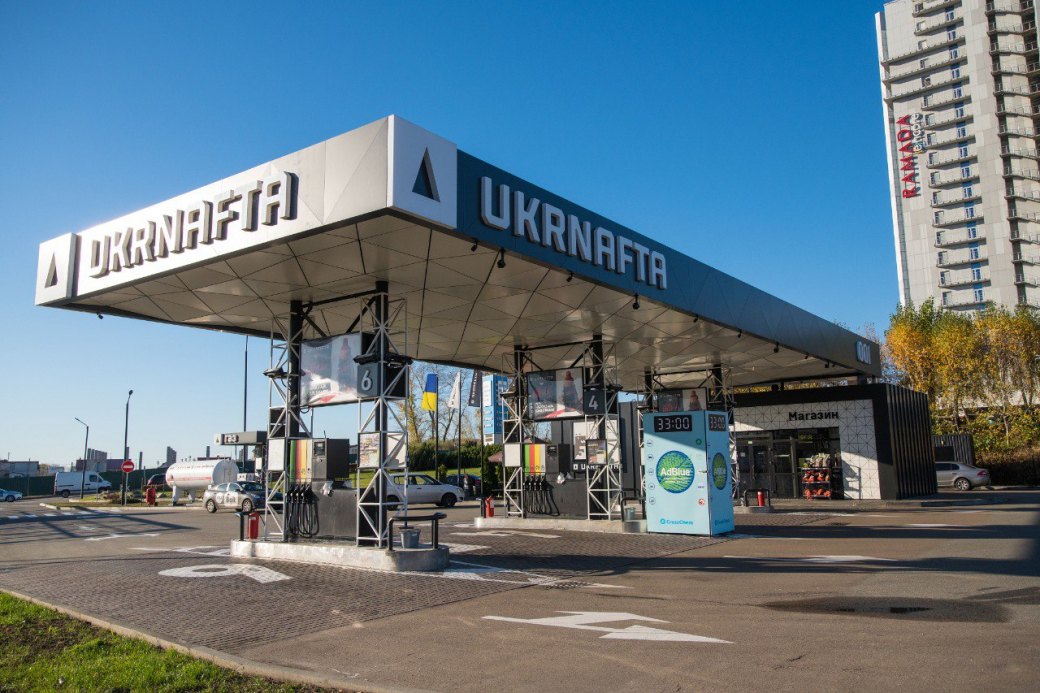
Oleksandr Sirenko cites two likely reasons why Ukrnafta filling stations in Kyiv have come under attack. First, a significant share of these sites belonged, until 2022, to companies with ties to Russia. That means the occupiers know their coordinates and other technical specifics well. Second, Ukrnafta is a state-owned company and at the same time the sector’s largest player. In total, it operates 662 filling-station complexes in almost all regions of Ukraine.
Restoring operations at most of the damaged stations in Kyiv is not even a matter of weeks: the process is costly, but relatively quick. Market players also do not currently see major problems with supplying the capital with fuel.
“The main thing is calm and a cool head. Nothing global will come of these strikes on filling stations. What matters is saving lives and preventing casualties; everything else can be dealt with,” believes Dmytro Lieushkin, founder of the Prime group of companies.
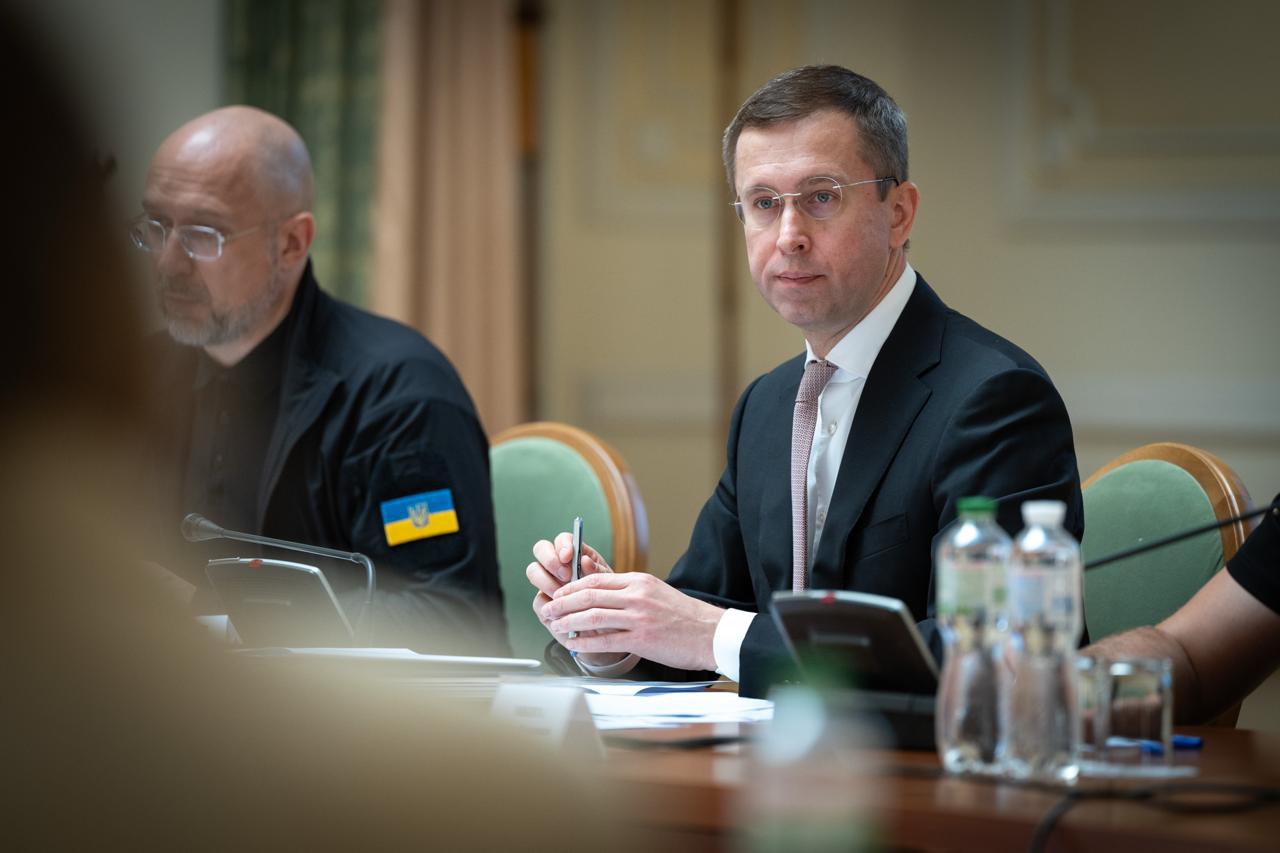
The Cabinet of Ministers promises to help keep the market supplied with fuel. Prime Minister Serhii Koretskyi noted that the railways would be involved more actively in the process. In addition, the government promises to simplify customs procedures for fuel tankers. Something similar was done in spring 2022. In particular, such steps helped overcome the fuel crisis at the start of the full-scale invasion.
Alongside Russia’s strikes on filling stations, Ukraine is experiencing a new bout of turbulence on the global market. Since Friday, prices at Ukrainian petrol stations have started rising again. Petrol and diesel have, on average, increased by about one hryvnia per litre.
Several serious factors are pushing prices up. First, benchmark Brent crude is costing more than $105 per barrel. Second, the global market is once again fearing a shortage that could be triggered by new attacks on tankers in the Middle East. For example, diesel exports from the Arab (Persian) Gulf countries are shrinking rapidly.
New Rules for Staying at Petrol Stations
Since August, the Russians have changed their strategy of strikes on Kyiv and the surrounding region. It is no longer only about intimidating civilians and hitting military targets. Russia is trying to paralyse Ukraine’s financial centre. The Kremlin wants to push Kyiv into a regime of round-the-clock air-raid alerts by launching jet-powered drones in measured batches. As a result, the capital’s economy grinds to a halt. At the same time, the Russians are trying to destroy warehouses with goods around the capital.
“Neither shopping centres, nor banks, nor cafés and restaurants, nor petrol station chains, nor industrial enterprises can, in principle, cover their costs when they are forced to remain closed for more than 80% of working hours. In such a situation, all these businesses could soon go bankrupt, and the budget will no longer be able to finance even the most essential social payments unless central and local authorities develop an effective algorithm for action in the new reality,” believes Volodymyr Omelchenko, director of energy programmes at the Razumkov Centre.
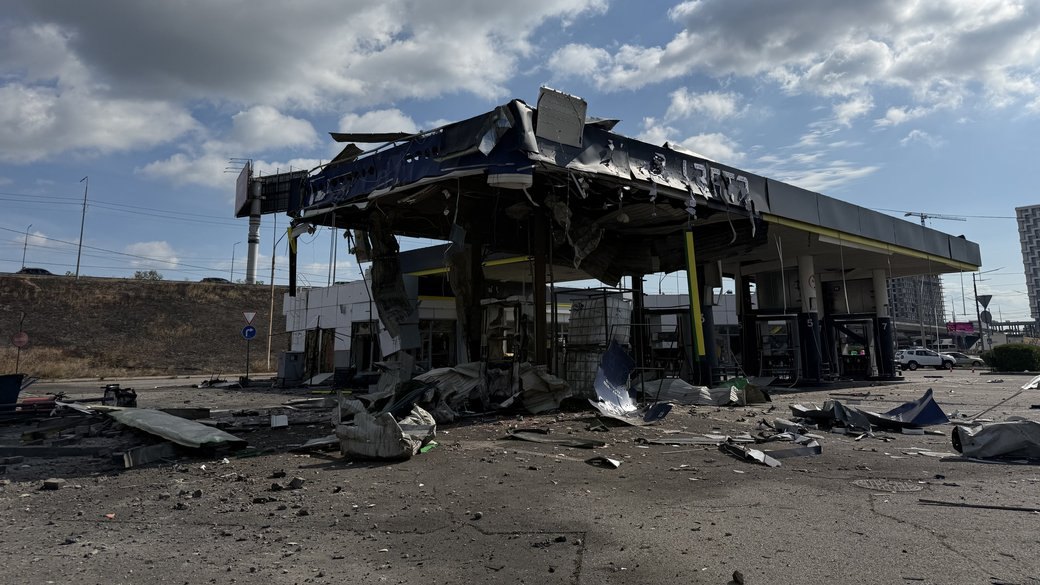
City and central authorities have been slow, but have nevertheless begun to respond. Admittedly, it has not been without yet another round of squabbling over who exactly is responsible for the situation in the city. But fortunately for Kyiv residents, Mayor Vitali Klitschko and the President’s Office have publicly toned down their mutual accusations.
Kyiv has introduced two danger levels: yellow and red. For now, it is very difficult to assess the appropriateness and effectiveness of such an innovation. Businesses themselves decide how to act when there is a threat from isolated drones. For example, banks do suspend operations, while the retail sector mostly continues to work.
Petrol station chains in Kyiv have also begun changing their rules. During yellow and red danger levels, for example, Ukrnafta stations will stop operating immediately. Most chains act similarly.
“Please follow staff instructions and leave the complex immediately,” the company’s press service reports.
They urge drivers not to leave their cars at filling stations and not to linger on the premises after refuelling or other purchases. They also advise — where possible — dropping passengers off outside the complexes.
“Following these simple rules helps reduce risks and protect life and health,” Ukrnafta adds.
Similar rules are already in place in frontline areas and regions bordering Russia. They were first introduced in Dnipropetrovsk and Kharkiv Regions.
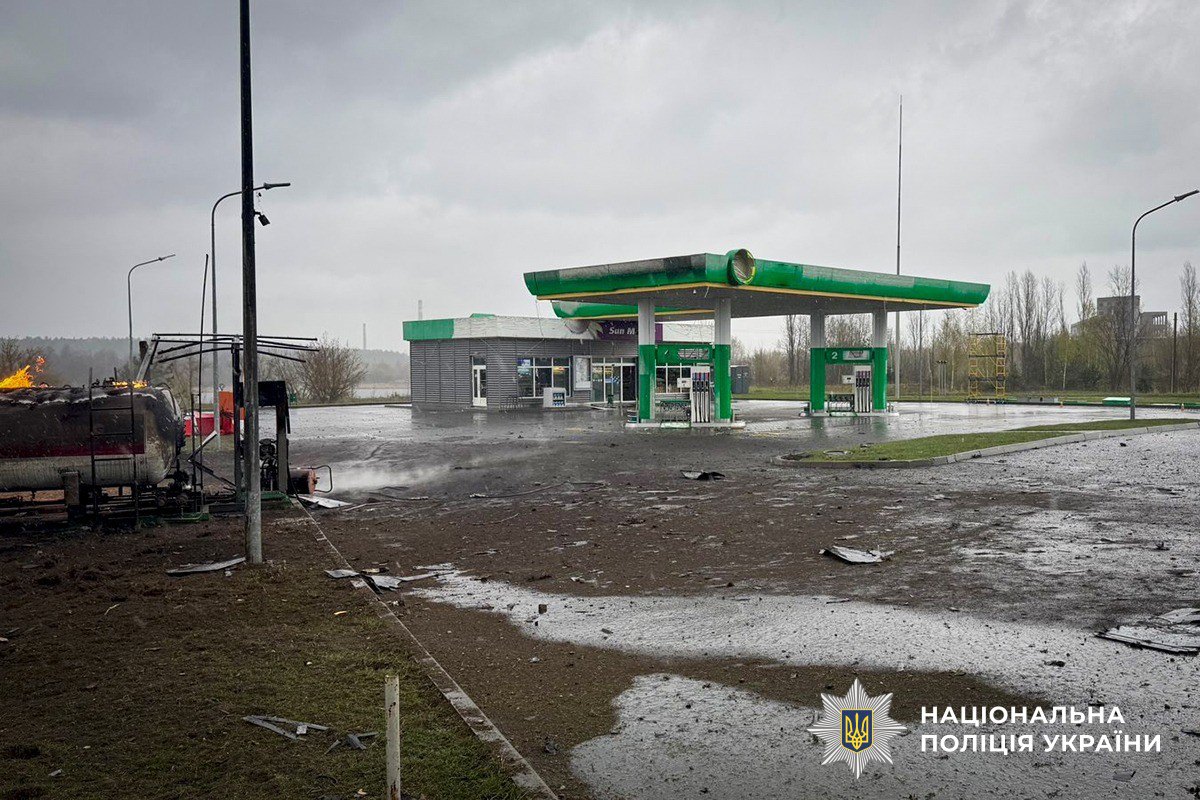
Russia began its campaign of strikes on Ukraine’s filling stations back in the summer. According to various estimates, the occupiers may have hit up to half a thousand filling stations, or roughly 10% of the total. The situation is particularly difficult in Sumy and Chernihiv Regions: in some local communities, not a single surviving filling station remains.
However, despite the scale of the damage, there are two important pieces of news. First, some filling stations have been restored: it is expensive, but possible. Second, Russia’s plan did not work, and it has not managed to destabilise Ukraine’s fuel market.
“We need to put an end to crowds of people queuing for hot dogs in dangerous regions. Filling stations are now a priority target, especially in frontline areas. You can eat a hot dog in a nearby café. You can’t be unloading a busload of ‘eaters’ right now. You won’t have time to gather them back up if there’s a ballistic strike, God forbid,” says Dmytro Lieushkin.
Filling-station chains are adapting quite skilfully to wartime realities. The start of the full-scale invasion was shock therapy for the market. Dealers managed to reconfigure supply chains and switched to just-in-time operations.
Discussions are currently under way about whether Ukraine should introduce mobile refuelling complexes. On the one hand, they are mobile and could solve fuel supply problems in certain regions. But on the other hand, such filling stations would become new targets for the Russians. What is more, they could potentially be far more dangerous because of open fuel tanks.