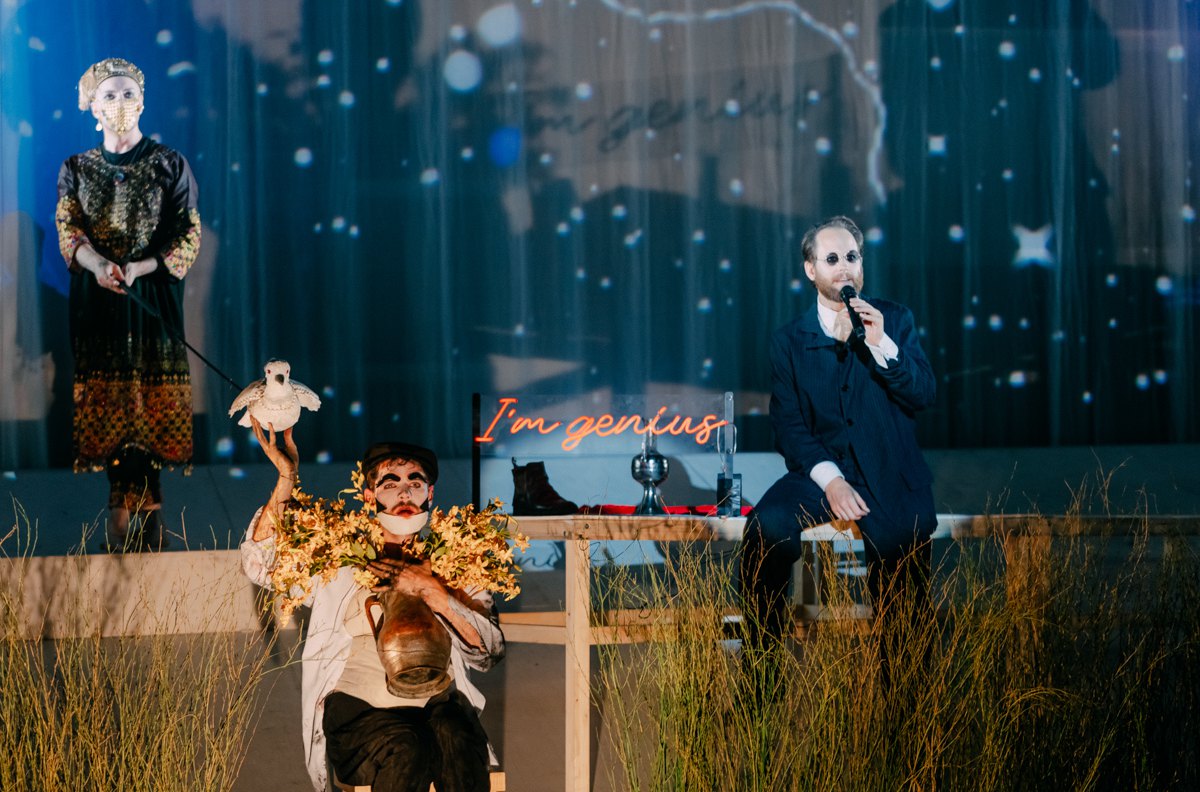





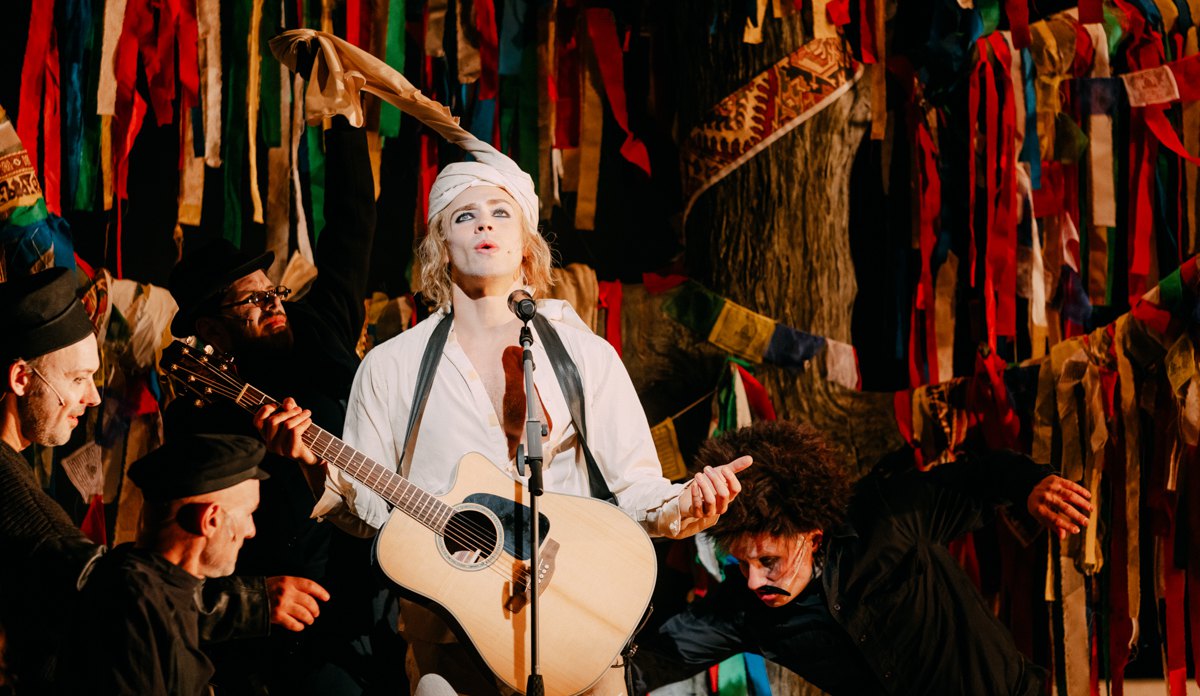
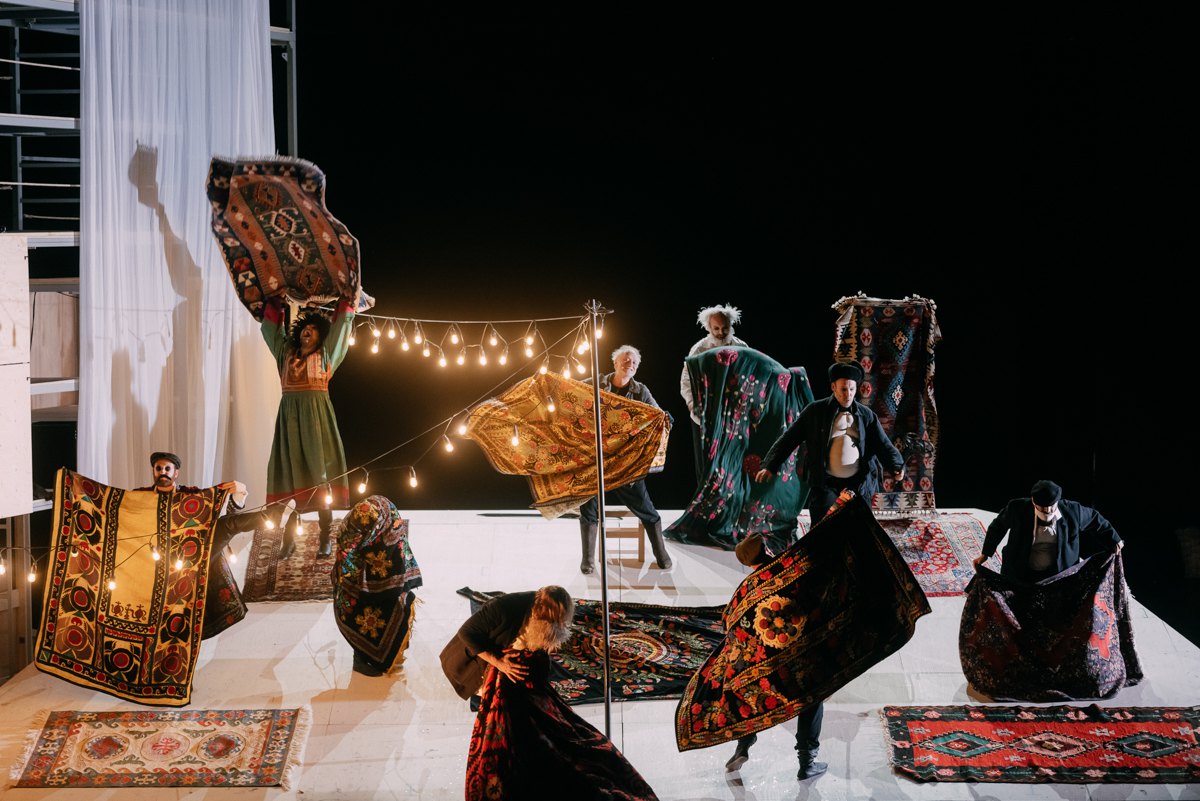
“What a relief that this isn’t a Ukrainian legend,” I thought, as a Georgian choir in national costume sang once again on the stage of Berlin’s Schiller Theatre. Perhaps not a very noble thought: the choir was magnificent.
But I already knew all too well what it is like when, in a production by the Russian director Serebrennikov, your culture suddenly becomes material for someone else’s statement. Four years ago I wrote a column, “Where Is the Duck Swimming”, on the occasion of the premiere of “Viy” at Hamburg’s Thalia Theatre, where that episode was the Ukrainian mourning song “Plyve Kacha”. In that production, Russia’s war against Ukraine dissolved into a much broader story about violence, death and innocent victims. So I came to “Legend” almost ready to continue the very same argument.
But Serebrennikov didn’t give me that.
The Infanta Who Never Was
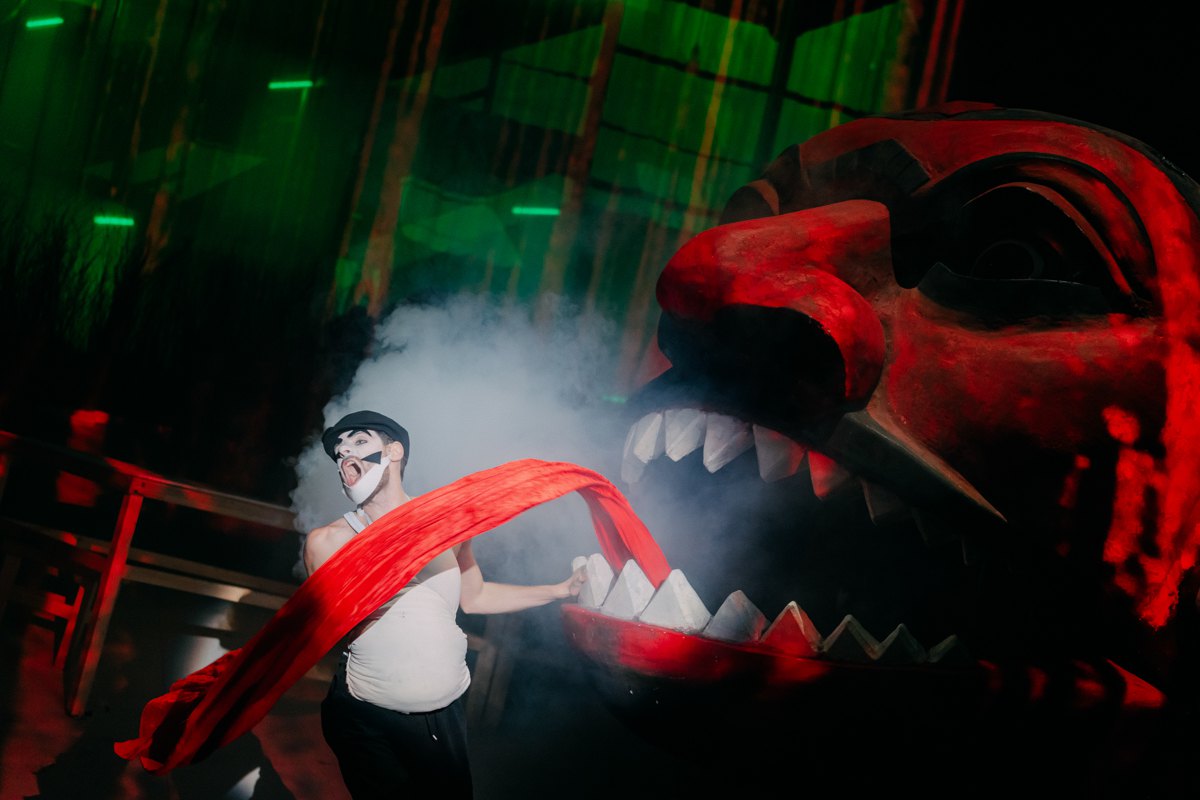
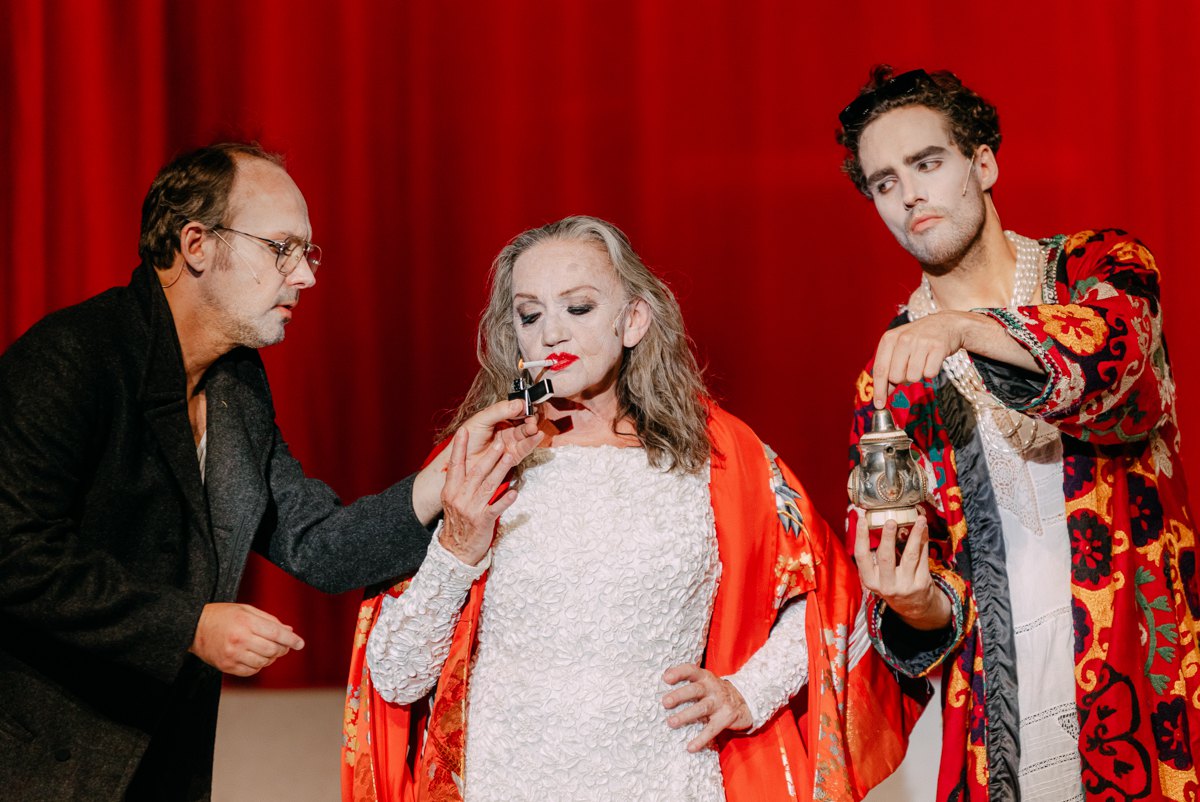
“Legend” consists of ten acts. Instead of a linear biography of Parajanov, there is old Tbilisi and the Khanenko Museum, Walt Whitman and Tarkovsky, the Venice Film Festival and a Soviet penal colony, King Lear with entirely recognisable features of Putin, quotations from Parajanov’s films and fantasies that never existed in his biography. Even Parajanov himself does not have a single body in the performance: in different “legends” he is played by different actors — men and women.
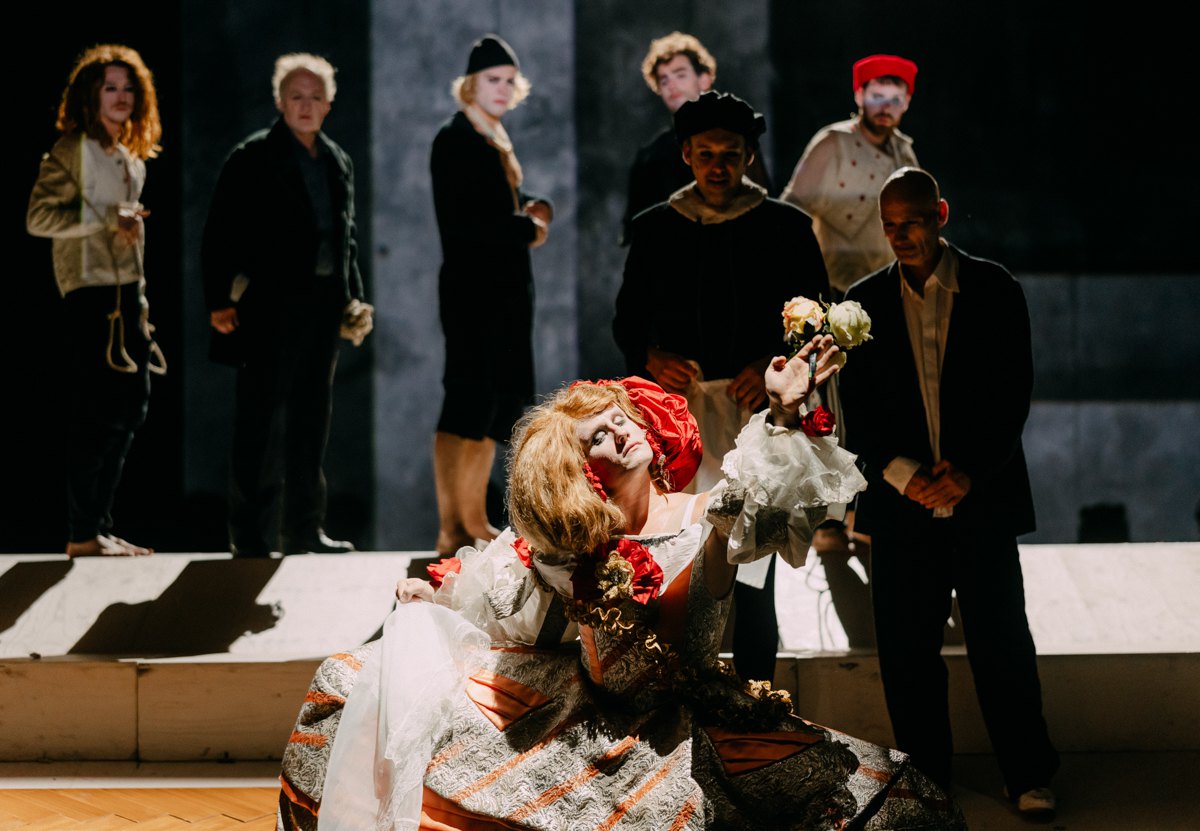
The second act of “Legend” — an obvious allusion to “Kyiv Frescoes” — is dedicated to Kyiv’s Khanenko Museum. The character Parajanov goes to look at a portrait of the Infanta Margarita, once bought by Bohdan Khanenko at a Berlin auction. Despite documents attesting to its authorship, over time it turned out that this supposed work by Velázquez was a forgery. But Parajanov never found out.
The performance continues this story in our own time. The museum exists in wartime mode: in autumn 2022 its building was damaged by a Russian missile strike. An air-raid siren sounds — almost like the sound of a trumpet. In the finale, another trumpet-like sound appears: to me it seemed similar to a trembita.
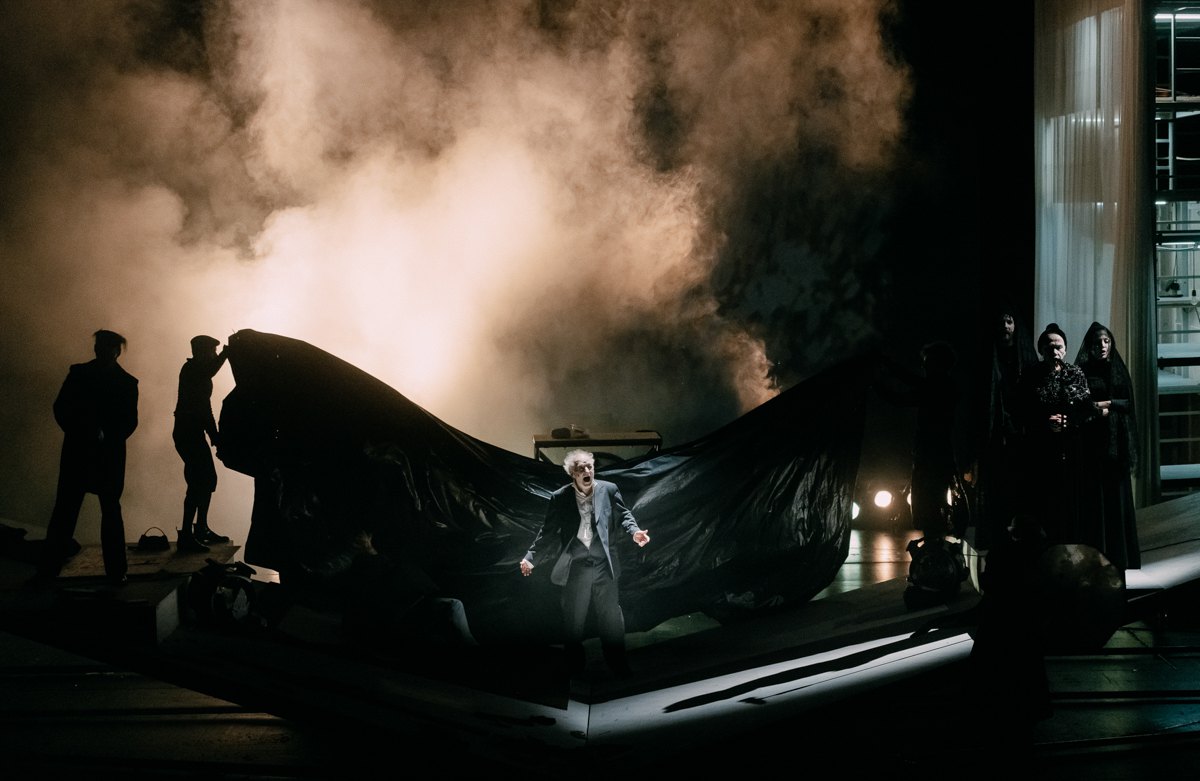
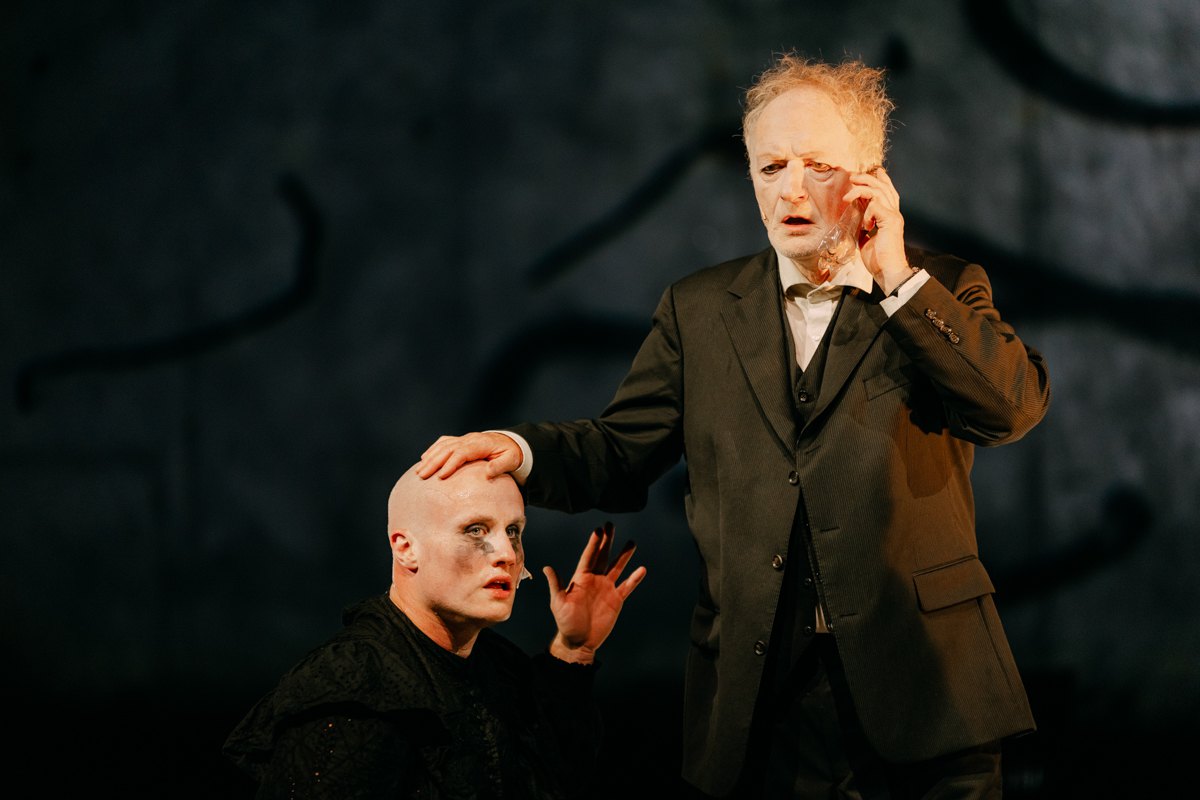
Gradually it becomes clear that this structure is not a way of retelling Parajanov’s biography, but an attempt to emulate his own method. “Legend” works as a collage performance, a mash-up: biographical facts sit alongside quotations from films, cultural codes alongside fantasies, and historical figures alongside images that exist only within this associative world. Georgia here is old Tbilisi of street madmen and flea markets. The poet Walt Whitman is a singer of unusual people. Putin the dictator is shown through the image of King Lear in a nappy: this grotesque figure does not blur the political meaning; on the contrary, it makes it unmistakable. The Infanta Margarita is easy to recognise by her characteristic costume: her hairstyle and voluminous dress. And Parajanov, with a fake belly, becomes the centre of this entire associative field.
Decorative details from “Shadows of Forgotten Ancestors”, “Kyiv Frescoes”, “The Colour of Pomegranates”, “Ashik-Kerib” can be recognisable quotations — or simply curiosities from Parajanov’s world; evidently, for me too, some Armenian, Georgian and other codes remained merely a visual flow. That is the principle of collage: you do not have to know the origin of every fragment for the image to work. But the next question is what happens to the cultural belonging of an individual image after it enters a collage mosaic?
Whose Culture Is This?
And here it is important to step out of the Schiller Theatre onto the streets of Berlin. During the very days of the Kirill & Friends festival, Germany’s capital was loudly shutting down the Russian House on Friedrichstrasse. Social media rejoiced. But I found myself caught by other posts — the ones that voiced what, of course, was not in the festival’s official press releases: the Russian House is closing, down with dictatorship, but Russian culture is alive. Here it is: the “real”, contemporary one — in Berlin theatres. Free, oppositional, European. Not identical to the state and its Russian House.
At the same time, Serebrennikov himself did not try to make Parajanov a “Russian” artist. His world is made up of different cultures, languages and geographies. Georgia here is not Russia. Ukraine is not Russia. Parajanov is not a Russian director. In that sense, the performance is far more precise than the frame that has situationally formed around it.
An interesting turn, then. In the performance itself, Parajanov’s cultural belonging is constantly multiplied and complicated. In the German context, the belonging of its author, by contrast, is simplified to a single one. Parajanov has been “universalised”. Serebrennikov has been “nationalised”. And this is a question not so much for the performance as for the cultural environment that receives it. Where do the borders of that “Russian culture” lie, whose vitality a festival by a Russian director in Berlin supposedly attests to? Does it really include a Georgian choir, Kyiv’s Khanenko Museum and an Armenian director who made one of the most important Ukrainian films of the 20th century? “Legend” itself resists such a simple appropriation: its Parajanov constantly slips out of a single identity — just as he slips out of a single body.
Finding Parajanov
The four-hour “Legend” creates an entire world around the image of Parajanov. He is played by men and women; Tbilisi and Kyiv appear, Whitman and Tarkovsky, the Khanenko Museum and a Soviet colony, his films, friends, costumes, music, imagined encounters. Parajanov is many-faced.
And yet Parajanov did not leave the Schiller Theatre with me.
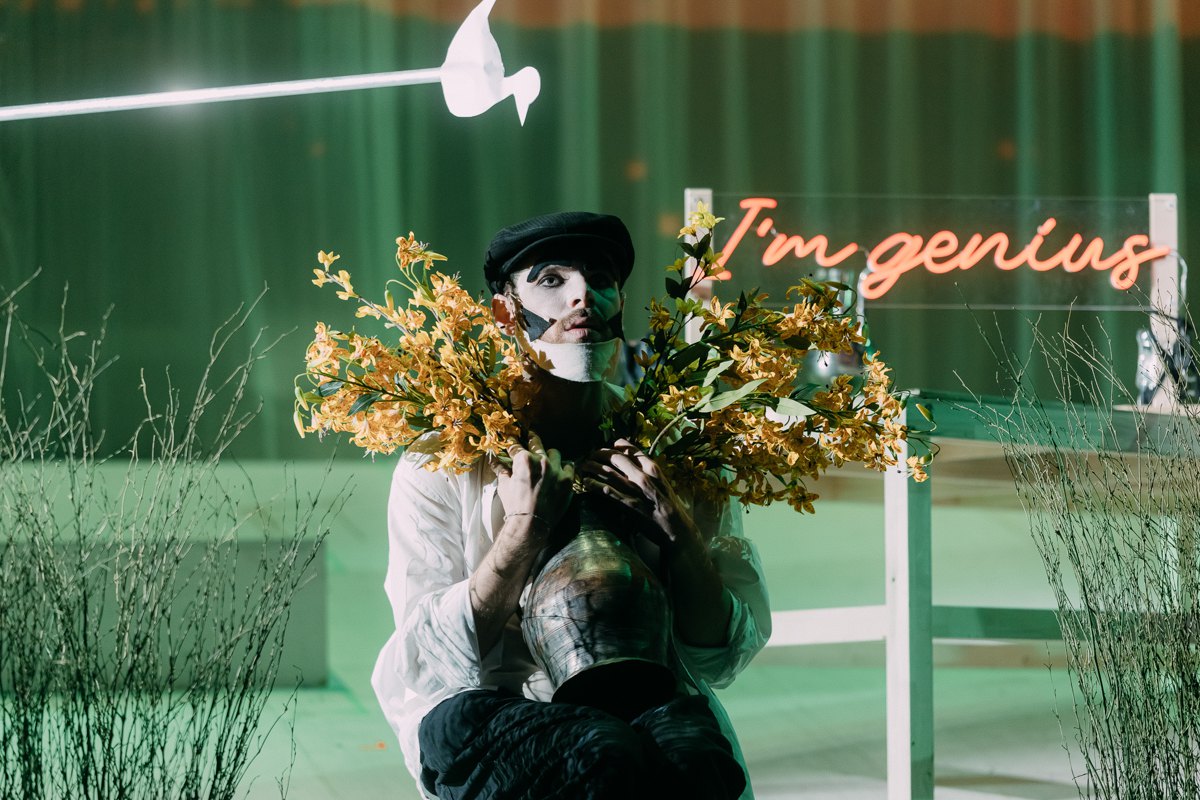
Kirill Serebrennikov took Parajanov’s way of seeing — collage, excess, fantasy, the transformation of reality into images — and, by those rules, built his own performance. From that point of view, “Legend” is consistent. And at times very beautiful.
But aesthetics and faithful execution of an idea are not enough for a performance to become something special. Individual images — an artist with a fake belly, the infanta in a Kyiv museum, old Tbilisi, Putin-as-Lear in a nappy — linger more strongly than the whole. Paradoxically, Serebrennikov managed to assemble Parajanov’s world. But Parajanov dissolved within that stage world.