





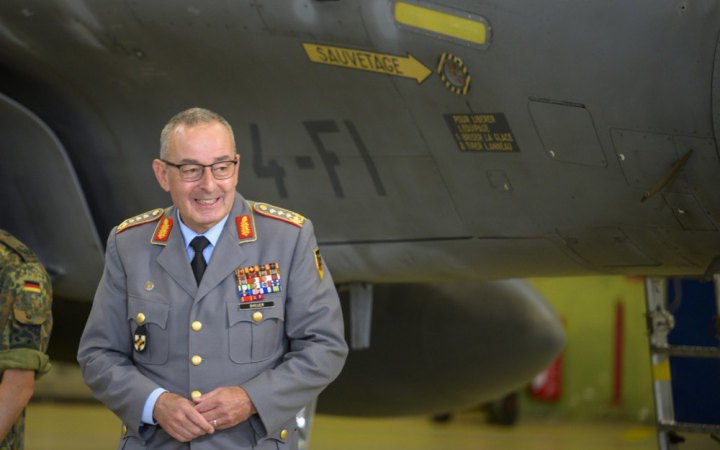
Germany’s Chief of Defence, Carsten Breuer, will lead NATO’s top military body. In a secret ballot of the Alliance’s chiefs of defence, a majority backed his candidacy.
Breuer, who has led the German armed forces since 2023, won the support of at least 17 of NATO’s 32 chiefs of defence in a closed vote on the candidacy for chair of the Alliance’s Military Committee in Copenhagen.
“Congratulations to General Carsten Breuer. Your operational vision, deep knowledge of this Alliance and leadership of the German Armed Forces will benefit NATO,” wrote the current chair of NATO’s Military Committee, Italian Admiral Giuseppe Cavo Dragone, on X as he announced the results.
Breuer will replace Dragone in the role in July next year and will hold it for three years.
The remaining voting results were not made public to avoid the risk of dissatisfaction and division over the outcome, a NATO official said on condition of anonymity.
The German general beat Canada’s Chief of the Defence Staff, Jennie Carignan, in the contest for the post. Breuer was seen as the favourite given Berlin’s status as Europe’s biggest defence investor and implicit backing from Washington. During the campaign, Breuer emphasised Germany’s leading role in defence funding, as European allies face pressure from the US, which is urging them to take greater responsibility for their own defence.
Carignan, who has been Canada’s Chief of the Defence Staff since 2024, stressed in her campaign the need to strengthen the role of the Military Committee and demonstrate the preservation of transatlantic unity within NATO. Alliance officials believed that strained bilateral relations between Canada and the US complicated Carignan’s position.
Germany is taking on senior military posts and greater operational responsibility for protecting states on NATO’s eastern flank. This includes a regional land forces command focused on Estonia and Latvia, as well as the permanent stationing of troops in Lithuania.
The chair of NATO’s Military Committee is expected to provide allies with frank military advice, including assessments of the feasibility, funding and capabilities of military operations. He also co-ordinates the work of dozens of NATO military staff working groups and helps build consensus when shaping military recommendations.