





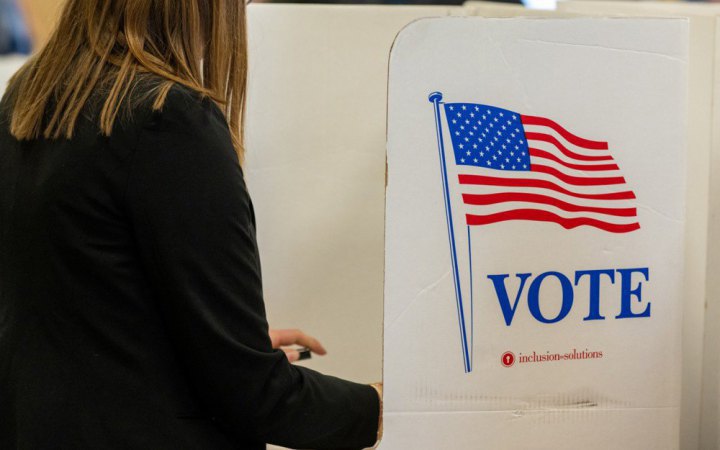
Election experts warn that the administration of US President Donald Trump could use the vote-counting period after the November midterm elections to challenge the results.
Control of the US Congress remains uncertain, so former US officials consider the hours and days after voting to be a particularly vulnerable period.
In early September, the US Supreme Court rejected an attempt by the Trump administration to impose tougher restrictions on voting by post. Against this backdrop, experts fear the Trump administration could use the vote-counting period to spread allegations of possible irregularities and to challenge results that do not match its expectations.
Read alsoFT: US Supreme Court Allows Trump Administration to Check Voter Rolls Using a Migrant Database
Former US Deputy Homeland Security Adviser Caitlin Durkovich suggested the administration could step up claims of foreign interference after voting ends. She said this could potentially be accompanied by demands to seize election equipment or ballots.
At the same time, these remarks are an assessment of how events might unfold, not confirmation that the administration has such a plan.
In some states, counting takes several days, while in California it takes several weeks. Control of the House of Representatives and the Senate could depend on results in states where counting takes longer.
"It is precisely during this period, while people are waiting, that doubts begin to arise," Durkovich said, adding that such doubts could be amplified by the actions of foreign and US political actors.
Larry Norden of the Brennan Center for Justice noted that state election officials are already trying to explain vote-counting procedures to the public in order to reduce the risk of disputes after the election.
Separate concerns relate to possible claims of foreign interference. Former US Deputy Director of National Intelligence Beth Sanner said there are no examples of a foreign state attempting to interfere specifically in the technical process of counting votes.
She said foreign influence, propaganda and direct interference in the technical process of elections are different phenomena.
Meanwhile, US federal agencies continue to review election infrastructure and voter rolls. The Department of Homeland Security, in particular, is requiring certain states to provide voter rolls and is running an initiative to identify possible non-citizens on the voter lists. Critics of the initiative question the data used and its legality.
Former US Cybersecurity and Infrastructure Security Agency official Jeff Hales also reported a reduction in federal support for election cybersecurity. He said that because of staff and funding cuts at CISA, state election authorities are receiving less technical assistance and less information about potential cyber threats.
At the same time, state election authorities are auditing voting results and continuing preparations for the elections.
Early voting in the United States has already begun. The main day of the midterm elections is scheduled for 3 November 2026. They will determine the make-up of the House of Representatives and part of the US Senate.