





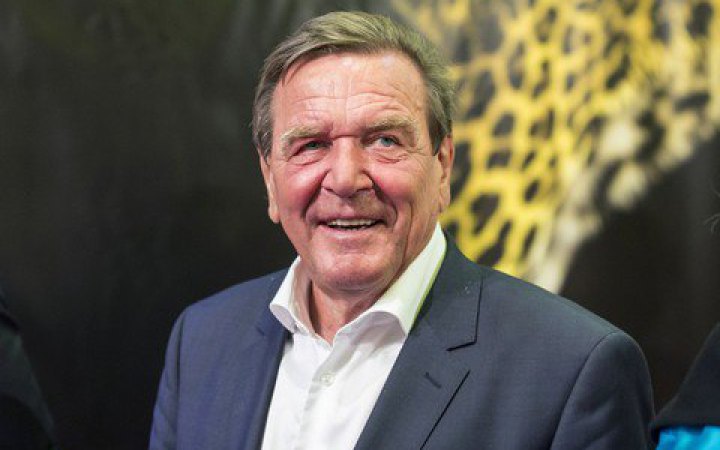
Former German Chancellor Gerhard Schröder has become a member of the supervisory board of the Russian company “Hyperglobus”, which operates on the local market after the Russian business was separated from the German Globus holding.
This was reported by Deutsche Welle.
In August, Globus confirmed that it had spun off its business in Russia into a separate company, “Hyperglobus”. It later emerged that Schröder had joined the supervisory board of the Russian firm. He previously held senior positions at major Russian companies, including Rosneft, and was linked to the operator of the Nord Stream gas pipeline.
The former politician’s new role has drawn criticism in Germany. Bundestag MP and Christian Democratic Union foreign policy expert Roderich Kiesewetter called Schröder’s appointment “a betrayal of Europe and his own country”.
“Anyone who publicly and demonstratively shakes Schröder’s hand is thereby seeking to show their position,” Kiesewetter wrote on the social media platform X.
Thomas Jäger, a professor of political science at the University of Cologne, also criticised Schröder, saying he had received “a new lobbying assignment” in Russia. He also raised questions about the former politician being greeted by German President Frank-Walter Steinmeier.
As Deutsche Welle уточнює, it was likely a reference to a ceremony marking the 75th anniversary of Germany’s Federal Constitutional Court, held on 28 September in Karlsruhe. During the event, Steinmeier shook hands with Schröder, who was seated in the front row.
German economist Jan Schnellenbach also reproached Schröder for his “shamelessness”, casting doubt on reports about his health, which supposedly meant the former politician could not appear before a German court.
Janis Kluge, head of the research division at the German Institute for International and Security Affairs, suggested that Schröder’s appointment could be linked to the German parent company’s desire to protect its assets in Russia from possible confiscation.
“Schröder is once again monetising his access to Putin,” Kluge said.
Schröder has long been criticised in Germany and other countries for his ties to Russia. After ending his political career, he worked in Rosneft’s leadership and was linked to the company operating Nord Stream.