





How Ukraine Became Visible in the Balkans
When people talk about Ukraine’s cultural ties with Europe, they most often mean Western Europe. The Balkans tend to be left out. Yet the ties are there — old and strong — and very often they rest more on personal contacts than on systematic state policy backed by appropriate funding. Can we say that 2022 divided the history of Ukrainian–Balkan relations into a before and an after?
Probably, yes. Because from 2022 onwards many countries seemed to wake up from a sleep in which Ukraine lay outside the bounds of their imagination. In other words, it existed somewhere out there, but it did not particularly interest anyone. It was either Russia’s shadow, or an unknown, little-studied and therefore, perhaps, uninteresting country.
In 2022 there was a surge of interest in Ukraine. Above all because the country that many considered a victim — one that would be forced to surrender in three days or, at most, a week — showed strength, stubbornness, an energy of freedom and resistance.
In the Balkan media you could also encounter the narrative: Russia is so strong, so powerful and so heavily armed — why don’t the Ukrainians surrender? The inability to understand how a much smaller country could resist also generated interest in it.
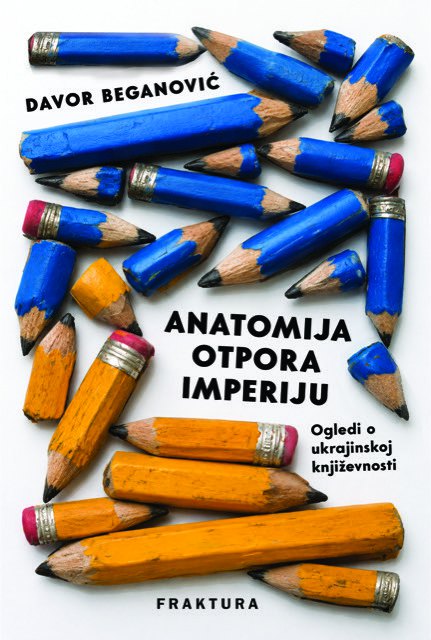
A telling example is Davor Beganović, a professor at the University of Münster — a Croat who, after the full-scale invasion, became so interested in Ukraine that he wrote dozens of essays on Ukrainian literature. A person who had spent his whole life working on Balkan literatures and Yugoslav studies turned to a culture whose language he does not know. He wanted to understand where this energy of resistance comes from. His book is titled accordingly: Anatomy of Resistance to Empire.
Beganović looks for answers in literature and culture. So when someone says that culture is not a priority right now, I consider that a major mistake. After all, how much harm has such a powerful weapon — such a “special operation” — as “great Russian culture” done us! So why can’t we carry out a victorious operation called “Great Ukrainian Culture”?
And how did Croatia react to the start of the full-scale invasion?
In Croatia, many people became interested in Ukraine because of a certain parallelism of historical fates. Those who had fought for Croatian independence — including writers and artists — responded particularly actively.
For example, the then head of the Croatian PEN Centre, Tomica Bajsić, a war veteran, immediately began offering residencies to Ukrainian artists, speaking out and talking about Ukraine.
And the first thing you could speak with were translations of Ukrainian poetry. In the first days of the full-scale invasion, people wrote to me from different countries, especially from Croatia: are there any translations we can read?
People quite spontaneously felt that this was precisely how one could talk about Ukraine. Ukrainian poems were read in theatres and in public squares.
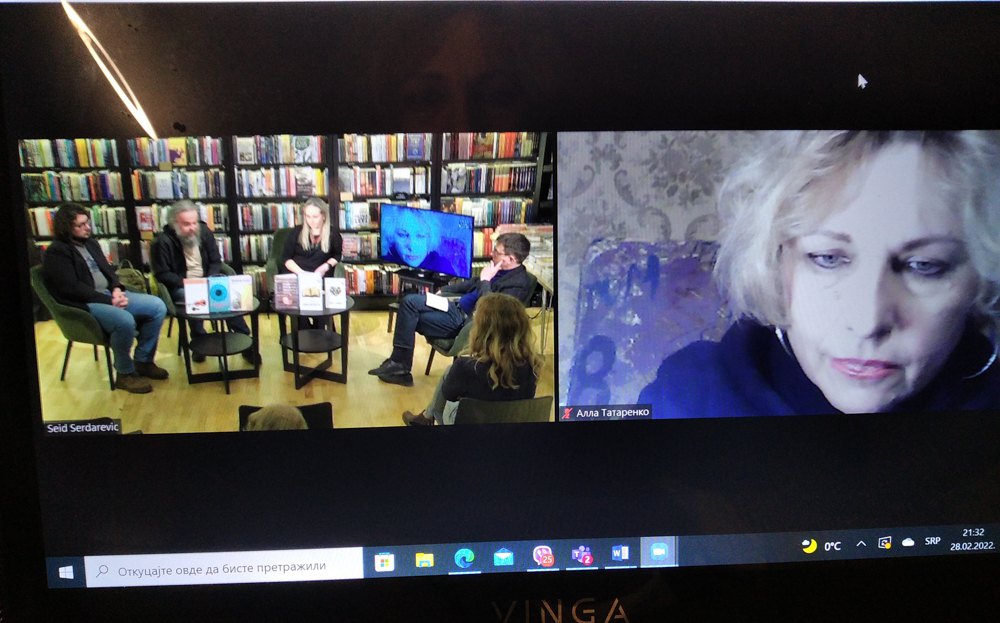
As early as 28 February 2022, one of the first conversations about Ukraine and its culture took place — in the bookshop of the publishing house Fraktura, which by then was already publishing Yurii Andrukhovych and other Ukrainian writers. Miljenko Jergović spoke, as did the publisher’s editor-in-chief Seid Serdarević and the translator Darija Pavlešen. I joined online from Lviv.
When I looked at the photographs from that discussion, I was struck by the fact that there was a smile on my face. In the preceding days, it seemed to me, it had been hard even to look at myself in the mirror.
When War and Peace Can No Longer Be Staged as Before
Have works appeared in Croatian literature that directly reflect on Russia’s invasion of Ukraine?
A very distinctive novel, The Silent Note, by Elvis Bošnjak — a well-known Croatian actor and playwright — has recently been published. It is his second novel, and it is based on real events.
An acquaintance of the author, a Croatian actress, travelled to her grandparents in Chernihiv at the beginning of 2022, and the start of the full-scale invasion caught her there. This story affected Bošnjak so deeply that he decided to write a novel, adding fictional elements to the real events.
But the book is not so much about Ukraine and the war as it is about how Croats see the Russian–Ukrainian war. What happens when war suddenly becomes “close” because someone you know or love ends up there. And when that person returns, the war seems to “recede” again.
The novel also raises the question of so-called great Russian culture, which is very popular in Croatia too. The main characters are actors who are supposed to perform in a production based on Tolstoy’s War and Peace. And it turns out that after the Russian invasion it is no longer possible to stage War and Peace as before. The idea of the great Russian soul, on which so much rested, no longer works.
In the end, the characters find another form: they stage a wordless performance. And it affects the audience so strongly that some set off for the Ukrainian border because they want to help in some way.
It seems to me that this novel shows very well the mechanisms of Croatian society’s reaction to the events of 2022. The main heroine is a Russian woman who does not want to belong to a “nation of killers”, but at the same time does not dare to name those responsible for her grandmother’s death during an evacuation. Instead, she blames the “world order”. I told the author that this is a major problem for part of the left-wing intelligentsia: they want to fight “for everything good”, but are afraid to say plainly who the killer is.
And that is precisely why this novel is interesting. It does not present an ideal picture in which everyone correctly identifies good and evil, but a real one — what we often observe in Western societies. In 2014, such a novel would hardly have been possible. Back then there was not yet a critical mass of people engaged with this “war and peace” problem. After 2022, it became clear that it concerns not only Ukraine, but all of Europe.
“A Bridge Isn’t a Bridge If No One Uses It”
You have been translating Ukrainian literature into Croatian and Serbian for many years, and Balkan literature into Ukrainian. Translation is now often called a tool of cultural diplomacy. But does it really work? And what prevents it from working?
I would say that a bridge does not function as a bridge if no one uses it, if no one walks across it.
For a long time, that was the situation with Ukrainian literature. Translations existed, but in the countries I work with they remained isolated cases. Large organisations were interested in ties with major languages and cultural centres. Ukrainian literature, meanwhile, was represented mainly by individual translators who wanted to say something about their culture.
These were sporadic attempts that did not provide a full picture. Serbian and Croatian readers rarely turned to these translations because Ukrainian literature seemed to them more like an exotic curiosity.
At the same time, some books were successful. For example, Yurii Andrukhovych’s Perversion felt closer to Serbian readers. It raised recognisable issues while remaining sufficiently unusual.
Sometimes translation even produces unexpected additional meanings. At the end of Perversion the words “Santa Maria della Salute” are heard. For a Ukrainian reader, this is first and foremost the name of a Venetian church; for a Serbian reader, it is the title of a famous poem by Laza Kostić, one of the best-known works of Serbian Romanticism. A Serbian reader might decide that Andrukhovych is quoting Kostić. But I asked Andrukhovych — he did not know that poem.
It also happens that a seed you sow sprouts twenty years later. Recently, a publisher in Belgrade who wanted to publish a Ukrainian book recalled that many years ago she had read an anthology of Ukrainian postmodern short fiction. It was one of the few times I met someone outside Slavic studies circles who had read and remembered that book.
So it is not enough simply to publish a translation?
It is not enough. You need books, conversations about them, promotion, systematic work.
You can talk as much as you like about how wonderful Ukrainian literature is. But until there are enough books and enough work to promote them, the result will be limited.
And bridges can work in both directions. When we translate a foreign writer into Ukrainian, Ukraine begins to become a little bit their own.
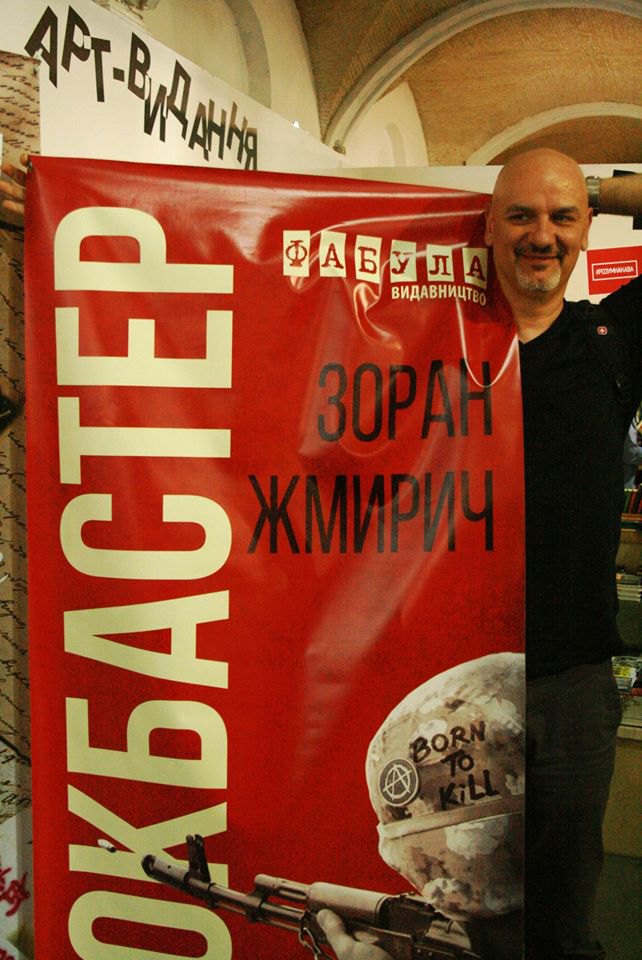
For example, one student enrolled in Croatian studies after reading Zoran Žmirić’s novel Blockbuster. She wanted to translate his other books too. When I told the author about this, he was deeply moved. Later he came to Lviv, met his readers. And when he returned to Croatia, he began talking about Ukraine.
So by translating the literature of other peoples, we also increase Ukraine’s presence in the world.
But Ukrainian literature in the Balkans had a competitor that had been working with local audiences for decades — Russian culture. How systematic was that work?
Our northern neighbour has long pursued a fairly aggressive cultural policy in the Balkans, deliberately and with focus. Competing with it was difficult because it took many different forms. For example, well-known Serbian writers were offered the chance to publish their new works on the Sputnjik website — not in translation, but in Serbian, in the original — for a good fee.
People who wanted to read a new story by their favourite Serbian writer had to go to Sputnjik, and along with the literature they received all the information that this outlet disseminated.
It turned out that we had not built as many of our own bridges as we would have liked. Of course, we need to build them, and we will. In Serbia it is especially difficult, because the Russians have built far too many of their bridges for ours to be noticeable.
Did anything change after 2022?
Yes — in Serbia, Ukrainian literature began to be published more actively.
First, interest in Ukraine grew. Second, programmes such as Creative Europe and other European projects began to include Ukrainian books, and the financial support attracted Serbian publishers.
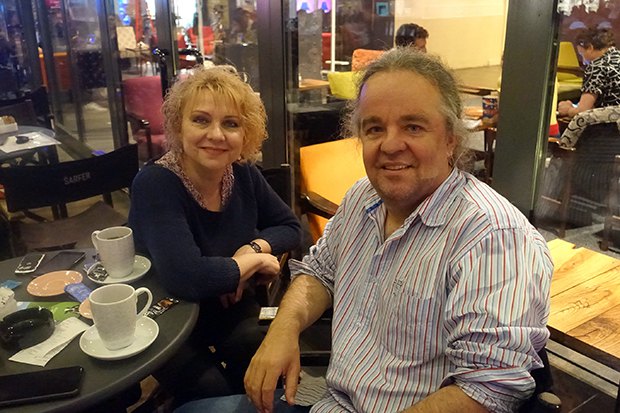
But books can also work in unexpected ways. For example, Kateryna Babkina became popular in Serbia thanks to the support of Miljenko Jergović. He came to the book fair in Belgrade, bought her book, read it and wrote an article about it.
Jergović is an influential writer and journalist. When Babkina’s next book came out, he wanted to take part in its launch.
That is also a cultural bridge: a writer from another country helps tell people about Ukrainian literature.
How War Returns Decades Later
It seems to me that in Ukraine, in recent years, Balkan literature is often read first and foremost as literature about war. But it was published here earlier for entirely different reasons, wasn’t it?
Of course. The first waves of translations of the literatures of the former Yugoslavia in Ukraine were far from being only about war.
In the late 1990s, books by Danilo Kiš, Milorad Pavić and Momo Kapor were published. The anthology Croatian Mosaic, which I compiled in 2006, was also intended to present the diversity of Croatian literature, not only wartime themes.
But from around 2013–2014, Ukrainian translators, publishers and readers began asking literature that had already lived through war questions to which they wanted answers. Balkan writers began to be asked not only about creative plans, but also about how to survive war, how to write about it, how people feel after it ends. Even the reading of books changed — books that had not previously seemed to us to be about war. For example, Miloš Crnjanski’s Diary of Čarnojević can be perceived as a modernist novel about a split personality. But Ukrainian readers began to see in it, above all, the story of a person who returned from war. War made more vivid what was already present in these books.
And in Croatia and Serbia themselves, did the Russian–Ukrainian war influence literature?
After 2022, many books about the wars of the 1990s appeared in Croatian and also Serbian literature.
But they were constantly writing about those wars before, too, weren’t they?
Yes, but now there is a noticeable difference. Many books have appeared about children of war — people who did not fight then, but watched everything through a child’s eyes.
This is a generation of writers returning to their experience from an adult perspective. These novels contain a lot of music, films and books from that time, details of everyday life.
For example, Tall Grass by Zoran Žmirić, Tearing Off Cabbage Leaves by Igor Beleš. In Serbian literature — Carota by Darko Tuševljaković, a novel about a man who returns in memory to a war he experienced in childhood.
In Žmirić’s Tall Grass, the story is about two basketball players — a Serb and a Croat — who were friends and rivals before the war, and then found themselves on opposite sides of the conflict. One of them, the Serb, is ordered to set a house on fire. He carries out the order, convinced that no one is inside. It was the house of the grandfather and grandmother of his Croatian friend. And all his life he is haunted by a question he cannot answer: were they inside at the time? Many years later their paths cross again, this time in distant Europe. And it turns out that the past has not gone anywhere.
The Russian–Ukrainian war has, in effect, taken these authors back to the experience of their own war, which happened thirty years ago.
It is a very interesting double perspective: how a person perceived events then, and how they see them decades later. Perhaps for us this will also be an important experience — to understand how war returns to a person many years later.
Are there books in contemporary Croatian literature in which war is present not as the central event, but as an experience that continues to shape people’s lives?
There are very many such books. In contemporary Croatian literature it is generally hard to find a work in which war does not appear at all. Sometimes it is literally a few lines, but they determine the characters’ fate.
For example, the novels of Nada Gašić, well known to Ukrainian readers. Three of her novels have already been translated into Ukrainian.
She has written another novel in her Zagreb cycle — Four Flames, Ice. It is a very distinctive book that could be called a fantastical novel, or magical realism. It combines different historical eras, including the stories of women accused of witchcraft. The author works with historical documents and finds unexpected details. For example, an Inquisition expense list: how much wine and food the executioner needs — the one who will torture a woman accused of witchcraft. After all, he too will be exhausted from torturing someone. The novel is about femicide — but also about the role of women in the life of the city and the country. It is shown without pathos and in a very unexpected way.
“What He Imagined Is Repeating Itself in Ukraine”
You mentioned Miljenko Jergović’s book War, which has been translated into Ukrainian. Why is it special to you?
It is a book about the siege of a city, but at the same time a universal book about war. You can even recall Troy and the Iliad. It is a book of parables, a kind of poetry in prose, at times very brutal. War unfolds in it with a certain epic calm. And much of what Jergović wrote resonates with events in Ukraine.
There is a story about a maternity hospital. When shelling begins, the newborns are taken down to the basement. The children in intensive care are supposedly taken down separately, and their mothers try to hear their children’s voices through the wall. They even think they can hear them. But at the end of the parable it turns out that the intensive-care babies were not moved anywhere. They remained upstairs during the shelling. When the head of the ward is asked how that is possible, she replies: “If it were otherwise, we would have no reason to come back.”
This story can be read philosophically: the children become a symbol of returning to normal life, for the sake of which people come out of basements. But after the Russian strike on Okhmatdyt in July 2024, it opened up to me in a completely different way. When I first read the parable, I did not think of the obvious: children in intensive care are connected to machines, and you cannot always simply pick them up and move them to a shelter. I remembered the doctor who was killed during the strike on Kyiv, staying with children who could not be evacuated.
Jergović also wrote that, watching the news from Ukraine, he has a terrible feeling: what he imagined — or knew from the experience of Sarajevo — is repeating itself.
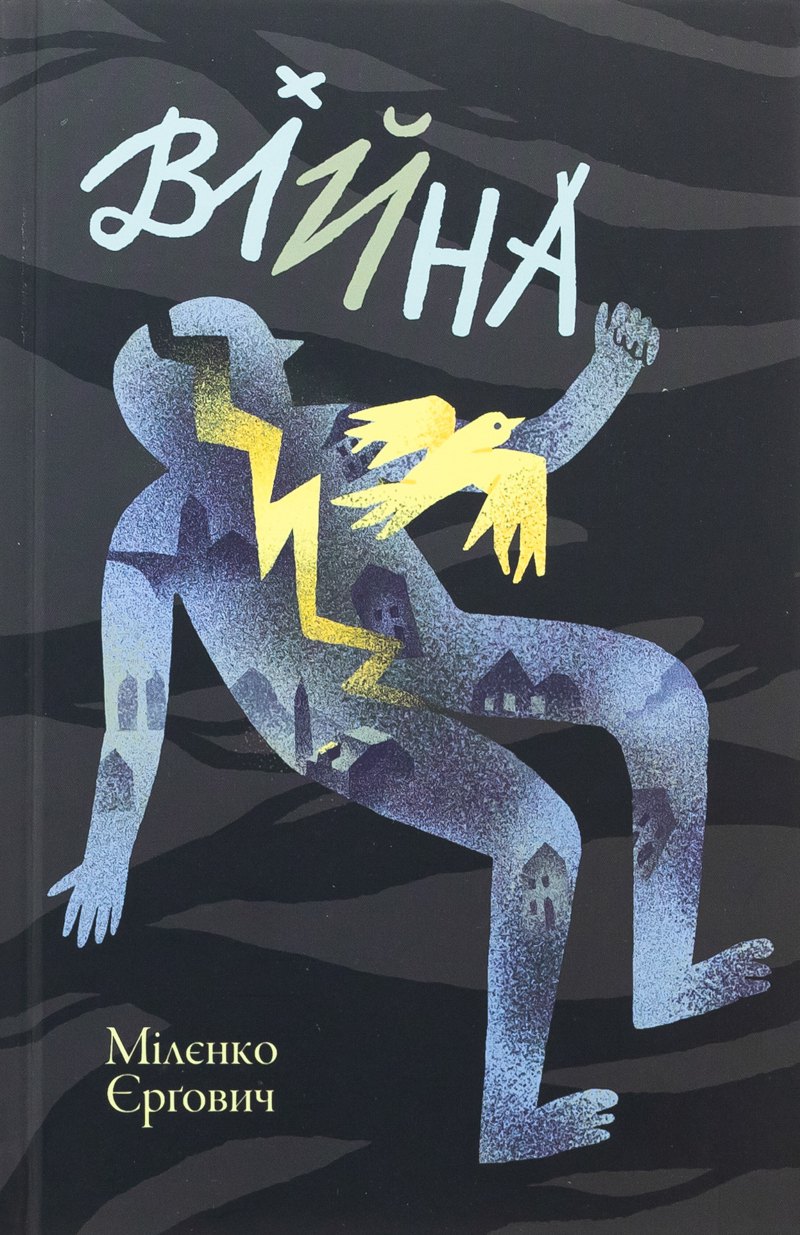
And then another story emerged. The editor of the Ukrainian translation, Nika Chulaievska, was working on the book when the strike on Okhmatdyt happened. She put the manuscript aside and went to clear the rubble. Later she wrote a text about how an editor’s work resembles, in some way, the work of someone clearing rubble. She wrote it in the style of Jergović’s parables — as a Ukrainian addition to the book.
I translated this text into Croatian, and Jergović published it.
It was a mutual enrichment of literatures, very important to me.
Sometimes literature works like donor blood, like a donor spirit. The experience of some people helps others make sense of what is happening to them.
“That’s How We Were Raised: As Russophiles”
We have talked a lot about Croatia. But what is happening in Serbia? What image of Ukraine is there?
A very varied one.
There are people who actively support Ukraine. There are those who love Russia more. But the overall attitude of part of the Serbian intelligentsia towards Ukraine I would describe as rather indifferent.
Ukraine is pitied: poor, unfortunate Ukraine. But at the same time there is a tendency to blame the West for everything. Anti-Western rhetoric does a great deal of harm. Russia actively supported it, in particular by exploiting memories of NATO’s bombing of Serbia. Interestingly, Serbs go to study and work mostly in the West, not in Russia. But anti-Western sentiment can be very strong. In the context of the Russian–Ukrainian war, this combines with a failure to understand why Ukrainians resist such a large state and why they so strongly aspire to Europe.
In many media outlets, the war was presented as a confrontation between Russia and NATO on Ukrainian territory. And Ukrainians as people who believed the West, which supposedly wants to use their country.
But I would not say that most Serbs are set against Ukraine.
A colleague of mine, a philologist, once said: “Well, you see, that’s how we were raised: as Russophiles.” After our hour-and-a-half conversation she added: “But in this war we are on Ukraine’s side.”
So it is not always conscious support for Russian aggression?
No, the situation is more complex.
Serbia has many internal problems — economic and political. People are tired; for many, life is hard. That breeds indifference to other people’s problems.
I was especially struck when, at the beginning of the invasion, Serbian intellectuals sent me quotations from Ivo Andrić or Meša Selimović about how unjust the world is. I had to explain that these quotations have a specific literary context; you cannot simply turn them into a universal explanation of what is happening.
At the same time, the situation is not standing still. There are people who change their attitude towards Russia and Ukraine. And there are those who, from the very beginning, have done an extraordinary amount for Ukraine.
Who, for example?
In Serbia there is a wonderful organisation, KROKODIL, which actively helps Ukraine — and not only through literature.
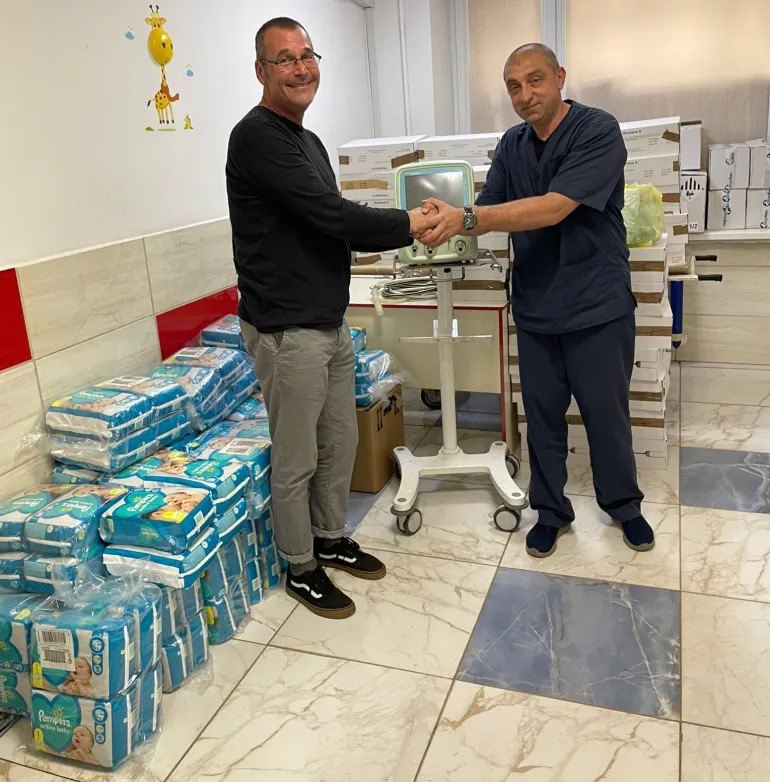
Vladimir Arsenijević, who leads it, has travelled to Ukraine many times, including to cities near the front line, brought humanitarian aid, raised money for medical equipment, and organised literary events. In Belgrade they created a Ukrainian library and opened free Ukrainian-language courses.
They also commissioned a mural of Lesya Ukrainka in central Belgrade. We discussed what inscription it should have. We settled on the lines: “No, I am alive, I shall live forever! In my heart I carry that which does not die.”
And at least four times local Russophiles attacked this portrait.
At first they tried to erase the inscription, written in two languages. Then the portrait itself was damaged. They wrote “fascists”, “Nazis”, and so on.
It was powerless rage. The only thing they could set against the beauty of that image and its poetry.
KROKODIL also organised residencies for Ukrainian artists for two years. They accepted only Ukrainians.
These are the kinds of people we can rely on.
From Viktoriia Amelina to Kateryna Kaly tko — What People Read in Serbia and Croatia
Which Ukrainian books are being published in Serbia and Croatia today? Are publishers mainly interested in literature about the war?
In Serbia, a wide range of Ukrainian books is being published. For example, Sister, Sister by Oksana Zabuzhko in an excellent translation by Milena Ivanović; the poetry of Lina Kostenko; works by Kateryna Babkina and Sofiia Andrukhovych; and Vasyl Makhno’s novel The Eternal Calendar.
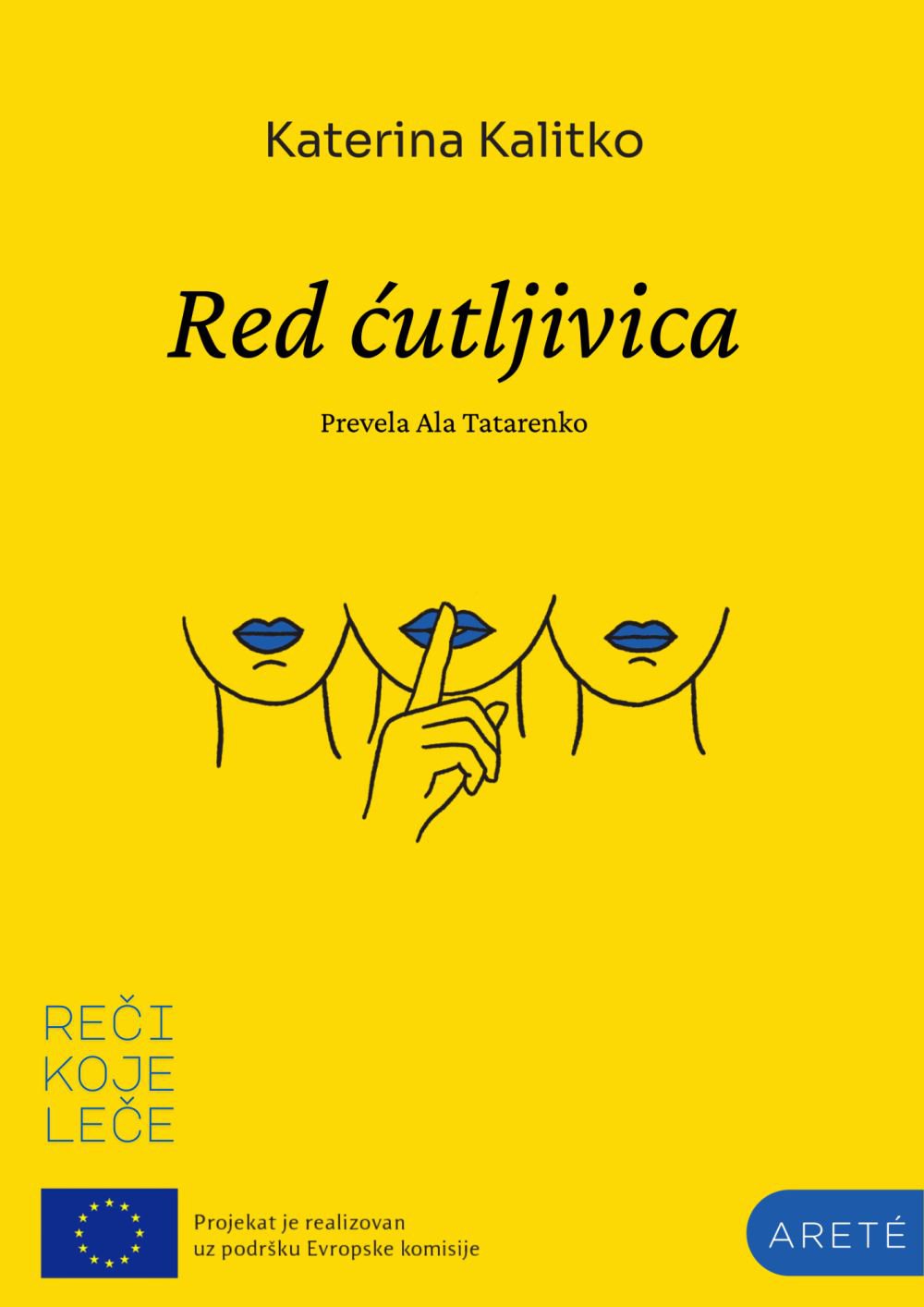
Recently, Kateryna Kalytko’s book The Order of the Silent Women was published in Serbian in Arete’s “Words That Heal” series.
I have also published translations in Serbian periodicals of poetry by Mariana Savka, Kateryna Mikhalitsyna and Daryna Hladun. But it is harder to find a publisher for a standalone poetry book.
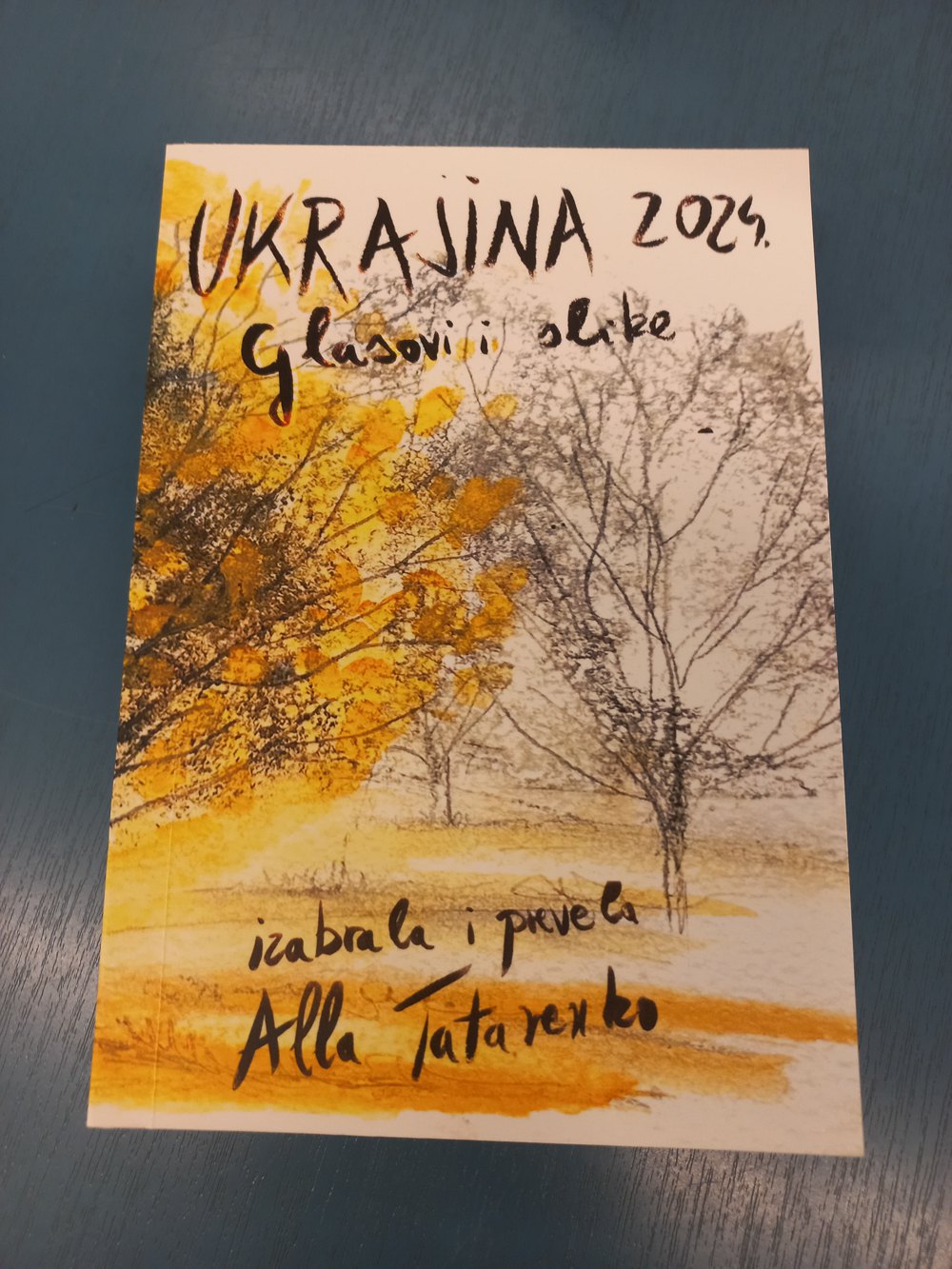
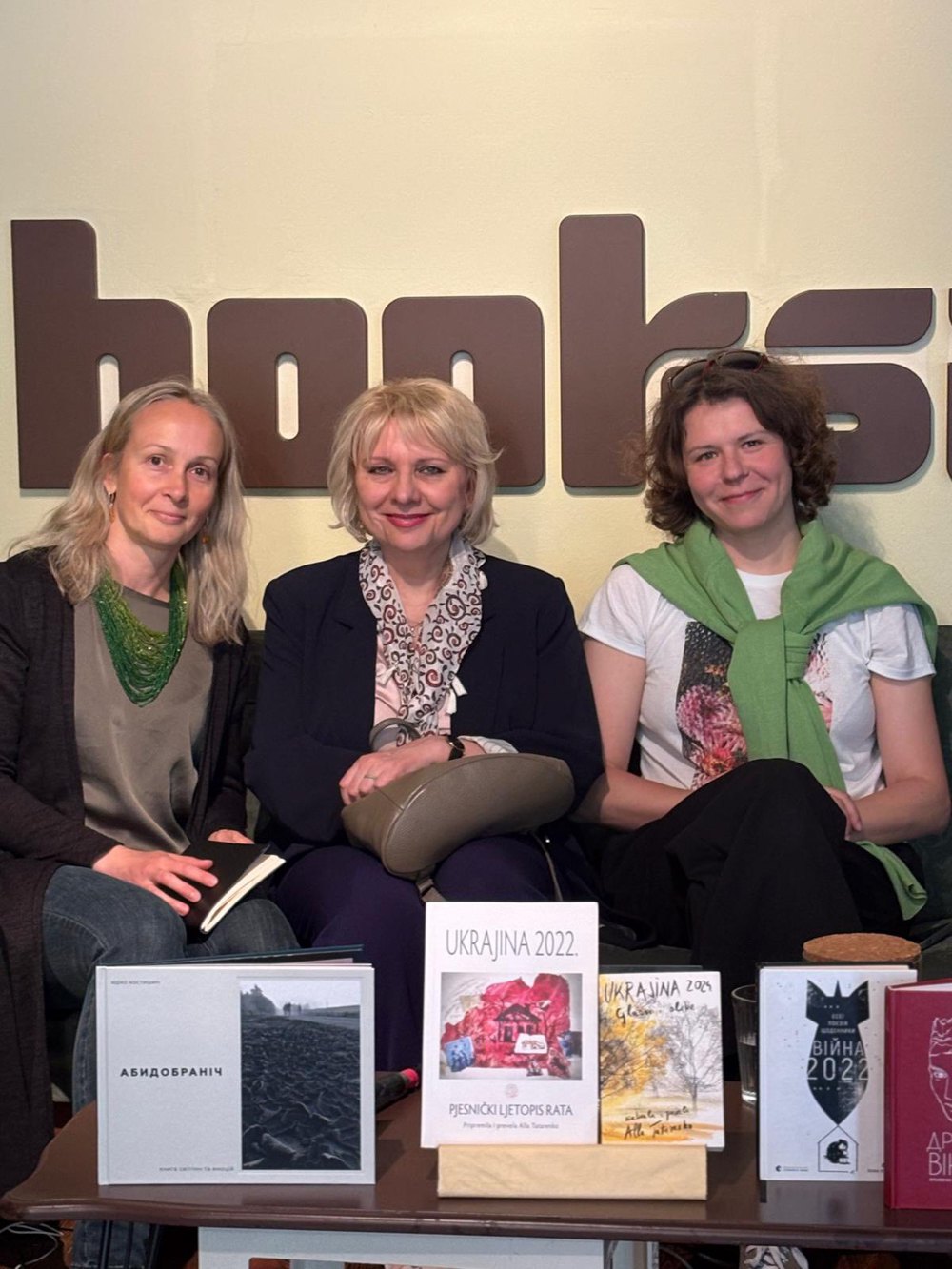
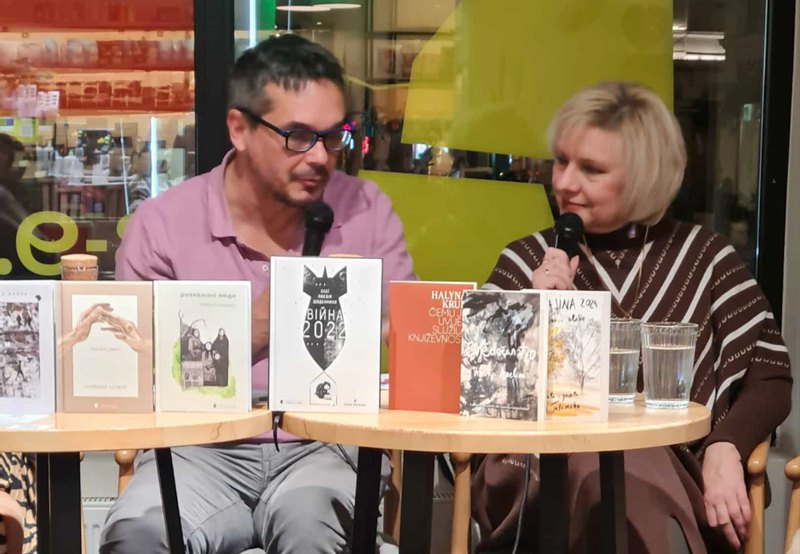
In Croatia, Ukrainian war poetry has noticeably more readers. I compiled two anthologies: Ukraine — 2022: A Poetic Chronicle of the War and Ukraine — 2024: Voices and Images, with illustrations by Yurko Kostyshyn. Darija Pavlešen and I also translated Viktoriia Amelina’s poetry collection Testimony. I translated new poems by Halyna Kruk and prepared numerous selections of Ukrainian poetry.
People often tell me: contemporary Ukrainian poetry is so wonderful — translate us something else. So there is demand. And that is very important.
And are there reciprocal translation links between Ukrainian and Croatian authors?
Yes, and that is very valuable.
For example, Tomica Bajsić translated poems by Viktoriia Amelina. And when Kateryna Mikhalitsyna came to a literary festival in Croatia, she heard his war poems in English translation and was so captivated that she began translating them into Ukrainian. At first I helped her with Croatian, and then she continued working independently. In turn, Tomica Bajsić began translating Kateryna Mikhalitsyna.
We Need the Vukovar Stories
Which books by Serbian and Croatian writers would you especially like to see in Ukrainian translation? Not necessarily about war.
If we are talking about classics, I would mention Impure Blood by Borisav Stanković. It is an extraordinarily poetic novel by a Serbian classic, whose mood somewhat recalls the works of Ivo Andrić.
From Croatian modernism — The Return of Filip Latinovicz by Miroslav Krleža. It is the story of an intellectual artist who returns from Europe to his home town. One of the most important novels in Croatian literature.
And if we are talking about the more recent past, we very much need Vukovar Stories by Siniša Glavašević.
Glavašević was a radio journalist during the siege of Vukovar. He told listeners about the shelling and the situation in the city, but at the same time read short stories meant to support people. These were not only stories about war. Often they concerned entirely ordinary things, but were filled with an inner light. They are told in the midst of hell, yet remain universal — you can read them in peacetime too.
Glavašević’s own story is tragic: he was killed during the war. I very much hope that a Ukrainian translation of this book will appear.
And which contemporary young Croatian writers, still unknown to Ukrainian readers, could you recommend?
I would like to name Luka Ostojić, who wrote the debut short-story collection Silence in the Wasp’s Nest. These are stories about the present day, but with a small dose of mysticism — mysticism that can be explained rationally, but not necessarily. It shows the world we live in as quite complex and not always understandable. In these stories there are people who have been through war, and those who have not experienced it. It seems to me they could interest not only seasoned connoisseurs of Croatian, Serbian or Bosnian literature, but also simply readers who want to read something engaging — something you can think about for a long time afterwards. These are stories that contain a mystery. The author does not advertise it, but it is hidden somewhere deep. And you think: what really happened there?
It seems to me we need this kind of literature too — literature we read not because it is about something specific, but because it makes our intellectual life more interesting.