






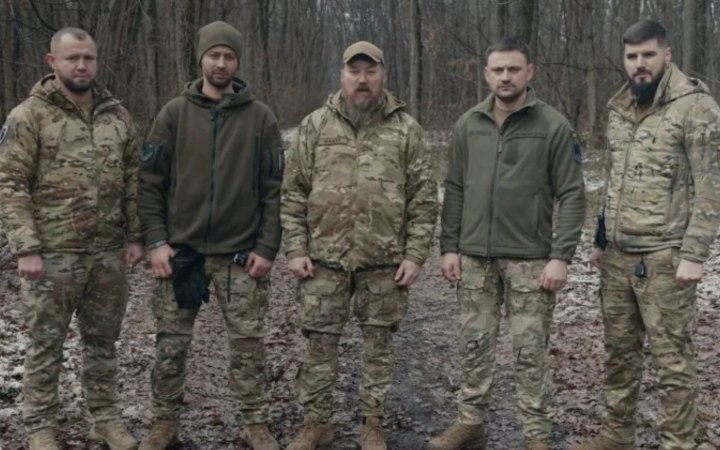
According to estimates by Robert ‘Madyar’ Brovdi, Commander of the Unmanned Systems Forces, the depth of the no-fly zone currently extends 25 kilometres from the front line on both sides, he said in an interview with Ukrayinska Pravda.
According to him, this is not about record-breaking drone ranges deep into Russian territory, but about the concentration of assets “that inflict damage on a regular basis”.
“Twenty-five kilometres on both sides is already sufficient for this corridor to be considered dangerous for unhindered, trouble-free and repeated movement, even by military personnel carrying out combat missions,” the USF commander explained.
He added: “As things stand, I would not advise venturing into the grey zone of the front line within 25 kilometres on either side without the appropriate training, necessity, protective equipment and everything else.”
What other figures did ‘Madyar’ mention in his conversation with UP:
- At the time of the ‘Drone Line’ unit’s formation, its personnel numbered around 2% of the total strength of the Defence Forces. Today, the target is 5%, “and to take on 50% of all enemy targets and enemy personnel hit”.
- According to reports, the unit has managed to exceed the 10,000 mark for “enemy personnel destroyed or neutralised each month”, with an overall rate of around 35,000–40,000 Russian targets per month.
- In the 11 months since the creation of the ‘Drone Line’, more than 300,000 enemy targets have been hit.
- “The average depth of destruction of enemy personnel currently does not exceed 1.5 kilometres from the front line.”
- The Russians are actively expanding their unmanned component and replicating the experience of Ukraine’s Unmanned Systems Forces. At the start of the year, the enemy had 86,000 personnel involved in unmanned operations. By 1 April, this had risen to 100,000. A month later, they were already reporting 114,000. By the end of the year, they plan to increase the number to 168,000.
“In other words, they have increased by 28,000 in four months. Let’s say some of the figures were exaggerated, fabricated or otherwise inaccurate, but they are growing at this projected rate: 28,000 in four months,” explained the commander of the USF.
- Russia is also optimising its supply chain and reducing weapon costs. Since the start of the year, inspections have reportedly been carried out at the manufacturer of the ‘Molniya’ drone, reducing its cost from $3,000–4,000 to $1,500.
“They increased the payload to 10 kilograms and placed a state order for 1.1 million of those ‘Molniyas’. Do you know what this has already led to? An average brigade on the front line encounters up to 60 ‘Molniya’ drones a day,” explained ‘Madyar’.
As an example, he also cited the daily deployment of 300–400 Shahed drones and 10 portable electronic warfare systems.
“They deploy them at their positions, go on the offensive, and no standard drone can reach that infantry because they are effectively moving ‘under a dome’,” noted the USF commander.
- He also suggested that within a year, the Russians could develop their own network as an alternative to ‘Starlink’.
- According to his calculations, around 1,000 Russian air defence units will need to be destroyed in the temporarily occupied territories. In the first five months of 2026, 134 units were destroyed. However, the full extent of the Russian army’s capabilities remains unknown.
- At the same time, a few weeks ago, the Unmanned Systems Forces destroyed a stationary Russian air defence system located 122 kilometres behind the front line, “far from any bodies of water, in the steppes of Donetsk Region”. According to ‘Madyar’, the system had been removed from a military cruiser.
“In other words, this is a Balalaika that was removed from a completely different type of platform and permanently installed at a depth of more than 100 kilometres. It’s amusing, but it speaks volumes. They lack anti-aircraft missile systems. And they’re using every available one,” ‘Madyar’ reasoned.
Read alsoEvolution of mid-strike: How German-Ukrainian Anubis drones are breaking Russia’s air defence system