






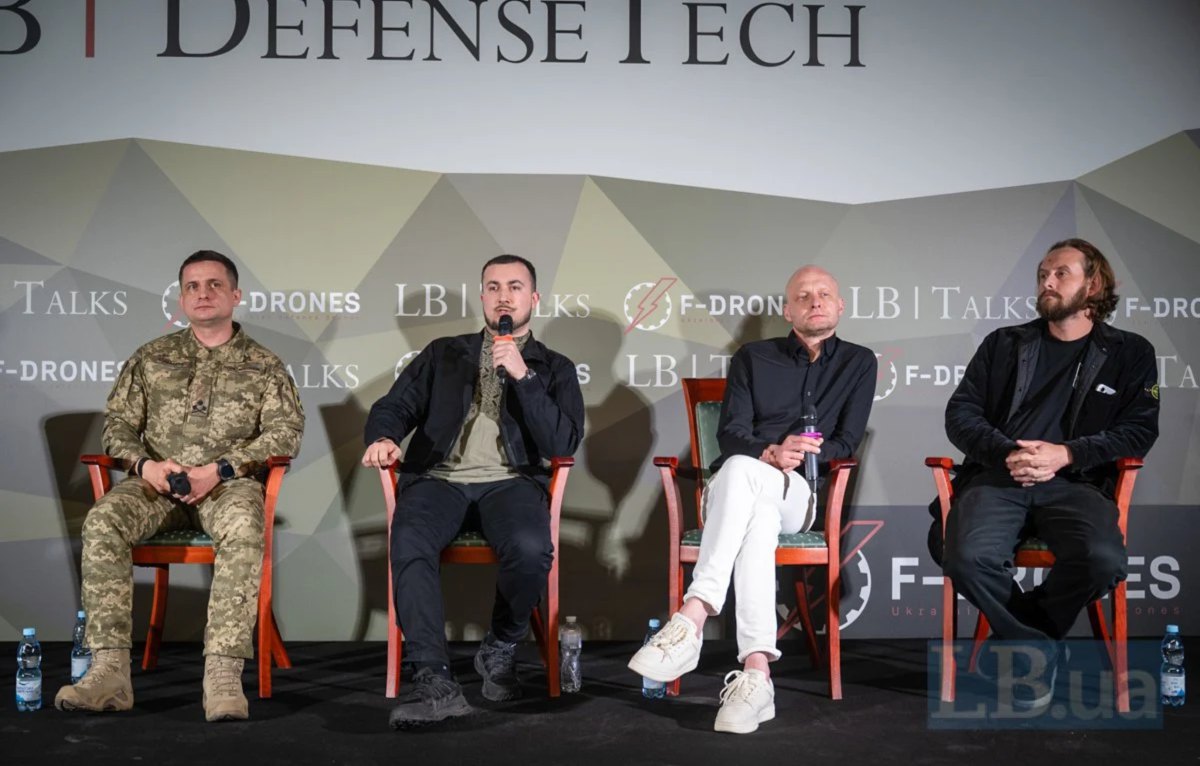
Gaining the upper hand over the enemy on the battlefield — and how to maintain it
The fact that Ukraine is technologically ahead of Russia is undeniable, Brigadier General Andriy Lebedenko notes. As an example, he cites the fact that the Armed Forces of Ukraine were the first to deploy such a large number of reconnaissance drones and strike UAVs. He also points to specialised UAV munitions, as well as Deep Strike and Middle Strike drones.
“This advantage is both qualitative and quantitative. One to one and a half times greater, and in some areas perhaps even more so, which is also extremely important. These advantages include guidance and navigation systems, as well as the operation of drones using GSM communication,” Lebedenko explains.
Most importantly, he says, Ukraine has succeeded in creating a large integrated system of sensors, information databases, interoperability, and reconnaissance-strike chains.
“When we combine reconnaissance and strike drones, this reduces the enemy’s reaction time to a threat. In this regard, we have many advanced technological solutions that have already been approved for over a year. We have already moved beyond the stage when a drone was expected to operate independently — pilot, remote control, drone. We now see only the integration of these systems. And this is in fact a highly complex task,” noted the Deputy Commander-in-Chief of the Armed Forces of Ukraine.
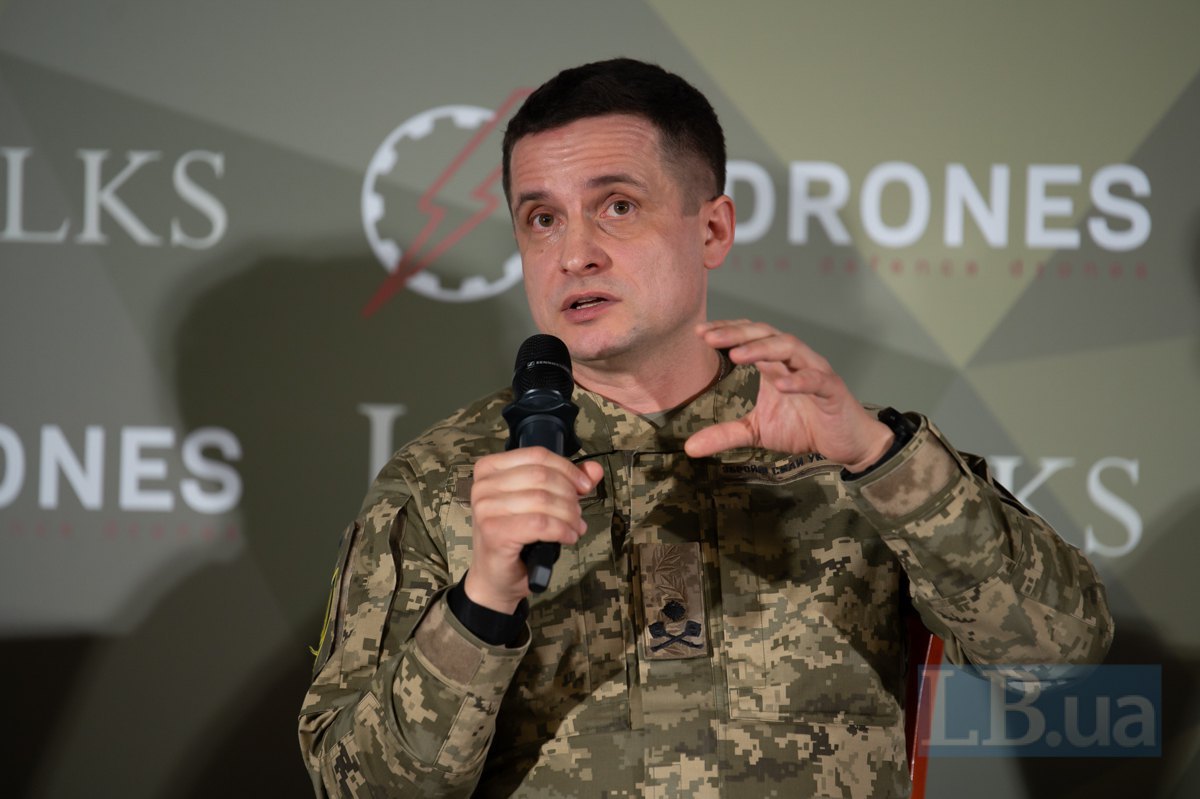
This advantage also applies to ground-based robotic systems, with the Russian army lagging behind both in the number of platforms and in the practical deployment of such robots.
“Now let us look at the enemy. It took them more than a year to establish similar command structures. They are now copying everything from us. Yet despite this, Ukraine retains the initiative,” the brigadier general emphasised.
He added:
“Perhaps we do not hold the advantage everywhere when it comes to scaling, as their system is totalitarian after all, and some decisions can be implemented more rapidly. Although this is also debatable, because scaling even successful solutions in today’s war is not always the correct approach, as some solutions quickly become obsolete and are designed for peacetime conditions.”
Read alsoHow UAV pilot training has evolved over four years of war: Yuriy-Phoenix on the experience of Lasar’s Group
According to Stanislav Khutor, this advantage can be maintained by accelerating the product development cycle.
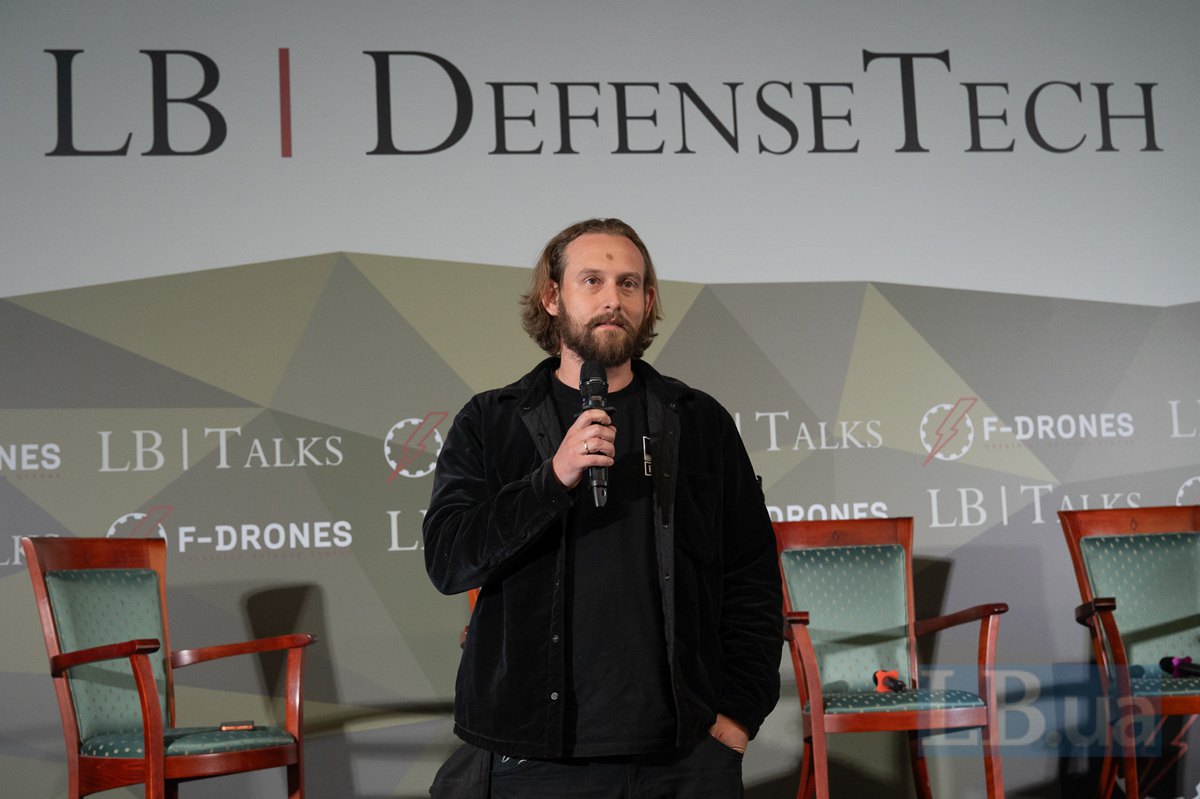
“Every technology has its own development cycle: concept, prototype, validation, production run, operational deployment, feedback and modernisation. Under normal circumstances, this cycle can take years. In wartime, it takes months, sometimes weeks.
And if we want to protect Ukrainian technology, manufacturing and our advantage on the battlefield, we must do more than just conceal individual solutions from the enemy. We need to accelerate the entire cycle: integration between the manufacturer, the military, procurement officers, the state, engineers, testing and mass production,” explained the CEO of F-Drones.
In his view, there is no single product, no ‘super-drone’, that will solve all the problems of modern technological warfare.
“There is a constant race to adapt: today you find a solution, tomorrow the enemy is looking for a counter-solution. Therefore, it is not the one who created a good product once who wins, but the one who goes through the new cycle faster — from idea to modernisation,” emphasised Khutor.
He believes that whoever spins this wheel of innovation faster has a chance of winning the technological war.
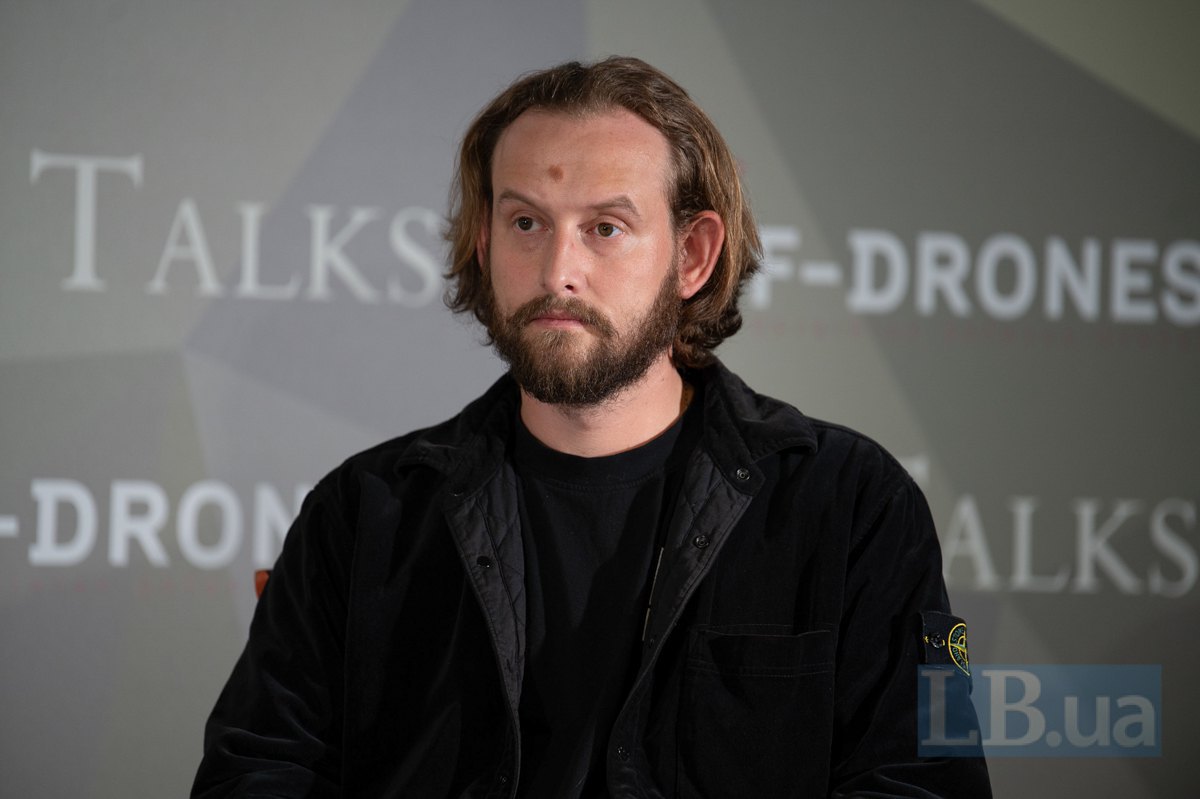
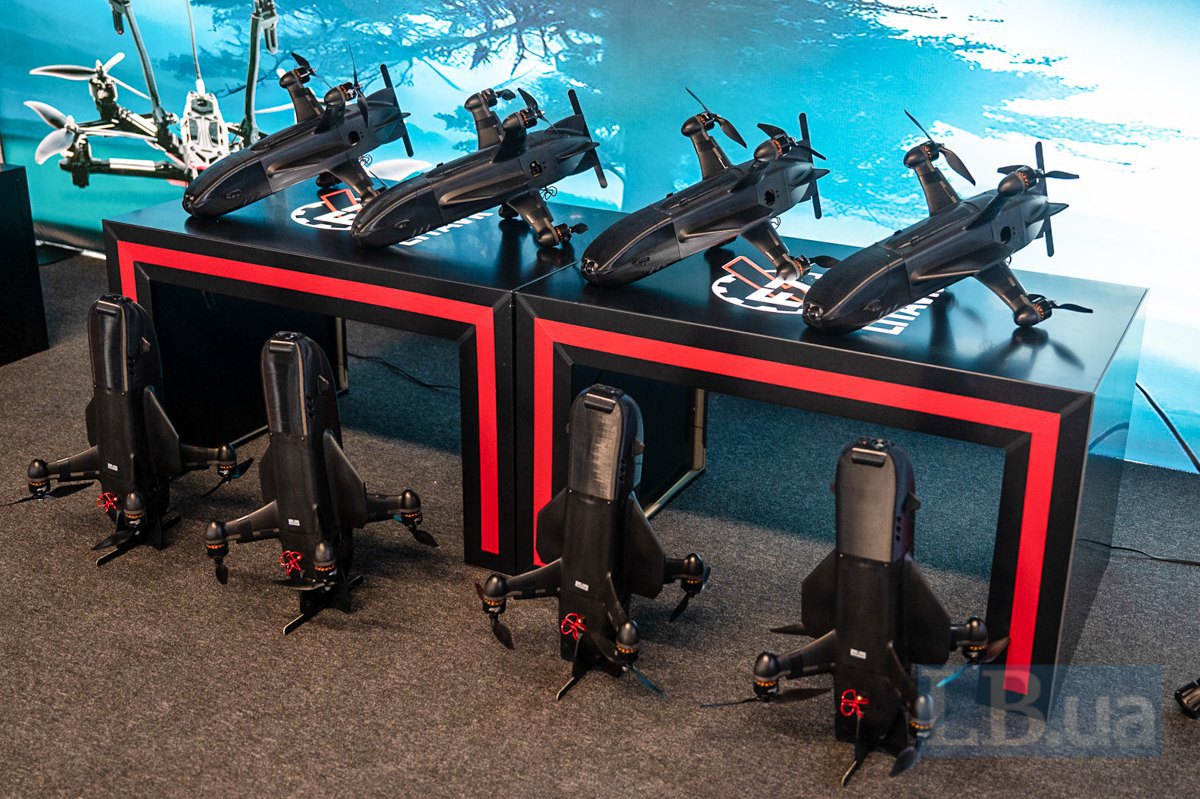
“Take our own example: in 2024, we began developing the LITAVR interceptor drone. In 2025, just nine or ten months later, we moved on to field trials and successfully shot down our first Shahed. During the same period, the system was certified and entered service. By early 2026, we had already released an automatic target detection and capture system. In other words, we completed the full cycle — development, testing, combat deployment, series production and modernisation — in a very short time,” notes Khutor.
He adds:
“This isn’t a story about a ‘carbon frame with a motor bolted on’. Modern defence tech is about systematic, intelligent solutions: pilot safety, remote ground stations, automation, communications, navigation, integration with other systems, and a layered approach to air security. There are still many steps ahead, and we need to accelerate them at every level.”
Export strategy and cooperation with international partners
In many Ukrainian developments, production capacity far exceeds the total potential demand of the Brave1 fund, notes Andriy Hrytsenyuk. And, in his view, this should be utilised to encourage sound models so that “Ukraine can capitalise as much as possible on the achievements that, unfortunately, had to be earned”.
“It is the state’s overarching task to find that model, but it cannot be built over a long period. We simply need to provide the opportunity to create it. It does not need to be regulated. For example, when it comes to procurement — when demand exceeds capacity, it is better to procure centrally. Once production capacity catches up with demand, and there is competition — in that case, decentralised mechanisms should be introduced. We can see that for many manufacturers, the volume of orders from the military under the decentralised model has increased five or tenfold compared to the centralised model. And that is correct,” explains Hrytsenyuk, citing this example.
In his view, the state’s role here is to provide freedom and opportunities, whilst ensuring there is no abuse.
“But we mustn’t forget two things: firstly, that our priority is the military and the front line; and secondly, that these innovations are driven by necessity. Every major war gives rise to new breakthrough technologies. And we were forced to do this. But we will be caught up with very quickly. There are already some excellent foreign interceptors appearing, as well as excellent FPV drones that are cheaper than those in Ukraine. The same story will play out with deep-strike and naval drones. If we don’t take advantage of this, we will lose everything,” he believes.
Davyd Aloyan also emphasises that the number one priority is to meet the needs of the Ukrainian military.
“The Ukrainian defence industry has gone through several stages of evolution. We have now reached the stage where we can produce not only for ourselves but also enter the global market. However, this must in no way have a negative impact on the front line. It should be an additional incentive,” he notes.
Aloyan describes the issue of exports as complex, as countries that export weapons are not usually engaged in active hostilities.
“Consequently, we need to strike a balance between potential opportunities and risks. We need to find a way to ensure that this equipment is fully supplied [to the Defence Forces] without breaching the commitments we already have on the international market, and to deliver orders on time across the globe,” adds Aloyan.
Nevertheless, according to him, Ukraine already has cooperation initiatives with partners, which it plans to continue developing.
“For us, this is an opportunity to shape a common security architecture and work with partners in the long term. That is, to enter into long-term agreements that will allow our defence sector to understand the future volume of resources that can be directly channelled towards the procurement of Ukrainian weapons and the engagement of Ukrainian expertise. Such predictability creates the conditions for the development of production and more effective procurement planning,” noted the Deputy Secretary of the National Security and Defence Council.
Andriy Hrytsenyuk is convinced that the focus should not be on selling a specific drone, but on building a ‘Defence as a Service’ model.
“What will a foreign country do? Will it cobble together its own security system from various components, just as the Ukrainian military has managed to do over the years? No. This is what we need to capitalise on. Sell the service,” believes the head of Brave1.
Read alsoEvolution of mid-strike: How German-Ukrainian Anubis drones are breaking Russia’s air defence system
Andriy Lebedenko is also convinced that Ukraine must not close itself off from cooperation.
“Our partners have resources and people, but they lack the knowledge to use these resources effectively. We know how to combine these elements to achieve effectiveness, and this is, in fact, our most valuable experience. We can offer our partners our unique experience in exchange for the technologies we lack. And I don’t think we should close ourselves off [from cooperation]. We need to share. And from what I can see, they understand that they are lagging behind and that they need our experience,” noted the brigadier general.
Stanislav Khutor points out that exporting is not simply a way to make money.
“It is a necessary path to quality, documentation, certification, a transparent supply chain, cybersecurity and stable production,” explains Khutor.
He cites F-Drones as an example:
“One of our drones won the US Pentagon’s Drone Dominance Programme, and we have signed a contract to supply a specific batch for the US military’s needs. But such a contract is not just recognition, but also a serious test: technical compliance, supply chain transparency, product cybersecurity, documentation and adherence to the customer’s standards. It is precisely through such challenges that the Ukrainian defence industry is maturing. Therefore, exports do not mean ‘less for the front line’. In the longer term, exports mean a stronger front line through a stronger industry: scaling up production, attracting capital, improving quality, service and the sector’s resilience.”
Replacing China
The issue of localisation has no simple answer, believes Stanislav Khutor.
“It is multi-layered. In reality, this is not just a question of localisation as such, but of control over the supply chain. This does not necessarily mean a complete rejection of components from a particular country. It means managing critical risks: understanding where components come from, which ones are critical, what alternatives exist, whether supply in the required quantities can be guaranteed, and whether the product meets the requirements of a specific customer,” he explains.
No modern defence industry exists in complete isolation from external suppliers and partners, notes Stanislav.
“The US, Japan, European countries, South Korea — all major economies are built on complex, diversified supply chains. The question is whether these chains are controlled, transparent and resilient,” explains Khutor.
He believes this presents a particular challenge for Ukrainian manufacturers: “If we want to operate not only in the domestic market but also to enter major Western defence markets, we must meet their standards.”
Davyd Aloyan notes that the issue here is not one of scaling up production, as Ukraine has unique experience — today the capacity of the Ukrainian defence industry is around $55 billion, whereas at the start of the full-scale invasion it was $1 billion.
The issue is that Ukraine faces resource constraints: not only financial, but also human.
“In terms of production, of course, it would be wonderful to have a closed production cycle, but today, in the context of globalisation processes across the world, this, in my subjective view, will be very difficult to achieve. Even if we manufacture components and so on, we still need a resource base in terms of raw materials,” he believes.
China’s expansion on the African continent is taking place precisely to ensure the capacity to produce various components for its industry, explains Aloyan. And other countries do not have such capacity.
“As for components, I believe that diversifying supply chains is key here. Although we should strive for a model of increased self-sufficiency within the country,” agrees the Deputy Secretary of the National Security and Defence Council.
Andriy Hrytsenyuk adds that Ukraine has many examples of successful scaling. Of the seven companies producing unmanned systems in 2022 and the team’s start-ups, they have grown into large businesses capable of scaling up, introducing unique technologies and implementing feedback very quickly.
“Therefore, everything that is created in Ukraine must continue to be developed, and we must seek a model that will be as beneficial as possible, both for Ukraine itself and for our partners,” he notes.
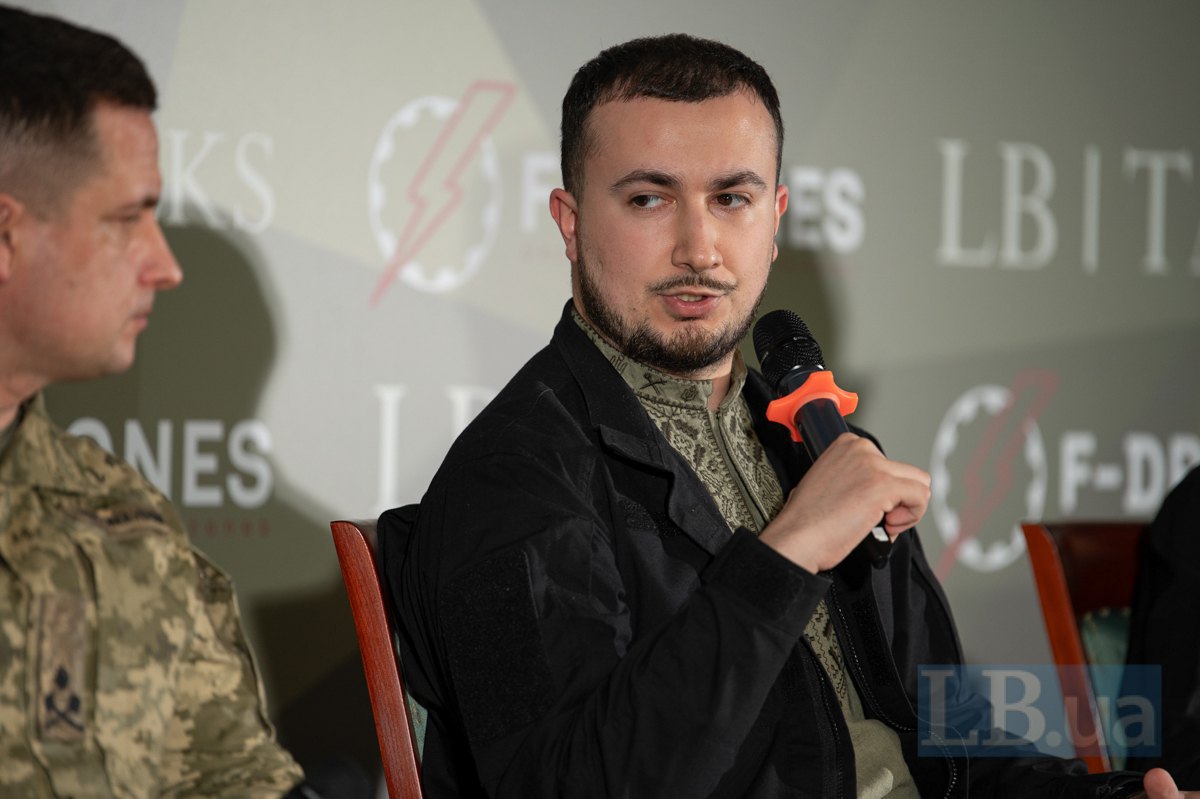
In terms of innovation, Ukraine has already become the world’s ‘Silicon Valley’, according to Davyd Aloyan.
“And, in principle, we are succeeding in this at the moment. All these drones are changing doctrines and paradigms of warfare across the globe. We are conveying this to our partners. And our strength lies in the expertise of both the military and the manufacturers,” he explains.
State support for Ukrainian manufacturers
All the speakers agree — such support is essential.
“In every country in the world, there is lobbying by domestic manufacturers. Admittedly, we have a slight legacy of post-Soviet culture, where support for one manufacturer can subsequently create a sense of unfairness among other manufacturers. Which, on the whole, is probably normal. And I think we will move from this to a format of more sustainable synergy between the state and manufacturers, so that scaling is sustainable and does not depend heavily on specific components,” reflects Davyd Aloyan.
Andriy Hrytsenyuk notes that, at the end of last year, a programme to support independent manufacturers of Ukrainian components was successfully launched to increase the number of Ukrainian motors, flight controllers and communication systems.
“More than 200 Ukrainian companies are already selling their components to drone manufacturers, and this is a strategic advantage for Ukraine: firstly, it reduces the risks of dependence on suppliers whose borders may be closed; secondly, it offers the ability to scale up production quickly and independently. This is critically important if production volumes need to be increased urgently,” he explains.
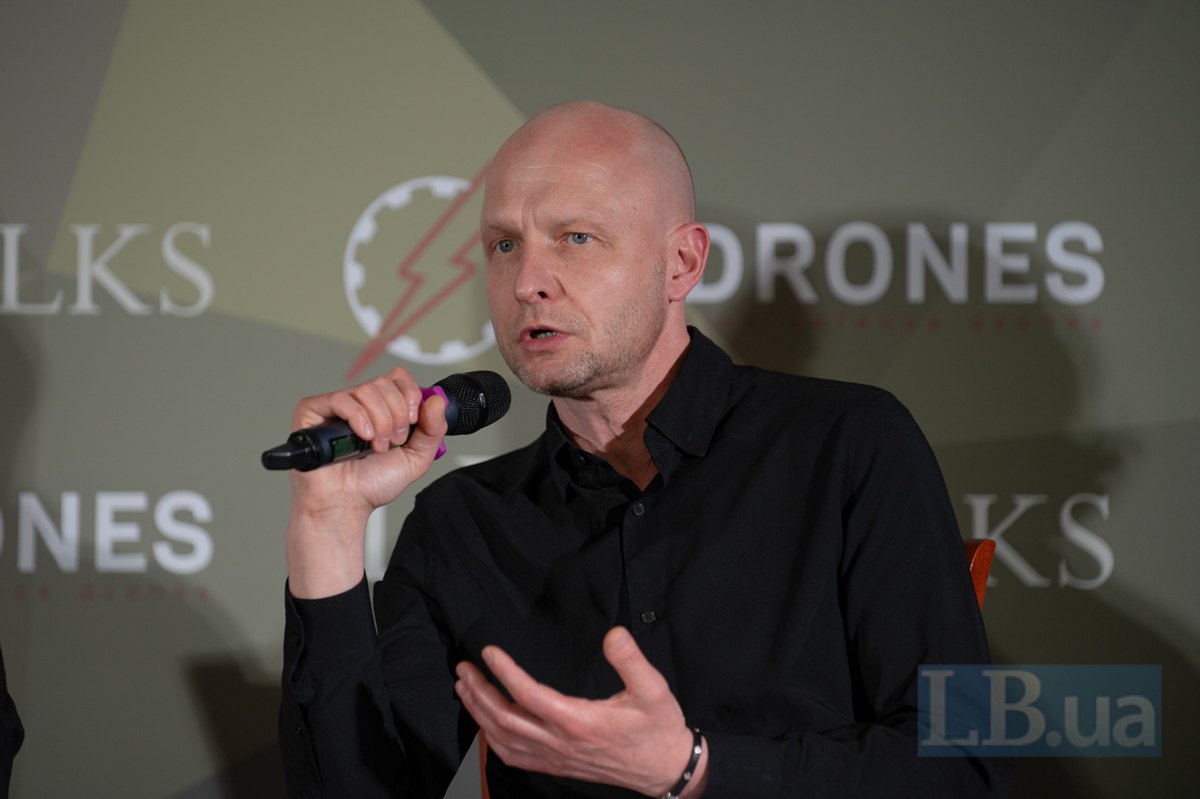
Thirdly, there is Ukraine’s strategic advantage in the eyes of foreign partners as an alternative to China. Fourthly, there is the development of our own expertise. “It is important not only to manufacture, but also to be able to innovate,” added Hrytsenyuk.
Stanislav Khutor notes that this support should not be limited to the procurement of specific drones or systems.
“It’s about creating a future engineering school that will form the foundation of Ukrainian defence tech for years to come. Maintaining R&D departments with hundreds of people is a huge undertaking. Building your own components is an even bigger one. One of my teachers once said: ‘First replicate, then modify what you’ve devised’. This fits well with the logic of manufacturing. Many started with off-the-shelf components, particularly Chinese ones. But gradually, Ukrainian manufacturers are developing their own concept of development, their own components and their own engineering culture,” Khutor explained his vision.
Therefore, in his opinion, localisation should take place across the entire component pyramid, not just at the final assembly stage.
“Defence tech isn’t just about drones. It’s about electronics, motors, antennas, radio communications, cameras, sensors, flight controllers, ESCs, materials, battery solutions, software, artificial intelligence, production management, testing, quality and service,” adds Khutor.
And he emphasises:
“I am convinced that Ukraine will take its place in the global market. And it will be a significant place, because experience paid for with blood cannot be forgotten and cannot simply be copied. Ukraine has long proven that Ukrainians are not just a nation of farmers. We are also a nation of engineers and weapons makers. We know how to do this. And our military proves it every day.”
Critical components
These have always existed, depending on the front’s priorities, notes Davyd Aloyan.
“What matters now is localising the production of explosives: gunpowder or specialised chemicals — and this is precisely where the state should be supporting manufacturers,” he explains.
Andriy Hrytsenyuk agrees – there must be support for the production of explosives, and that is absolutely right.
“At present, Ukraine is heavily reliant on foreign-produced explosives for its ammunition manufacturing. This is a critical dependency. Therefore, the state, together with Brave1 and the Armed Forces of Ukraine, is launching a joint project — a competition among Ukrainian companies is nearing completion, and investment is being made in the creation of production capabilities for explosives,” he explained.
***
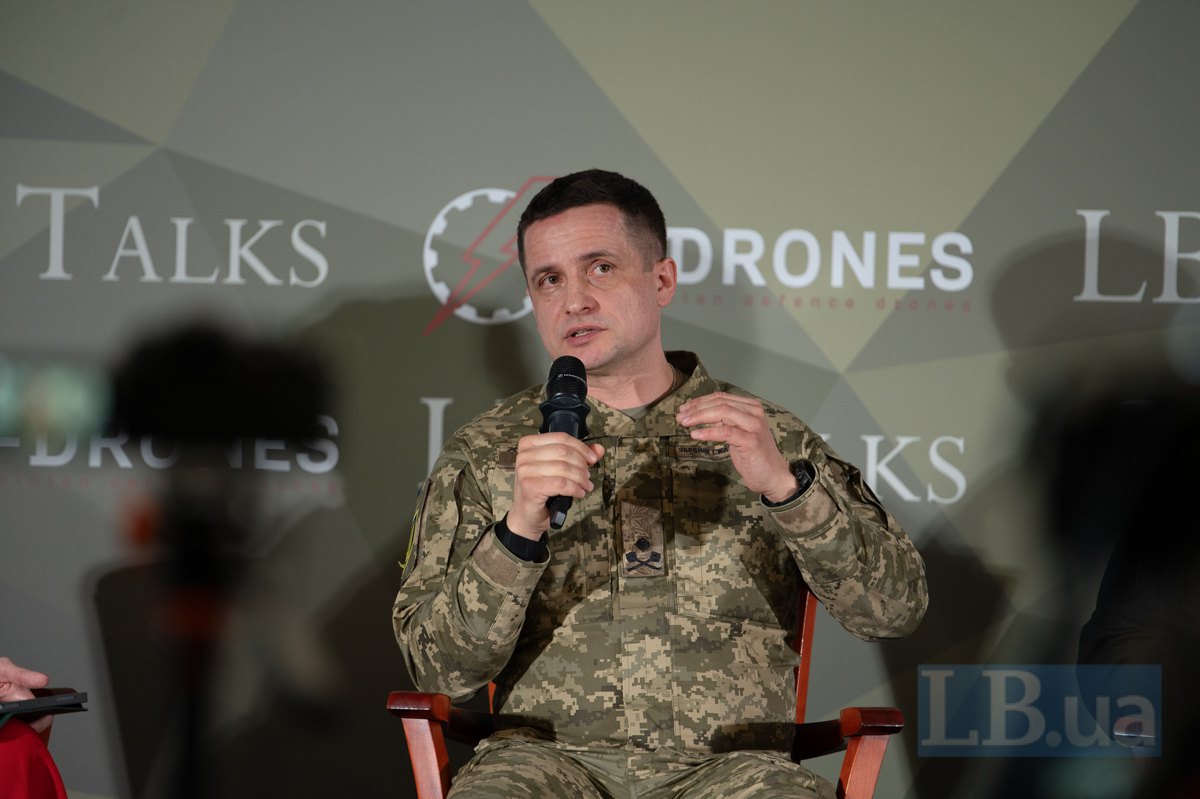
Brigadier General Andriy Lebedenko emphasises that the modern battlefield is a very multifaceted affair. And battlefield technology is not limited to drones.
“We must not forget that the personnel on the front line are not just drone operators fighting each other. There is a vast array of personnel and equipment there. At the start of the war, we completely forgot about the protection of equipment, personnel and areas — about effective systems that allow us to destroy the enemy,” notes Lebedenko.
He adds:
“Once drones reach a certain level of development, their effectiveness will be reduced. Today, UAVs fly over our positions and logistics without any particular problems, because we have virtually no developed system for protecting our equipment. This is precisely what we need to pay special attention to, and we are moving in this direction.”