






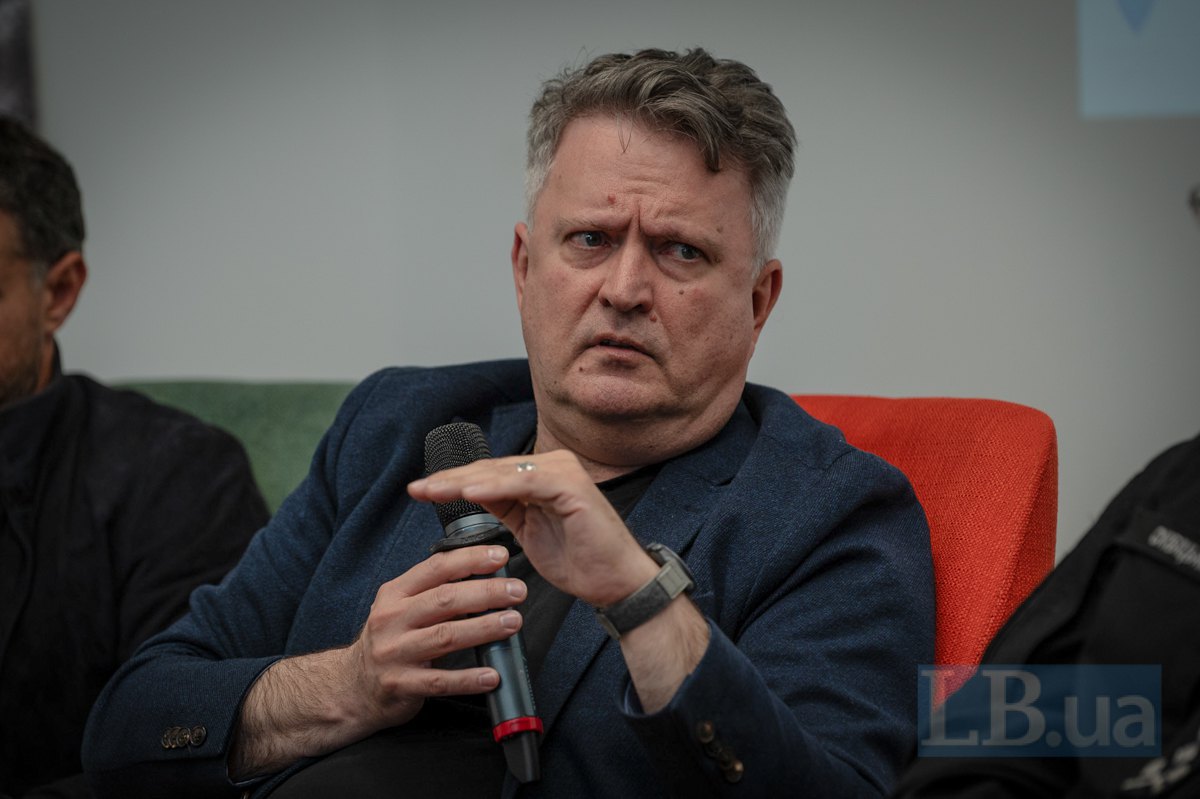
Negotiations with Moscow are never improvised, Serhiy Kyslytsya notes: the Russian Federation always sends representatives with very clear instructions, which they are obliged to follow. It is for this very reason, he adds, that negotiations in Istanbul, Abu Dhabi and Geneva lasted two days.
“It’s not because anyone wants to spend an extra half-day in Geneva. It’s because the Russian side needs to be given the opportunity to make its case, carry out its instructions, and report back to Moscow in the evening or at night that those instructions have been fulfilled.
Then, on the second day, whilst still operating within the framework of those instructions, they are more willing to listen in a relatively relaxed manner. Perhaps they may even say something beyond the scope of the instructions, because they have already reported that those instructions have been carried out,” Kyslytsya explained.
However, the fundamental problem with negotiations with the Russian side, notes the Deputy Head of the Office of the President, is that negotiators from the Russian Federation do not have direct access to Putin.
“And if you don’t have access to Putin, your value is minimal. Then the report on the state of negotiations passes through many, many filters. What eventually reaches Putin may have a completely different context from what actually happened during the negotiations,” he said.
With the current negotiating team, which has already gone through three rounds of talks, Serhiy Kyslytsya notes that it was clear from the outset that the most fundamental issues would not be resolved.
“That is precisely why the President of Ukraine instructed us that, sooner or later, a summit [between the presidents] must take place to resolve the fundamental issues. Then, in the Russian system, instructions must be passed down to the lower levels, and it will be those lower levels that implement the presidents’ agreements,” Kyslytsya added.
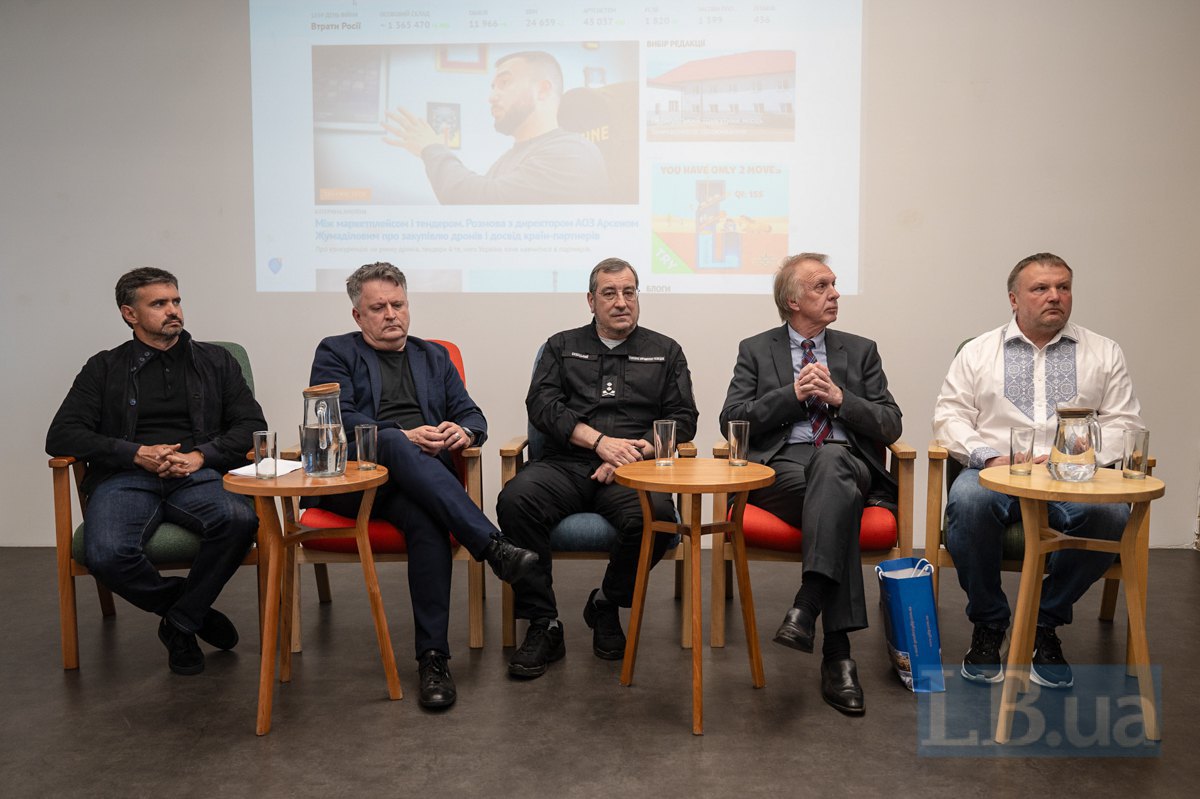
He also highlighted the difference between the talks in 2025 (in Istanbul) and those in 2026 (in Abu Dhabi).
“I often say that we didn’t have talks in 2025; we had meetings. We did indeed gather in the same room. The Turks would open the proceedings, both sides would read out their positions, and that was it. You couldn’t really call that negotiations.
That is the fundamental difference in 2026. These negotiations were genuinely trilateral. The American side took a direct part in all three key meetings — two in Abu Dhabi and one in Geneva. They listened attentively and asked questions when clarification was needed. They even helped when the Russians and Ukrainians could not reach an agreement. Then they would say: ‘All right, let’s take your two positions, combine them and present our version.’ That was the value of this process,” Kyslytsya explained.
Furthermore, he considers these negotiations to have been the most productive, partly because of the involvement of Russian military personnel — representatives of the Ministry of Defence and the GRU — who, in his view, “proved to be more capable negotiators than Russian diplomats and politicians”.
“In Abu Dhabi and then in Geneva, unlike in Istanbul, we worked in two groups: a military group and a political group. The military group operated on a military-to-military basis, while the political group addressed political issues. I was in the military group, while my boss, Budanov, was in the political one. At first, I didn’t understand what I was supposed to do in the military group, but it later became clear that that was where I belonged – to keep an eye on the political framework during the military talks.
Imagine Ukrainian generals sitting alongside Russian generals at a time when their officers and soldiers were killing one another on the battlefield. It was a tense atmosphere. Nevertheless, the military group’s work proved more effective than that of the political group. The military were able to agree on matters without which, even if a political decision had been reached — including on the most fundamental issues — it would not have worked. Given the concentration of troops, unprecedented since the Second World War, and the length of the front line, it is impossible to imagine politicians simply making a decision and the military stopping the war.
The military group’s work focuses on how verification would be carried out, who would be responsible for it, and who would provide the necessary resources. Just imagine how many resources are required,” shared the Deputy Head of the Office of the President and member of the Ukrainian negotiating team.
Although no formal negotiations are currently taking place, contacts continue regularly at all levels, Serhiy Kyslytsya noted.
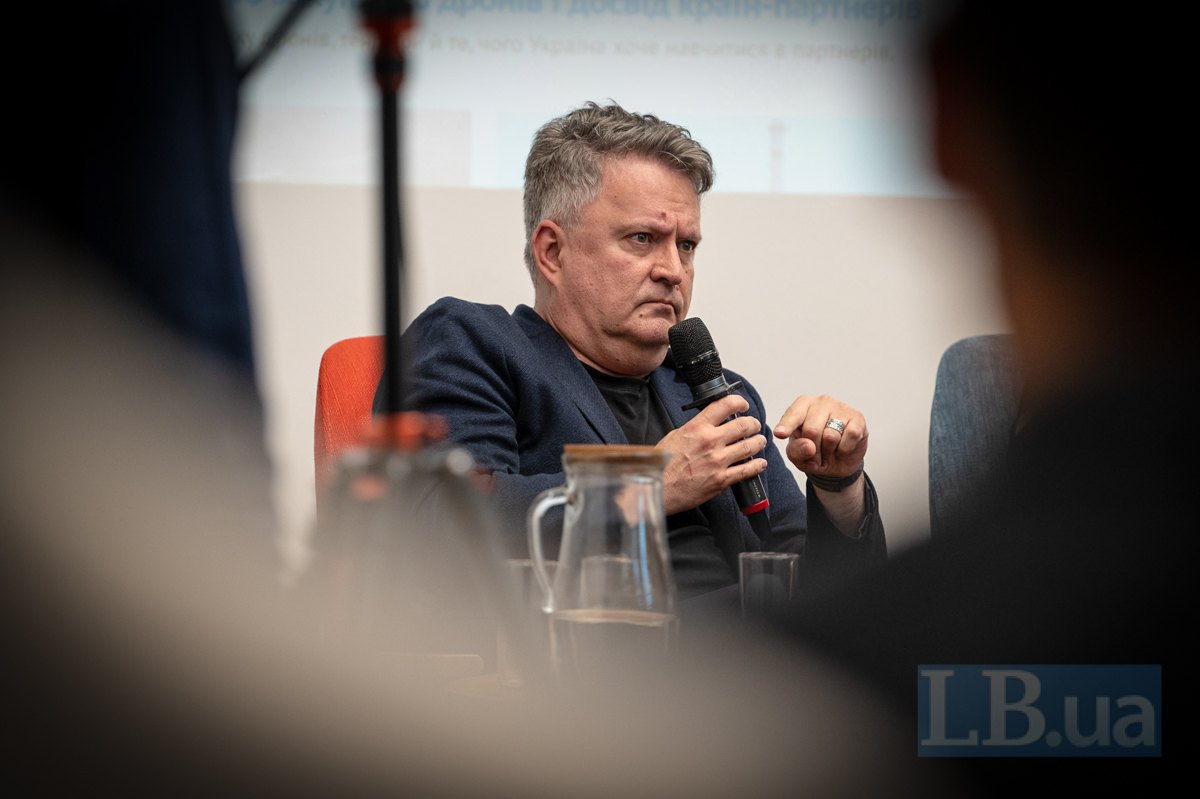
“The US is unable to focus on the Ukrainian issue”
The fact that MP and head of the Servant of the People faction Davyd Arakhamiya has joined the negotiating team has, to some extent, addressed the concerns of the American side, which, in informal discussions or as a point of emphasis in formal talks with the Russian side, had been lacking the specific position of the Ukrainian parliament, noted a representative of the Office of the President.
But the problem for the American side — among many others, adds Serhiy Kyslytsya — is also that after seven visits to Moscow, they have not yet been to Ukraine even once.
“No matter how good the briefings from intelligence, from the State Department (if they even read the State Department), or from the National Security Council may be, until you see with your own eyes how Kyiv lives, until you travel to the east or the south, you cannot have a proper understanding of what is happening in Ukraine. They promised they would come. Mind you, that promise was made over two months ago,” Kyslytsya emphasised.
The situation is further complicated, he points out, by the fact that the same negotiating team is dealing with Ukraine as with Iran.
“When we were last in Miami — meeting in a bilateral format — Ukraine and the United States, Steve Witkoff’s day began at 4:00 am with a multinational Zoom call on the subject of Iran. In other words, by the time he came to see us at 10 am, his working day had already lasted six hours. That is why they are unable to focus on the Ukrainian issue at a time when they themselves have found themselves drawn into a war that, it seemed, should have ended by now,” notes Kyslytsia.
At the same time, says the representative of the Office of the President, the level of sympathy for Ukraine among the American public is very high. As is the percentage of those who clearly understand that Ukraine needs to be supported.
“But the fact is that foreign policy in general, and the Ukrainian issue in particular, do not carry enough weight when American voters go to the polls and make their choice,” Kyslytsia emphasises. (In this context, he advises paying attention not only to Americans, but also to the populations of certain European countries. For example, Ukraine concerns only 1% of Irish people, and Gaza 5%).
It is also important, he adds, to what extent our partners are influenced by Russian propaganda. During or prior to negotiations, the Deputy Head of the Presidential Office notes, it was more important to spend two or three hours with the Americans than to have yet another conversation with the Russians.
“The Americans, believe me, genuinely didn’t understand why we couldn’t organise elections in three days. We spent countless hours explaining why. Because someone would sit there and say: ‘But Putin said you can do it in three days.’ And our Constitution didn’t concern them, especially at a time when they were trying to treat their own in a similar manner. Back then, the words ‘Constitution’ and ‘constitutional constraints’ were such a sensitive issue for them that you couldn’t use them.
So you sit there and explain that in the last election there were at least 20,000 polling stations. To organise 20,000 polling stations, you need to hire a certain number of people. In America, for example, taking into account all displaced persons, 200,000 people can vote. And here we have five consulates-general. Five consulates-general means 40,000 per consulate. How many days, not hours, would it take for 40,000 people to vote? And what is the budget for that?
To inform 200,000 voters in America that there will be an election, you need to spend a million dollars on envelopes, stamps and postage. When you explain it like this, you realise just how uninformed the foreign negotiator is,” says Serhiy Kyslytsya.
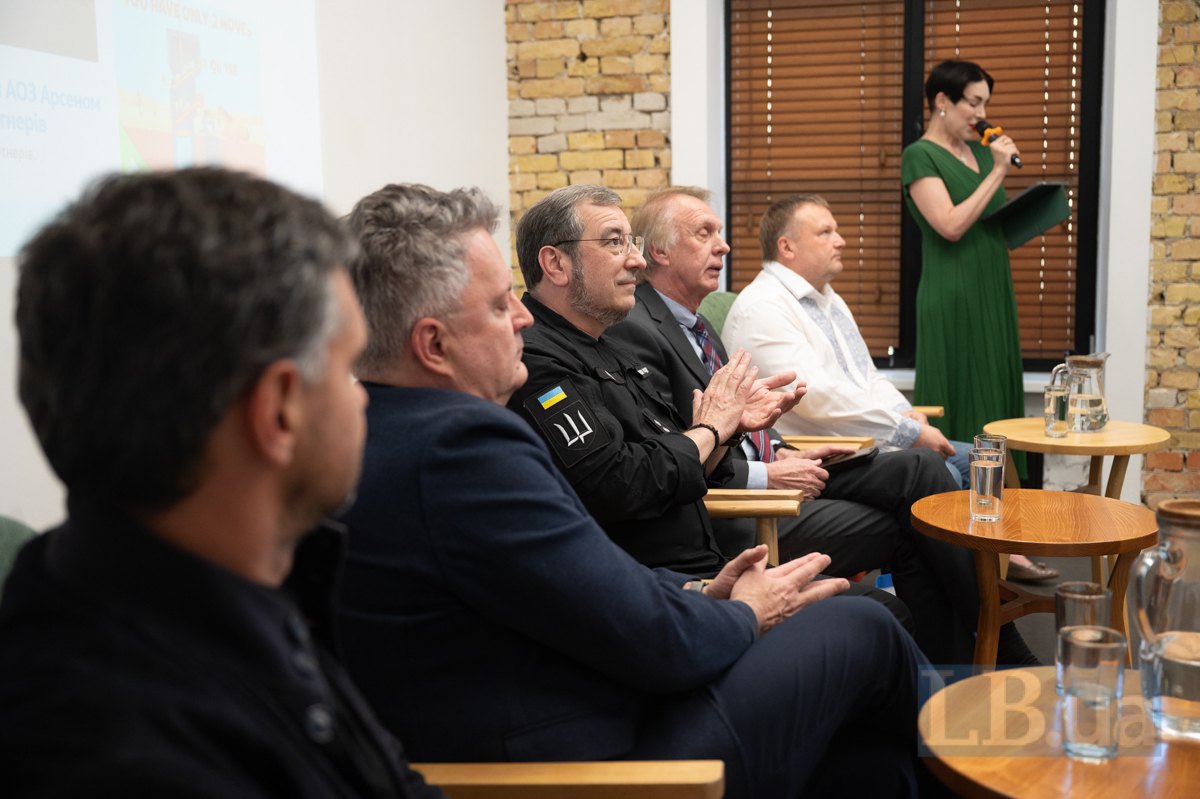
What do we know about Russia and what influences its position?
What could have a real impact on the Russian side’s position regarding the war? In fact — as Serhiy Kyslytsya points out — there are two factors: how close they are to a general mobilisation and the state of the economy in terms of funding the war effort. The Russian population is not one of these factors, the member of the negotiating team is certain.
“Let me give an example. 26% of households did not and do not have running water. When I was in New York (while serving as Ukraine’s representative to the UN — Ed.), I had a map of Russian regions showing the age at which, no matter how much you work for the rest of your life, you will never earn as much as your family would receive if you were killed at the front.
Only in St Petersburg, Moscow and Novgorod is it 40+. There are regions in Russia where that threshold is reached as early as 23–27 years old. What a family receives if you are killed at the front is an unimaginable sum of money. Imagine: the deep Russian countryside. He’s an alcoholic, doesn’t earn any money, comes home and beats his wife. So how is she supposed to get any money?
Incidentally, another type of business, apart from the funeral industry, that has flourished in Russia is dentists for the middle class: people now have the money to go to the dentist,” said Serhiy Kyslytsya.
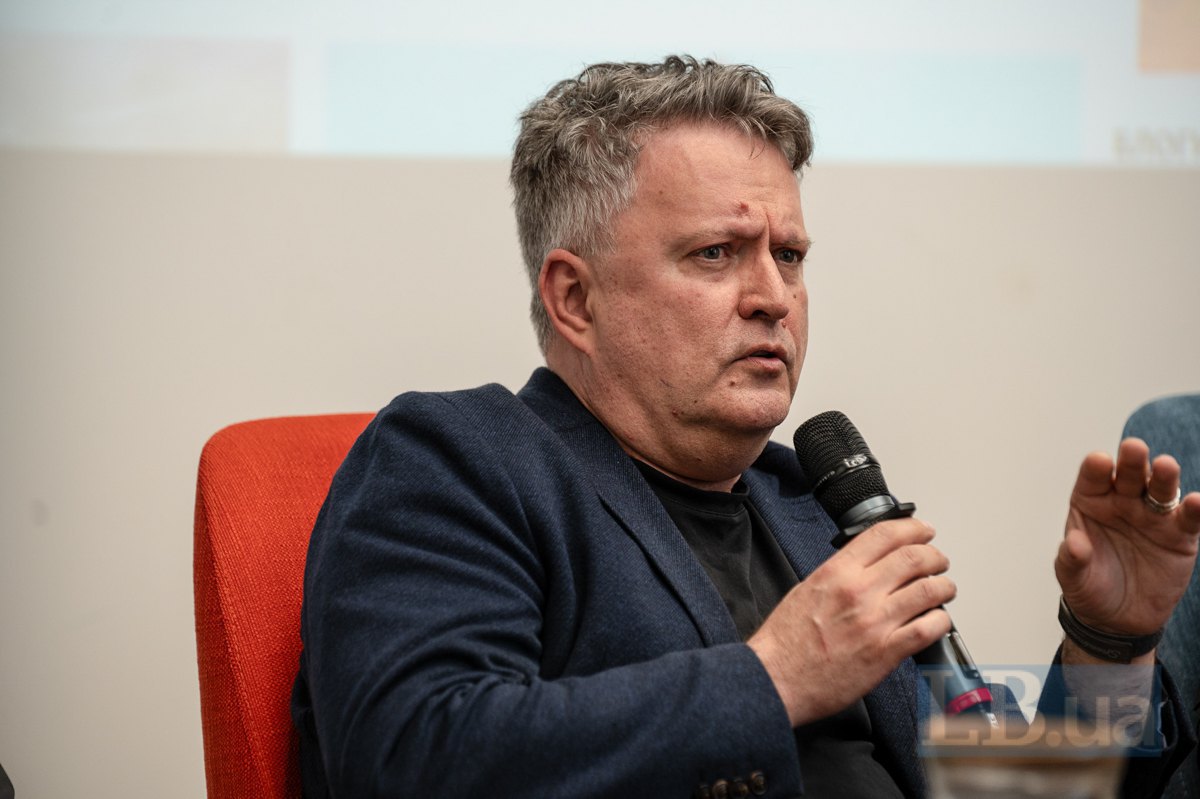
Do we have enough data on Russia, given that it keeps all its statistics as secret as possible? The Office of the President maintains that there is plenty of information and intelligence—it is gathered from various sources, including Ukrainian intelligence agencies, our embassies, and foreign intelligence services (not only military, but also political and economic).
“Sometimes we deliberately organise competitions between our intelligence services. Incidentally, since Kyrylo Budanov took over as head of the Office, a new practice has emerged whereby we have a fixed day when the Office’s leadership meets and we receive briefings from various intelligence services and the military,” said Kyslytsya.
There are no problems with information, he emphasises; the difficulty lies elsewhere — “in the fact that Ukraine still belongs to that category of countries where people and specialists believe they must obtain as much information as possible and retain it in their heads.”
“It ought to be different. I’m not interested in an employee who can recite the latest report on the Russian Federation. I’m interested in an employee who knows where to find information, how to analyse it, and how to apply it. And that is the problem. The problem with our education system.
How are American diplomats trained? You come to a course, and they tell you: ‘Today, you are the US Embassy in Egypt. You are the ambassador, the military attaché, the economic adviser, the consul, or whatever. You’re facing a civil uprising —- what are your actions?” And here I don’t need to know whether my consul remembers all the pharaohs who lived in Egypt. Do you see? That’s our problem,” emphasises Serhiy Kyslytsya. “
It’s not that we don’t have piles of fascinating theories on our desks about what’s happening in Russia, even scientifically substantiated ones. Our problem is that we need to know how to apply this information. What is the Office, and Ukrainian diplomats, actually doing? First and foremost, trying to find PAC-3 missiles for the Patriot system.
Because no matter how clever we all are, if we don’t have PAC-3s for the Patriot system next winter, it will all go down the drain. Success is measured by whether you can persuade a foreign partner, whose constitution states that they cannot supply weapons, to find a way to provide those weapons to us.”
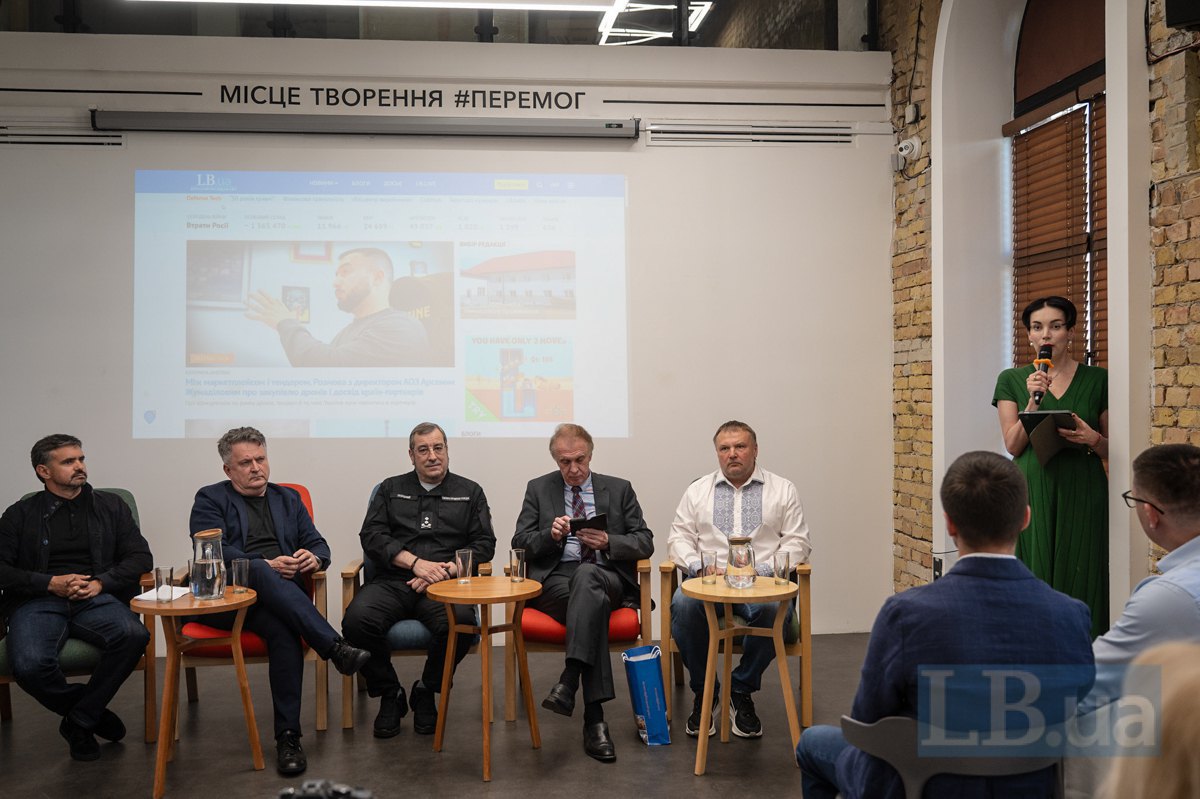
What to do with Russia after the war
Russia still has plenty of money to wage war, believes Serhiy Kyslytsya. Ukraine is inflicting significant damage on the Russia’s oil refining industry, but even a reduction in oil production of 50 million tonnes [as discussed during the debate] is still not critical for the Russian Federation, he asserts.
“Until recently, India was buying 2 million barrels of oil a day from the Russian Federation. So even in the context of economic relations between Russia and India, 50 million barrels is less than a month’s worth.
There are countries — I won’t name them — that are Ukraine’s most sincere partners. They give a lot of money, but spend even more on purchasing petroleum products produced in third countries from Russian oil. So, it’s not a linear situation here. There are Western European countries that are among the top five donors to our security. And they are also among the top five spenders on purchasing petroleum products in third countries, in that very same India.
If you look at The Guardian from 2024, they will tell you that in 2023, Britain spent more on purchasing certain Russian goods than it provided in aid. And yet, the only countries stronger than Britain are Norway, the Netherlands and Germany. There is no doubt about this when you look at how trade with Kyrgyzstan, Turkmenistan and others has grown by 2,000 per cent,” noted the Deputy Head of the President’s Office.
And Ukraine’s more pressing problem will not be how to ‘reorganise’ Russia after the war, emphasises Serhiy Kyslytsya, but how to convince Europeans not to revert to a ‘business as usual’ mindset the day after the war ends.
“Businesses in Europe are waiting in the wings, dreaming of starting business with the Russian Federation. And these are businesses in Germany, Italy and many Western European countries,” Kyslytsya asserts.
As for Russia itself, he does not believe it is possible to denazify the Russian Federation in the same way as Germany.
“The way Nazi Germany was “reorganised” after the war—it was occupied and then underwent far-reaching denazification processes that affected everything: the state administration, the army, the church, even hospitals.
The Russian Federation will not be occupied. It is hopeless. There is no plan and no strategy for the occupation of the Russian Federation in order to carry out de-Putinisation there. Without de-Putinisation, we will not have a new Russia that would be safe to live alongside. Even if the democratisation of the Russian Federation were to begin tomorrow, it would be a process lasting at least 20 years. In the meantime, it would be, as they say, an ‘imminent threat’ hanging over everyone,” the OP representative is convinced.
And no ‘good Russians’ will help with this either, Kyslytsya argues, because none of them have ever known a democratic Russia.
“In all my years of diplomatic work, including in New York, I’ve seen perhaps one and a half ‘good Russians’. Honestly. I don’t believe in ‘good Russians’. I do not believe it is possible to ‘sanitise’ the minds of Russians.
Russia, unlike the Baltic states, unlike those who inhabited and lived in Western Ukraine before 1939, has not a single generation that has lived under democracy. The abortion of the embryo of Russian democracy took place during the Second Chechen War. That was the end of it.
Russians have no points of reference in their memory to help them understand why a democratic society might be even slightly more attractive than other alternatives. Russians will continue to love Europe like leeches, sucking out of it everything they can, but they will never become Europeans. ‘Remember, in imperial times, how many prominent Russians lived in Paris, London and Berlin, and yet remained such staunch imperialists,’ remarked a member of the negotiating team with the Russian Federation.
The UN cannot help in any way, Kyslytsya is convinced — the Yalta model of the United Nations has run its course. During his time as Ukraine’s representative to the organisation, 150 Security Council meetings dedicated to Ukraine were held, and that is the maximum that could be ‘squeezed out’, he says, and a change of Secretary-General will not remedy the situation either.
But even Vladimir Putin’s death, in his view, will bring nothing positive.
“If Putin dies, it will be collateral damage. Then there will never be a tribunal against him. And that is a bad thing. If there is no tribunal against the main perpetrator of this crime, the cycle will not be broken. Do you understand? The issue of accountability is one of the most crucial.
If we, together with the Western, civilised world, fail to put even one of this trio on trial (a special tribunal allows the President, Prime Minister and Foreign Minister of the Russian Federation to be held accountable. — Ed.) in the dock, consider that we have lost one of the key elements of our future victory,” explained the Deputy Head of the Office of the President.
What, then, should Ukraine do? Become a strong nation, Serhiy Kyslytsya is convinced. This is more important than whether we can ‘cure’ the Russians, adds the Deputy Head of the Office of the President.
“The creation of a political nation is ongoing here. There is a great deal of mythology surrounding who Ukrainians are and whether we have truly become a nation. And after the war, there will be a period far more terrifying and dangerous than the war itself. This is typical of any society at war. Remember what happened in Europe: Churchill had 80% support in May, but by July (1945 — Ed.) he had lost 143 seats in parliament. That is why the wave of left-wing and right-wing populism after the war poses a greater threat than ‘Oreshnik’. And if we miss this chance, there may well be no next one,” emphasised Kyslytsya.
Yet he has not lost faith in Ukrainians.
“When I was asked in America to explain the difference between Ukrainians and Russians, I always used this example. You know, when emigrants arrived, they set up credit unions. The name of one of the oldest Ukrainian credit unions in America explains everything to a foreigner better than anything else. Its name is Self-Reliance Credit Union, Samopomich. You go to the bank to borrow money, and the bank tells you: ‘We’ll give you money so that you can become self-sufficient.’ Do you understand? This is the fundamental difference between us and the Russians. It lies in the fact that we will never sell our rights.
We will never, I hope, trade them for the state promising us protection, shelter and something else. And therein lies the genius of Ukrainians, who have countless flaws.
But I want to return once more to the idea that, God forbid, we should lose after victory. That would be a tragedy for everyone who remained in Ukraine. So let’s think about how to be strong on the day after victory,” concluded Serhiy Kyslytsya.