





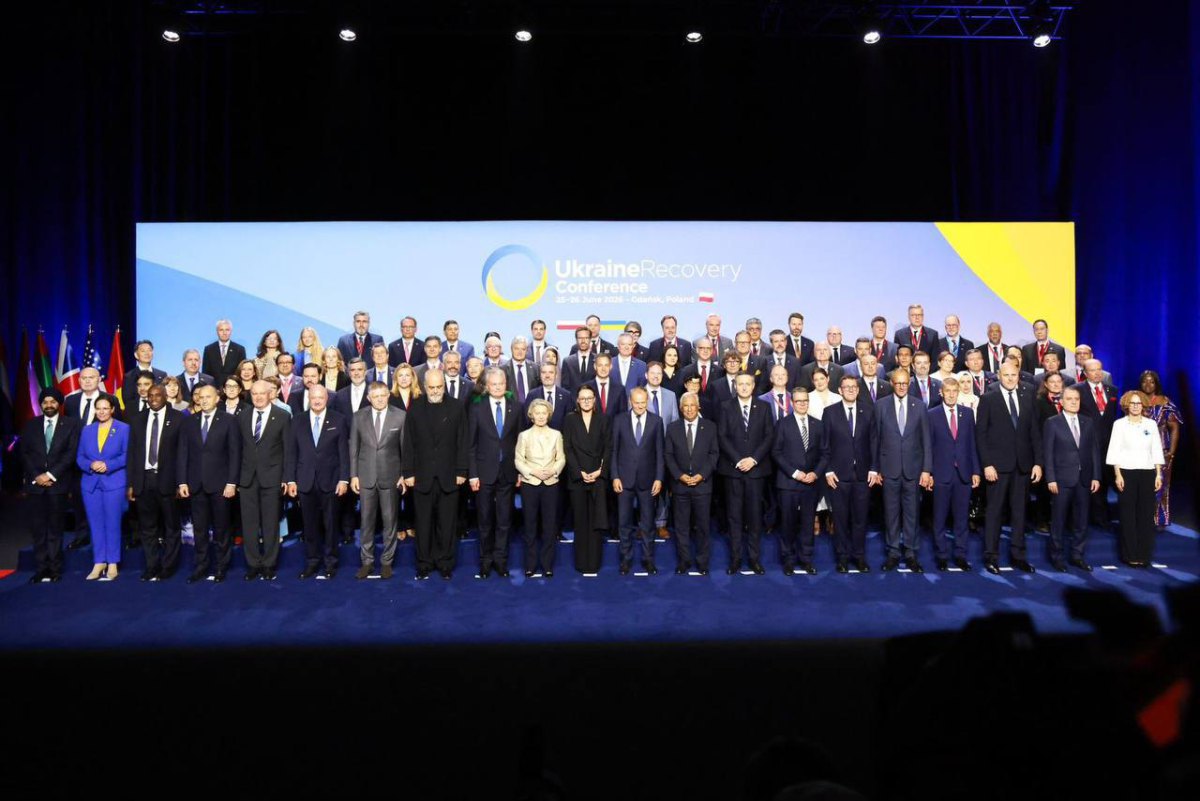
The financial lifeblood
Ursula von der Leyen has set out the key principle: Ukraine’s security is now inseparable from Europe’s security. The question, then, is financing.
A €90 billion package for the next two years has been confirmed. These funds are critically important. They will help maintain macroeconomic stability, secure energy supplies, support the armed forces and finance major repairs to the power grid damaged by Russian air strikes. In addition, a further €2.3 billion tranche has been allocated to address urgent funding needs.
The €90 billion in macro-financial assistance, together with an additional €6 billion earmarked for drones (more on that later), represents more than financial support. It sends a clear signal to the market. Investment on this scale is guaranteed to stimulate growth in the European defence industry. European companies entering into joint ventures with Ukrainian partners stand to benefit significantly. This is no longer solely a political project; it is the emergence of a new European security market, attracting major investment and creating significant economic opportunities.
Another particularly important development concerns SEPA. From the beginning of 2026, Ukraine will become part of the Single Euro Payments Area. For logistics and the defence industry, this is a major breakthrough. Transaction costs will fall substantially, payments will become more seamless, banking compliance requirements will be simplified, grey-market schemes will be reduced, and the procurement of critical components from European suppliers will accelerate.
The importance of this step is already evident. Ukraine is purchasing engines for its Ruta missiles from European suppliers, with the total number acquired now exceeding 1,000 units. Easier financial integration is expected to accelerate many such processes in the future.
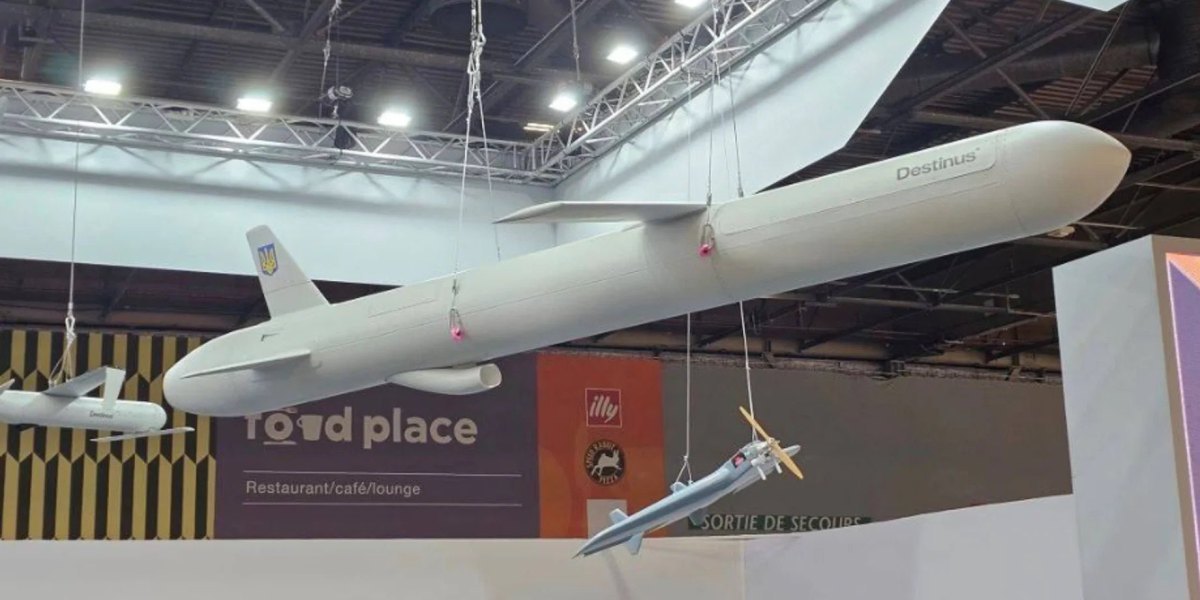
The evolution of the defence industry: from donations to joint production
This is perhaps the most significant development to emerge from the conference. The rhetoric has changed decisively. The discussion is no longer centred on supplying ready-made weapons, but on establishing joint production facilities.
Europe is investing €6 billion specifically to expand drone programmes. This amounts to direct state investment in asymmetric warfare. The emphasis is on battlefield-driven innovations: interceptor drones, medium-range strike drones, unmanned surface vessels and electronic warfare systems. Ukrainian developers now possess unique expertise in these fields. There is a limited window of opportunity, and Europe is moving quickly to capitalise on it.
The so-called ‘fish paradox’, described by Harvard professor Joseph Henrich, is highly relevant here. Success does not necessarily belong to the most intelligent individual, but rather to the system that can most effectively accumulate and apply collective experience. Ukraine’s military innovations are not the product of isolated design bureaux. They are the result of lessons learned by thousands of crews under combat conditions, often at enormous human cost.
European investment is therefore directed not only at technology, but at the accumulated operational experience behind it. By partnering with Ukraine, European militaries can avoid having to acquire many of these lessons through costly and potentially deadly trial and error.
Ground drones are another area attracting considerable attention. A notable example is the partnership between Germany’s Quantum Tencore Industries and Ukraine’s Tencore. Ground-based robotics represents the next stage in the evolution of warfare. Its applications include last-mile logistics, casualty evacuation, mine clearance, fire support and the resupply of isolated positions.
Those involved in frontline evacuation operations understand the challenge. Recovering and stabilising seriously wounded personnel while under constant attack from FPV and fibre-optic-guided drones can place medics themselves at extreme risk. Ground drones capable of evacuating casualties from the most dangerous zones offer a way to save lives and improve long-term recovery prospects for wounded service members.
European governments are well aware that robotic evacuation systems may become essential for preserving highly trained personnel in future conflicts dominated by unmanned systems. It is therefore unsurprising that interest is growing in the potential use of ground-based drones to secure strategically important areas such as the Suwałki Corridor and border regions adjacent to Belarus.
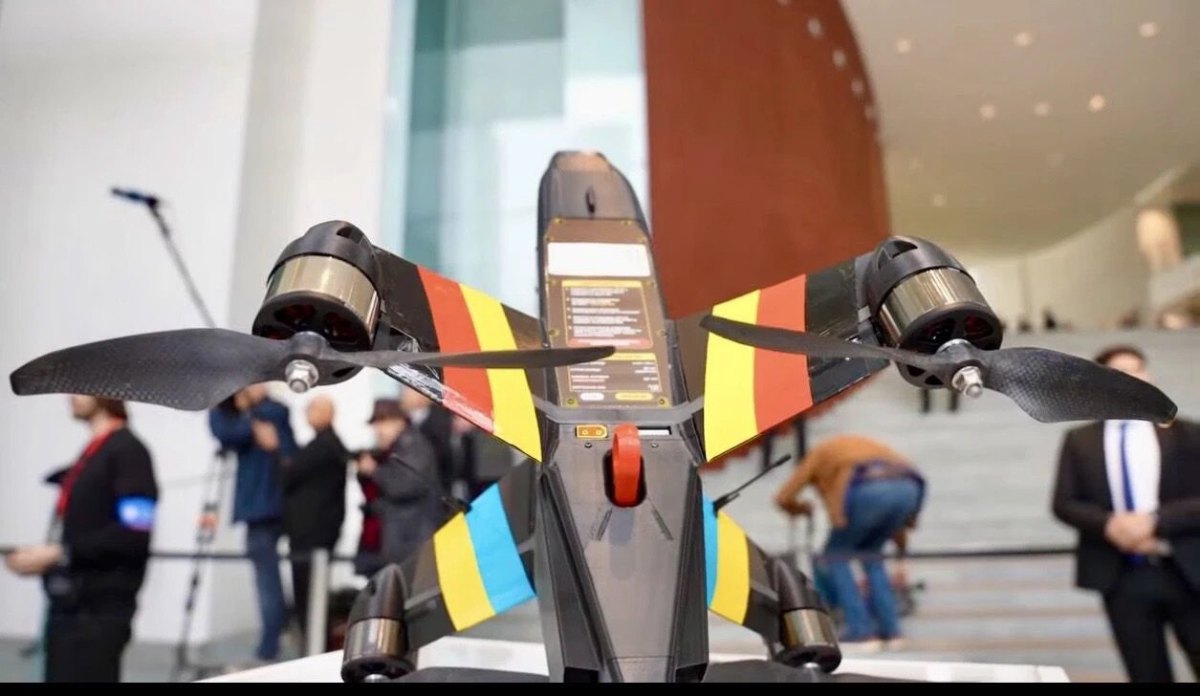
Distributed supply chains are also becoming increasingly important. Production of specialised fuel for Flamingo missiles is being established in Denmark, despite recent controversies surrounding Mindich. This reflects a broader strategy of risk diversification. The most sensitive and hazardous components can be manufactured far from the battlefield, beyond the reach of missile strikes, helping to guarantee continuity of production and final assembly.
Fuel, warheads, guidance systems and engines can all be scaled up within the European Union. The arrangement offers clear advantages to both sides: Europe gains access to combat-tested technologies and established production expertise, while Ukraine benefits from investment, expanded manufacturing capacity and protection from direct attacks on critical facilities.
Politics and European integration
Donald Tusk set the political tone of the conference. He described Gdańsk as a living symbol of reconstruction and stressed that the foundation of a successful future and deeper integration lies in historical truth and the genuine ability of nations to reconcile. This is an encouraging sign. It suggests a move beyond disputes over historical grievances and competing narratives. Such debates belong to the past and have little relevance to the challenges Europe faces today.
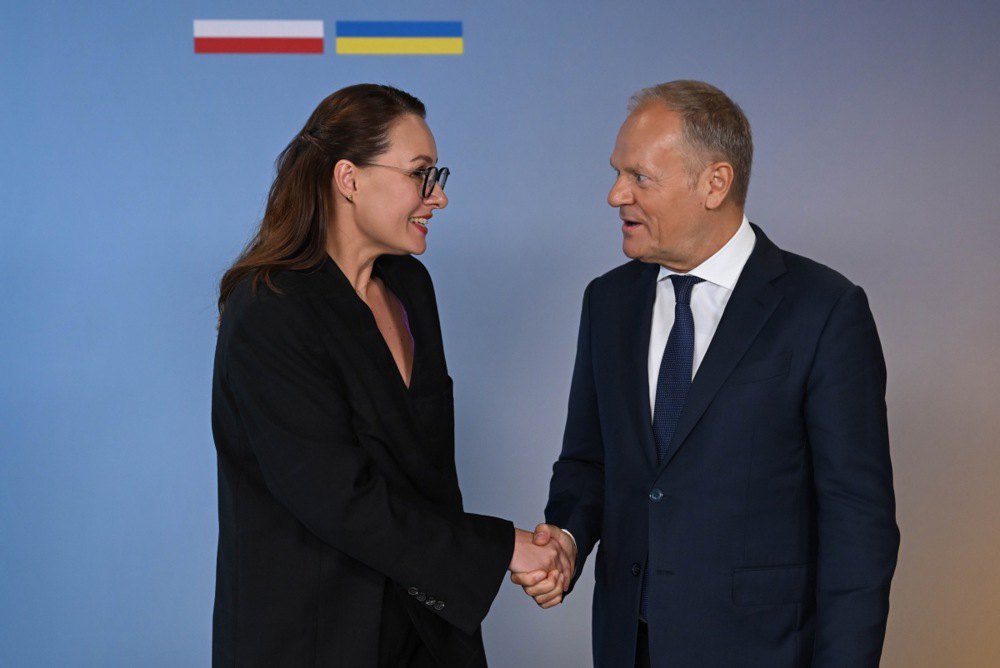
Yuliya Svyrydenko highlighted another important development: the official launch last week of the first negotiation cluster on Ukraine’s accession to the European Union. The message from the European Commission is clear. If Ukraine maintains its current pace of reforms, full membership is no longer a distant prospect but an achievable objective. The goal now is to avoid the prolonged accession limbo experienced by countries such as Turkey, whose membership process has remained unresolved for decades.
The bottom line: in brief
URC 2026 has demonstrated a fundamental shift in Europe’s approach. The focus is moving away from reactive crisis management towards systematic, long-term planning for the continent’s security and defence economy. Hundreds of contracts are being signed. Billions of euros are being invested directly in drone programmes. Joint defence production lines are being established. The European Union is deliberately building a more autonomous and resilient defence-industrial ecosystem.
Within this framework, Ukraine’s battlefield experience and capacity for rapid innovation are increasingly being combined with Europe’s industrial capabilities and financial resources. Ukraine did not choose this role. However, leveraging the expertise gained through the war — from challenging Russian naval dominance in the Black Sea to conducting long-range strikes against critical military infrastructure — has become an essential element of national strategy.
Ukraine is no longer positioned solely as a recipient of assistance. It is becoming a provider of expertise and an increasingly important component of Europe’s broader security architecture. This represents a pragmatic partnership in which Europe contributes capital and industrial capacity in order to strengthen its own long-term security. The war of attrition has increasingly become an industrial contest, and in that contest Ukraine is beginning to operate according to the same strategic principles as the world’s most advanced economies.