





Russian armed forces losses in the war against Ukraine have exceeded 10,000 people for a third week, said Ants Kiviselg, head of the Intelligence Centre of the Estonian Defence Forces, ERR reports.
“Russia has lost more than 10,000 troops for the third week in a row — both wounded and killed. The average daily losses this week remain at around 1,600 troops, which means just over 11,000 were lost over the week,” Colonel Kiviselg said.
According to him, the trend that Russia is losing more on the battlefield than it can recruit continues.
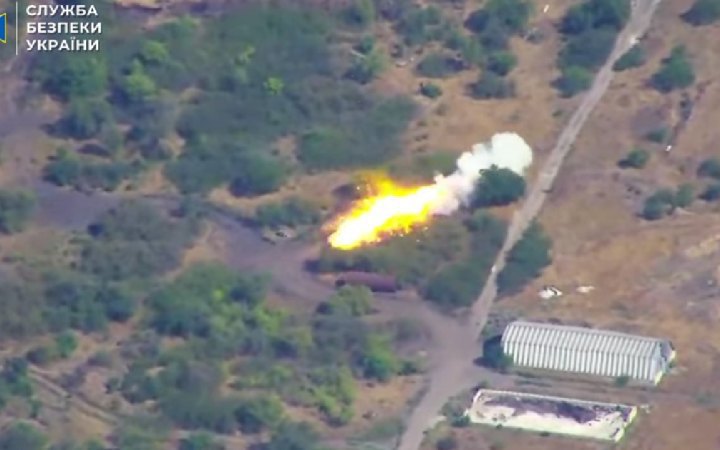
Speaking further about Ukraine’s success, Kiviselg listed strikes on Russian oil facilities in Krasnodar Krai, Saratov and Samara regions, as well as in the Republic of Tatarstan; the port of Makhachkala on the Caspian Sea; attacks on chemical plants in Perm Krai and Volgograd; and the destruction of a drone manufacturing plant in Rostov Region.
“Among the military targets are attacks on airfields in Rostov region, launch sites used to store air-defence weapons and long-range drones in Rostov and Oryol regions. Damage is still being assessed, but the Ukrainians likely managed to shoot down or damage some aircraft, as well as helicopters,” the colonel added.
Kiviselg also referred to a report by the International Energy Agency (IEA), which says the condition of Russian oil refineries has deteriorated due to the impact of long-range strikes from Ukraine, while sanctions are hindering efforts to repair the damage caused by air strikes. The IEA estimates that Russia’s oil refining capacity will remain 30 per cent below pre-war levels over the next 18 months.
Although Russia has increased pressure on Ukraine by attacking its civilian infrastructure, surveys show that Ukrainians are not ready to give in despite the hardships caused, Kiviselg noted.
“This week, Russian long-range strikes continued to hit critical and strategic infrastructure facilities in Ukraine, as well as residential buildings, possible warehouses, shopping centres, petrol stations, vehicles and businesses — and this is in at least 17 regions of Ukraine, and in roughly half of these regions there were also power outages as a result of the attacks,” he said.
Russia has once again begun using relay transmitters in Belarus, which had not been operating for some time, to carry out such attacks; as a result, Russian strikes are also reaching western Ukraine and are likely to be more accurate and effective, Kiviselg added.
The head of the armed forces’ intelligence also noted that Russia has attacked around 500 locomotives in Ukraine during the full-scale war; this year, around ten UN humanitarian aid warehouses have been attacked, and in September, four pharmaceutical warehouses.
However, as Colonel Kiviselg noted, recent surveys in Ukraine show that around 77 per cent of Ukraine’s population do not want to concede to Russia’s demands or accept Ukraine’s defeat, and believe that resistance must continue.