




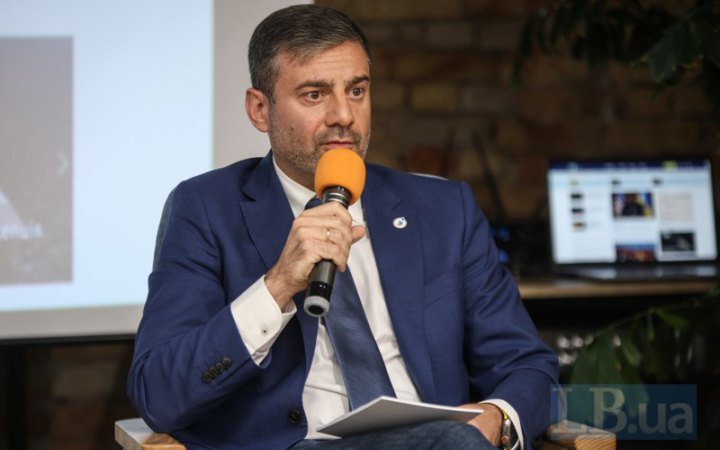
Verkhovna Rada Commissioner for Human Rights Dmytro Lubinets, together with Hungary’s ombudsman Imre Juhász, carried out a joint monitoring visit to educational institutions with Hungarian as the language of instruction in Transcarpathia.
According to Lubinets, all 11 schools for inspection were chosen by the Hungarian side to make the process as transparent as possible.
During the visit, the officials spoke with teachers and pupils of different ages — from primary to final-year classes. The children answered freely in Ukrainian, English and Hungarian.
Lubinets noted that the joint monitoring recorded no violations of the rights of the Hungarian community. In addition, throughout 2026 the ombudsman received no complaints from representatives of the Hungarian minority.
In total, 92 schools operate in Transcarpathia where Hungarian is used in education, Lubinets said. The educational process, the printing of textbooks and teachers’ pay are fully funded from Ukraine’s state and local budgets. According to the Ukrainian ombudsman, the country is setting the best example of protecting the rights of national minorities.
- Earlier this month, the ombudsman reported that Ukraine and Hungary would set up a joint working group to deal with the protection of minority rights — Hungarians in Ukraine and Ukrainians in Hungary.
- In June this year, an agreement entered into force to resolve issues relating to the educational, cultural, linguistic and political rights of the Hungarian community in Transcarpathia between Ukraine and Hungary.
- The dispute between the two countries on this issue has continued since autumn 2017 because of the language provision in the Law “On Education”. In Budapest, it was believed to restrict the rights of Transcarpathian Hungarians.
- Viktor Orbán began using the issue as his main argument for blocking Ukraine’s integration into Western structures. In particular, in January 2024 during a visit to Uzhhorod, Hungary’s then foreign minister Péter Szijjártó officially presented a list of 11 demands. The core complaint was the restoration of minority rights to the state that existed before 2015. This included the unrestricted use of Hungarian in education, culture and local government, without the limitations introduced after the start of reforms.
- Orbán also used the minority issue to manipulate the debate around Ukraine’s accession to the EU. In December 2023, he responded to an appeal from leaders of the Hungarian community in Transcarpathia, who urged him to support the launch of membership talks for Ukraine. The politician ignored the community’s own request and said he would instead propose a “strategic partnership” rather than full membership, arguing that Ukraine was supposedly not ready to guarantee minority rights.
- The new Hungarian government led by Magyar continued to insist that Ukraine fulfil the 11 points of the demands.
- Radio Free Europe/Radio Svoboda previously wrote that Transcarpathian Region had long ranked last in the External Independent Testing (ZNO) league table for Ukrainian language. In particular, in Berehove district, where Hungarians make up 75% of the population, 63% of school leavers failed the Ukrainian ZNO. There are villages where 100% of pupils failed the test.
- Svyatoslav Babilya, coordinator of public monitoring of the ZNO in Transcarpathia for the civic network Opora, reported cases where applicants could not even fill in a ZNO application form on their own because they do not speak Ukrainian.