






Is remote de-occupation possible, and what are the consequences for Russia so far?
The impact of these operations on the Russian army’s logistics is already considerable. As an officer from the Azov Corps’ unmanned systems department told LB.ua, disrupting logistics means, above all, reducing supplies of ammunition and fuel. This directly affects the situation on the front line.
The source noted that, while it is still too early to speak about liberating parts of the territory, the Russian military is already feeling the pressure.
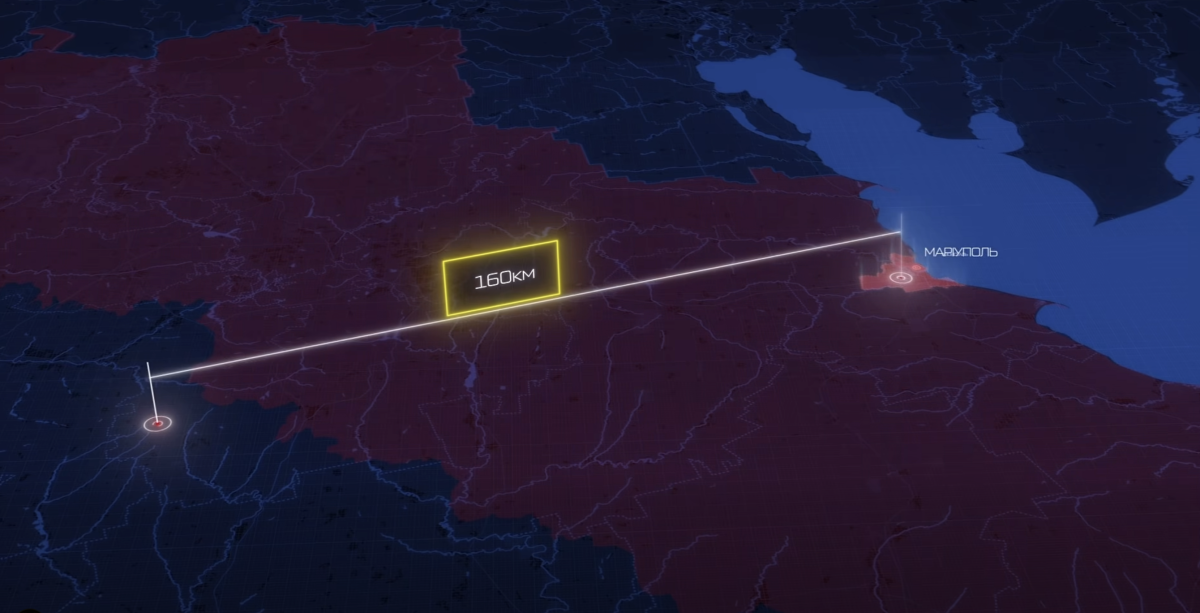
“As things stand, we can bring territories up to 160 km from the front line under fire control. We cannot consider these territories recaptured until the last invader has been driven from our land, but we can say that within a 160 km radius no occupier will feel safe. As we use cost-effective means, we can target not only priority targets but also any objects the pilot identifies as hostile,” the First Corps noted.
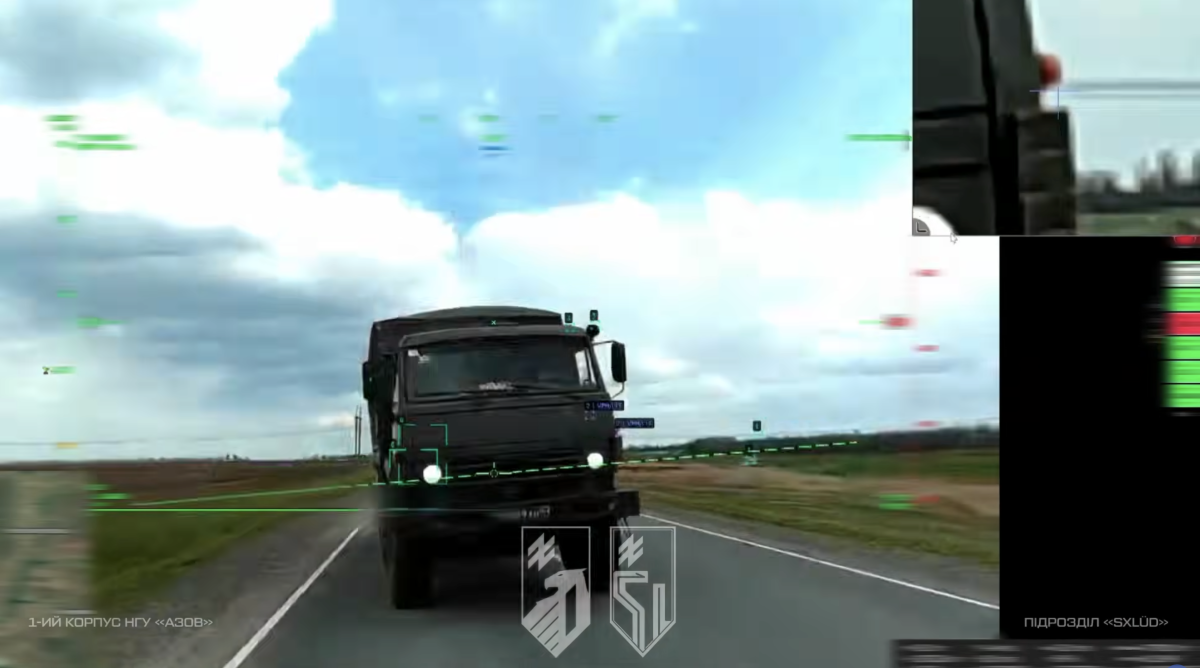
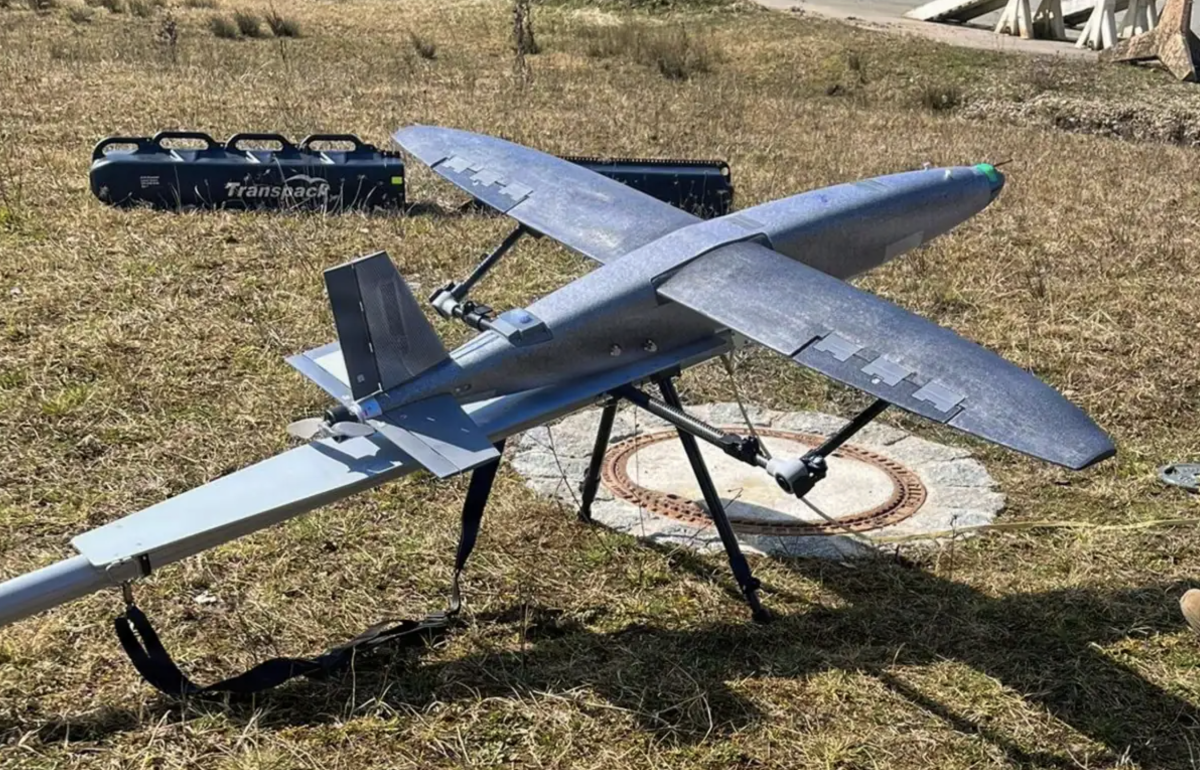
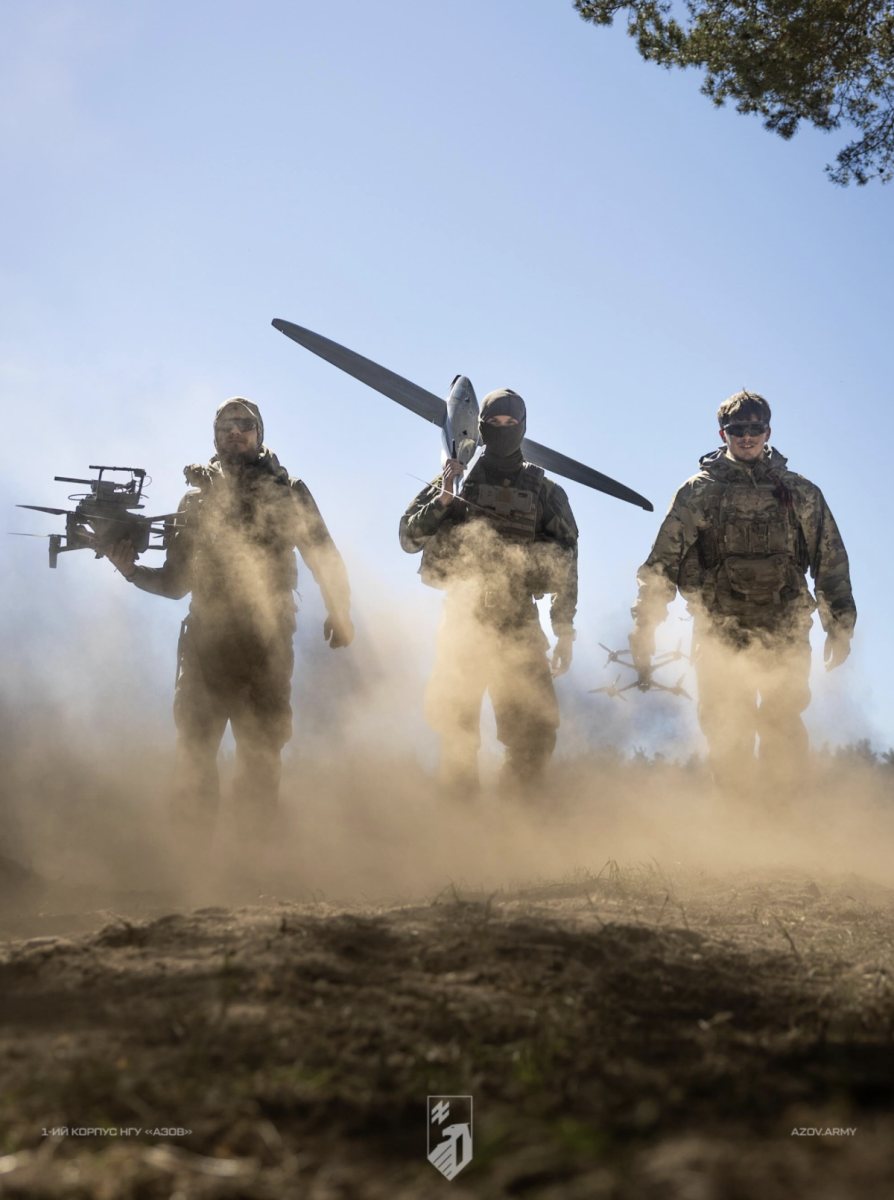
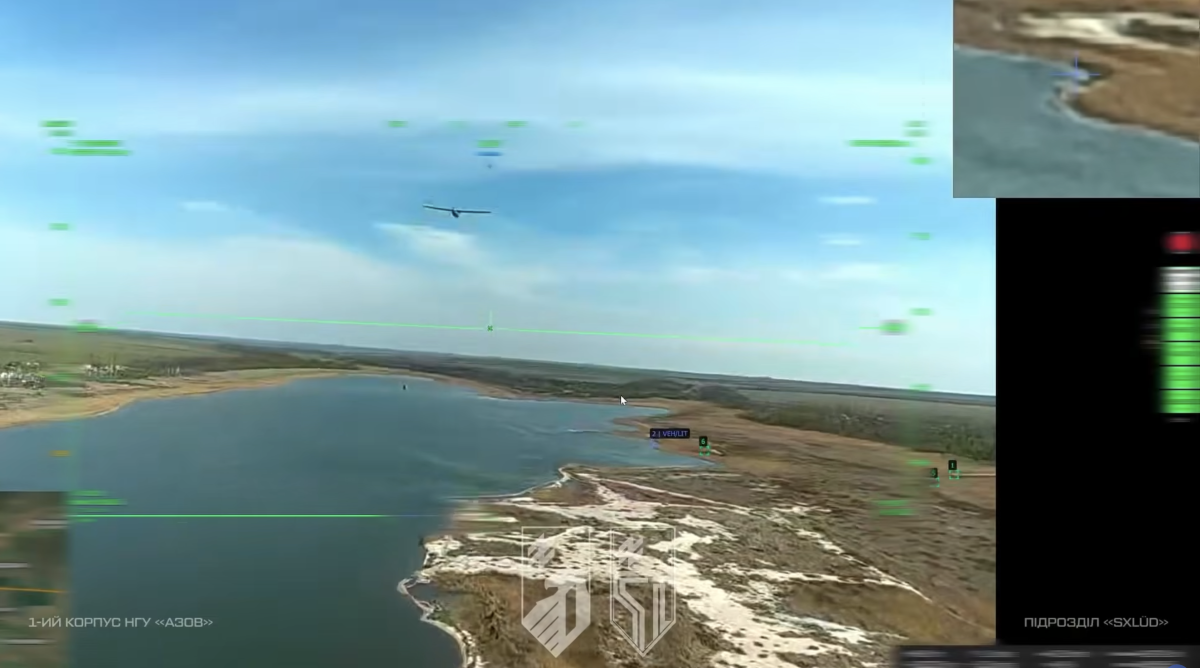
They also stated that units are using modernised American-made Hornet unmanned aerial systems for operations against enemy logistics.
Note: The Hornet is a kamikaze strike drone developed by the American company Swift Beat (formerly known as Perennial Autonomy), owned by former Google CEO Eric Schmidt. The aircraft-type drone has a built-in AI system capable of automatically recognising military targets in camera footage.
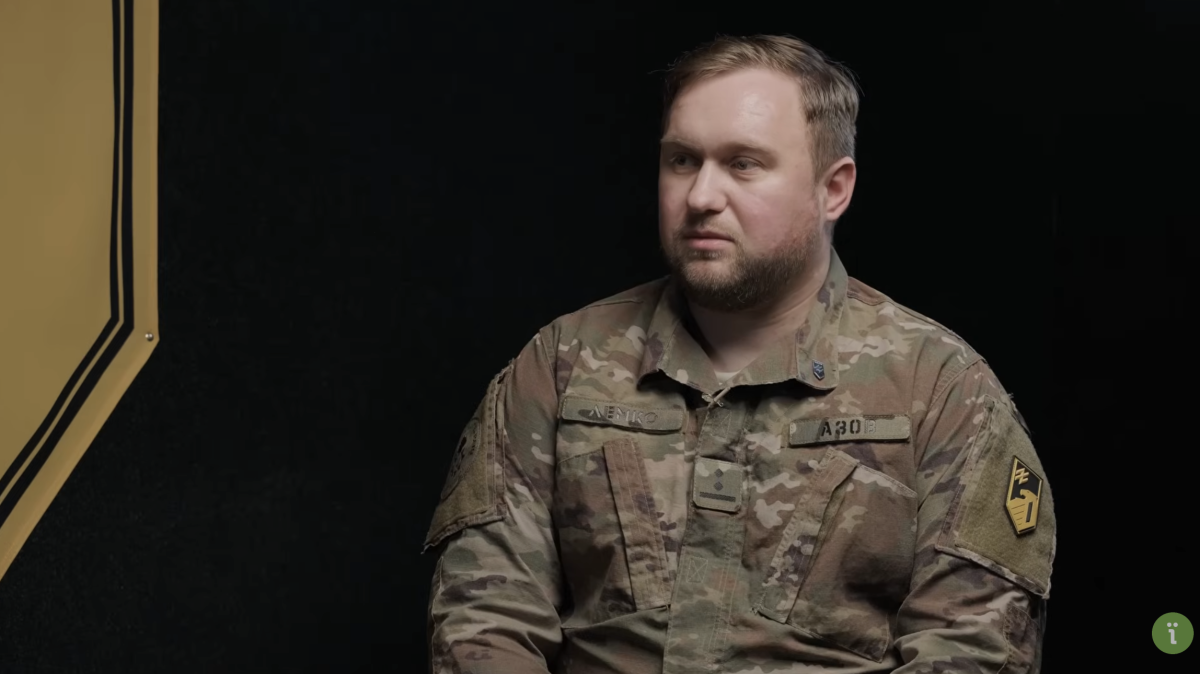
As Arsen Dmytryk (Lemko), Chief of Staff of Azov, explained in a recent interview with Ukraїner W, such strikes are the result of coordinated efforts by multiple units.
“When people say we’ve launched more drones than they have — that’s brilliant. On the battlefield, we’ve made enormous progress in terms of UAV capability. Our units hold positions 50–100 km deep, forcing the enemy to move their logistics further back. We control the Donetsk bypass, the entrance to Donetsk, the logistics route, and the Mariupol–Donetsk motorway. That’s 150 km. Orders have already been issued in Donetsk to relocate headquarters, move areas where equipment is concentrated, and transfer depots outside the city,” Dmytryk noted.
It’s no longer just the security services
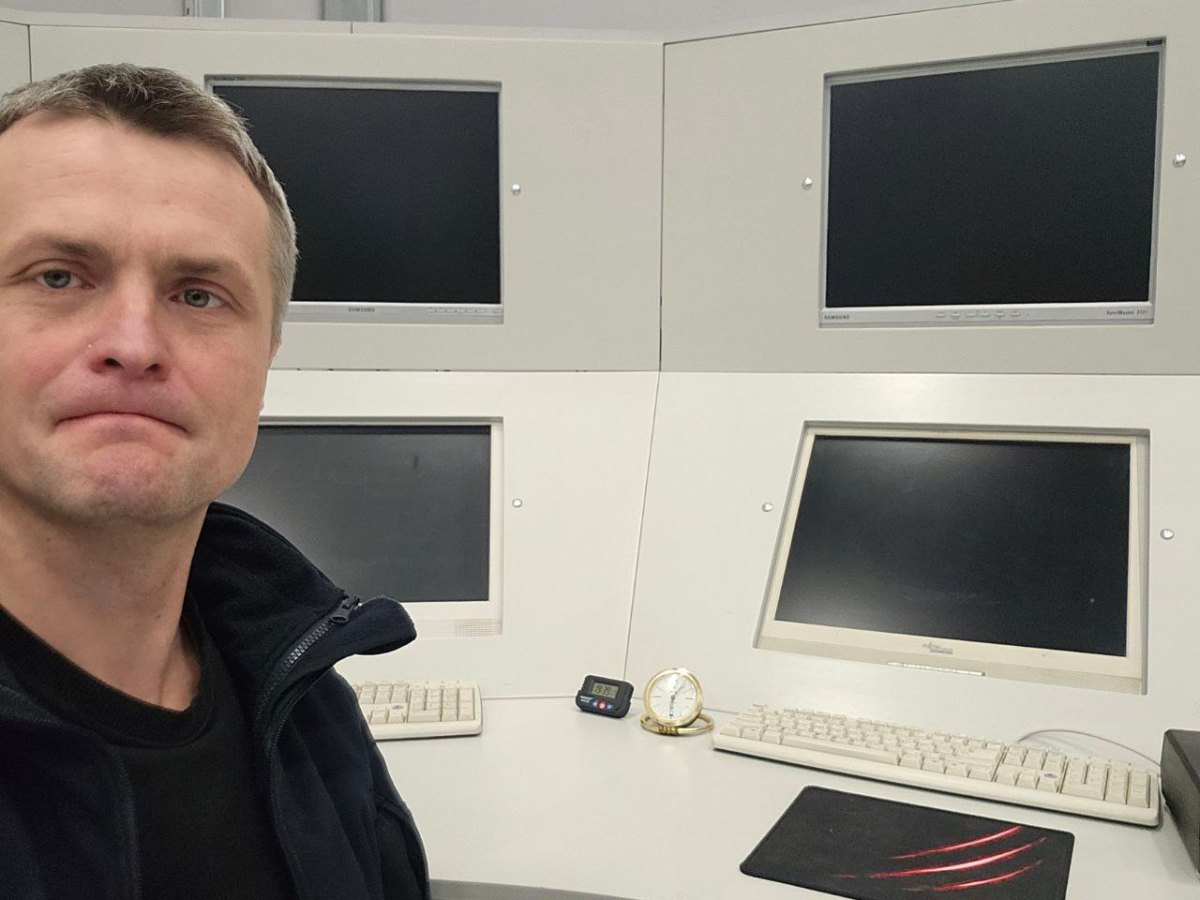
Naturally, the size of the grey zone, or kill zone, is increasing. Ihor Lutsenko, a military officer and co-founder of the Aerial Reconnaissance Support Centre, told LB.ua that whilst troops are not physically present in such areas, widespread destruction is taking place.
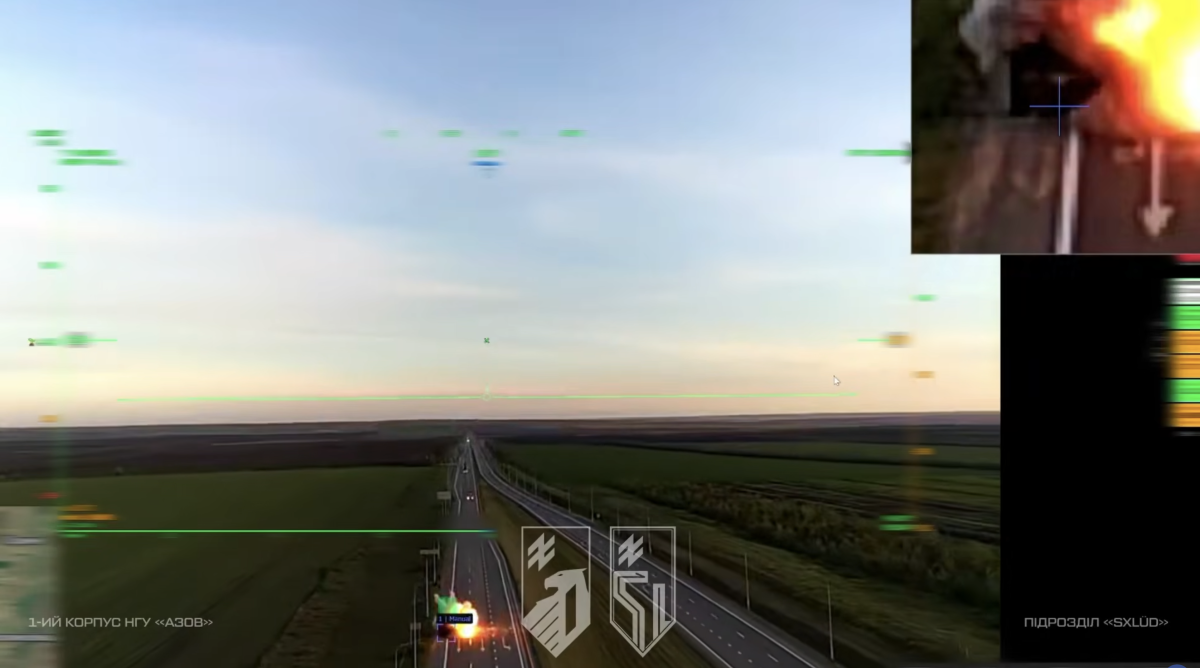
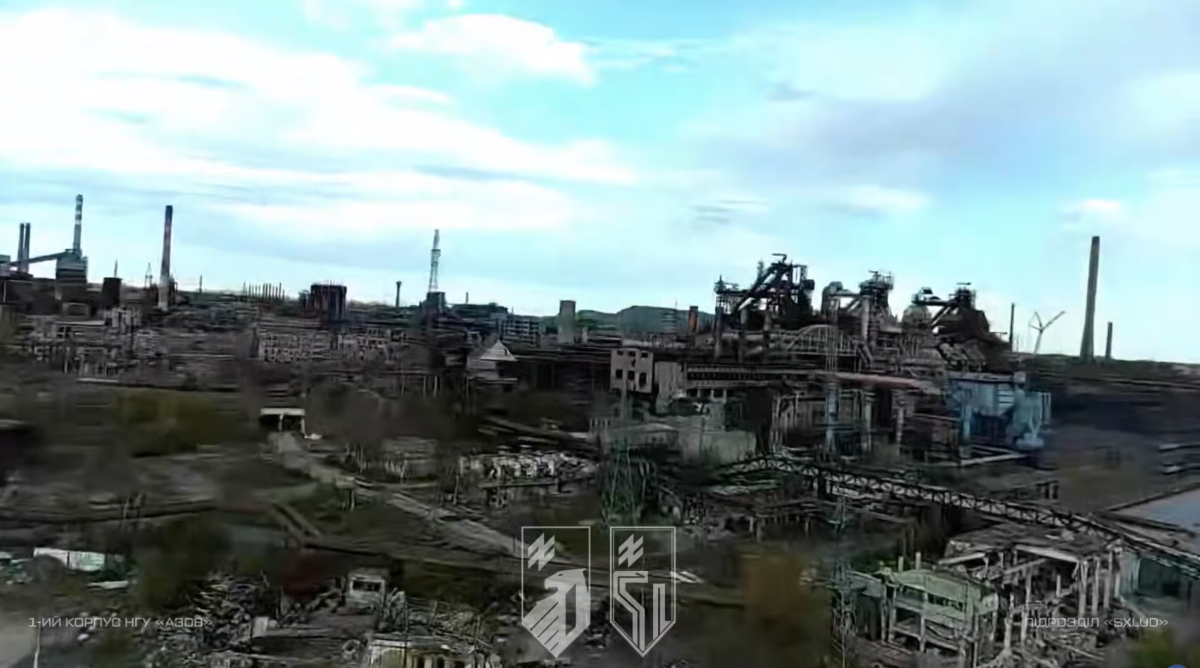
“The technical capabilities of drones are growing, and they will continue to grow. That is a fairly obvious prediction. It’s just that previously, this was mainly the domain of special forces and intelligence agencies, who would strike very important targets from a considerable distance, hunting them down, and we’ve seen plenty of those videos,” explains Lutsenko. “But now we can see that this is standard practice for Azov, which first announced a drone siege of Donetsk, showing the main roads and the damage inflicted on them. The next series of videos was dedicated to Mariupol. The nearest point to Mariupol is about 120 km from the territories under our control.”
Areas for development
At this range, Russian lorries are the primary targets. Russians are already forced to use military transport with caution, even if it is 20 km from the front line.
To achieve this, aerial reconnaissance must be properly established at such a range. This is more expensive and also a target for the Russia’s air defence system, says Ihor Lutsenko.
“Or to fly haphazardly in a kamikaze aircraft directly over the roads and, upon spotting something, launch an attack. This is quite a serious undertaking; I don’t think the current [units], not even Azov, are specifically tailored for this kind of work within their existing structure. I mean having enough resources and operators to monitor the whole of Mariupol. But we’re working towards that,” he says.
At the same time, Ihor Lutsenko is convinced that other reconnaissance methods can help identify stationary targets.
According to him, if such strikes continue to be successful, there will be an opportunity to develop this approach. But this will require the deployment of thousands of personnel, “so that the entire area from the Sea of Azov to the territories under our control in southern Ukraine is within our striking range”.
“If we see that this really works, it will be easier to convince the high command to allocate more personnel and pay them proper salaries. Because it is not a given that an operator [of such UAVs] will earn as much as his colleague in the ground forces, who is engaging targets on the front line,” Lutsenko argues.
In his view, for the sector to develop, the state needs to call on manufacturers to produce systems capable of completely blocking the Russian Federation’s military logistics in the south.
“And not just the south, but the south in particular — that would be highly significant; we can see just how much of an impact this has in Azov. And we currently have every opportunity to do so: our communication systems are working quite well in those areas, unlike the situation with the enemy. They have to expend far more effort to set up some sort of mesh networks. To be honest, I’m convinced that the Russians are in a dire situation right now because their communications have been cut off. Because in the current drone war, Starlink is the be-all and end-all,” notes the military officer.
How the Russians are countering
Recently, Russian military correspondents on social media have frequently complained about strikes by Ukrainian forces using new drones, as this significantly complicates the Russian army’s supply lines to the front. They complain that Russian lorries can no longer move safely along the roads near Mariupol. Electronic warfare is no longer effective, as the drones operate via satellite communication.
According to Ihor Lutsenko, the Russian military is trying to counter this, and the greatest danger comes from their interceptor drones.
“They’re also quite active in this area, as we can see from videos where they’re deploying interesting systems. They have their own radars. Consequently, at least in the area near the front line, their crews are a threat to us. So we need to navigate this zone quietly and carefully — either at high altitude or by some other means. We also need to work against their radars; this must be a separate strand of our development,” explains Lutsenko.
And this branch must work to reduce the density of the Russia’s anti-aircraft crews, he believes.
At the same time, the Russians may start using such crews to cover their logistics routes. This does not mean they will cease to be vulnerable, but more resources may be needed in such a case, notes Lutsenko.
“We’ll need to speed up our operations, sending two or three drones to attack a single target. That way, if their interceptors shoot down one or two, the third would still get the job done,” the serviceman reasons.
Read alsoEvolution of mid-strike: How German-Ukrainian Anubis drones are breaking Russia’s air defence system