






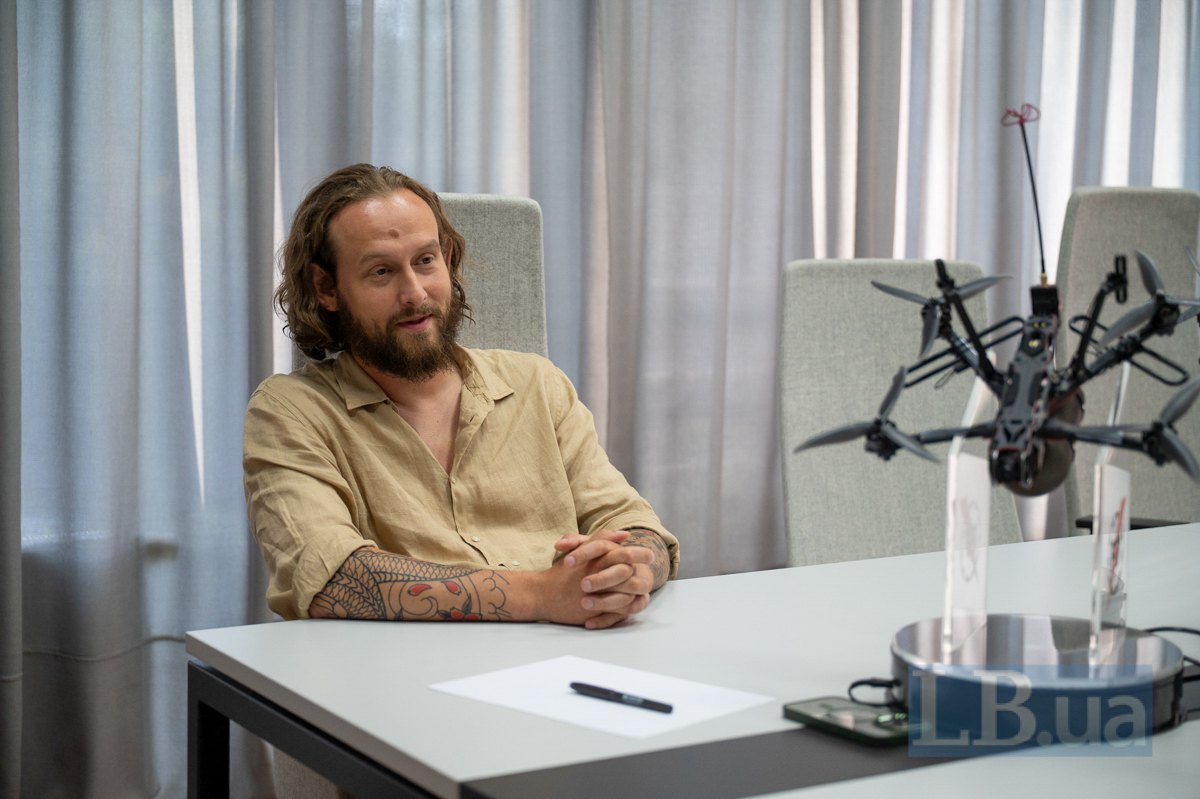
About Khutor and F-Drones
Let’s start with your background. What were you doing before Russia’s full-scale invasion and before joining F-Drones?
I am a dentist with a focus on maxillofacial surgery. Before the full-scale invasion, I had several different jobs, but they were all in the medical field.
When the full-scale invasion began, I joined the military. I served in a special unit of the TOR battalion within the Patrol Police. We operated as a combined unit and took part in various operations, including in Bucha, the clearance of the Kyiv Region, the Kharkiv offensive, Mykolayiv and Kherson.
At the time, we began developing strike drone systems of various sizes within the unit. Initially, these were large agricultural drones that we modified to carry and drop munitions. That was during the Mykolayiv operation. By the time we reached Kherson, we were already using our first FPV drones.
What happened after you left the service?
I was demobilised — this is possible under a Patrol Police contract. I then became technical director of the Army of Drones programme at the Ministry of Digital Transformation. We opened a training centre for pilots and drafted regulations to simplify the process of putting unmanned systems into service.
I first came across F-Drones products while working with the Army of Drones. We distributed them to military units as part of a volunteer project. I remember sending lorries loaded with these drones to the Zaporizhzhya Region.
When the Army of Drones programme began to be restructured, I was offered a position on the F-Drones team. I soon took responsibility for the company’s development as CEO.
What does F-Drones’ product portfolio currently look like, apart from the F-10?
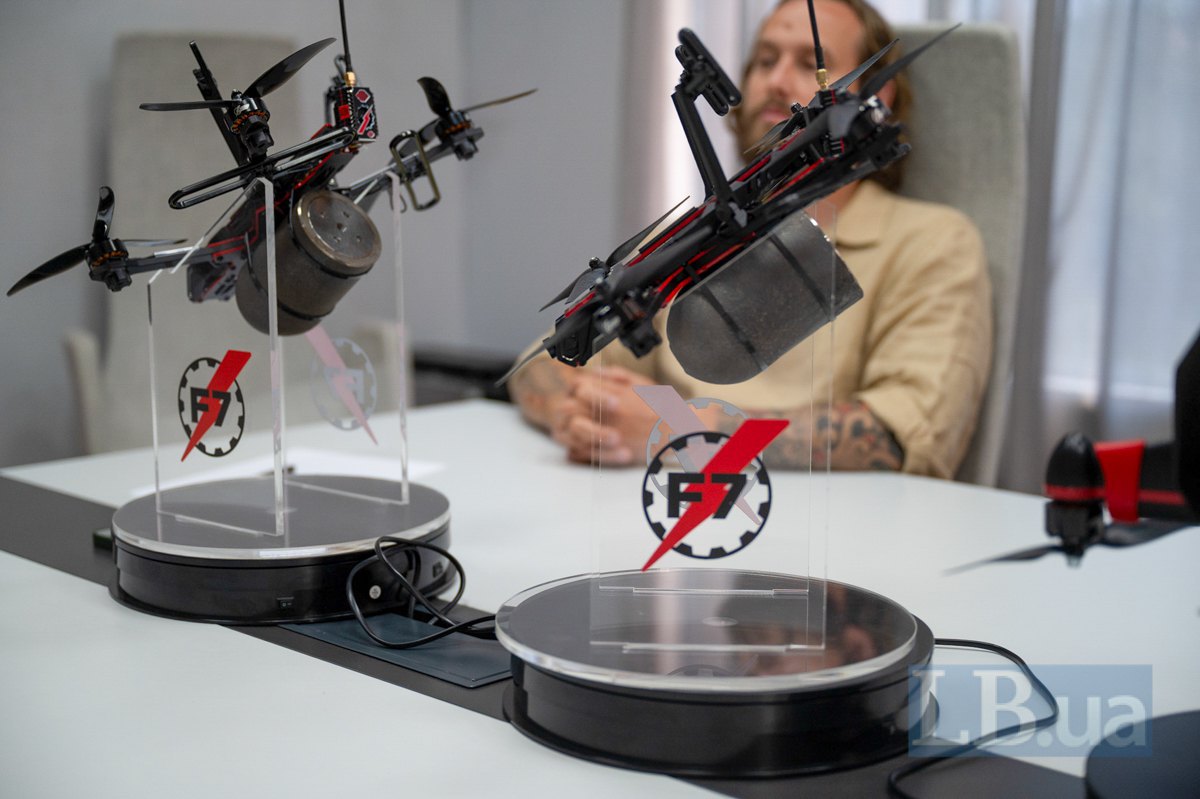
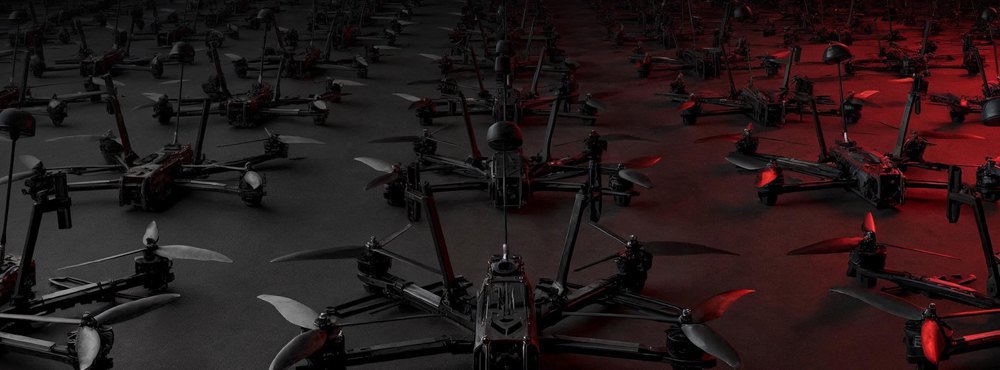
It is a broad range. Starting with smaller quadcopters, there is our well-known F7. According to 2025 results recorded in the Delta system, it was recognised as one of the most effective systems in terms of the number of Russian personnel, light vehicles and armoured equipment hit.
Another fairly popular model is the F11 BORYS, which can carry up to 3kg in both its radio-controlled and fibre-optic versions.
Our heavier platforms include the F10 HEXA and F13 HEXA hexacopters, which, like our bombers, can also be reconfigured for different missions.
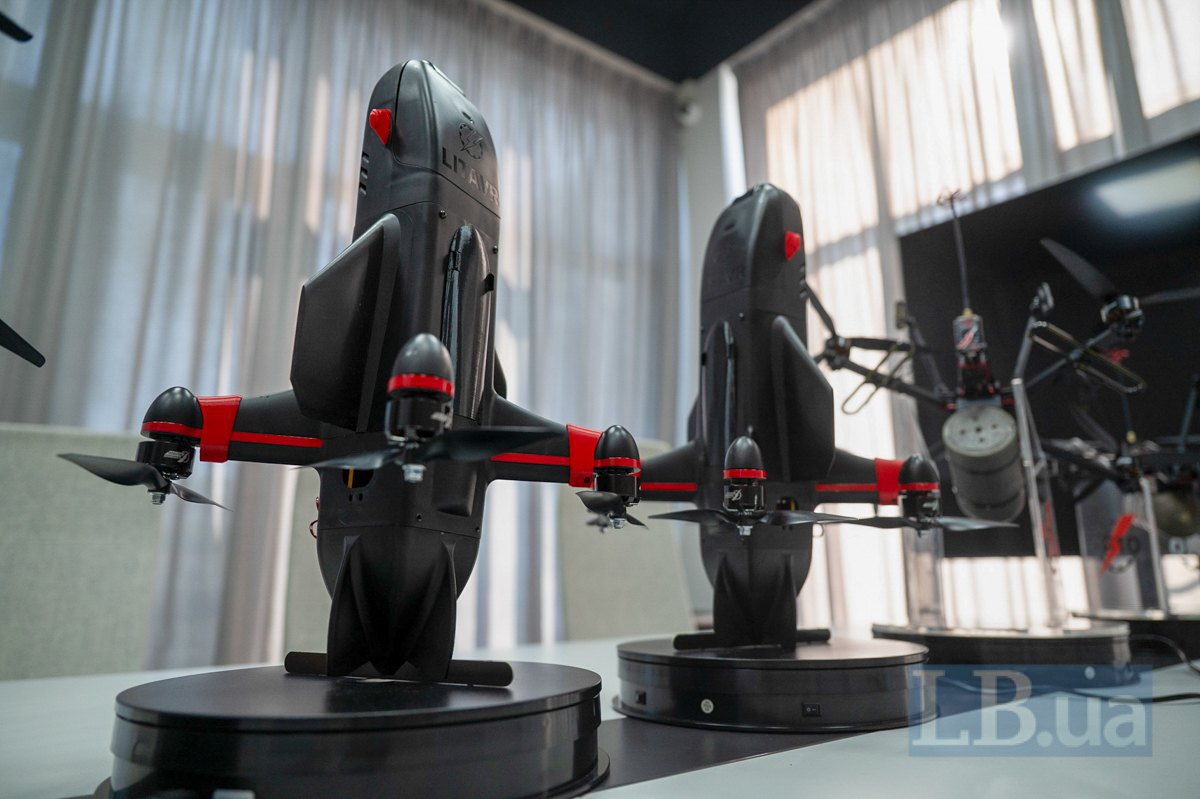
Then there is the F18 smart repeater drone equipped with Starlink. And finally, the Litavr interceptor, which destroys Russian Shahed drones on a daily basis, including jet-powered ones.
By the way, we have prepared the launch of an updated version of the interceptor, the LITAVR+, designed specifically to hunt down jet-powered Shaheds.
Could you tell us a little more about this system? The fight against jet-powered Shaheds, as well as ballistic missiles, is currently one of the biggest concerns for Ukrainians.
The LITAVR+ is an upgraded version of our main interceptor. It can reach speeds of 400kph and even slightly higher. It retains many of the features of the original model: our own software, a specialised navigation system that does not rely on GPS, and a target terminal guidance system — the so-called last mile capability, which allows a mission to be completed without pilot intervention.
And, of course, there is the remote-control technology, which allows the pilot to operate the drone from virtually anywhere in the world.
Has it already undergone combat trials?
The LITAVR+ has already passed factory testing and is now undergoing combat trials. There have already been successful deployments, including the interception of jet-powered Shaheds, backed by video footage of the engagements.
As for the rest of the product range, one of our newer systems is the F-Capitan, a fixed-wing strike system in the mid-strike class. It can carry a 10kg payload over a range of up to 100km.
Destroying Russian logistics and supply routes is a major requirement for the military, and Ukrainian forces are already actively using this system.
Read alsoF-Drones unveils F-CAPTAIN mid-strike drone. What are its capabilities?
Several other products are currently at the testing stage, but we are keeping them under wraps for now. Overall, the company’s focus is on offering the military advanced unmanned systems across all domains — in the air, on the ground and at sea.
So should we expect an unmanned ground vehicle (UGV) from F-Drones soon?
Yes. We will unveil it once we are ready to present it publicly. We are currently working closely with the military.
I also wanted to ask about FPV drones and whether they are still relevant. In the media, there was a period when conventional FPVs dominated, followed by fibre-optic drones, and now interceptors and mid-strike systems. How widely are conventional FPVs still being used today?
It is a system that will remain with us for good. It is like a bullet — a standard that has existed, still exists and will continue to exist regardless of the side or the conflict.
The fact that there is less media attention around FPVs does not mean they are any less effective or in demand. The military’s need for these systems runs into the millions.
Why is the company called F-Drones?
I would trace it back to the F-7.
So the drone came first, and the name followed?
Yes. It was a time when Ukrainians were eagerly awaiting Western military aid: Leopard tanks and F-16 fighter jets. We realised that while we were waiting for those F-16s, the enemy would be targeted by the F-7 — a drone we would build ourselves.
That is where the F series and the whole F-Drones concept came from.
What sets your company apart in the market — the products, components or service?
Several things. First, we are the first Ukrainian company to localise 100% of our components in-house: motors, frames and electronics, including flight controllers, electronic speed controllers, communications systems, video transmitters, and ground and onboard antennas across the full frequency range.
These are the components that typically leave manufacturers dependent on China. We are eliminating that dependence.
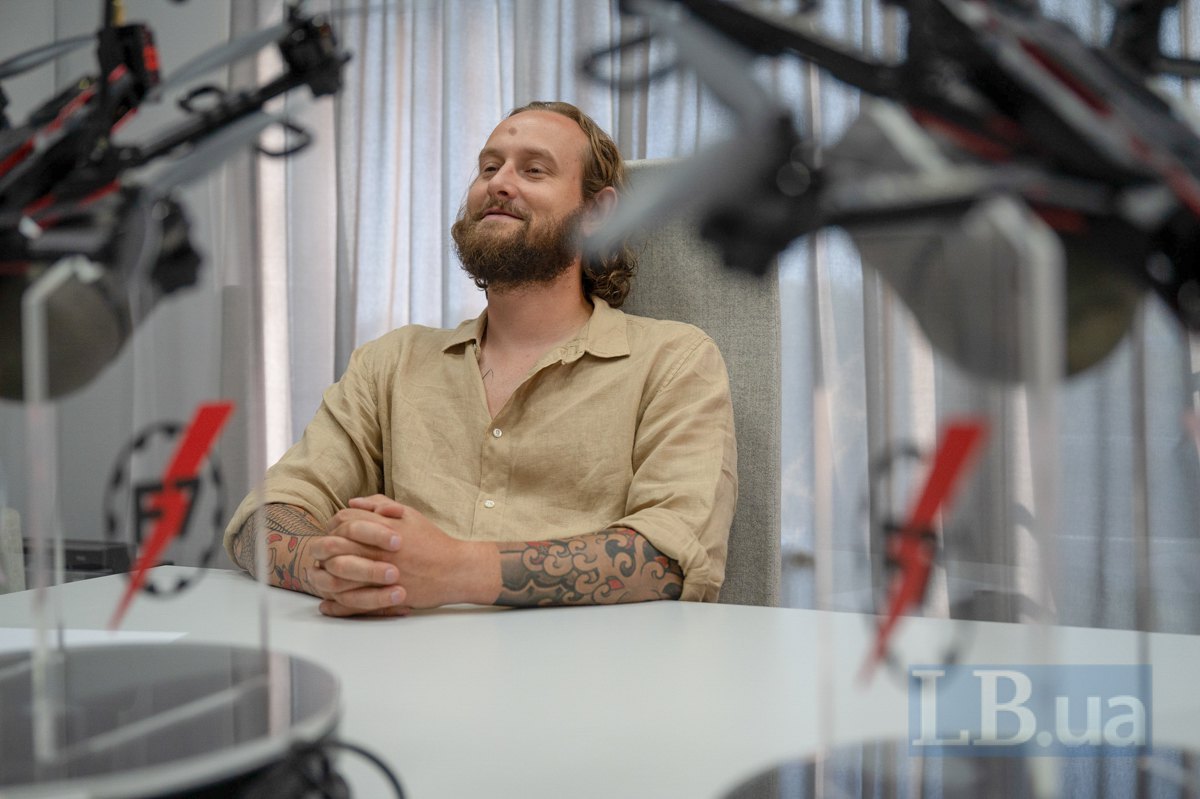
Second, we put a strong emphasis on innovation. We deliberately maintain a higher-than-usual proportion of R&D staff — engineers, inventors and programmers. This allows us to bring new products to market in time and upgrade existing ones.
Third, it is about our vision. We genuinely believe that drone manufacturing — and Ukrainian defence tech and deep tech more broadly — should become a strategic sector of the economy, a specialisation for Ukraine in the international division of labour, and a powerful national asset and source of influence in the world.
To make this a reality, F-Drones is ready to invest in building an industry-wide ecosystem, reviving and developing Ukraine’s engineering tradition, and supporting talent. For us, this is an important mission and a responsibility as inheritors of the great engineering legacy of Sikorsky, Antonov, Korolev and Kondratyuk.
And we are already doing it.
Why did F-Drones remain a low-profile company until recently?
Our decision to keep a low profile was driven primarily by the need to protect our people and production sites. Staying out of the public eye helped us remain less visible to Russian forces. Working in the shadows allowed us to quietly develop complex projects and take part in important missions. We simply got on with the job without making a fuss.
Today, our products have already made enough noise of their own, so it is no longer possible to remain completely out of the public eye. Security concerns, however, have not become any less important. But the decentralisation and geographical dispersal of our production facilities allow us to talk a little more openly about what we do — while, of course, keeping sensitive information confidential.
On cooperation with the US and the export process
How and why did you decide to take part in the Pentagon’s Drone Dominance Program?
Returning to the idea of strategic influence through cooperation with the state, the participation of Ukrainian manufacturers in programmes like this is a direct tool for shaping a global vision of the future. Right now, decisions are being made about what drones should look like, how to build a component supply chain and how to achieve genuine independence from China. We have a duty to turn the unique expertise Ukraine has gained during the war into both stronger national defence and the success of Ukrainian companies.
The decision to enter this market is not about making money overnight. It is a strategic choice, as well as an expression of deep gratitude. The United States is a strategic partner whose support has helped Ukraine withstand some of its most critical moments. At the same time, the US remains the most demanding, technologically advanced and largest defence-tech market in the world. Our US partners may not yet fully understand every nuance of modern high-intensity drone warfare, but this is where global standards are being forged.
For F-Drones, this is an important reputational project and a bridge to global expansion. It is an opportunity to show the world what Ukraine’s technology sector is capable of. In practical terms, it means attracting external investment, expanding our R&D capabilities and developing solutions that will strengthen our front lines as early as tomorrow.
As for the programme itself, more than 200 companies initially applied. Twenty-five were selected to take part, and only 11 made it to the final. We came sixth, and as of today, all our drones have been adopted by the US Army.
And did you need a US-based representative to make this possible?
Yes. That is Ukrainian Defense Drones Tech Corporation (UDD Tech Corp), with which we have signed a memorandum. It is now the importer of our Ukrainian-made drones into the US.
UDD will assemble our drones in the US under licence. We are currently submitting the documents required to obtain an export licence for granting such licences to assemble F10 UAVs. If everything goes smoothly, the first F-Drone will roll off the production line in Ohio this autumn — built using Ukrainian technology, but made in the USA.
What did the competition in the US look like?
It was a US military requirement for a specific system, which was then tested by the US armed forces. The programme included field trials, with no Ukrainian pilots involved — only Americans flew the drones. They carried out missions, compared the results and scored the systems. The number of drones to be procured depended on each company’s ranking.
What are your expectations for the programme’s second round?
According to publicly available information, the link between a company’s ranking and the size of its order is somewhat different this time. But there are more participants in the second phase, so the competition has become significantly tougher. There are also more Ukrainian companies taking part. In the end, 2,000 drones were ordered.
How long did the export licensing process take, and what did it involve?
The entire process took around two months and required intensive cooperation with a number of government bodies at different levels. We went through most of the process in close cooperation with the state-owned exporter SpetsTechnoExport.
The procedure was genuinely complex. First, an application is submitted to the State Service of Export Control, followed by approvals from the Security Service of Ukraine (SBU), the Defence Intelligence of Ukraine (DIU), the Ministry of Defence and the Foreign Intelligence Service. The final decision was made by the Interagency Commission on Military-Technical Cooperation and Export Control Policy.
It is symbolic that we received the licence on 1 July, the very day the government officially announced its reform of drone exports. It was an important and significant date both for F-Drones and for Ukraine’s defence industry as a whole.
We became the first company to receive authorisation to export a finished Ukrainian-made unmanned system to the US. The system was subsequently changed, while we went through the process under the old procedures.
How much did your participation in the Pentagon programme and the US drone order help?
It really did help. We had official letters of support from the US Department of Defence. For Ukrainian government agencies, this was a clear signal that this was a serious matter being handled at the highest level — not simply a business deal, but an issue of interstate relations with a strategic partner.
As a result, our documents received the closest possible attention during the review process, although there were still a few surprises along the way.
Is this deal with the US somehow running in parallel with the Drone Deal programme? As far as I know, Ukraine and the US have not signed it yet.
The two sides are still negotiating. Perhaps our case will also help facilitate the signing of the Drone Deal between the US and Ukraine.
Read alsoThe U.S.-Ukraine Drone Deal: how Ukrainian tech can force-multiply U.S. SOF
Do you know what will happen to the F-Drones already delivered to the US? Will they be used in any combat operations?
As far as I know, no. This batch was purchased for initial testing and personnel training. In other words, US armed forces crews will use these drones to train and build up flight hours.
Contracts for drones intended for operational use will come later, taking into account the results of the training, testing and flight hours accumulated in the US.
So the Pentagon will test and train on this batch and then come back to you with its conclusions: “We need this many more”?
That is exactly the outcome we are hoping for.
And will you supply subsequent batches under an accelerated procedure?
Yes. And here we see two parallel routes: direct exports of finished products from Ukraine, or technology exports — in other words, licensing our drone technology for production abroad. We plan to pursue both routes.
In particular, we are moving ahead with plans to establish production in the US by licensing the manufacture of our drones at a facility in Ohio.
Whether we export more finished systems or transfer more technology will depend on the terms of the Drone Deal, the needs of the Ukrainian military, as well as our production capacity and component supply chain. The number-one priority is ensuring an uninterrupted supply to the Ukrainian armed forces; only after that do external programmes come into play.
The government has set absolutely the right priorities, which we fully share: first and foremost, the Armed Forces of Ukraine and the best technologies for our front line. And if we have the resources and capacity to influence global trends in the drone industry at the same time, we will certainly make use of them.
The Ohio factory
Were plans to start production in the US already in place when you applied for the Pentagon programme, or were these two parallel tracks?
Initial discussions were already under way at the start, but the decision to establish a fully fledged factory took shape later. We are now preparing the site for launch.
We expect to obtain all the necessary licences and permits shortly, allowing us to manufacture both the F-10, which is already covered by our contract with the US Department of Defence, and other models in our product range.
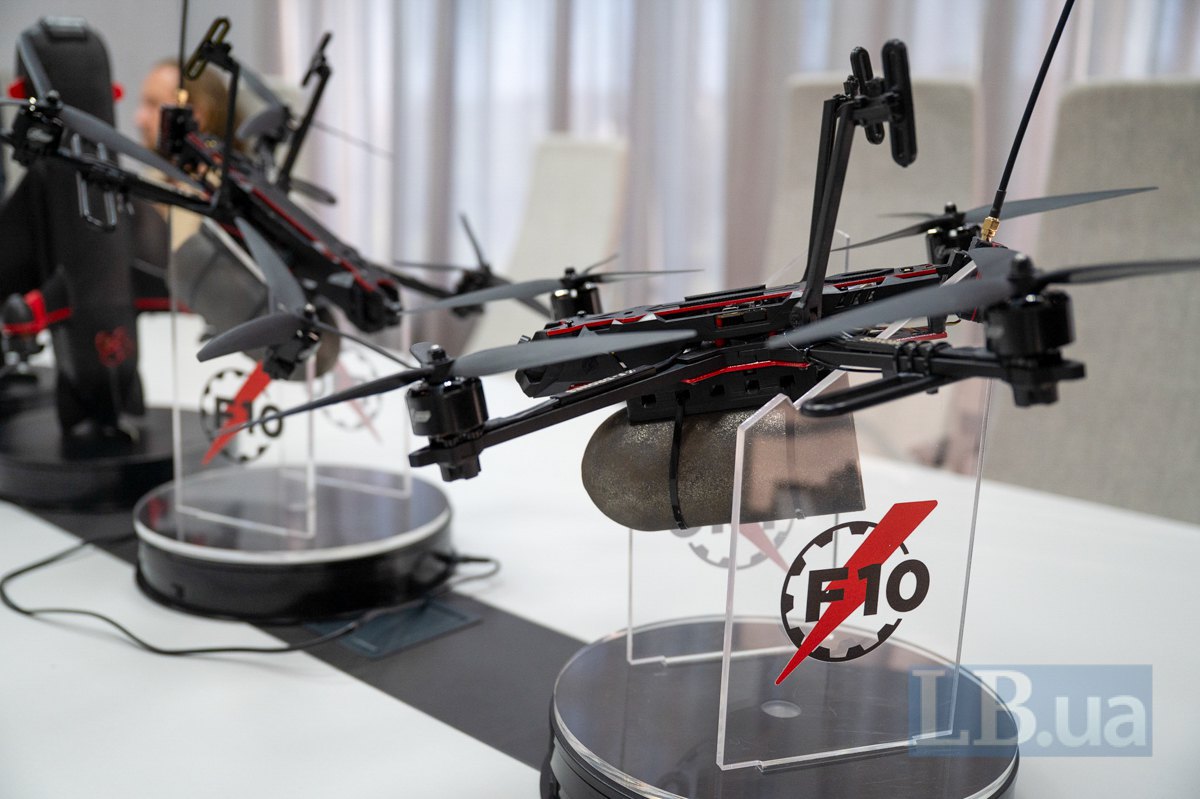
So the Ohio factory will produce complete systems, and will they meet US requirements for full localisation of the component supply chain?
The component supply chains in the US and Ukraine have their own differences. In the United States, the NDAA imposes strict requirements — there must be no Chinese components whatsoever in the drone’s design. To a large extent, we already meet these requirements with our own components. We have a clear understanding of how to achieve 100% compliance with NDAA standards across our entire product range and qualify for the Blue UAS list — the official list of unmanned systems approved for procurement by US government and defence agencies. Incidentally, our F-10 UAV is already on the Blue UAS list.
Read alsoTougher than the NDAA: How a new Pentagon document is shaping the global drone market — and what Ukraine should do about it
How did you choose the state, and did you research the labour market before setting up the operation? What is the situation like?
It is a very interesting market: in the US, the state itself proactively helps you set up a business. The negotiations were a lengthy process. A number of factors influenced our decision to choose Ohio. Congresswoman Marcy Kaptur, co-chair of the Congressional Ukraine Caucus, played an important role. She actively supported our entry into the region and showed us the incentives available in the state. These include grant programmes, tax breaks and support for job creation. We also saw that other major defence-tech players were choosing states with a strong industrial heritage. For example, Anduril has facilities in this region.
How did you agree with UDD on protecting intellectual property rights?
All intellectual property rights to our developments remain in Ukraine. In the US, we are setting up manufacturing facilities only, so the key technology assets and design rights remain with our company and under Ukrainian jurisdiction.
I’ve heard from many industry players that Ukraine’s intellectual property culture is not particularly well developed, and that companies are often reluctant to patent their solutions. How do you approach this issue?
We have taken a systematic approach to it and have been filing patents since 2023. It is a strategic priority for us, so we register and protect our rights in three jurisdictions at once — under Ukrainian, European and US law.
How will you transfer feedback from the military to your overseas production, particularly feedback that affects how quickly a system can be upgraded? Or will the US side decide how this will work?
A new body of experience will develop on the US market, and we will organically combine it with our Ukrainian experience. Time will tell which of these two areas of expertise will carry more weight. But the principle remains unchanged: drones manufactured in the US will go through the same rapid iterations and modifications that we have become accustomed to in Ukraine.
So, taking two companies in two countries, the experience of the war in Ukraine will influence the US operation, while the experience of the US military will influence the products of the Ukrainian company?
Exactly. It would be foolish not to take advantage of the opportunity to learn and scale through cooperation with partners of this calibre. The US Army is an enormous institutional and technological resource.
I do not mean that Americans will come and teach us how to fight. It is about taking our unique combat experience and looking at our products from a different perspective. In Ukraine, we operate in constant firefighting mode: the product was needed yesterday, the solution the day before yesterday. At that breakneck pace, there simply is not enough time for some things. In the US, we have the space to apply new methodologies, processes and evaluation approaches.
This applies to everything: assembly practices, quality-control standards, legal and administrative procedures, and ultimately the way we work with the military itself.
On the EU–Ukraine Drone Alliance
F-Drones recently joined the founding companies of the EU–Ukraine Drone Alliance. Why did you decide to apply?
For us, it is an opportunity to directly communicate our vision of what the future market should look like. The European Commission conducted a thorough selection process across Europe, resulting in a core group of nine Ukrainian and nine European companies. In our application, we outlined how we see the development of unmanned systems, robotic systems, component supply chains and the industry as a whole.
Can you share any of that publicly?
Not yet.
What are the benefits of joining the Alliance for the company and for Ukraine?
First and foremost, it is high-quality networking. The Alliance is a unique platform for finding European partners, contractors and suppliers, as well as for directly exchanging combat and technological expertise.
Secondly, it gives us a direct role in shaping joint EU–Ukraine policies. We are developing concrete proposals for making Europe’s defence industry stronger, more sovereign and technologically independent. Ultimately, this is a fundamental component of the collective security of both Ukraine and Europe as a whole.
From the company’s perspective, do you see evidence that Europe is now genuinely ready to listen and honour its commitments, rather than simply talk about how we need to preserve democracy?
Given the scale and results of joint military exercises and simulations in the air, at sea and on land, I am convinced that we have finally been heard.
The results of these tests speak for themselves: when a simulated fleet is sunk within five hours, or a small group of UAV operators completely halts a division, any doubts disappear. Our European partners have seen the realities of modern warfare first-hand and realised that the time for empty talk is over — it is time to act.