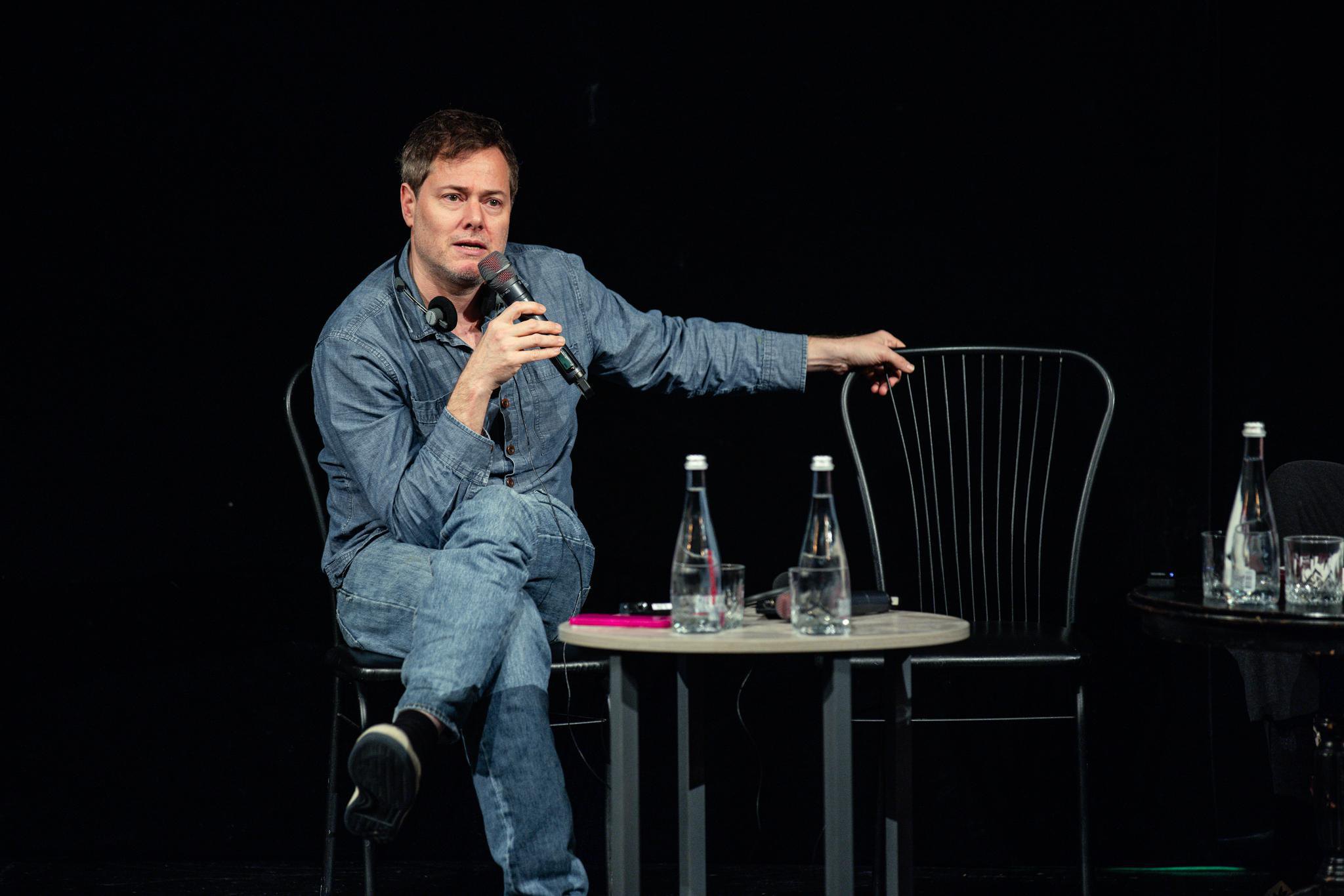







“In Kyiv, you don’t get the impression that there is a war going on. And this shows how well society has learned to cope with the situation.”
Milo, this was your first visit to Kyiv. What impression did the city make on you?
I must say that I was impressed. I even wrote an article about it. I was struck by how vibrant the theatre scene is, because for me that is the main point of entry. To be honest, I expected a much more straightforward way of talking about the current situation. Instead, I got the impression that it is a space free of propaganda. Usually, in a society at war, especially when foreign guests are invited, the tone becomes more propagandistic. But not here. And that was very important: we had genuinely interesting discussions in a very interesting environment.
The second thing that struck me was how interested the audience is in theatre. I had heard about this, and I saw it for myself: every performance I attended was sold out. This is very different from most countries. I saw performances that I could invite to the Vienna Festival. In other words, everything was of a high standard.
And perhaps one more thing: in Kyiv, you don’t get the impression that there is a war going on. The city is alive, restaurants are open, the streets are crowded, people are relaxed. And this, in my opinion, shows how well society has learned to cope with the situation. I came back with a very positive feeling. Although, of course, my visit was short. The deeper you dive in, the more you understand the complexity of reality.
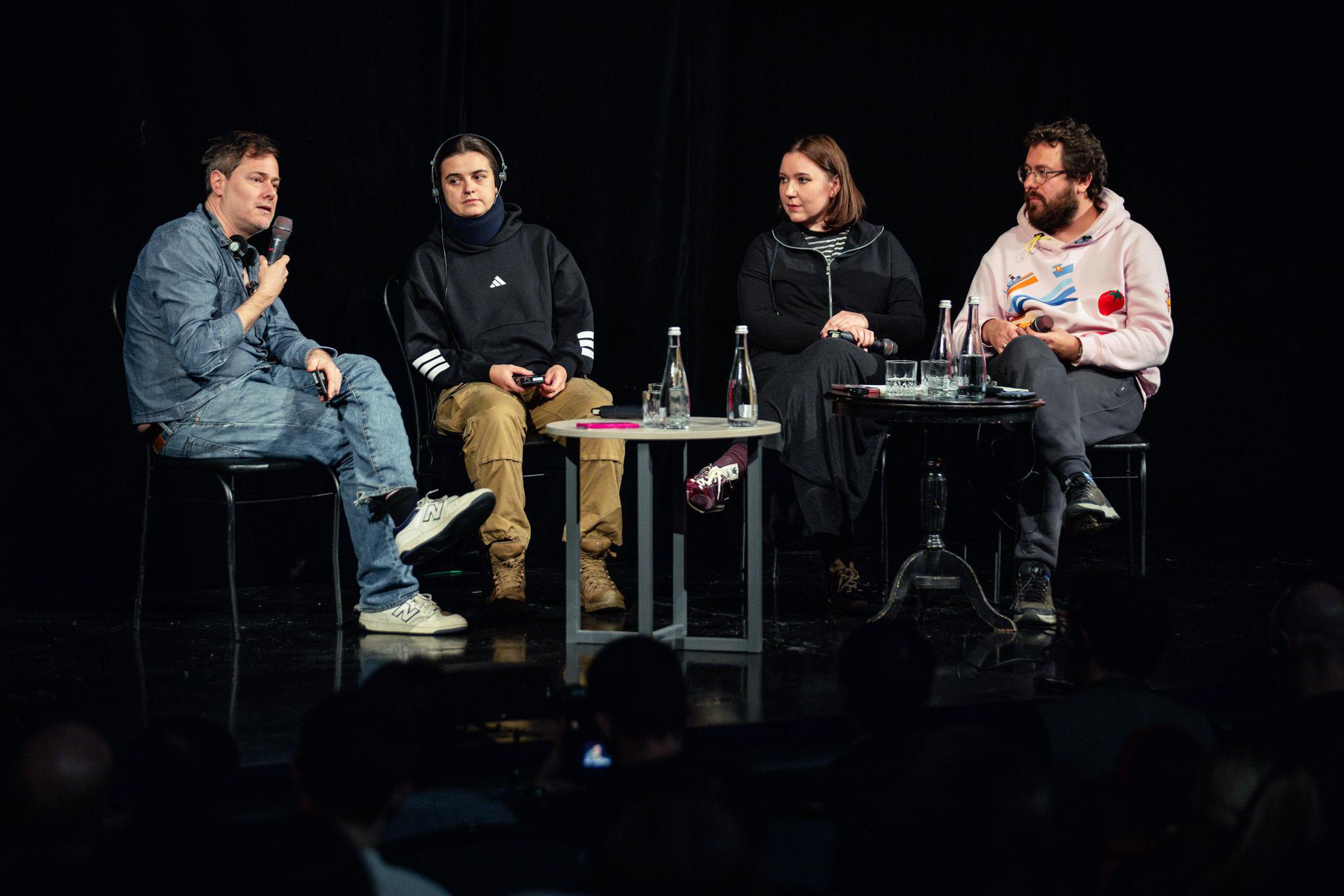
How did you feel during the public discussion?
What was interesting to me, and what my article is about: I worked in Moscow until 2013, when I was expelled from the country, along with some Russian artists and curators who were dissidents. And I was very interested to see the Ukrainian perspective on this. As you say, “what they did was not enough.”
In the West, the view of Ukraine changed only in 2022, after the second full-scale invasion. Before that, after the annexation of Crimea, there was virtually no reaction: political ties with official Russia were only severed abruptly in 2022. I think the difference is that Ukraine perceives this as the result of a very, very long history: colonialism, occupation, cultural occupation, the imposition of history and, of course, military occupation and the extermination of people. In my opinion, Europe is completely unaware of this. They realise that an invasion is taking place, that the invasion is unacceptable. But they do not understand that this is just one chapter in a very long history.
So, regarding my impressions: some things were as I expected, others completely contradicted my expectations. The day after the discussion, I met again with Olena [Apchel], a theatre actress and now a soldier, to continue the conversation. It seems we will start working together. I would like to delve deeper to understand what could be truly useful, what could be a gesture of solidarity at this moment in your history.
“Our public conversation in Kyiv was something like a tribunal. And I really liked it.”
I had the feeling that the Ukrainian theatre community used your presence not so much to hear your position, but rather to clearly define its own boundaries, its own path to decolonisation, and to accuse the West of its blind spots. Did you perceive it that way too? How prepared were you for such a conversation?
Yes. We have many such discussions in the West — and, in my opinion, for good reason. Because we have our own idea of what history is. And then we go somewhere and realise that history is different there. So, I think there is a perception in the West — you can call it Russian propaganda, you can call it imperial historiography, whatever you want — a perception that Ukraine has somehow always been part of Russian history, and that Ukrainian independence is a bit fake. All these narratives are widely accepted in the West and, I think, in the world in general. That is why it is really important to tell the story from the inside and in a different way, again and again.
I was confused that the first question on the panel referred to my work with children in Five Easy Pieces (a production by Milo Rau based on the case of Dutroux, a serial rapist and paedophile. — Ed.). I answered because I respect any question, but inside I was thinking something like… “but I want to talk about the situation.”
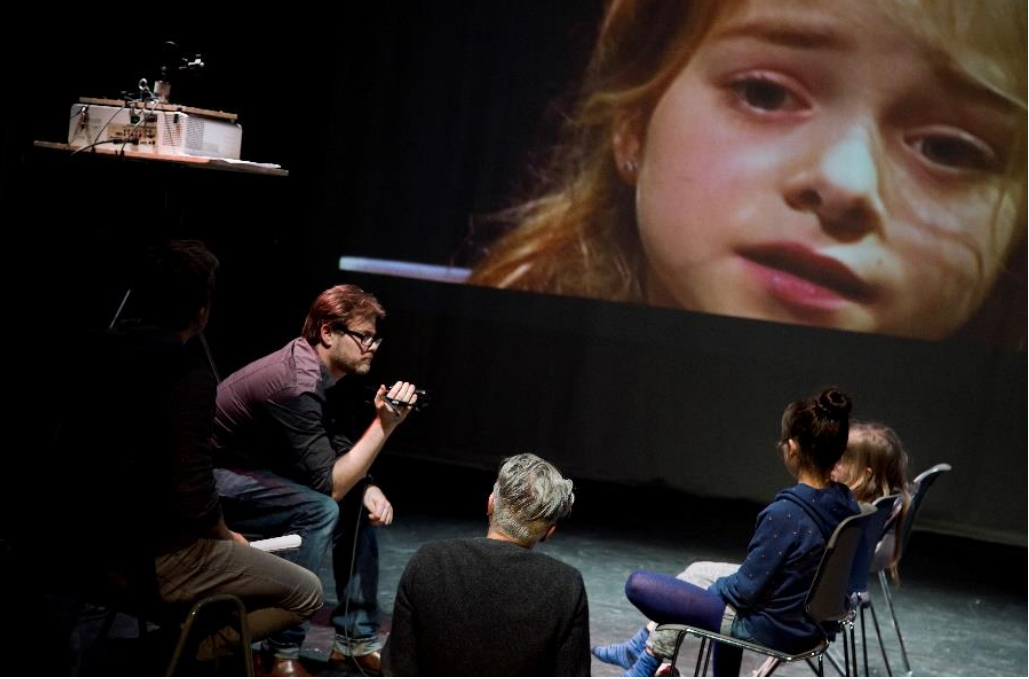
I have had repeated experiences that show that doing your own analysis, having your own perspective and information about how things look from afar is not at all the same as living in the real context. I experienced this in Congo. I also experienced it in Russia, when I went there to work with Pussy Riot, which led to the loss of my visa in 2013. I expected a strong, visible opposition scene, as that is how it was described in the West. But when I invited random Russians to a public “jury” to rethink the Pussy Riot trial, it turned out that 90% were against them. That was in 2012. I expected a polarised society, but I encountered a predominantly conservative, orthodox Russia.
I experienced something similar — in a mirror sense — in Kyiv: people in the West told me, “You’ll go to Kyiv and hide in basements from bombs.” But I arrived in a city that sometimes looks more European than Paris. And where the discussion, our public conversation, was something like a tribunal. And I really liked it. I have had too many intellectual discussions — I am tired of them. That is why I really like having this real confrontation. It was at a fairly high dialectical level and promises to be a longer story.
I did not come to “attend the festival”, like Bono, and then disappear. I came to start an exchange. And the fact that it is really starting is a very good sign. A sign that, in my opinion, Ukrainian society is not preserving itself during the war, not postponing problems “until victory”, but on the contrary, is using this moment for change. This is evident in the way you tell your own story, but also in the way you speak out against corruption. Because usually, societies under such pressure say, “Later, let’s win the war first.” No, there is no need to pay for external aggression with internal conformism. And that is not what is happening here. You perceive the development of democracy, civic responsibility and defence as part of a single narrative. And by inviting the director of the Vienna Festival, you are not trying to “be nice so that he invites all the performances” — this is powerful and right. That is how it should be. It is super cool.
“My task as an artist is not to be neutral, but to expose the reality of facts.”
Switzerland, where you come from, builds its image on neutrality. But during the conversation in Kyiv, it was emphasised many times that there is no neutrality in theatre, because an artist always empowers someone and silences someone else. After this visit, do you feel that as an artist you cannot afford the neutrality that the state can afford?
To be honest, Swiss neutrality is fake. It is a trick that allows them to be a kind of third party that cooperates with everyone. Neutrality is another name for total collaboration. Switzerland cooperates with everyone — including Russia. In St. Moritz, for example, street names are duplicated in German, Italian and Russian — because the Russian community is the largest there. So, this is not about neutrality. My task as an artist is not to be neutral, but to expose the facts of reality.
During the discussion, a proposal was made to pause solidarity in working with Russian classics. When you look at this from the perspective of a representative of large institutions, do you see a real possibility of introducing such a pause programmatically, and not just at the level of personal declarations?
Yes, perhaps. Although personally, I prefer rethinking to boycotting. For example: what could a Ukrainian or democratic appropriation of Chekhov, Dostoevskiy, Pushkin or Tchaikovskiy look like? How can we take them away from Russian propaganda and return them to civil society, which is international by nature? But I fully support the boycott of Russian state art at this time. Inviting performances financed by an aggressor state is whitewashing. That is obvious.
However, there is another side to this. During Hitler’s time, people asked: is it possible to perform Schiller and Goethe? Should exiled writers such as Thomas Mann be supported? After all, he was crucially important to the anti-fascist forces. A democratic reinterpretation of Schiller was important at a time when the Nazis were trying to appropriate him: to say, “This is not yours — it is ours.”
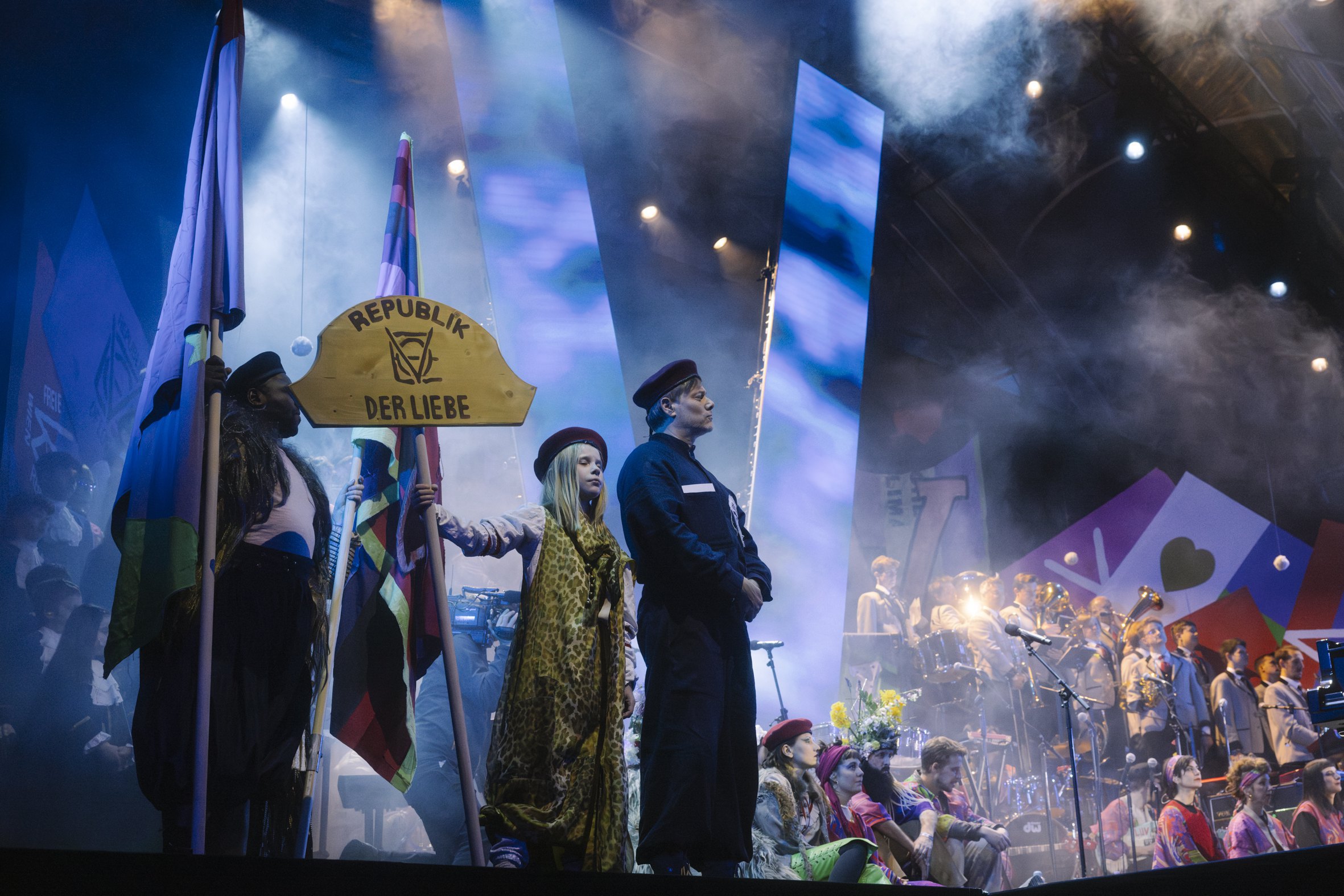
But the Ukrainian case is different: you have been culturally occupied in order to destroy your culture. You were given Pushkin instead of your own poets. And that is unacceptable. So the most important question now is: who is the Ukrainian Pushkin? Which Ukrainian modernists should be heard? In Germany, many new translations of Ukrainian authors are now being published — as an act of solidarity and counterbalance.
A very accurate metaphor was used: in Berlin, when they fly "east", they fly to Moscow, bypassing everything in between. This applies to Warsaw, Belarus, Slovakia, Hungary, and even the territories of the former Austro-Hungarian Empire. These areas were simply erased from the cultural map. That is why I came to Ukraine — because I am a theatre and music specialist. And I want to see what is happening here, what we can do together, who I can invite, what project we can create together. I understand the need to restore national history — it is a natural and important step in defence. But my job is to support you through invitations, collaboration and visibility. And yet, I hope that someday humanity will reach a point where culture in all its diversity will be perceived without hierarchies, when we will be able to love one and the other at the same time.
I myself come from a small country — Switzerland. We have our own language — Swiss German. But it is not German, even though it is called that. In the 19th century, attempts were made to make it a written language, like Dutch. But Switzerland was not strong enough — and now we speak it, but we write in German, and from the age of 12 we learn German. And so it is gradually being supplanted by another culture. But, of course, Germany never did to us what Russia did to Ukraine.
"Indignation — post-colonial and neo-colonial — is heard all over the world. But the fact that Europe colonised Europe is hardly ever mentioned."
The conversation touched on the issue of asymmetry: "good Russians" are often supported as subjects, while Ukrainians are supported as victims. Do you agree with this?
Yes, this is classic colonial rhetoric. One Ukrainian director said: "I am tired of Western directors who come and stage The Trojan Women, where people in a state of grief and suffering are presented as a chorus, not as subjects of tragedy. Instead, the ‘self-critical, melancholic oppressor’ is one of the central figures in international cultural discourse. And how can this be reversed? When you come to Ukraine, you find hundreds of different strong individual artistic positions, absolutely subjective. So again, reality turns out to be completely different from how it is perceived from the outside. Indignation — postcolonial and neocolonial — is heard all over the world. But it was interesting to experience this within Europe [in Ukraine] — because Europe is usually perceived as a continent of colonisers, and the fact that Europe colonised Europe is hardly ever mentioned.
The discussion in Kyiv kept coming back to the “good Russians”: Pussy Riot, Marina Davydova and others. Ukrainian artists insisted that the “Russians against the regime” perspective reinforces the Russian narrative and overshadows Ukrainian voices. Will this affect your approach to solidarity with the Russian opposition?
Yes and no. I agree that their influence within Russia is zero, and that hopes for a "liberal Russia of the future" can be dangerous — it may turn out to be a mask for imperial politics playing at democracy. Therefore, I am not going to seek absolution in Kyiv for my friendship with Pussy Riot. This is not the right context or moment.
But in Western Europe, the situation of Ukrainian artists and Russian exiles is equally difficult. There are stars like Pussy Riot and Kirill Serebrennikov, whom everyone loves. But there are thousands of artists who fled Russia and lost everything because they were against Putin and therefore in favour of Ukraine. This is a complex reality, and we cannot simplify it. I don't want to lump everyone together. For me, the line is drawn where an artist remains silent or supports Russia — in that case, I cannot be his or her friend.
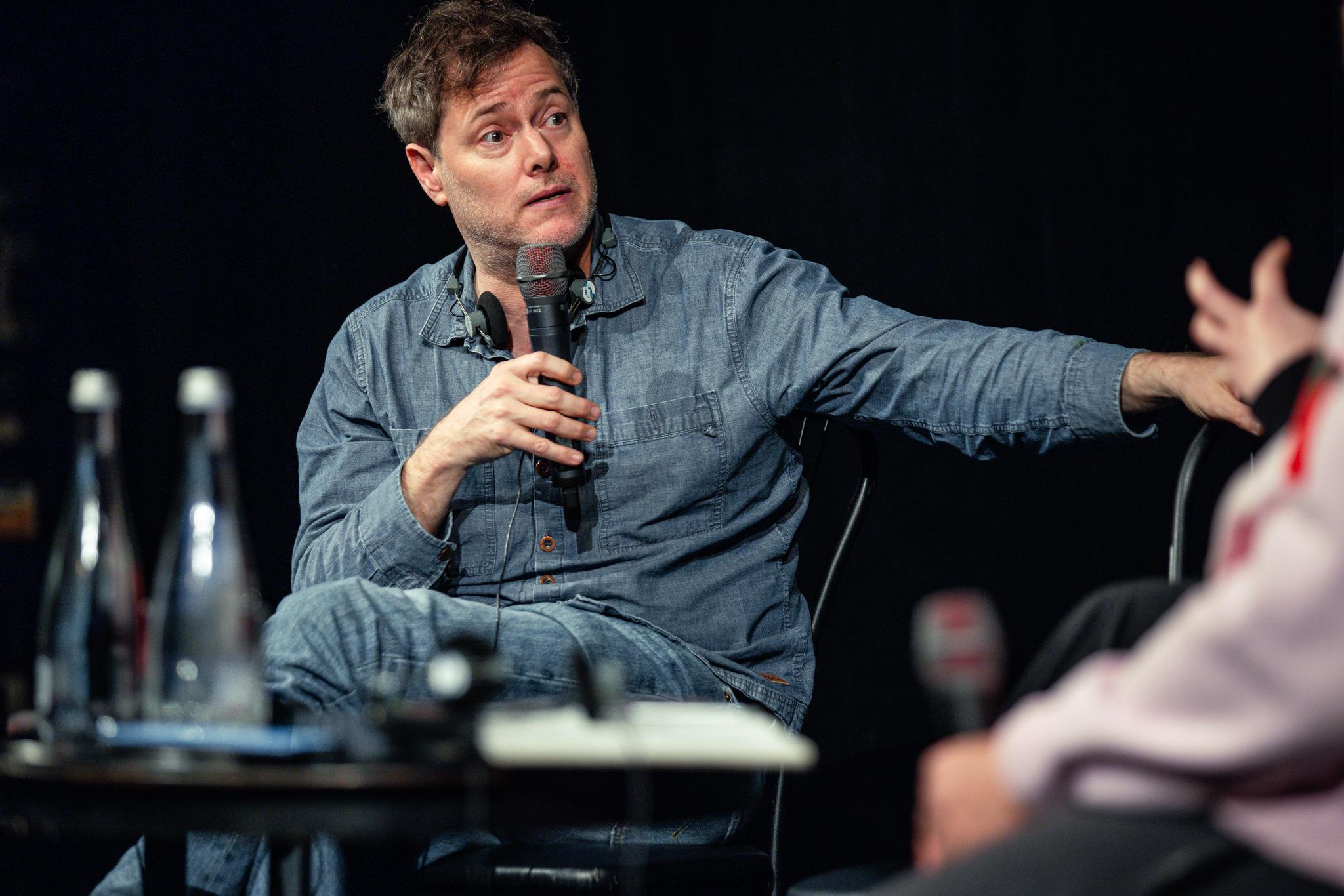
You said that maturity in theatre begins when we stop feeding our own narcissism and really take context into account. You often stage political performances in other countries, where a foreigner may not know the local context and its complexities as well as the audience does. Isn't that a problem? How do you work with this risk?
I work with this risk through mixed teams. We create performances that belong to different places at the same time: for example, Belgium and the Amazon. Performances from which Belgians can understand something about the Amazon, Amazonians about Belgium, and together we see how everything in the world is connected. In other words, I create performances not so much about a place as about the world — together with people from different countries.
If I worked in Ukraine, I would work with Ukrainian singers, actors, directors, costume designers and set designers, as well as artists from Austria or Germany — places I know well. And together we would talk about our times through our different experiences. But I would never say, "And now I will tell you the story of Ukraine in the 20th century." I am not a historian or a journalist. I am a person who works differently. My job is to bring people together, build teams and tell stories about the world through their experiences. Sometimes we agree, sometimes we don't. And that's okay.
For example, when I first worked in the Amazon, I encountered one of the biggest myths of European left-wing environmental thinking: ‘sustainable development’ and ‘diversity’. Everyone wants to buy ‘diverse’ and ‘sustainable’ products because they don't destroy the planet or exploit people. And in the Amazon, all the big international colonial companies say exactly that: "We are sustainable and inclusive." That's why they say there: when you hear the words ‘sustainable’, ‘eco’, ‘diversity’ — run away. Because that's the language of the coloniser. It's very interesting how you have to redefine what you thought was right.
For example, the truth is that for the West, the face of resistance to Putin is not a Ukrainian soldier, but a Russian dissident. And this is what you realise when you come to Ukraine: you need to break these narratives or at least make them more complex, including all voices. I started asking myself: how can this be? After all, every day in the media, if there is a half-hour news broadcast on any channel in Western Europe, at least five minutes are devoted to Ukraine. You have been the number one topic in Western European news for two and a half years. Every child knows about Ukraine. But the information I received when I arrived in Kyiv was information I had never received before. How is this possible? How can information be so widespread and so filtered at the same time? What is this structure, mechanism, system that transforms post-colonial rhetoric into a "discourse of liberation struggle" within colonial discourse? That's what I'm talking about. How is it that on the way from Kyiv to Berlin, information is so distorted that we have a completely different idea of what is really happening?
During the discussion, there was a strong call not to create performances in which Ukrainians and Russians sit down "at the same table" to talk about reconciliation — because this again reinforces Russian narratives. As a creator of political theatre, do you see an opportunity today to strengthen the Ukrainian voice in Europe?
I think this is only possible by inviting performances created in Ukraine. This is the only way. For me, of course. If I were a politician, I would invite politicians or activists — although, in the end, I do that anyway. It is absolutely necessary to hear the real, concrete positions of Ukrainian artists and intellectuals — to hear them in all their specificity, and not in the format of some kind of therapeutic round table. As they are, without any additional framing or attempts to "balance" them, simply in their uniqueness. And this, by the way, is what I learned during this discussion: you don't need to balance your position with this or that caveat every time, adding "but" and "on the other hand" — that way, everything just dissolves, as if it were family therapy and this family had "a few problems." You just have to say: we have never voluntarily been part of this Russian family. We no longer want to be involved in these family dramas because this is not our family. That's what I really understood.
Is it true that you will be working on an opera related to Ukraine?
It is not an "opera related to Ukraine." It is an opera that I want to create together with Ukrainian artists and singers. But it is only planned for 2027, and it is still in such an early stage that I don't know what to say about it yet.
Read alsoMilo Rau, Olena Apchel, Tamara Trunova: discussion ‘Theatre and Resistance’