







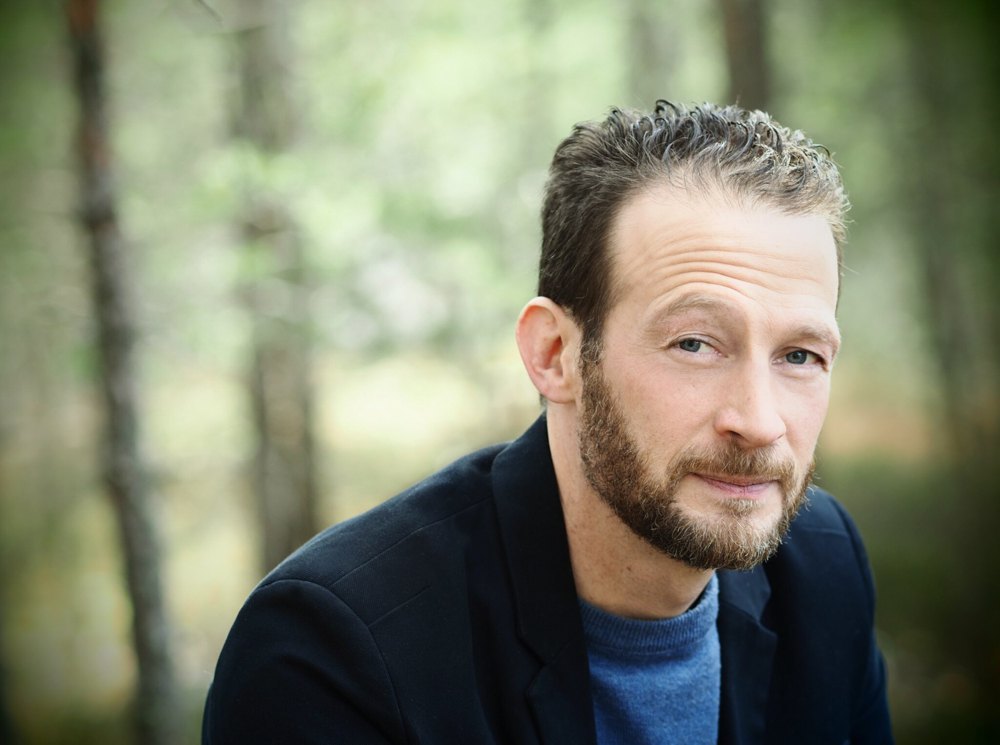
You began translating from Ukrainian after the start of Russia’s full-scale invasion of Ukraine. Why and how did this transition happen?
I first encountered Ukrainian back in 2007 during a short visit to Kyiv. But at that time, I was not yet studying the language. Later, I worked a bit in Belarus with local publishers, and that helped me better understand the situation in this part of Europe. However, it was only the start of the full-scale war that became a wake-up call, not only for Swedish translators, but for many other translators working from Russian. It was then that many of us realized that we — those trained in Slavic studies — had been educated within a Moscow-centric tradition of viewing this part of Europe. And we began taking an interest in Ukrainian.
I study the history of translations into Swedish and recently wrote an article about the tradition of translating from Ukrainian. There have not been many such translations. But there was a brief period — during the first third of the twentieth century — when the process was more active, and there were direct contacts between Ukrainian and Swedish authors and translators.
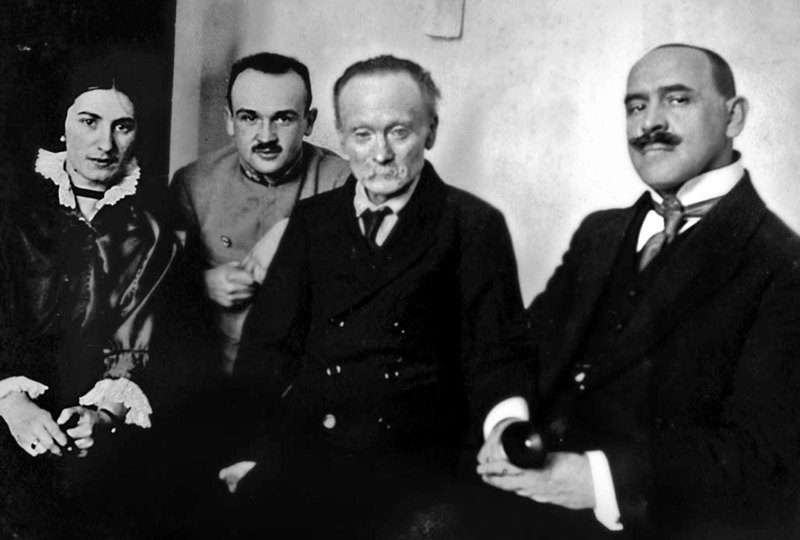
For example, Swedish researcher and translator Alfred Jensen lived in Lviv for some time, where he met, among others, Mykhaylo Kotsyubynskyy. Several translated anthologies and individual texts appeared during that period. He also wrote a book about Ukraine, introducing it to Swedish readers. In all of this, direct personal connections were, and still are — the key factor.
After the Second World War, a Moscow-centric approach came to dominate Slavic studies, including in Sweden. There were virtually no direct contacts between Swedish translators and Ukrainian authors. This situation persisted until 2022.
When you decided to switch to translating from Ukrainian, what infrastructure for learning the language was available?
At first, there were no courses at all. The events of 2014 did not spark academic interest in Ukraine. But after February 2022, universities hurriedly began organising courses. One of the first was a course in Gothenburg aimed at people who already knew a Slavic language. I attended it a little, but it was difficult to combine with work. So in practice I learned the language on my own — first by reading poetry and news, and later fiction.
How did you choose which works or authors to translate?
That is usually difficult. I try to interest Swedish publishers in Ukrainian novels I have read. But it is hard for them to understand how good a book is if it has not been translated into a language they read — preferably English. They want to know whether the translation is worth investing in. So most of the translations I have completed were actually the publishers’ choice.
So there is a lack of proactive work from Ukrainian agents and publishers offering titles to Swedish colleagues?
In part, yes. But publishers still prefer to read an existing translation into English or, say, German or French. And that raises the issue of the quality of English translations, which is not always high.
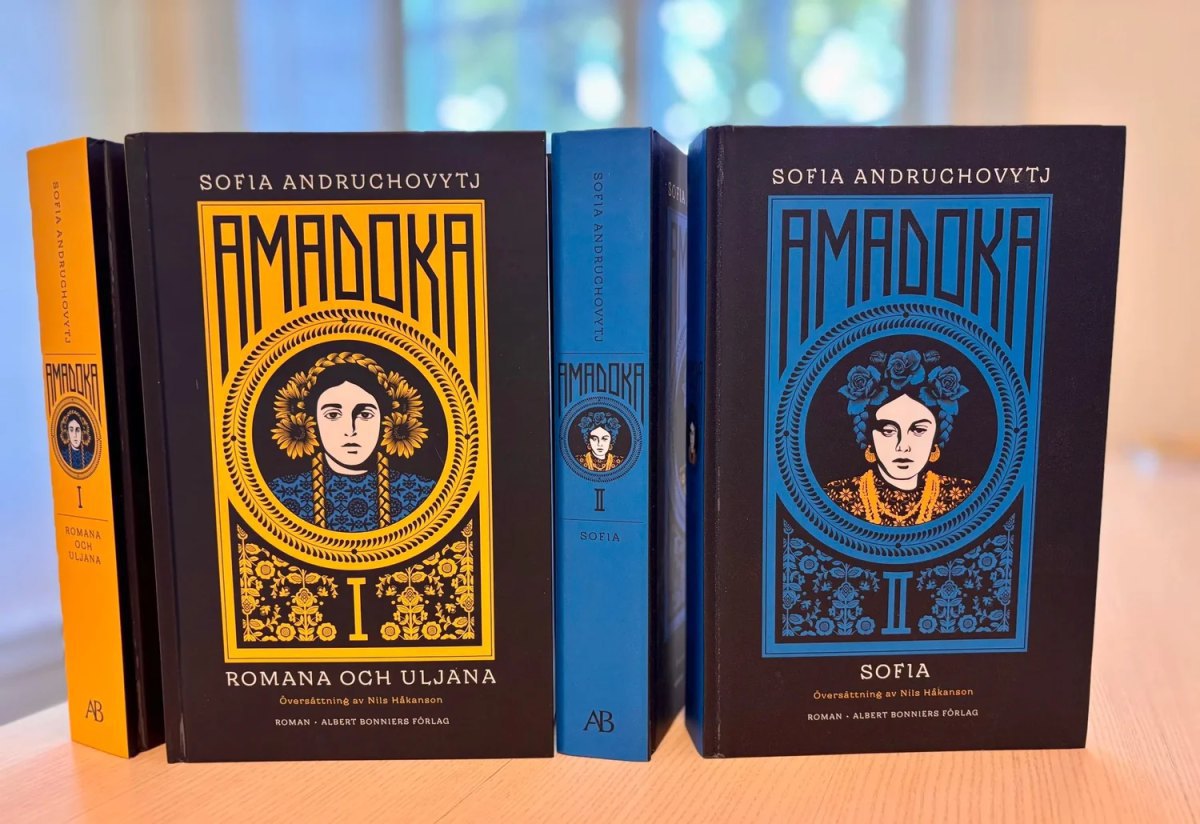
And yet you translated Amadoka by Sofia Andrukhovych — quite a substantial novel. Was that also the publisher’s decision?
Yes, it was one of the largest publishers in Sweden. Publishers of that scale are more willing to take financial risks that smaller market players would probably avoid.
How did you work on the translation? Did you communicate with the author, and if so, what kinds of things did you ask about?
It was a special situation because Danish and Norwegian publishers also began translating Amadoka at the same time as the Swedish edition. So we had correspondence among the translators, where we could ask each other any questions we wanted. That helped a great deal because I was not alone with the text.
I did contact Sofia, though only occasionally, because very often the problems that arise in translation are more problems of your own language than of the language or text you are translating.
The Danish, Norwegian, and I often struggled with the same passages, mostly because of stylistics and the poetic logic behind certain transitions.
What struck or impressed you most about the book?
The most fascinating part of the translation process was the diversity of styles, tonalities, and voices within the text. A translator acts like an actor — you place yourself in the described circumstances and perform within them, but in your own language.
And how was the book received by Swedish critics?
Like me, they were impressed by the stylistics. Amadoka is a very ambitious project with a compelling aesthetic. But what was also entirely new for Swedish critics was the historical context described in the novel. In effect, the book opened readers’ eyes to parts of European history that had been unknown to many of them.
How significant are translations of Ukrainian books for the Swedish market today?
Before 2022, translations from Ukrainian practically did not exist. Now several titles are published every year. But it is also important to understand that the translation market in Sweden is small, especially when it comes to languages other than English. Moreover, this field had been going through a crisis for several years, so fewer translations were being published overall than in the past.
Still, the situation with Ukrainian literature now differs dramatically. Ten years ago, I could perhaps have named only one translator, whereas now there are at least five of us working in the field. And stable contacts with Ukraine have been established.
Do Swedish schoolchildren read Russian, Ukrainian, or other Slavic authors?
I would say they do not really read at all (laughs). More broadly, though, the Swedish curriculum is structured differently from Ukraine’s. We do not have mandatory reading of the classics — teachers themselves decide which books to recommend, and in the end children read very little.
When I was at school, we did not read Russian authors. So the question of whether Ukrainian literature exists in the shadow of Russian literature does not really arise here. There was never room for Leo Tolstoy in Swedish schools.
If schools hardly teach literature at all, including Russian literature, where does the desire to study Slavic studies come from? How did it happen for you?
I studied in the 1990s, when many major events were unfolding in Central and Eastern Europe. Originally, I planned to go to Belgrade and study Serbian, but there was confusion with the tickets and I ended up in Moscow. I learned Russian, and the key reason for that was precisely the dramatic changes taking place in the region during the 1980s and 1990s.
Later, I became interested in certain Russian authors. I attended a series of translation seminars where I could work on translations from Russian under the mentorship of an experienced translator. Then, together with several friends, I founded a publishing house and began choosing for myself which books I wanted to translate. I started with Kolyma Tales by Varlam Shalamov. Later, I began collaborating with other, larger publishing houses.
Did you continue translating from Russian after the start of the full-scale war?
I translated one novel by Maria Stepanova — editor of Colta, who in 2022 signed an open letter condemning Russia’s invasion of Ukraine and left Russia. I am currently working on a collection of short stories by a Russian author in exile.
I think you have heard the discussion — particularly active in Ukraine — about the Moscow-centric view of Eastern European culture and literature, which you yourself mentioned earlier. After all, in this war we are also fighting for our own voice. Is there a discussion on this topic in Sweden?
There is such a discussion, but my impression is that it is overly simplified. And it often seems to involve people who do not actually have knowledge of or contacts with Ukrainian or Russian contexts.
At the same time, among those who work on topics related to Ukraine and Russia, there has been a substantial shift, which I mentioned earlier. And I think a more nuanced discussion of the issue still lies ahead. I myself plan to write about it, because I think many Swedes would want to read a detailed account of the historical problems of Moscow-centrism and Russification.
I also have an idea to create a kind of reinterpretation of a classic text by placing it in a contemporary Swedish context. For example, I could address the imperial legacy of Russian literature through A Hero of Our Time by Mikhail Lermontov. After all, it is a book about Russia’s occupation of the Caucasus. And I could transpose it into a future Sweden. It would function as a mirror for imperialism.
Given your deep knowledge of Russian literature, have you reflected on the concept of the mysterious Russian soul? Have you ever had to answer questions about it for a Swedish audience?
I have always been sceptical of the romanticisation of the Russian soul. At one point, I devoted my dissertation to the history of translations from Russian into Swedish and to the motives behind those translations in different periods. And I noticed something close to worship of this Russian “spirituality” among Swedish translators. It looked strange and became widespread several decades ago, especially during the Cold War. So I think we also need a separate study of how Russian propaganda promoted this perception of its literature. In Sweden, it had an enormous influence on the uncritical perception of Russian culture among Slavic scholars. Not among everyone, of course. But it had significant influence in many Western European countries.
But Sweden has a particular history with Russia that should not have encouraged such romanticisation.
Yes, for Sweden the nature of Russians was more apparent. Before the Cold War, we traditionally viewed not necessarily Russians themselves, but Russia, with hostility and suspicion. Yet during that period this attitude was somewhat undermined by a more positive interest in the large neighbouring country called the Soviet Union. Though for Swedes it was still, essentially, Russia. Gradually, positive interest and even admiration turned into blindness toward certain parts of the Soviet Union.
What blind spots remain today in Swedish understanding of Ukraine?
In 2022, people realised the absurdity of the situation: there was a huge country in the centre of Europe about which we knew almost nothing. Since then, many books on Ukrainian history have been published, written by Swedish, Ukrainian, and American historians alike.
Why did no serious reassessment happen back in 2014?
I think Russian propaganda was successful in undermining Ukraine’s legitimacy in the eyes of Swedish journalists and public figures. There was a period when it seemed as though Ukraine was full of Nazis. The idea that Crimea wanted to join Russia was widespread. More broadly, people simply were not prepared to believe that Russia could be that bad. By 2022, there was no more room for illusions.
I think the period between 2014 and 2022 was also perceived differently inside Ukraine. People there were puzzled, for example, by the continued contacts between Ukraine and Russia during those years.
It also mattered greatly that in 2014 there were far fewer people in Sweden who knew Ukraine or had contacts there, especially in the eastern regions. Very few understood the situation. And that made Russian propaganda’s work much easier.
But regardless of how much people knew about Ukraine, the fact remained that one country had taken part of another country’s territory — something fundamentally against European ideas of law and order.
Of course. I remember writing publicly about this when Russia hosted the 2018 football championship. I tried to raise the question of whether we should really send our national team to a country that had occupied a large part of another country. I tried to make noise about it, but most people simply buried their heads in the sand, hoping it would somehow pass.
You know, there is always a way to justify inaction. I think many people realised that the response should have been much tougher only when it was already too late.
Has the myth of “Ukrainian Nazis” spread by propaganda in 2014 now disappeared?
There was a period in 2014 when many writers — mostly from left-wing circles — wrote extensively about Ukraine supposedly drowning in Nazism. It became obvious that at least some of those authors were trapped in conspiracy theories. As a result, they lost credibility. But the main factor was the spread of knowledge. The more Swedish journalists and people from other professions travelled to Ukraine, the better they understood that even if there were Nazis there, they were very few in number and did not wield major influence. The most important lesson from all this is the need for direct contact between people and for personal experience.
At the end of the conversation, I would like to return to language and literature. If someone in Sweden wants to study Ukrainian now, in 2026, are there enough resources available?
Yes, they are easy to find now. Universities have opened courses for which there is demand. I know of such programmes in Stockholm, Gothenburg, Uppsala, and Lund. It is a pity this did not happen back in 2014.
Speaking about your personal experience of reading Ukrainian literature, what has been the greatest discovery?
Like many Swedes, I had only a very general understanding of the history of this part of Europe. Then I discovered both medieval heroes and the generation of artists executed during the Stalinist era.
Right now, I am working on a translation of poetry by Taras Shevchenko, who still has not been properly translated into Swedish. And this matters, because such a translation serves a different purpose than translating a contemporary author — it provides historical perspective.
It is a difficult translation that requires explaining the author’s biography and the context of his era. The book will be published at the end of the summer and will include Kobzar along with several narrative poems. Later, I would also like to translate Shevchenko’s later poems.
Among contemporary writers, I am trying to draw publishers’ attention to Artem Chekh, particularly his novel Who Are You?.