






valova’s poetry, and we started with her work. Both I and the students really liked it.
After last year’s workshop, I decided to suggest to Yaryna that we make a book of her translations together.
I think that through a single author, you can very clearly hear what has happened in Ukrainian poetry after the start of the full-scale invasion. There are elements of continuity, but also elements that show how a person experiences war while being outside Ukraine (Iryna Shuvalova has lived in China for many years — ed.).
This poetry combines a very subtle sense of nature with reflections on history and what is happening now. It is at once very Ukrainian and very international. Everyone can understand it, feel it, experience it.
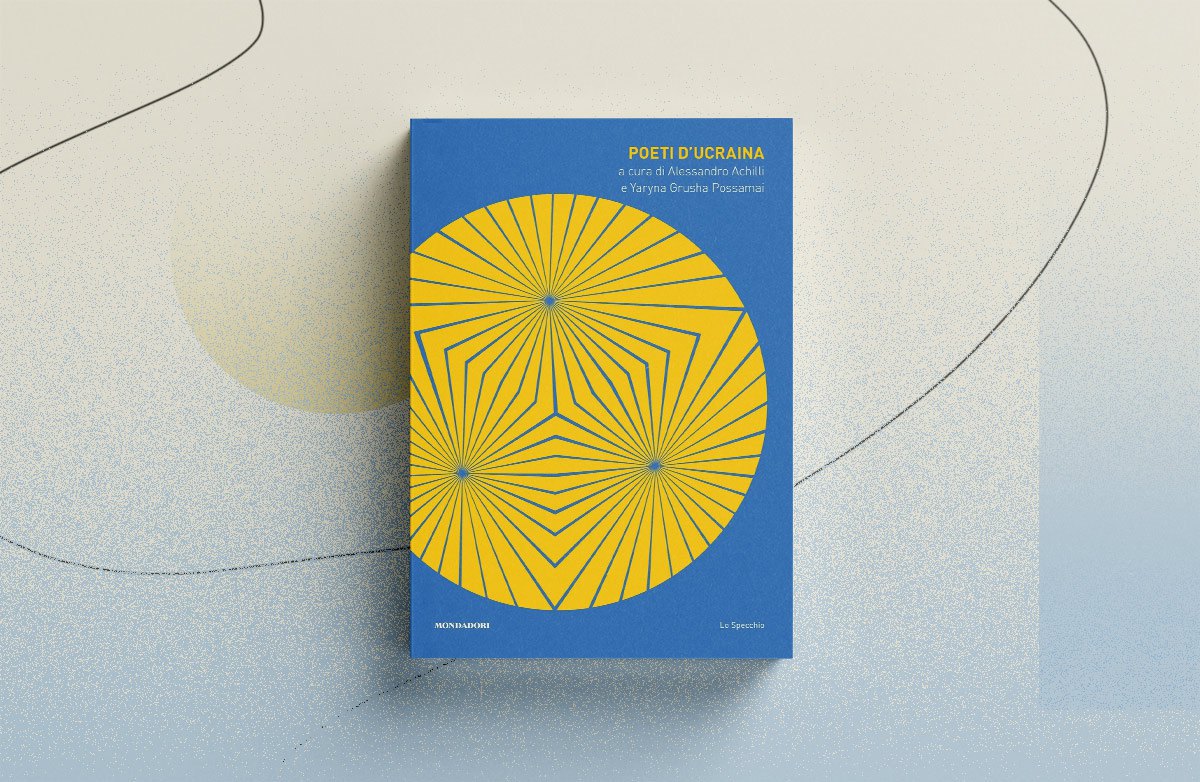
Yaryna: I’ll add that we carried out this book project with the publishing house Interlinea. We jointly applied for the Translate Ukraine programme and received financial support. We also involved a Ukrainian designer in creating the cover.
For me, Shuvalova’s poetry is also about before and after 2022. I lecture to Italian students, and we analyse these changes precisely through Shuvalova’s work. The same can be seen, for example, in the texts of Iya Kiva, many of which Alessandro has translated.
Shuvalova is a poet of deep inner reflection. Her worldview and experience of working with poetry are evident in her texts. One of the themes she explores is how to be a Ukrainian poet in the world, how to exist when you live in one reality but are surrounded by another. I think this is not only about Ukrainians living abroad, but also about those who leave temporarily and cannot find themselves in that other reality, wanting to return home.
This worldview helps both Ukrainians and foreigners better understand the war. I also like how scenes are built from images and objects. In the end, everyone can find a detail to hold onto, build their own understanding, and read it in their own way.
Alessandro: I would add that readers in Italy know this publishing house well for its focus on poetry.
You shared your personal impressions — what feedback have you heard from readers?
Alessandro: The book was published recently, so there have only been some reactions on social media, but more are coming — presentations are ahead. For example, at the Turin Book Fair, the largest literary festival in Italy.
It should be said that poetry in Italy is, unfortunately, not read as intensively as in Ukraine. To truly promote poetry here requires a lot of effort. We are just beginning, and we have big plans. For example, we have just agreed with Iryna on presentations in the autumn when she comes to Europe.
Yaryna: My students respond very positively to Shuvalova’s poetry. We read the poem “And you thought, and we thought, it was a war...”, and it is also a very concrete poem that helps them realise the horrors of war.
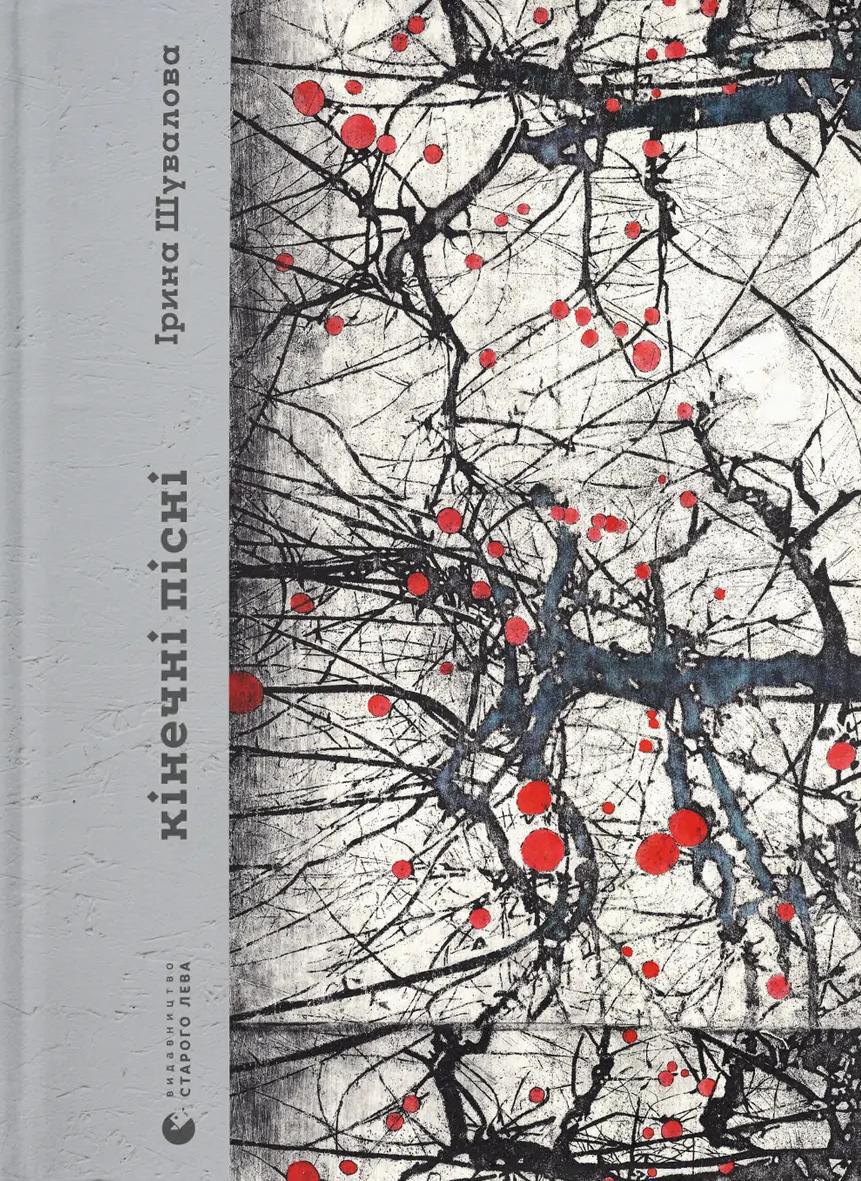
By the way, it was exactly this poem that Italian writer Francesca Melandri used as an epigraph for her new book “Piedi freddi” (“Cold Feet”). The book is a letter to her father, who during the Second World War fought on the side of Nazi Germany as part of the Italian army that advanced through Ukrainian territory all the way to the Don River.
Melandri dismantles the myth that this was supposedly Russian territory. She writes that it was Ukrainian, not Russian, women who saved Italian soldiers from frostbite.
The book reflects on the distortion of terms, cultural memory, and how Ukraine is perceived in Italy. Melandri is very sincere in this book. I hope it will be published in Ukrainian, as it would also help Ukrainians understand the context we work with in Italy.
How did you come to translate from Ukrainian into Italian?
Yaryna: My story with the Italian language began in 1995, when I first came to Italy as part of a group of children from Chernobyl. From the age of nine, I started speaking Italian with the family that hosted me every year through this programme.
After finishing school, I entered Taras Shevchenko National University of Kyiv, where I studied Italian philology. At the same time, I studied on exchange programmes at two Italian universities. I have lived in Italy since 2015, and since 2018 I have been teaching Ukrainian language and literature at the University of Milan.
Before 2022, it was very difficult to propose translations from Ukrainian to anyone. At that time, I only translated one short story by Serhiy Zhadan together with Giovanna Brogi, and even that was for a Swiss literary journal. Since 2022, there has been very strong interest in Ukrainian literature. And that interest has not disappeared — it has remained stable.
I consider Alessandro my teacher, because he was the one who taught me how to translate poetry. He was also the one who suggested that we create a joint collection of Ukrainian poetry. After that, there were many more translations.
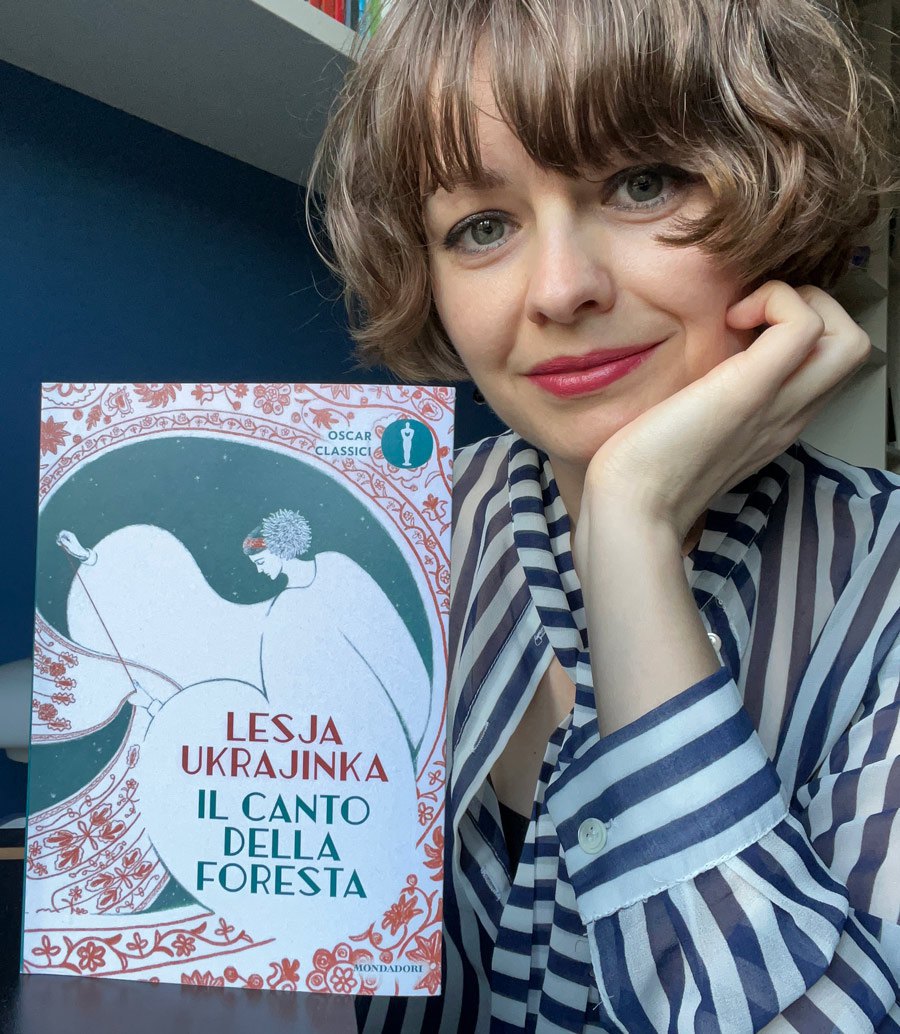
I compiled a literary guide to Kyiv, which includes excerpts from Ukrainian texts of different periods about the city, and I translated The Forest Song by Lesya Ukrainka. I also translated — from English — Looking at Women, Looking at War by Victoria Amelina. I have just finished translating her novel Dom's Dream Kingdom.
Alessandro: I was a Slavic studies student, focusing on Russian and Polish philology. I also studied German language and literature. Later, at the University of Milan, thanks to the efforts of Giovanna Brogi, Ukrainian philology was established. I really liked the Ukrainian language and literature.
Afterwards, there were summer courses in Lviv and in Germany. When the opportunity arose to enter a PhD programme, I chose Ukrainian studies and wrote my dissertation on Vasyl Stus. That was when I also started translating him.
The first prose work I translated was The Yellow Prince by Vasyl Barka. Then came Stalking the Atomic City (Oformliandiia) by Markiyan Kamysh. I translated Behind the Back by Haska Shyyan and Kaidash Family by Ivan Nechuy-Levytskyy. My translation of The City by Valerian Pidmohylny has been waiting for publication for two years — the publishing house simply does not have time. I hope the book will come out next year, as many people are waiting for it.
I regularly translate poetry. I hope that Yaryna and I will manage to compile another anthology. I think it will be war poetry — Ukrainian voices after 2022.
I also really like the free verse tradition of Ukrainian poetry from the 1970s–1980s, poets such as Mykola Vorobyov and Mykhaylo Hryhoriv. I think it is also important for a fuller understanding of Ukrainian poetry in Italy. These are texts that are not very well known in Ukraine, but they can resonate with Italian readers. I hope to compile such an anthology as well.
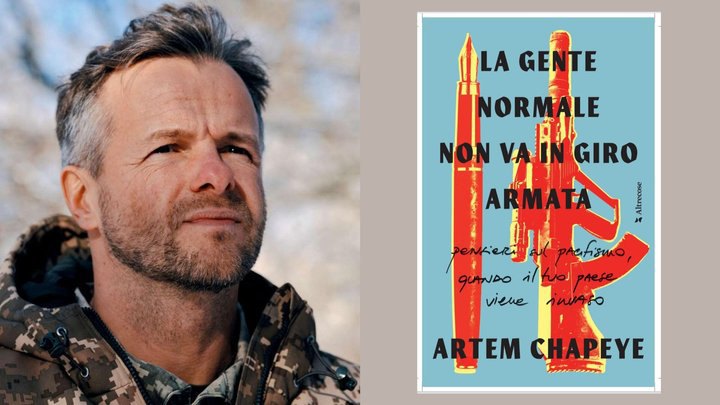
And soon the Italian translation of Not Born for War by Artem Chapeye will be published.
How do you choose what to translate next? Barka or Nechuy-Levytskyy do not seem like the most obvious choices for a market that knows little about Ukraine.
Alessandro: I would say it is more often the case that publishers propose texts to us. If I can, I agree. And what is offered is not always my first choice.
In general, I think everything that can be translated and published should be translated. Because there are still very few titles from Ukrainian literature on our market. But it is good that a new generation of translators is emerging. When I was a doctoral student 12–15 years ago, there was almost no one working in this field.
Yaryna: I want to explain how the “full-length” translation of Kaidash Family came about. In 2023, I compiled a literary guide to Kyiv, which included poetry, diaries, letters — including texts by Lesya Ukrainka. It also contained many excerpts from prose works. The idea was to “cast many hooks” and offer readers different kinds of texts.
Alessandro translated the excerpt from Kaidash Family where Malashka goes to Kyiv. It seemed to me very close in spirit to Boccaccio’s Decameron — a story about not-so-honest church workers.
Later, a Sicilian publishing house, which is now publishing a lot of Ukrainian classics, commissioned a full translation of the work.
Classics should be translated because they create continuity and show the Ukrainian literary process in its full depth. It is important to demonstrate that we did not appear in 2022. These translations also become teaching material in universities.
For example, my students said about Nechuy-Levytskyy that they expected boring realism, like Italian literature of the same period. But they received something completely different. I also used this text in a reading club with Italian adults.
Contemporary authors gain publishers’ interest when they receive awards or through tragedies, as happened with Victoria Amelina.
How has the situation with Ukrainian studies and courses in Italy changed in recent years?
Alessandro: The only real department of Ukrainian language and literature in Italy is in Rome. It has existed since the early 1990s, when Oksana Pakhlyovska came to Italy from Kyiv. For the next 25 years, nothing else existed.
About 20 years ago, Giovanna Brogi started teaching Ukrainian language and literature at the University of Milan. But then, as now, it was only a yearly elective course. There was once a course at the University of Venice, but it was closed long ago.
Everything changed in 2022. I recently returned from Siena, where I took part in a small conference on the state of Ukrainian studies in Italy. It was very interesting — five years ago such a conference would have been unimaginable. Now it is possible to discuss the situation of Ukrainian studies in Siena and Palermo: what is closing, what is opening, how many students attend, and what needs to be done to increase their numbers. In Palermo, for example, Oleh Rumyantsev works and has already written two Ukrainian language textbooks for Italians.
Yaryna: Courses have also appeared in Padua and in Turin, where I taught for a year and where my colleagues now teach, as well as in Bologna, where I taught for three years.
In Bologna there was a seminar dedicated to culture, where language learning played only a minor role. It was attended by an average of around 20 students, and interest remained steady. In Milan, interest has declined slightly, but that is more a question of the university and the city as a whole, which is very expensive for students to live in.
We have an Association of Ukrainian Studies, where we recently founded a reading club dedicated to Ukrainian literature and have been actively running social media channels. We are trying to find new formats that might attract students of Ukrainian studies and support them in learning the language and literature.
If we compare the situation of Ukrainian and Russian studies in Italy, what is happening with interest in the latter?
Alessandro: It seems to me that interest in Russian studies is declining. Ten years ago there were hundreds and hundreds of students choosing Russian language and literature. Now there are many fewer. But I do not think this is for ethical reasons. It is simply that Russian is not as useful a language as it was before 2022. Of course, there are still Russian tourists and, unfortunately, business is still being conducted, but all of this is far less intense than it used to be.
Ukrainian language courses are usually attended by students who are already studying another Slavic language, often Russian. But this is mainly because studying Russian still leads to a recognised degree. By studying Ukrainian, you cannot currently obtain a degree anywhere except in Rome.
Yaryna: We are now in a delicate period in which Russia is attempting to return to the international stage. We have seen this in its participation in the Venice Biennale.
Alessandro: In Venice, incidentally, there is a Centre for the Study of Russian Culture called “Tsar”.
Yaryna: These are attempts to return to the market, to normalise crimes and the presence of a terrorist state on the international stage. And these attempts will continue.
Who actually drives the development of Ukrainian studies in Italy?
Alessandro: It is driven by both Ukrainians and Italians. For example, in Padua it was an Italian scholar, a specialist in Polish studies, Viviana Nosilia, who is deeply supportive of Ukraine. She approached the Ukrainian Institute and an American foundation supporting Ukrainian culture and secured funding to open a Ukrainian language course in Padua.
In Bologna, the initiative was taken to the rector by the Polonist Andrea Ceccherelli. In this way, a Ukrainian course was created within the Polish department. In Turin, there were Slavists, including a Russian language lecturer with a strongly pro-Ukrainian stance, Massimo Maurizio, and the Polonist Kristina Jaworska.
Yaryna: So it requires both initiative and funding. At the University of Milan, there were two separate Ukrainian courses — language and literature — for two consecutive years, because a local scholar, Maria Grazia Bartolini, secured private sponsorship. In fact, the funding required to launch such a course is not very large. I am not sure about the current situation, but in Milan around ten years ago it took only about €5,000.
What reflections on Ukraine and its culture have emerged within Italian society during the years of full-scale war?
Alessandro: It seems to me that Italian readers have finally understood that Ukrainian literature exists — that it is real. Its presence on the market has, in a sense, become normalised, and this is very important, because before 2022 there were even educated people who had no idea that such a literature existed.
Now this is obvious: everyone knows there is Ukrainian literature, that there is a Ukrainian language, and that literature is written in Ukrainian. As Yaryna has already said, this is crucial. At times, one still hears people suggesting that Ukrainian literature only “emerged” about four years ago.
Of course, that is not the case. This is precisely why it is important to translate not only contemporary works but also the classics. I think readers are interested when they find in Ukrainian literature things that feel familiar to them — things they recognise from Italian literature or from other traditions such as English or French. They realise that similar literary processes took place in Ukraine: Romanticism, Realism, Modernism, and so on.
At the same time, it is important to make clear that the 20th century in Ukraine included profoundly tragic moments: Stalinism, repression, and the fact that in the second half of the 1930s normal literary production was simply not possible. These aspects are not yet fully understood, partly because there are still very few translations from the early 20th century. The good news, however, is that in about a month — if I am not mistaken — a new history of Ukrainian language and literature will finally be published.
The first such work appeared almost 30 years ago: a history of Ukrainian literature by Oksana Pakhliovska. It is a very solid book, but it is outdated and does not include contemporary literature. Now, however, an Italian translation of a literary history originally published in German a year ago will appear. It was produced through collaboration between German and Italian scholars.
This new history of literature will be published by a major academic press, meaning it will be available in all university libraries across Italy. This represents another step towards the full normalisation of Ukrainian literature within Italian academic and cultural life.
Yaryna: I can add that there are fewer “silly questions” at festivals now. I remember that when Alessandro and I presented an anthology of Ukrainian poetry in around 2024, we were still being asked questions about Bandera. Or, at events in more remote parts of Italy, people would ask about alleged repression of Russian speakers in Ukraine.
Now such questions are much rarer. There are many more Italians who are well informed about the Ukrainian context. We are at a stage where Italians are debunking myths about Ukrainians for other Italians. And this is not limited to academia — it also includes volunteers. For example, this spring there was a Wikipedia editing marathon in which Italians created and expanded pages about Ukrainian culture in Italian.
We can already see the direct results of our work over recent years. Of course, everything moves slowly, and we have to accept that we do not have the same resources as Russia. But we have managed to develop the market, and Russian presence in it is now significantly smaller. Russian writers are no longer invited to official festivals, and they rarely come to present translations.
Another positive development is the growth of Ukrainian cultural life within the diaspora, which is actively cooperating with Italians. In Milan, for example, a Ukrainian library has opened, along with many other initiatives. Alessandro and I teach a free lecture course on Ukrainian literature there, which is attended by Italian readers as well.
There are also small Ukrainian cultural festivals bringing Ukrainian speakers to Italy. Just last weekend, for instance, the “Ukraine is a Country” festival took place, featuring Nataliya Kryvda and Yaroslav Hrytsak, with simultaneous translation into Italian.
I think all of this is linked to the arrival of a new wave of migration after 2022 — a much more active and engaged community.
We seem to be arriving at an unexpectedly positive picture — one I, to be honest, did not expect.
Yaryna: Yes, it is surprising, but the situation has genuinely improved.
Do Italian schoolchildren encounter Russian or other Slavic literatures as part of the compulsory curriculum?
Alessandro: In Italian schools there is no subject called “world literature”. There is, of course, Italian literature, and students study English, and possibly French or German. But so-called Tolstoy-and-Dostoevsky is not taught in schools. Teachers may, of course, recommend books they consider interesting, but Ukrainian authors are not mentioned, simply because they are not known to exist.
As for history, I am afraid the situation is quite poor. We are finally coming to the negative aspects. There is still the concept of a “Russian space”, which is understood as encompassing everything that was once the Soviet Union.
Yaryna: School pupils and students really have very little understanding of what is happening in this part of Europe, because textbooks in both history and geography are very poorly written. It reflects a certain rigidity in Italian thinking — a lack of openness to new interpretations of history and to current events in general. Fortunately, a younger generation is emerging that is more open to new perspectives.
Are there Italian translations of recent books on Ukrainian history?
Alessandro: There are translations of works by Serhiy Plokhiy and Yaroslav Hrytsak, as well as books by Italian scholars, such as our colleague Simone Bellezza. But none of these have yet had an impact on school textbooks. I think it will take a few more years before those changes filter through.
The problem is also that there are many propaganda books in circulation that repeat Russian narratives. So on the shelf in the “Geopolitics” section, you might find three or four good books and around thirty poor ones. That is a real issue.
It is also difficult to work with the Italian left. It is very hard to explain to them that Ukraine is not, by its political orientation, a right-wing state. That is why I am very much looking forward to the Italian translation of Artem Chapeye’s book. It is written by a left-wing intellectual who speaks directly to a left-wing audience. I was deeply struck by the book as soon as I read it and immediately agreed to translate it. There will be presentations, and I expect some uncomfortable questions. But this book will be very useful for us.
Yaryna: Yes, it is strange, but the situation has genuinely improved.