





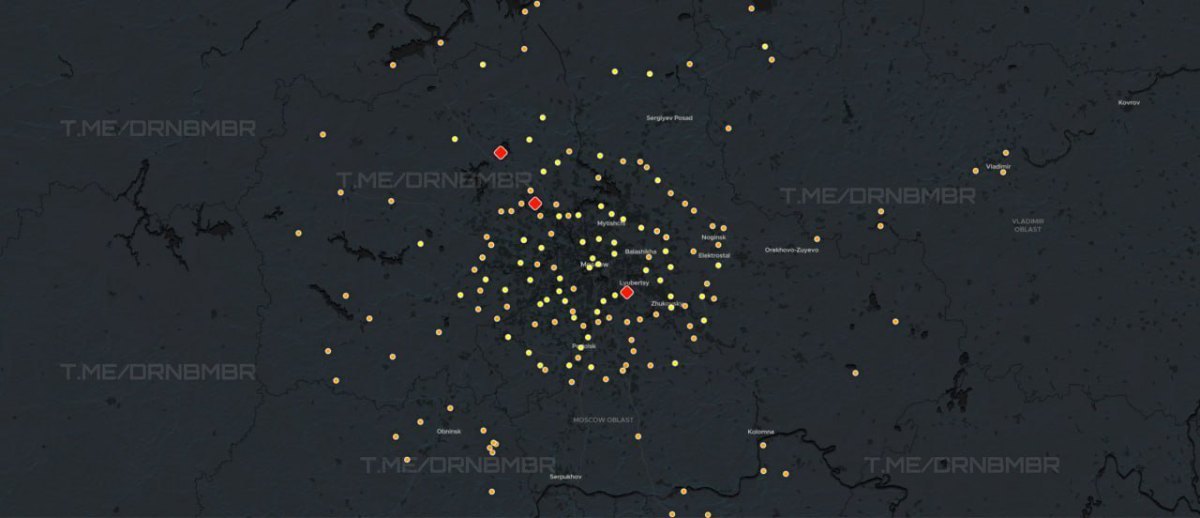
A large salvo, ultra-low altitude approach, perfect use of terrain, and overloading the engagement capacity of air defence systems did their job. An important role was also played by the use of jet-powered drones. In essence, these are full-fledged light cruise missiles, referred to modestly as UAVs only so that organisations with three-letter acronyms can use them without going through mountains of bureaucratic staff procedures.
Their speed critically reduces the reaction window for Russian radar operators — the target appears on the screen and leaves the engagement zone before the crew can establish stable tracking and filter it out from the incoming swarm.
And then there are the “Pantsirs”, of course. Ever since the campaigns in Syria and Libya, it has been clear that the Pantsir-S1 cannot handle engagements even with relatively large and radar-visible Bayraktar TB2, effectively becoming targets themselves. Yet, most likely, the defence industry lobby in Russia prevailed, and expensive resources were tied to close-range defence of the capital and strategic sites using exactly these systems — which, frankly, is something we can only “congratulate” them on.
The system was designed to engage conventional metallic targets such as cruise missiles and aircraft. Slow drones made of plastic or plywood have a very small radar cross-section, so the radar often filters them out as “noise” (birds or environmental clutter). As a result, crews often detect UAVs visually only a couple of kilometres away — when there is no longer enough time for interception.
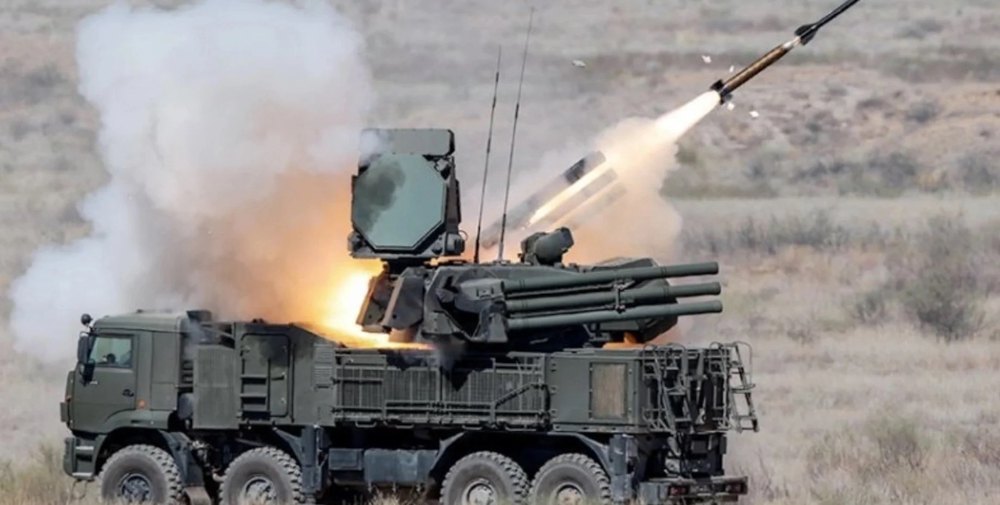
Overloading the system’s capacity: The ‘Pantsir’ is capable of simultaneously tracking and engaging a maximum of 2–4 targets. When 10–15 vehicles approach a target, the system simply becomes overwhelmed.
Ammunition expenditure and smoke: ground-based 30mm guns have a wide dispersion of projectiles – to shoot down a single manoeuvring drone, the automatic system fires everything it has, instantly running out of ammunition. And as soon as thick black smoke and soot rise from the first strikes on the site, the complex’s optical channels are blinded, turning it into a mere backdrop.
In Ryazan, severe damage has been recorded to key oil refining and distillation units – the diesel fuel hydrotreating units, AVT-3, AVT-4 and AT-6. Oil rains, just like in Tuapse, are generously showering the surrounding area – is that a good plan of yours, Comrade Zhukov? We have criticised this refinery many times, but such catastrophic consequences and a complete halt to production are a first.
It is worth understanding the macroeconomics: of Russia’s approximately 30 large and medium-sized refineries, between 8 and 10 plants are consistently in a state of partial or full emergency (not scheduled, but right now!) repair. In absolute terms, this means a constant shutdown of 18–22% of their crude oil refining capacity. That is a loss of 1.2–1.5 million barrels per day, which are dropped from their output figures.
Read alsoA patched-up quilt of Russia’s air defence: why the country’s skies have turned into a sieve
Strategic bombing has already led to a fall in oil production and meant that, despite high global prices, the Russian budget has received minimal additional revenue. At the Solnechnogorsk oil terminal alone, four storage tanks, each with a capacity of 5,000 cubic metres, were destroyed – that is 20,000 tonnes of fuel lost and 15–17 million in monetary terms. And several such key transfer stations have been hit. Whereas in 2024 they could still patch up a hole in the AVT pipeline within a month or a month and a half by using warehouse stocks (’cannibalising’ old installations) and rapid grey imports, by May 2026 this mechanism had finally broken down: Cannibalism has run its course: there are simply no spare pumps, high-temperature valves, compressors or sensors in the warehouses – everything has been used up by previous repairs.
And then there’s the Chinese noose. As we’ve already discussed, Chinese banks are blocking up to 80% of payments out of fear of secondary US sanctions. Ordering a Chinese equivalent of a German Siemens compressor right now is a six-month quest involving shady middlemen, double overpayments and the risk that the money will simply get stuck in a transit account.
So we are continuing our work. Our medium-range strikes are methodically grinding down their air defence systems and radar ‘eyes’, preventing them from redeploying additional air defence forces deep into the rear. Meanwhile, long-range strikes by unmanned aerial vehicles are hitting them where it hurts most – their macroeconomy and their pockets. This is a direct blow to their ability to recruit new contract soldiers for astronomical wages and to purchase components in circumvention of sanctions. It is precisely on these two pillars that the Kremlin’s political stability in 2026 rests.