





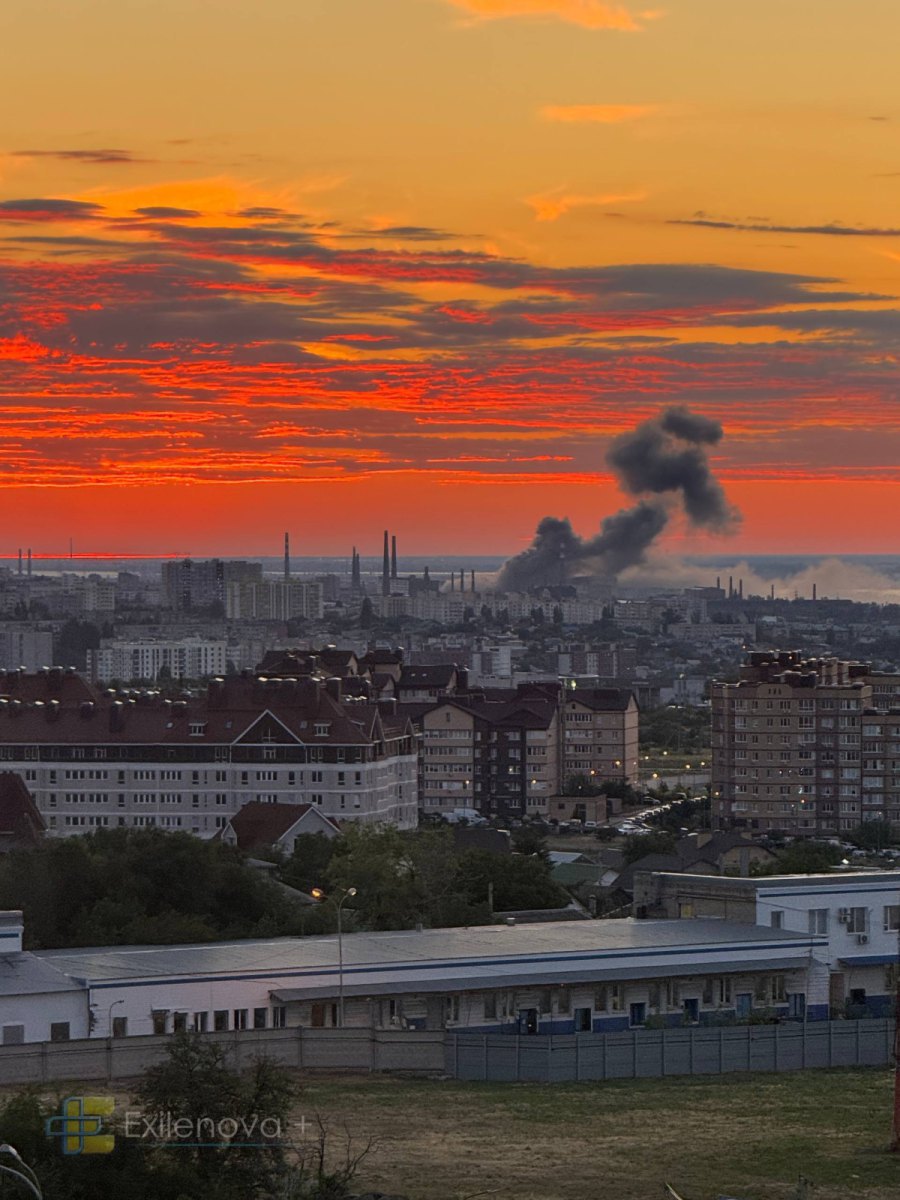
Three Flamingo missiles struck workshops at the Titan-Barikady plant in Volgograd on the night of 27 June 2026. A direct hit by the missile's heavy warhead is expected to put the facility out of action for months. This can be verified by the fact that the Kremniy El plant is still in the process of clearing debris and repairing its roof after being hit by Storm Shadow missiles, which carry significantly smaller warheads. The situation in Volgograd appears even worse: one of the plant's workshops has effectively ceased to exist. Reports of people killed and injured suggest that air raid warnings continue to be widely ignored in Russia. Machinery can sometimes be replaced faster than highly skilled personnel can be trained.
Titan-Barikady is one of only a handful of enterprises in Russia — together with Plant No. 9 in Yekaterinburg — that possesses the equipment and expertise required for the highly complex metallurgical processes involved in manufacturing large-calibre gun barrels, including casting, forging, autofrettage and deep-hole drilling.
In addition to Iskander missile launch systems, the plant manufactures artillery components for the 152 mm Msta-S self-propelled howitzer and the newer Koalitsiya-SV system. Titan-Barikady also modernises and produces barrels for heavy artillery operated by the Reserve of the Supreme High Command, including the 203 mm 2S7M Malka self-propelled gun (an upgraded Pion) and the 130 mm A-222 Bereg coastal artillery system.
A barrel for the Msta-S typically has a service life of around 2,000–2,500 rounds, after which it must be replaced. Beyond that point, shell dispersion increases well beyond design specifications and, in extreme cases, shells may even detonate in the breech. The loss of production lines, unique vertical turning lathes, forging presses and the electroplating workshop is likely to inflict more lasting damage on Russia's military-industrial capacity than the destruction of several ammunition depots.
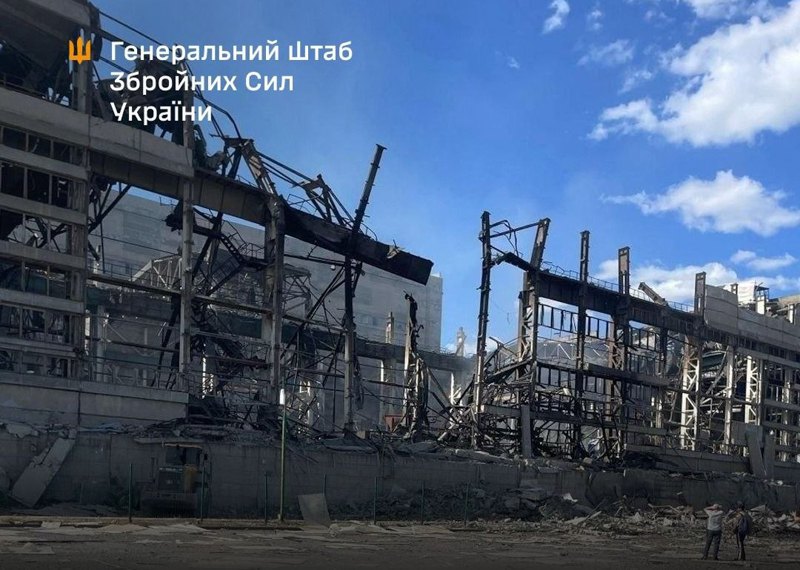
On 25 June, Ukraine's Defence Forces struck two of Ufa's three major oil refineries — Bashneft-Ufananeftekhim and Bashneft-Novoil. Ufa is, notably, around 1,800 kilometres away in a straight line. Local residents reported thick black smoke and multiple fires across the industrial zone. The strikes reportedly damaged the crude oil primary processing units, reducing the operating capacity of both refineries by up to half. Together, the facilities account for as much as 6% of Russia's fuel production, meaning the disruption is likely to deepen existing supply pressures. If repairs at the Moscow refinery have already been taking months, it suggests Russia is facing shortages of both spare parts and specialised contractors capable of restoring complex CDU-VDU (crude distillation) units.
Read alsoRussia’s oil paralysis: why today's crisis is omly a warm-up for a disaster
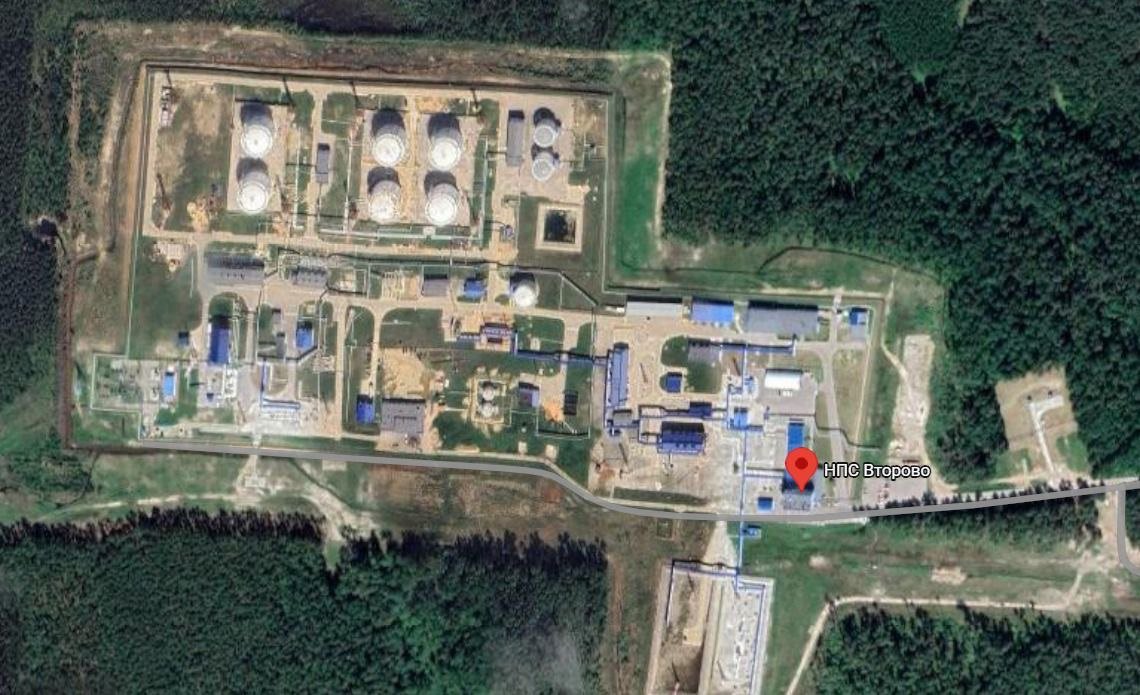
At the same time, another strike targeted a critical logistics hub — the Vtorovo oil pumping station in Russia's Vladimir Region. It is Europe's largest bulk petroleum loading terminal, supplying fuel directly to Moscow and supporting the capital's aviation hub. According to the assessment, a drone strike on the station's distribution system effectively disrupted one of the main fuel supply arteries feeding Moscow, triggering a cascading disruption in the delivery of refined petroleum products.
On Ukraine’s Constitution Day, 28 June, a paired strike targeted two oil refineries.
The first was the Slavyansky refinery in Krasnodar Krai. It is one of the key facilities in Russia’s southern industrial cluster, supplying fuel to military formations operating in Ukraine. A swarm of drones reportedly penetrated local air defence, with debris and direct impacts triggering a large-scale fire. District authorities confirmed damage to technological gas pipelines and main power transmission lines. The plant was partially shut down, with emergency repair teams urgently deployed across Kuban. The aim, as stated, is continued disruption of Russia’s south, a region that traditionally consumes large volumes of fuel for irrigation and also serves as a supply route to occupied Crimea.
The second incident involved the Yaroslavl refinery (Slavneft-YANOS). The facility is located about 700 km from the Ukrainian border. It is a strategic plant supplying fuel to central Russian regions and the Northern Fleet. Strikes on the storage tank farm and vacuum units reportedly caused such disruption that security forces temporarily closed a federal highway exiting Yaroslavl toward Moscow for nearly an hour while emergency services worked to contain the fire.
This is described as more than isolated refinery fires. The stated objective is to generate a cascading crisis: disrupting production beyond the Urals while simultaneously damaging distribution pipelines closer to Moscow. This increases logistical strain, reduces the availability of rail tank cars, and forces the capital’s aviation hub to rely on fuel reserves. The intended target is the broader economy, with transport companies under pressure, alongside impacts on agriculture, logistics, and taxi services.
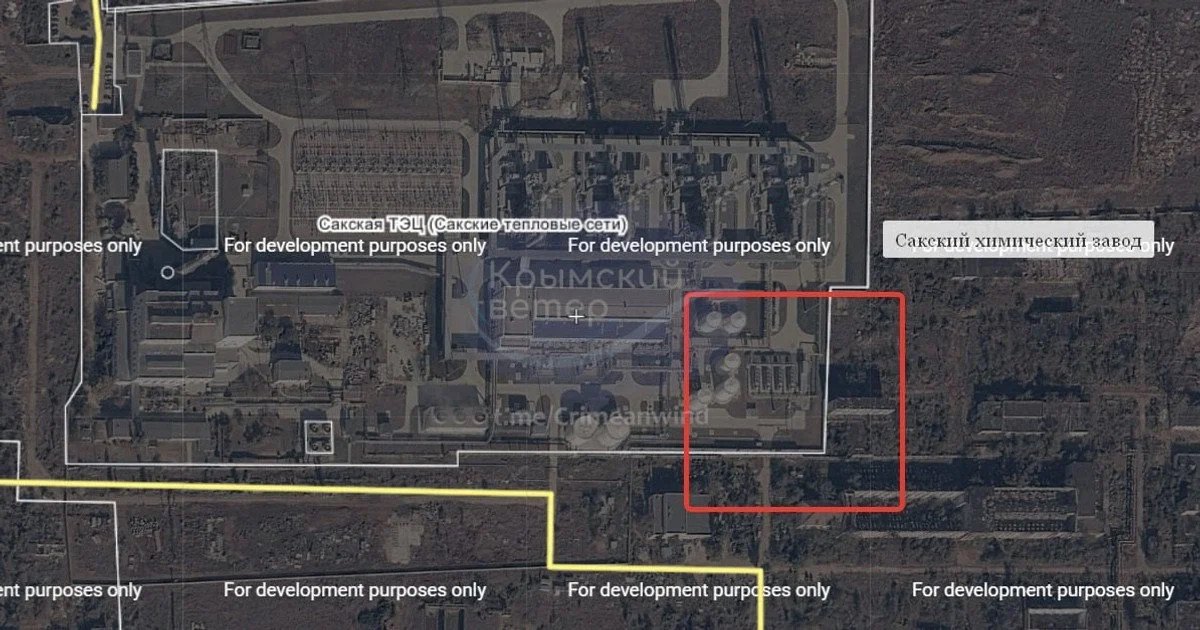
Occupied Crimea continues to experience sustained disruption. On the night of 28 June, the Saky thermal power plant came under attack. Locals reported more than 16 explosions within an hour, as a swarm of drones systematically struck the station’s infrastructure. NASA FIRMS satellite data recorded strong thermal anomalies in the area of fuel storage tanks and transformer substations.
The 150 MW facility supplied key Russian military assets in the western part of the peninsula, including the airbase in Novofedorivka. As a result, strict rolling blackouts have been introduced in Simferopol and Sevastopol, lasting between two and five hours. Traffic lights in several cities have stopped functioning, while the occupation authorities describe the situation as “urgent repair works”.
Read alsoThe cost of holding Crimea: Ukraine’s strategy of logistical attrition
In addition to energy infrastructure, a space communications centre near Vityne, outside Yevpatoriya, in occupied Crimea also came under heavy attack. This is a unique deep-space communications facility which the Russians used to coordinate the operations of their military-scientific satellite constellation and to guide high-precision weapons. At least three ballistic missile strikes were recorded, and expensive radar equipment and antenna arrays at the facility were destroyed. This is a vast area housing vulnerable radio telescopes, phased-array antennas and ultra-sensitive receiving equipment, which provides communication with the Russian satellite constellation (including the GLONASS system and the ‘Liana’ radio-technical reconnaissance satellites).
Two of the six such complexes have been hit – the losses in long-range aviation, space communications centres and fuel production are such that Avdiivka could be cast in gold and shipped straight to the Russian Federation, but the pensioners in the Kremlin wanted to go down in history.
In southern Russia, military logistics came under attack. In the Rostov Region, a swarm of drones attacked a logistics hub near the ‘Sambetski Heights’ complex, which was being used as a transhipment base for equipment and personnel before their deployment to the Donbas. As a result of the strikes, at least 12 members of the support staff were reported wounded and several pieces of freight equipment were destroyed. The occupiers attempted to conceal the strike, but were unable to hide the stream of ambulances heading towards Taganrog. With the bridge to Novoazovsk – the ‘land corridor’ to Crimea – completely destroyed, the route continues to dry up.
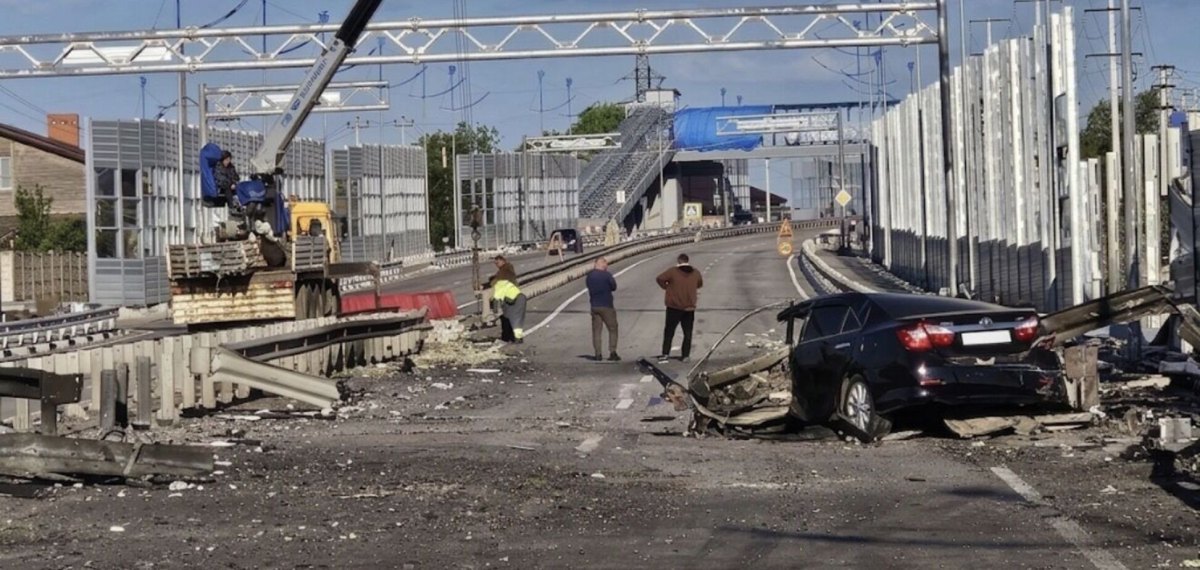
The scale of the operation is reflected in the intensity of the strikes, which reached their highest level of 2026 during this period. Russia's Ministry of Defence claimed that its air defences intercepted 269 Ukrainian drones over 11 regions on the night of 25 June alone. It also reported shooting down another 213 drones across 12 regions on the night of 27 June. According to the assessment, this reflects a deliberate tactic in which Ukraine's Unmanned Systems Forces launch large numbers of decoy drones to saturate Russian air defence networks and deplete the missile stocks of Pantsir and Tor systems. Once those defences are overwhelmed, heavier strike drones and missiles are able to reach their intended targets, causing damage that can take months to repair.
Whether this will alter the Kremlin's course remains uncertain. Despite mounting pressure on Russia's fuel infrastructure, the war continues. As long as Russia's military can refuel its equipment, produce artillery barrels and employ precision-guided weapons, those capabilities remain legitimate targets of Ukrainian military operations.