







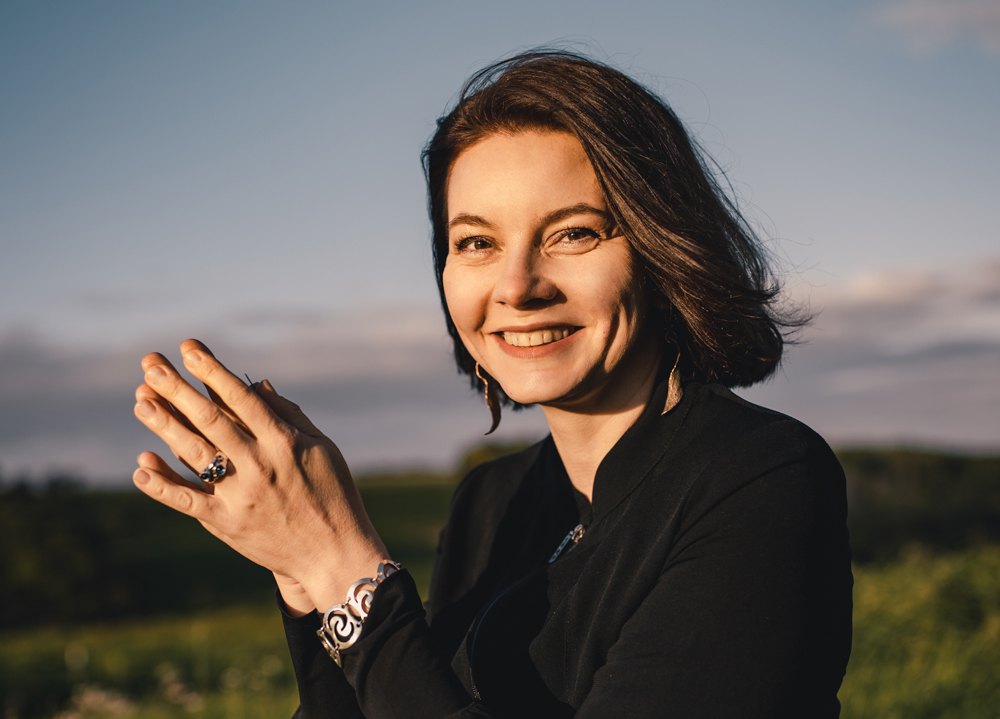
Who is Lyuba Morozova?
You have many creative roles. All of them are in the music sphere, but they are diverse. How do you feel about yourself right now? Who is Lyuba Morozova today?
This has always been one of the hardest and most important questions for me. And if we’re talking about me as a person, then surely my greatest achievement is that I can now identify myself as Lyuba Morozova.
Because before, I clung tightly to professional definitions and tried to figure out which direction to take. And now I work primarily as a musicologist and music manager. These fields do not entirely overlap, but in my work I try to combine them more and more. They are, quite literally, two different ways of thinking, and each requires a different kind of focus. But this complementarity gives me and my projects stability and a certain sense of grounding.
Read also“If Russia had occupied Ukraine, we would be dead and instead of us, you’d be seeing Gergiev, Currentzis, and Netrebko"
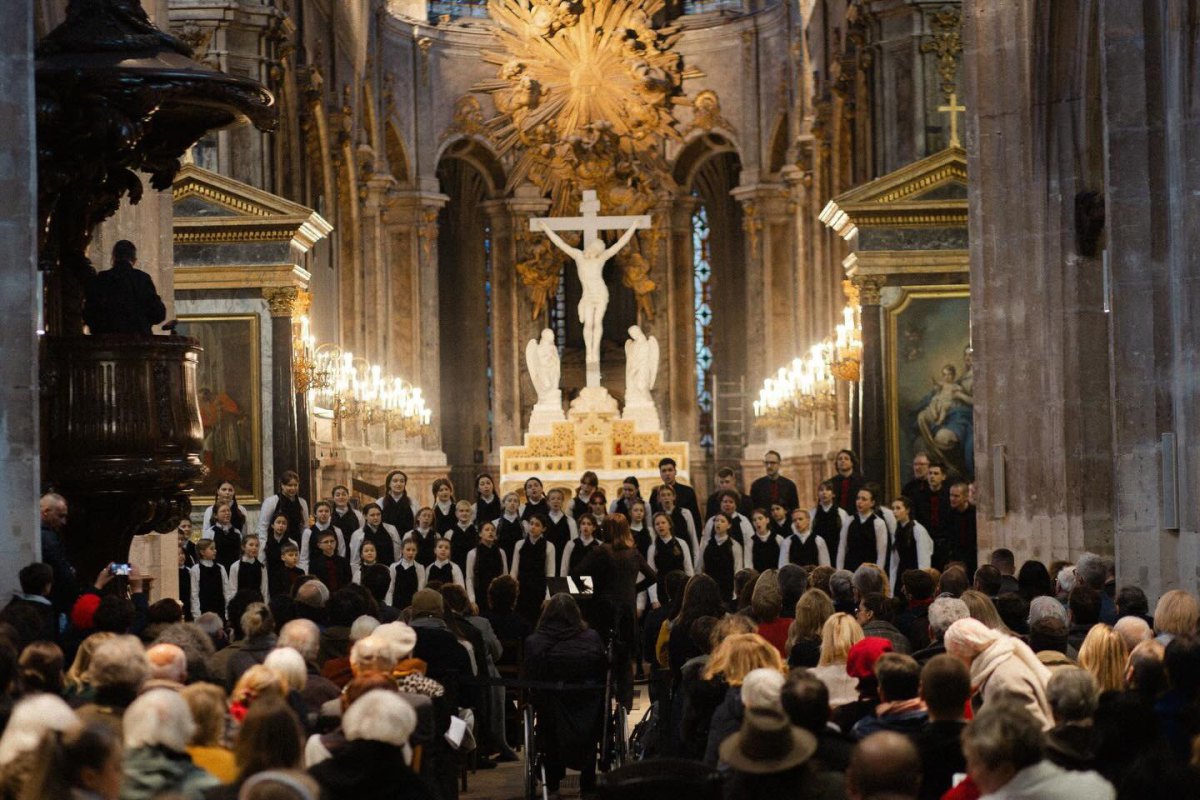
I am becoming increasingly adept at practical matters. And these practical tasks, from project to project, are becoming ever more unusual in the challenges they present. For example, two weeks ago, at the last concert in Paris at the Church of Sainte-Marie, where the Shchedryk choir had come, we had to find stands for the choir and then assemble and dismantle them ourselves. And I — a rather impractical person — was running about with a screwdriver, working with large and heavy structures.
In the end, the three of us put it all together: me, my colleague Anna Stavychenko, and a kind person from Transcarpathia who happened to be in Paris and helped us. And we dismantled everything very quickly — in 20 minutes, because a traditional Mass was due to take place in the church after the concert.
This experience gives me the feeling that I can do this — despite my humanities background. On the other hand, I am increasingly able to bring my own expertise to projects, and I am being approached more often from different countries for comments and advice. And for me — as someone who spent nine years studying music at university — that is truly very gratifying.
Are you still working as the artistic director of the Kyiv Symphony Orchestra?
No. I left of my own accord in 2022. We went our separate ways. The orchestra is now at a different stage. It was a difficult decision for me.
So your main projects are now linked to the Ukrainian Institute?
Yes. When I left the orchestra, I was in a very difficult emotional state. I did not know which way to go next. And it was all decided by a single Facebook post.
Two weeks before I left, I wrote a post asking people what they valued most about me. It was the very same question you asked me: who am I?
When people started replying, first of all, it was very therapeutic — I could read so many warm and supportive words about myself. But there were also things there that I needed to pay attention to. It became a valuable reflection for me.
And among the first comments were replies from the directors of the Ukrainian Institute. They wrote that they had a proposal. I replied straight away — and it was a match.
On the decolonisation of Ukrainian music and global interest
I saw a post about the Ukrainian Institute declaring a year dedicated to the composer Fedir Yakymenko. Please tell me, why is this figure important to us?
Unfortunately, he is a little-known figure in Ukraine. His work is so beautiful in the classical sense that Ukrainian and international pianists should be playing and appreciating it — instead of Sergei Rachmaninoff. For me, since 2022, one of the central questions has been: how can we replace Russian composers, not just to represent our own, but to truly fall in love with them — to perform their works with passion and a sense of discovery.
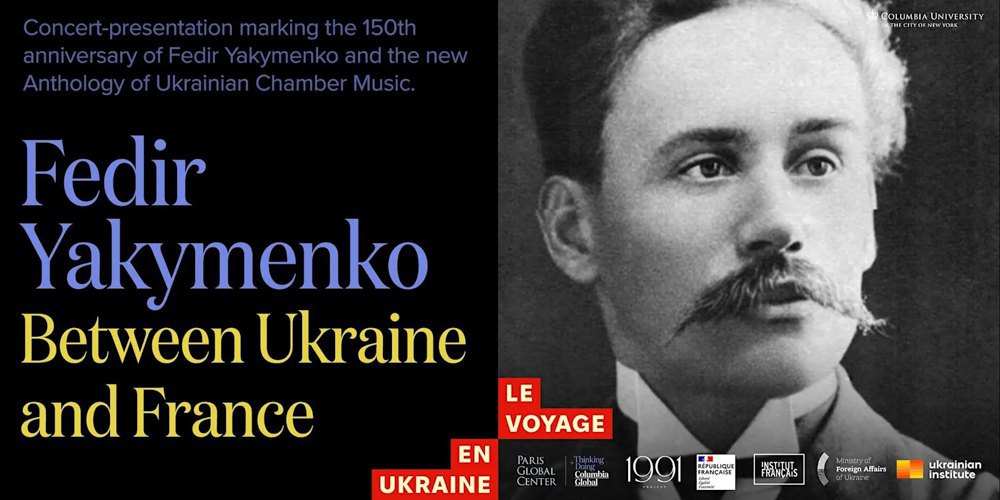
I was very keen to work with a variety of material, but Yakymenko won me over, particularly because he was a true piano enthusiast. By various estimates, he wrote over eight hundred pages of piano music. And he composed it almost everywhere: he could get up and immediately sit down at the piano, jotting down ideas on nothing more than napkins.
This music varies in difficulty: it can be performed by beginners as well as virtuosos on the grand stage. It is also stylistically diverse, yet it possesses a special sense of beauty and mystery — something we particularly appreciate in early 20th-century Ukrainian painting. I would describe this as a kind of symbolism in music, or more broadly, musical modernism. He sometimes turned to experimentation and avant-garde elements, but generally wrote music that is easy to recommend and share. One quickly develops an affection for it.
The second aspect is the figure of Yakymenko himself. He is a powerful figure, and it remains unclear why he is so underrated. One reason is likely that he left for Paris and never returned. His legacy needs to be painstakingly reconstructed, and that is what we are doing. In Ukraine, incidentally, his brother Yakiv Stepovyy is better known.
There is also an important diplomatic dimension to this work. Since the composer was educated in the Russian Empire, and during his studies his surname was russified (he was listed as Akimenko), many sources still record him as a Russian composer. However, he was Ukrainian and identified himself as such. A significant portion of his works is based on Ukrainian themes — this is evident both from the titles and from direct quotations of folk songs, where, for example, one can recognise The Cossack Rode Beyond the Danube. Even his gravestone states that he was a Ukrainian composer.
Let’s use his example to explain what decolonisation means in music. How do we define ‘our own’ when many composers were born in the Russian Empire and were automatically recorded as Russian?
The advantage lies with self-identification. Attempts to force artists who contributed to the creation of the ‘Russian world’—such as Tchaikovsky—into Ukrainian culture simply because they had Ukrainian roots and admired ‘Little Russia’ are misguided and only reinforce colonial narratives about ‘one nation’. In Yakymenko’s case, his identity is beyond doubt. An additional argument is, in particular, his later period. Even in Paris, in exile, he continued to write music connected with Ukraine. And these were not merely ‘Russian sketches’, as was sometimes the case with émigré composers. He clearly positioned himself as Ukrainian.
It is important for me to see his style and, through it, to understand what Ukrainian music is, how it might develop, and how we might explore and perform it further. Because I am certain that the symbolic dimension we see in Dovzhenko’s films or in poetic cinema in general could also be explored in music — it is something inherent to our culture and worldview. We need to reveal this naturally, without excessive pathos or the unnatural poeticisation typical of the school curriculum.
As a mother of two, I’ve struggled with these texts from the Ukrainian Literature syllabus. Despite everything being written correctly, excessive adulation leads to us eventually devaluing the sacred and spiritual in a natural context. This remains a trauma of the school curriculum.
And how do we get international musicians interested in this? Why might they choose to perform our works — out of interest or thanks to specific promotional efforts?
We are still preparing the collection on Yakymenko, so we haven’t been able to share it with musicians yet. It is a complex undertaking, divided among several teams. One of them is research-based, as we have performers who are also researchers.
Among them is Pavlo Lysyy, who is probably the world’s greatest collector of Yakymenko’s works. He knows all the descriptions, titles and dedications by heart. Sometimes it’s hard to believe that such people exist, but they do. It was Pavlo, along with the musicians Artem Zamkov and Andriy Kolyada, who proofread, played this music and cross-checked the materials to ensure that later additions to the scores did not affect the result. After all, there are different versions, and it is important to strip the text of these additions so that we can present precisely the version that the composer wrote.
This new research project was initially undertaken by the musicians, and was later joined by Olha Ligus — a brilliant musicologist who runs a series at the Philharmonic dedicated to repressed music. She specialises in Ukrainian modernism, so she was keen to work with this composer. Back in February, ahead of Yakymenko's birthday, we published her material, on the basis of which she wrote a detailed text for the forthcoming collection. We are translating it into English, as the project is primarily aimed at international distribution.
As with previous anthologies, we distribute these materials via our website and a request system. This is a Google form through which musicians and researchers from all over the world contact us. At present, our anthologies are represented in more than thirty countries worldwide. The latest request, for example, came from a researcher of Valentyn Bibik’s work in Japan. And such enquiries are not isolated, which is very encouraging.
We offer works for various instrumental ensembles — solo piano, chamber and symphonic music. The latter was a real challenge, as orchestras are hesitant to include unknown works in their repertoire: they are difficult to learn, and one needs to understand the performance style, which is not always obvious when there is no established tradition. We know how to perform Bach, Brahms or Mozart, but how do we play Lyatoshynskyy so that he doesn’t sound like Shostakovych? Especially given that Russian propaganda once imposed the image of the ‘Ukrainian Shostakovych’. It was precisely for this purpose that the anthology of symphonic miniatures was created. We offer short, striking works that are easy to integrate into a programme. This is music that is well received (a sort of symphonic hits, ranging from opera overtures to the soundtrack for the TV series Roksolana) and can serve as an alternative to the usual repertoire. In addition, I provide further recommendations: I send texts, as all the scores are accompanied by musicological materials, and I explain how they can be performed.
Much depends on individual enthusiasts who are keen to interpret Ukrainian music. It is precisely through such individuals — soloists, conductors, coaches — that it is gradually spreading. At the same time, collaboration with major institutions continues.
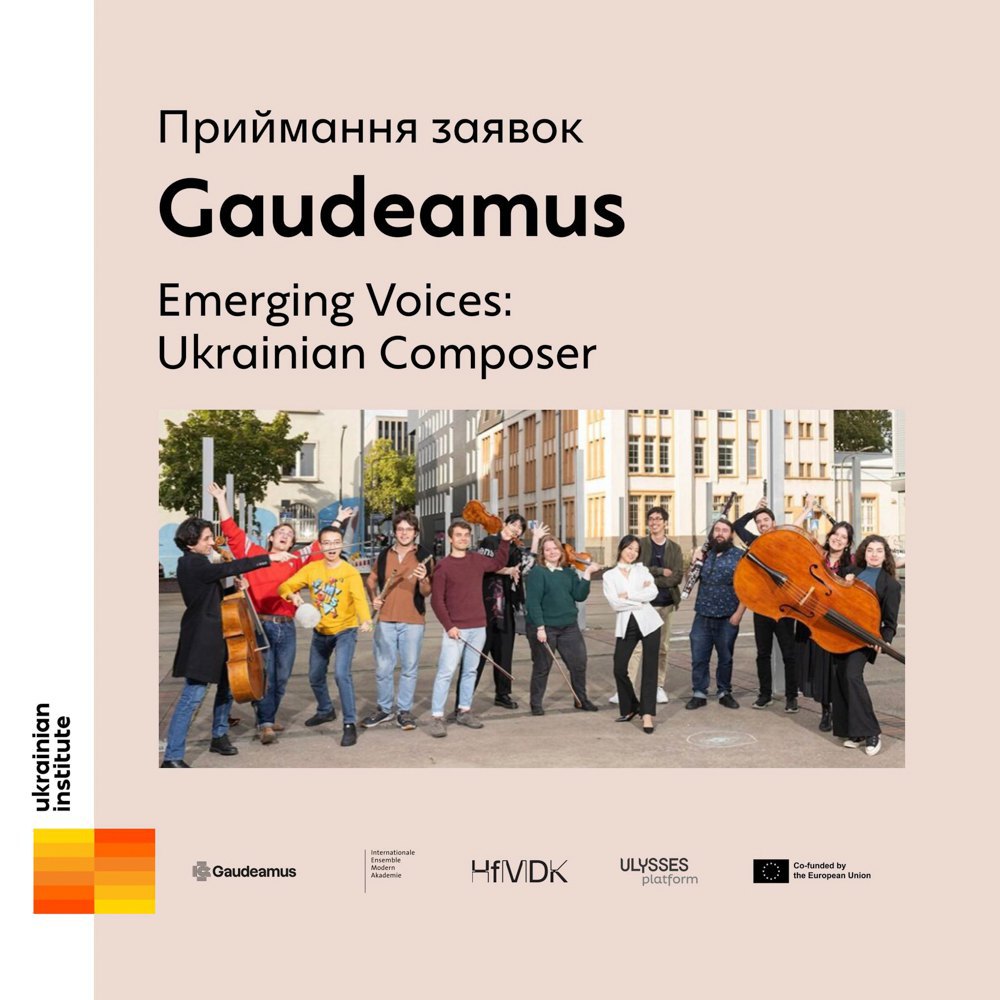
For example, at the end of April we will announce a five-year collaboration with the Basel Symphony Orchestra. This is one of the key ensembles working with new music. We have an exciting collaboration planned: from the premieres of forgotten and repressed music to new commissions for contemporary composers and the organisation of open calls. I believe the music community has long needed this. Also this year, we launched two open calls for composers for the most renowned new music festivals: Warsaw Autumn and Gaudeamus.
On ‘Russian classics’
Let’s talk about the classical repertoire and the debates surrounding it. Explain this mechanism: if a Ukrainian musician, conductor or ensemble — one that is sufficiently well-known and established within the European context — refuses to perform the so-called Russian classical repertoire (where the word ‘Russian’ is often even omitted) at a festival or gala concert, what happens next? Is this a major problem? Do they fall out of the academic world?
It’s a complex issue, and, it seems to me, we’ve complicated it ourselves by lacking unanimity among our musicians. So, if one person refuses to perform the Russian repertoire, whilst another—even one with the same international reputation—continues to play it and publicly supports it, then, of course, the advantage often lies not with those who refuse.
I think this is largely due to a colonial perspective. Ukrainian music—like the music of other countries that were part of the Russian imperial sphere—has long been tied to a more recognisable ‘centre’. And to untie it from this centre means to reorient thinking — not just one’s own, but also that of the audience, literally putting it on a different track. This is a huge task, first and foremost for music management in the Western world, which, frankly speaking, few people want to take on. There is also a certain inertia at play here: in classical music, people have been working with the same approaches for decades, and it is difficult to switch quickly to a different way of thinking or repertoire policy.
As for the consequences for artists, this does not necessarily mean an automatic ‘exclusion’ from the academic world. But it may mean fewer invitations in certain circles where people are not prepared to reconsider the canon. At the same time, it is precisely in recent years that new opportunities have opened up for Ukrainian music in places where there is a demand for new narratives, for expanding the repertoire and for rethinking tradition, and we must make the most of this
The same applies to opera and ballet. It seems there is a sort of established canon — for example, with Swan Lake.
But this so-called ‘Russian canon’ — in particular Tchaikovsky’s three ballets — was largely shaped not by Russian but by French tradition. A major contribution to it was made by the choreographer Marius Petipa, who, although he lived in Russia for seventy years, never learnt Russian, as nobody in the ballet world spoke it. Since the 18th century, ballet in Russia has largely been created by invited artists, primarily from France, as well as from Italy and Spain. It was they who, over the course of about a century and a half, shaped what would later come to be known as ‘the great Russian ballet’.
For example, Sleeping Beauty is not simply a ballet by Tchaikovsky, but also a kind of fantasy about an idealised monarchy, a reference to the era of Louis XIV. And from the outset, it looked different: the costumes were different, as tutus did not yet exist. Consequently, the technical possibilities of the dance were limited by the costumes. Much changed from performance to performance, as there was no fixed ‘score’ for the ballet in the modern sense. Today’s Sleeping Beauty, like Tchaikovsky’s other ballets, has little in common with the original.
What is today called ‘grand Russian ballet’ is in fact a hybrid that grew out of a European, specifically French, foundation. Working in a German theatre with ballet, I also see the difference between the schools. When you watch French dancers, you see a delight in movement, a striving for perfection, but at the same time a sense of freedom and joy in their own bodies. When you look at the Russian tradition, however, there is a sense of rigidity in the system: these are stories of breaking points, of traumatised bodies and fates. Personally, I haven’t watched Russian ballet for a long time and have no desire to engage with that context.
On the Ukrainian musical canon
Can we really speak of a specific Ukrainian musical canon? Especially when it comes to older, repressed works or destroyed scores?
This is even more complicated than the repertoire. I’ve been moving in the same direction as the rest of the world when it comes to early music, because this is another lost segment. Although there was no repression in the strict sense, this music was forgotten for various reasons and is now being reconstructed. This early music, which we have to rediscover, can be just as challenging for us as new music, because it raises many questions for researchers: how should it be performed? Not everyone can do this.
For example, Baroque is music that has to be rediscovered all over the world; it’s not just a Ukrainian problem. Haydn isn’t particularly well-known; it’s mostly Mozart. The canon is generally quite narrow. And when something new is added, even from forgotten works, we realise that the orchestra cannot build an entire programme solely from this new music. So this new piece has to be integrated into the existing programme. According to the laws of auditory perception, it should be roughly 20–30% new material, but 70% should be consistently familiar, so that people can process it. Otherwise, the audience will simply walk out. That’s how we’re wired: we need recognition. And they work the same way with Ukrainian music: there needs to be a small new segment that is integrated into the programme.
The problem is that Ukrainian music is often attempted to be combined with Russian music — as if this makes it easier to ‘integrate’ it into the programme and attract the attention of an audience already accustomed to this context. It’s convenient, but at the same time it’s limiting. Instead, it’s important to show how Ukrainian music can sound alongside other traditions.
For example, there was a year when, in collaboration with the UCMF festival in New York, Latoshynskyy’s romances were performed. Usually, they were placed alongside Russian works, but here another parallel is more obvious — with musical expressionism and the New Viennese School. That is precisely what we wanted to emphasise. Incidentally, Lyatoshynskyy himself had German translations of these romances. And instead of presenting them in a Russian context, one could either translate them into Ukrainian or use these German texts. In the latter case, it immediately became clear why this music finds itself alongside Schoenberg and Berg: a natural, historically grounded continuity emerged.
Read alsoMusicologist Olha Shumilina: "Many Ukrainian composers in the world are perceived as Russians, and we need to counteract this"
This seemingly small step — using the German texts that Lyatoshynskyy himself had prepared for performances abroad — allowed the music to be placed in a different context and heard in a different light. And it is precisely in this, I believe, that the curator’s task lies: to build bridges that open up new connections, interpretations and possibilities for Ukrainian music.
For example, the Berlin Radio Orchestra approached us and requested the Wedding Songs from the choral opera Zolotoslov by the contemporary composer Lesya Dychko. I was curious to see where they would fit this piece in, as the wedding theme isn’t exactly suited to every programme… It turned out that it was perfect for a children’s programme and fitted in seamlessly. Such things may seem strange or controversial to us, but our task is to suggest these curatorial moves.
Storyteller and promoter of Ukrainian music
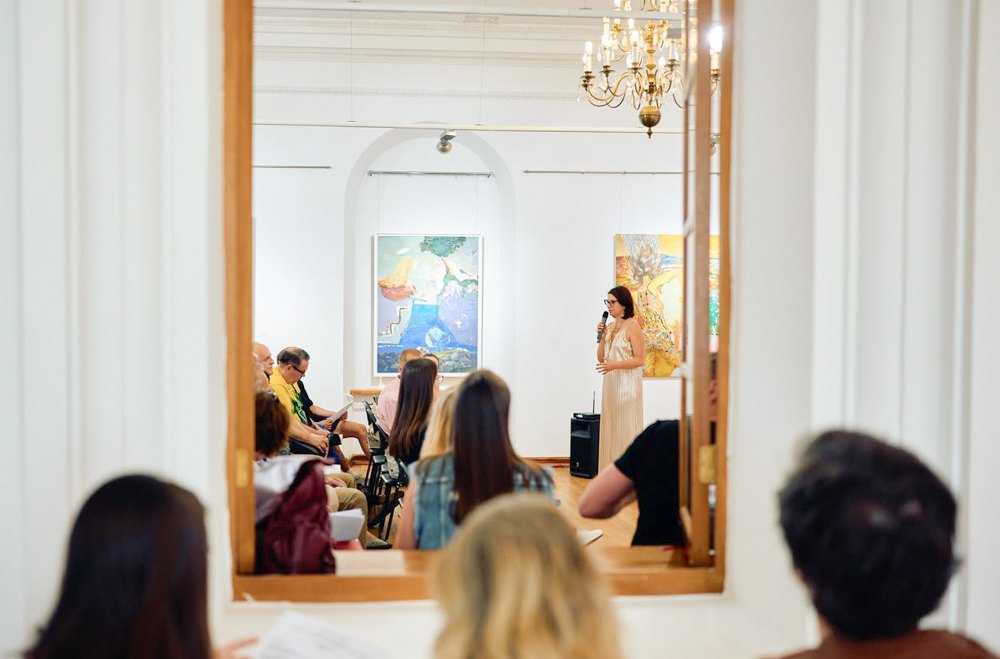
Let’s go back to last year’s Bouquet Kyiv Stage arts festival at Saint Sophia Cathedral in Kyiv and your involvement there. Please tell us about the process: do you mainly advise on the music programme or do you put it together yourself?
No, they do that themselves. This time, I was just moderating the concerts.
Do you feel there’s a problem in the academic environment of being too self-absorbed? A narrow musical language, a specialisation that simultaneously excludes a broader dialogue with an audience that isn’t made up of musicians? Because, among other things, that’s what sets you apart — you know how to tell stories and provide context.
I’ll start with something else. My second job at the moment is at a German theatre, where I’m a concert and ballet dramaturg. And that’s also a challenge linked to speaking, because part of my work involves giving speeches and writing texts for programmes. And there, programmes, unlike our tradition, are large booklets of 25–30 pages with detailed texts. So, as a musicologist, I write these texts about the classical repertoire, trying to add biographical stories and break up the formality a little.
The Germans have a tradition that Ukraine is gradually adopting as well — the Einführung. The idea is that 45 minutes before the concert (and sometimes again 30 minutes before), there is a fifteen-minute talk about the programme, and people come specifically for it. Older Germans in particular love these talks before concerts and ballets. It is important for them to understand exactly what will be happening during the performance. This kind of moderation is important in cultures where logic is valued and there is a need to rely on new information.
But I find it more difficult here, both because of the language and because of the need to delve deeper into certain details that a Ukrainian listener might find tedious. In Ukraine, I decided for myself that my task was to popularise classical music and encourage people to listen. That is what I did at Bouquet Kyiv Stage.
I began my outreach work initially as a critic: I wrote reviews, trying to explain in words what was happening in the music, and later developed a more expressive style, imagery and understanding. At first, it was very scary to go on stage – perhaps the fear of academic concerts, where strict teachers ticked boxes every time a student made a mistake, kicked in. But then it became less important how many times I made a mistake or how much my voice trembled during a performance. What mattered more was that I could become a guide for the audience into the world they wanted to enter. And it worked.
The main thing for me was that I knew: I have 2–3 minutes — I don’t need to hold the audience’s attention any longer to shift their focus, to let them ‘breathe’. I’m like a radio presenter announcing what’s coming next. Sometimes it’s not even literal information about the piece, but simply a mood that helps them switch from one state to another.
Returning to the academic aspect: the traditional philharmonic listener can be rather limited in their tastes. But if tastes in art music, new classical music or simply classical music haven’t yet been formed, it’s more interesting to work with that. For me, festivals held in unusual, sometimes acoustically imperfect venues are an opportunity to convey something to an attentive audience not accustomed to going to the philharmonic, to feel their feedback, because it is stronger, livelier, more natural. After a concert, people want to take something away with them that they can pass on – and that is why I exist. It is as if the listener has experienced something intangible, yet they have still taken something away and passed it on.
To me, you are the architect of Ukrainian music’s presence in Europe and within the country...
Thank you, that’s very kind. It immediately made me think of the Polish composer Penderecki: he had a huge garden covering many hectares, and he called himself a gardener. In music, I’m a gardener too.
And the best moments for a curator are when the fruits of your labour begin to sprout and take on new meanings. When, during a concert, you feel how naturally the programme has come together. You see that your ‘child’ is alive and can now function even more interestingly without you — all it needs is a little nudge. That is the greatest joy.
Read also“Decolonising Art. Beyond the Obvious”. Excerpt
And finally: what perhaps surprises you or stands out sharply in your current work at the German theatre? What was the most unusual thing?
The most unusual thing for me is that, despite working abroad, I still do a lot of work in Ukraine. And I consciously try to maintain that presence. Although the Ukrainian Institute’s projects are often international, the ones that take place in Ukraine are the ones that bring me the most joy. And, fortunately, they do exist.
This is because, when you deliver a text, you convey emotion and transport people into a certain world. This creation of worlds is part of what we were talking about: symbolism, the depth of culture, and what particularly resonates with a Ukrainian audience. What is most valuable to me is the feeling of a live audience, the energy that flows from you and returns, different each time.
At the same time, a good performance is exhausting: you need time to recover afterwards. But it is an incredible, almost ritualistic, magical sensation: as if you are in a closed circle of energy.
In Germany, it works differently. There, everything is much more rationalised, built on logic. And I find that difficult, because I think differently. Over time, I’ve learnt to take this into account: I know where the audience will laugh, because it’s predictable.
In Ukraine, it’s not like that: here, everything is much more intuitive and variable. Even with a prepared text, I can go on stage, feel the audience and completely change the course of the performance. This balance between spontaneity and an almost mathematical structure is something that is inherent to me as a person.
Ultimately, this is a difference in mentalities and traditions, as well as a different sense of music. I remember being told in Germany: ‘You write too poetically; the lyrics need to be simpler — like potatoes.’ And I had to learn that simplicity. But because of that, I appreciate every performance in Ukraine even more: because there, you can remain complex.