






‘Petrovich’ and ‘Magistr’ overseeing the construction of nuclear power stations
In 1966, the Soviet government adopted a resolution on the construction of several nuclear power stations with a combined capacity of 11.9 million kW. One of them, which was to be built in Ukraine, had the working name Central Ukrainian.
A long search was conducted to find a site for the plant: sixteen options were considered in the Kyiv, Vinnytsya and Zhytomyr Regions. The nuclear power plant was intended to supply electricity not only to the northern and central regions of Ukraine, but also to the Rostov Region of Russia. They settled on an area near Kyiv, close to the village of Kopachi, first mentioned in 1685. This village no longer exists: after the accident, it was so contaminated that all 393 farmsteads were razed to the ground and covered with a thick layer of soil.
Yet in 1966–1967, the village was still going about its daily life. At that time, the Council of Ministers of the Ukrainian SSR approved the allocation of a 1,676-hectare plot of land for the construction of the station. Although the land allocation was agreed back in 1967, construction did not begin until 1970. At the same time, supervision of the works was entrusted to the Sixth Directorate of the KGB, which dealt with economic counter-intelligence and the fight against sabotage and subversion. It established an ‘intelligence network’ at the station comprising 17 KGB agents and 58 ‘trusted individuals’, i.e. informants.
Construction had only just begun, yet the State Security Committee had already set about searching for ‘unreliable elements’ among the workers. A total of 9,294 people and 40 subcontracting organisations were to be vetted. They weeded out former members of the Organisation of Ukrainian Nationalists, citizens of German and Chinese ethnic origin, ‘contacts with capitalist countries’ and those convicted of serious crimes.
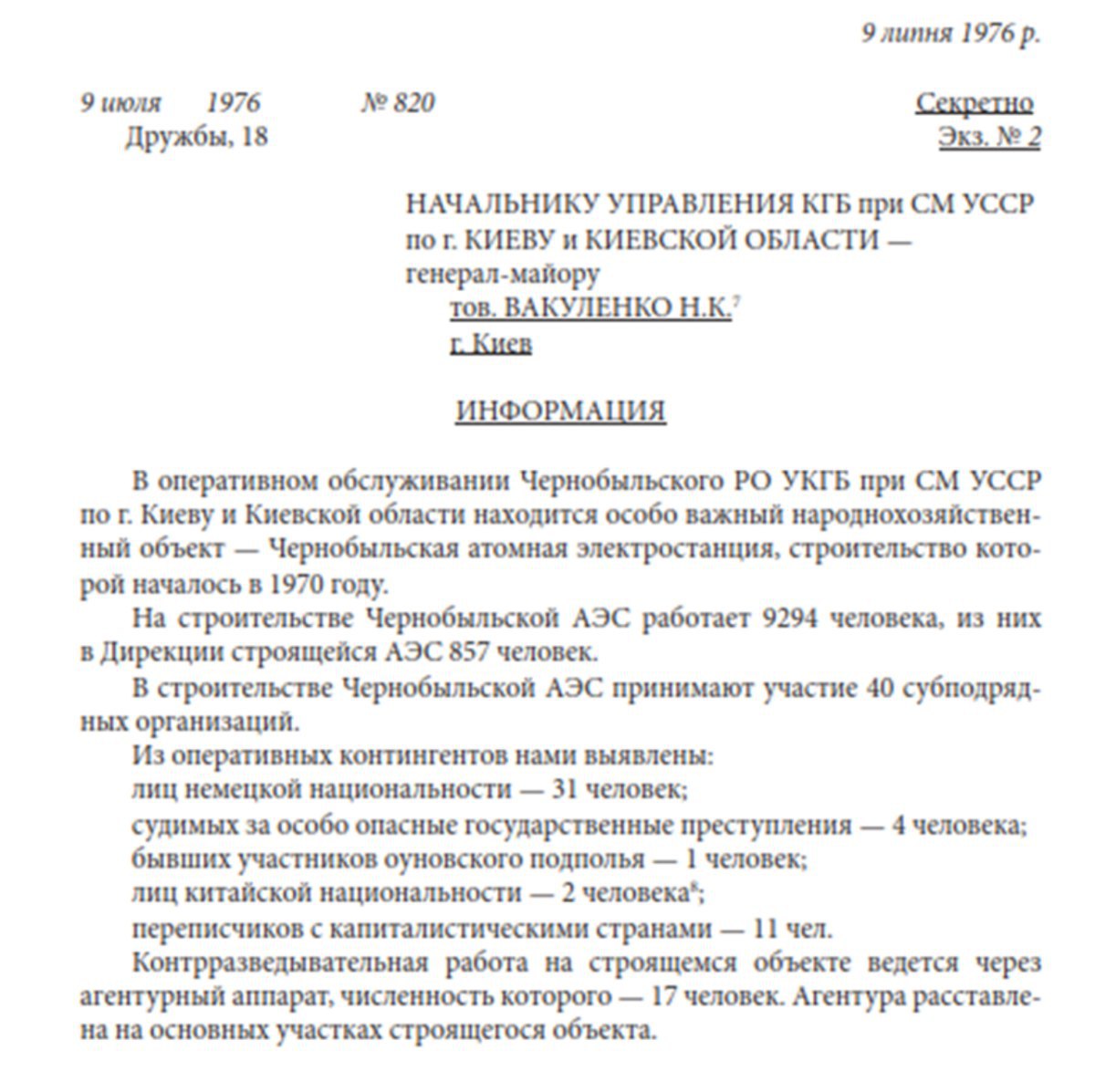
The SBU archives contain several aliases of agents who were disguised as power station employees: ‘Magistr’, ‘Petrovich’, ‘Dnipro’. Informants were designated by the letters: ‘I’, ‘T’, ‘F’. Their initial reports indicated that the Ministry of Energy of the Ukrainian SSR lacked experience in operating nuclear power stations, unlike the Soviet ministry. This is not surprising: the Chornobyl plant was the first to be built in Ukraine.
In addition to the lack of experience, KGB agents also noted ‘systematic violations of construction and installation procedures and the inefficient use of production resources’. As construction of the plant progressed, an increasing number of such reports were sent ‘up the chain’. Agents from the Chornobyl Nuclear Power Plant reported to the State Security Committee of the Ukrainian SSR, for example, that steel reinforcement bars that were difficult to weld were being inserted into concrete blocks, meaning the work had to be redone. Furthermore, someone was tampering with the design documentation and making unauthorised alterations. Furthermore, there is neither a fence nor security along the station’s outer perimeter. Consequently, the workers are engaged in the favourite pastime of the Soviet proletariat: taking home whatever they can steal from the site.
It is noteworthy that the ‘all-powerful’ KGB — at least, that is how we have come to view the secret service of the Soviet era — had no influence whatsoever on the situation. For example, in February 1976, the Chornobyl Nuclear Power Plant received defective pipes for the circular water supply system, manufactured by the Kurakhove Boiler and Mechanical Plant. The plant’s management should have returned them to the manufacturer. But the director of the Chornobyl Nuclear Power Plant, Viktor Bryukhanov, sent the pipes to the assembly workshop.
The KGB informed the Kyiv Regional Committee of the Communist Party of Ukraine of this, but it seems no one there paid any heed, as poor-quality pipes from Kurakhove continued to arrive at the plant thereafter.
Sometimes events unfolded according to a different scenario. The Chornobyl management ordered the foundations to be laid on top of the damaged waterproofing, without rectifying the construction defects. The First Secretary of the Central Committee of the Communist Party of Ukraine, Volodymyr Shcherbytskyy, learned of the incident and sent a coded telegram to the Minister of Energy and Electrification of the USSR, Pyotr Neporozhnyy. In the telegram, Shcherbytskyy asked Moscow to set up a departmental commission to verify compliance with safety regulations at nuclear power facilities in the Ukrainian SSR.
Imagine the long journey the decision took: from the KGB agent’s report at the station to the leadership of the republican KGB, from there to the party leadership of the Ukrainian SSR, and from the party leadership of the Ukrainian SSR to the Communist Party authorities in Moscow! And this despite the fact that it was merely a matter of replacing the waterproofing…
All the reports circulating between the offices mentioned poor construction quality and numerous workplace injuries. And whilst the party bosses exchanged coded messages, the workers were pilfering property and doing a slapdash job. The Chornobyl Nuclear Power Plant was born out of mismanagement and sloppiness, for it is not for nothing that they say that too many cooks spoil the broth. There were plenty of supervisors at the plant, but not a single one managed to motivate the working class of the time to work conscientiously.
Bite, little fish, big and small, in the radioactive pond
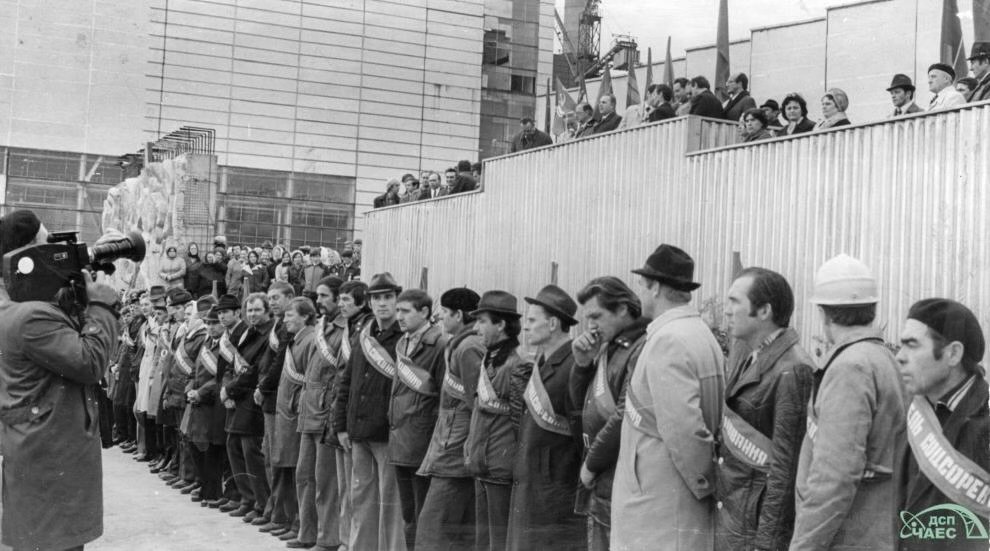
It was 1976—the tenth year since the Chornobyl project was conceived. Moscow began to press Kyiv to commission at least one power unit. The first unit was originally planned to be launched in 1974, then in 1975. Finally, the plant’s workers took on a ‘socialist commitment’ to bring it into operation in December 1976. KGB agents reported that this was impossible due to the low efficiency of the operating units and the lack of certain equipment. Eventually, Minister Neporozhnyy intervened: he demanded that the Chornobyl management launch the plant ‘at any cost’.
But the minister’s whims remained just that. The first reactor was commissioned in September 1977. Yet no one ever analysed why substandard materials were being used, why deviations from the design were occurring, or why associated organisations were supplying low-quality equipment. Neither the KGB agents nor the Communist Party helped: the first power unit was built haphazardly. The second was the same. This was known both in Kyiv and in Moscow. It seems that nobody cared about the plant’s safety: the party leadership was concerned only with the ceremonial ribbon-cutting at the commissioned facility.
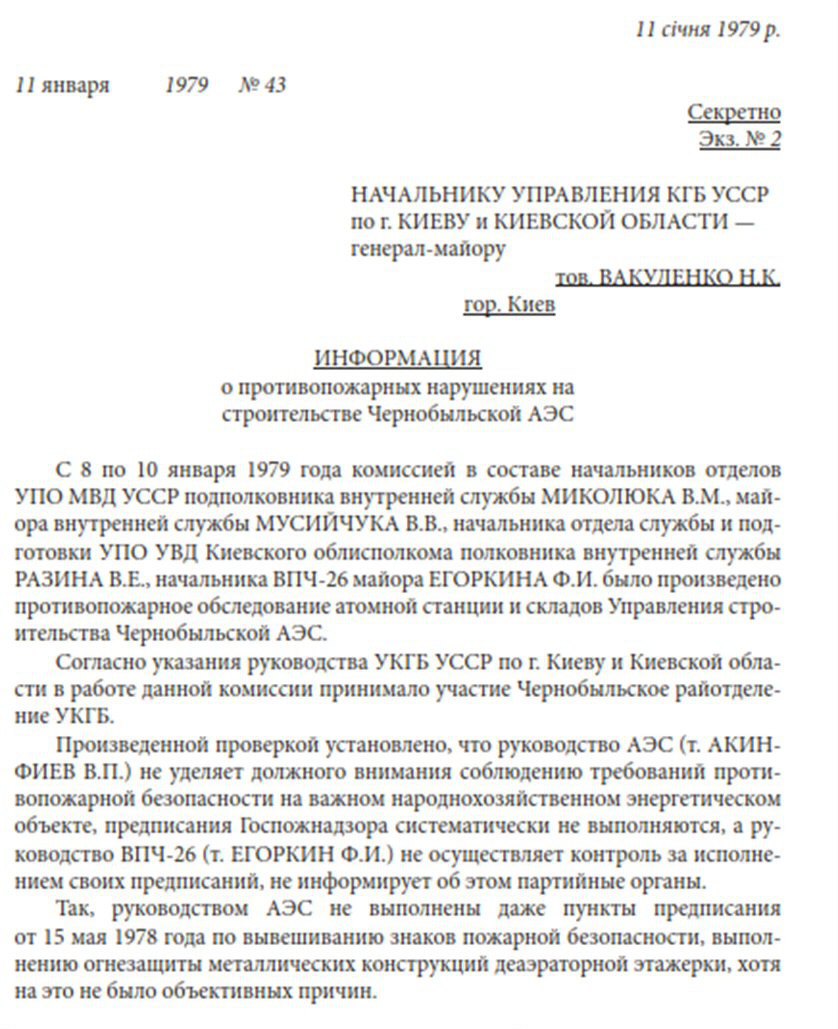
In 1979, the head of the KGB of the Ukrainian SSR, Vitaliy Fedorchuk, wrote a detailed report to the Central Committee of the Communist Party of Ukraine. He reported on problems with the waterproofing of the foundations, which had never been rectified; on defects in the framework of the machine hall, the absence of a fire alarm system in the plant’s central warehouses, and fires at the facilities of the second power unit. Fedorchuk’s memo eventually reached Shcherbytskyy, who… sent another coded telegram to Neporozhnyy, proposing the creation of an additional commission to carry out an inspection. The KGB and the Communist Party of Ukraine were going round in circles, doing nothing in reality to ensure the plant’s safety.
The consequences soon became apparent. The first emergency at the Chornobyl Nuclear Power Plant occurred in February 1979. The automatic safety system was triggered, shutting down the first power unit. No one was injured, but the country suffered a shortfall in electricity, a fact reported to the leadership of the republican KGB. The second emergency occurred in June of the same year due to poor waterproofing. The KGB of the Ukrainian SSR reported the incident to the Central Committee of the Communist Party of Ukraine; the report was ignored.
The first incident posing a potential health risk to NPP staff occurred on 19–20 April 1981. Radioactive water leaked from a pipeline in the first power unit, contaminating an area of 180 square metres. Yet even this went largely unnoticed. In total, between the start of the nuclear power plant’s operation in 1977 and the commissioning of the third power unit at the Chornobyl Nuclear Power Plant in December 1981, there were 29 emergency shutdowns.
Numerous reports were written about them, but they had no effect whatsoever. It was reported that even the monitoring and measuring instruments were useless: it was impossible to measure radiation levels properly at the plant. At the same time, the Chornobyl management set about breeding fish in… a cooling pond contaminated with radionuclides. And not just breeding them, but also selling them to residents of the Kyiv Region via the Ivankiv fish processing plant.
A little-known fact: between 1978 and 1980, plant workers staged spontaneous strikes. But not at all because of the radiation hazard, of which they were, in all likelihood, completely unaware. The strikers were concerned about delayed wage payments (yes, wages were also delayed in the USSR).
In 1980, a worker named Yashchenko, who lived in Pripyat, initiated the protests. He stuck posters on the doors of the dormitories (of which there were 24 in the city, housing a total of around 10,000 people) and called on people to attend a protest. In Pripyat, apart from delayed wages, the reasons for the protests were poor housing conditions and disruptions to food supplies in shops. The KGB took measures against ‘spontaneous gatherings’ and the scandal was hushed up.
In 1982, an accident occurred at the Chornobyl Nuclear Power Plant that could be considered the final warning before the major explosion. On 9 September, the reactor of the first power unit was being started up at the plant following a major overhaul. During the start-up, a rupture occurred in a process duct, leading to the release of radioactive substances into the environment. Radiation levels at the plant exceeded the permissible threshold by a factor of ten, and in the surrounding towns and villages by a factor of a hundred. No conclusions were drawn.
However, in 1983, the Pripyat branch of the KGB of the Ukrainian SSR developed and began implementing the ‘Atom’ plan. To this end, the number of KGB agents among the plant’s staff was increased. Thanks to these agents and ‘trusted individuals’, the State Security Committee compiled a list of design flaws in the VPR (‘high-power channel-type reactor’). The memorandum highlighted the extremely low safety standards of this type of reactor. Later, in August 1984, the Sixth Directorate of the KGB of the Ukrainian SSR informed the Kyiv Regional Committee of the Communist Party of Ukraine about the negligent attitude of maintenance staff towards their duties, and about the discovery of ‘damage to the load-bearing and enclosing structures of the reactor compartment of the operational third power unit’.
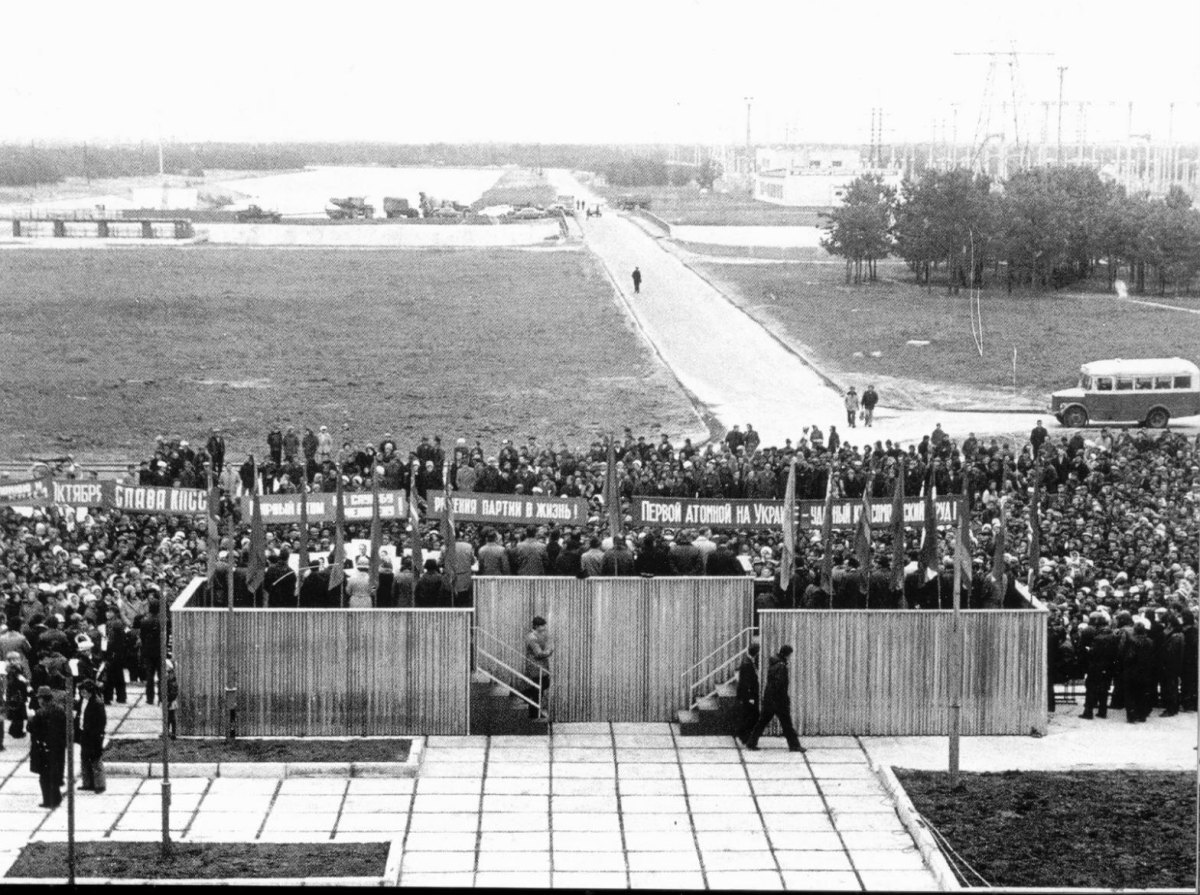
KGB agents tried to sound the alarm, analysing all the technical errors and oversights that had become apparent following the commissioning of the first three reactors. But their attempts to draw attention fell on deaf ears. At the end of 1983, the fourth reactor was commissioned at the Chornobyl Nuclear Power Plant. It was also of the extremely dangerous, poorly controlled RBPK type, which uses steam as a coolant. The fourth reactor would explode two and a half years later. This would halt the construction of the fifth power unit, which was scheduled to come online at the end of 1986.
Numerous reports, inspections and analytical notes submitted to various administrative bodies failed to prevent the largest man-made disaster of the 20th century. This was because all these administrative bodies in the USSR served as ‘Potemkin villages’, where behind the grand façade there was nothing that even remotely resembled genuine concern for the people’s welfare.
In search of saboteurs and an external enemy
The fourth reactor exploded at 1.25 am on 26 April 1986. It was a Saturday, and most of the Soviet Union was sleeping peacefully in anticipation of two days off. And in a week’s time, the May holidays were due to begin. Then the people of Kyiv would fill the city’s parks and the banks of the Dnipro; there would be barbecues, gatherings, drinks and festivities amidst the young spring greenery, already saturated with lethal doses of radiation.
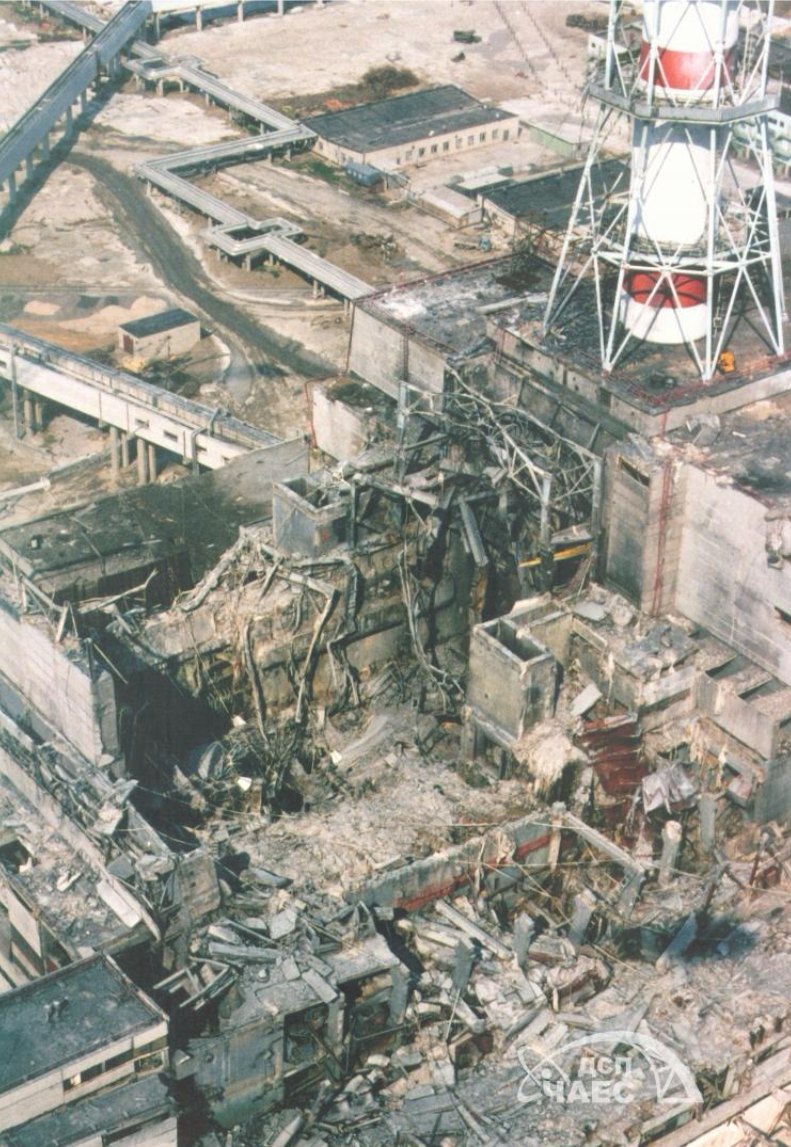
For after the power unit building and part of the machine hall roof had partially collapsed on the night of 26 April, radioactive substances had been released into the atmosphere from the reactor’s collapse. An operational team from the Pripyat City Department of the KGB arrived at the station. Some of the KGB agents began questioning the station’s staff: they were looking for possible sabotage. Strange, given that it was the KGB officers themselves who had been reporting technical shortcomings at the Chornobyl plant for years! The cause of the accident should have been sought in the Soviet Union’s management methods, not in mythical saboteurs.
Other KGB officers were engaged in no less ‘useful’ work: carrying out orders from their superiors to prevent information about the accident from leaking out. At 2.30 am, senior KGB officials arrived at the Chornobyl Nuclear Power Plant: a group of counter-intelligence officers led by Major General Yuriy Petrov, Deputy Head of the KGB of the Ukrainian SSR. And by the evening of 26 April, members of the Soviet government commission, led by Borys Shcherbyna, Deputy Chairman of the Council of Ministers of the USSR, had also ‘arrived’.
The very next day, staff from the Pripyat City Department of the KGB were deployed to assist in the evacuation of Pripyat’s residents. The KGB agents’ task was to ‘prevent panic among the evacuees’ and to ensure that information about the scale of the accident did not spread. However, from 1 May 1986, the KGB agents — in accordance with the directives received — once again joined the ‘plan to halt the intelligence and subversive activities of enemy special services, foreign anti-Soviet centres and hostile elements in connection with the accident at the Chornobyl Nuclear Power Plant’.
Every day by 7 pm, the capital’s special services unit was required to send a dispatch to the KGB of the Ukrainian SSR regarding the situation in Kyiv. And although the KGB was interested, among other things, in the ‘spread of provocative rumours and leaflets’, there was also a demand for information of a different nature. In particular, whether sanitary standards were being observed in the food industry, how the police were operating, and how many patients with radiation sickness had already been hospitalised. The Sixth Department of the KGB was also tasked with assessing the financial losses resulting from the radioactive contamination of agricultural land in the northern districts of the Kyiv Region and the medical consequences of the increased radiation levels in Kyiv and the surrounding areas.
Meanwhile, on 26 April 1986, the Kyiv Regional Prosecutor’s Office opened a criminal case on the grounds of an offence under Part 2 of Article 220 of the Criminal Code of the Ukrainian SSR (‘Violation of safety regulations at explosion-hazardous enterprises or in explosion-hazardous workshops’). The team of investigators was led by Mykhaylo Potebenko, Deputy Prosecutor of the Ukrainian SSR. The case of the disappearance and murder of Georgiy Gongadze would bring his successful career to an end after a decade and a half. In 2002, President Kuchma dismissed Potebenko, the Prosecutor General of Ukraine, formally on the grounds of staff rotation, but in reality due to demands from the opposition at the time.
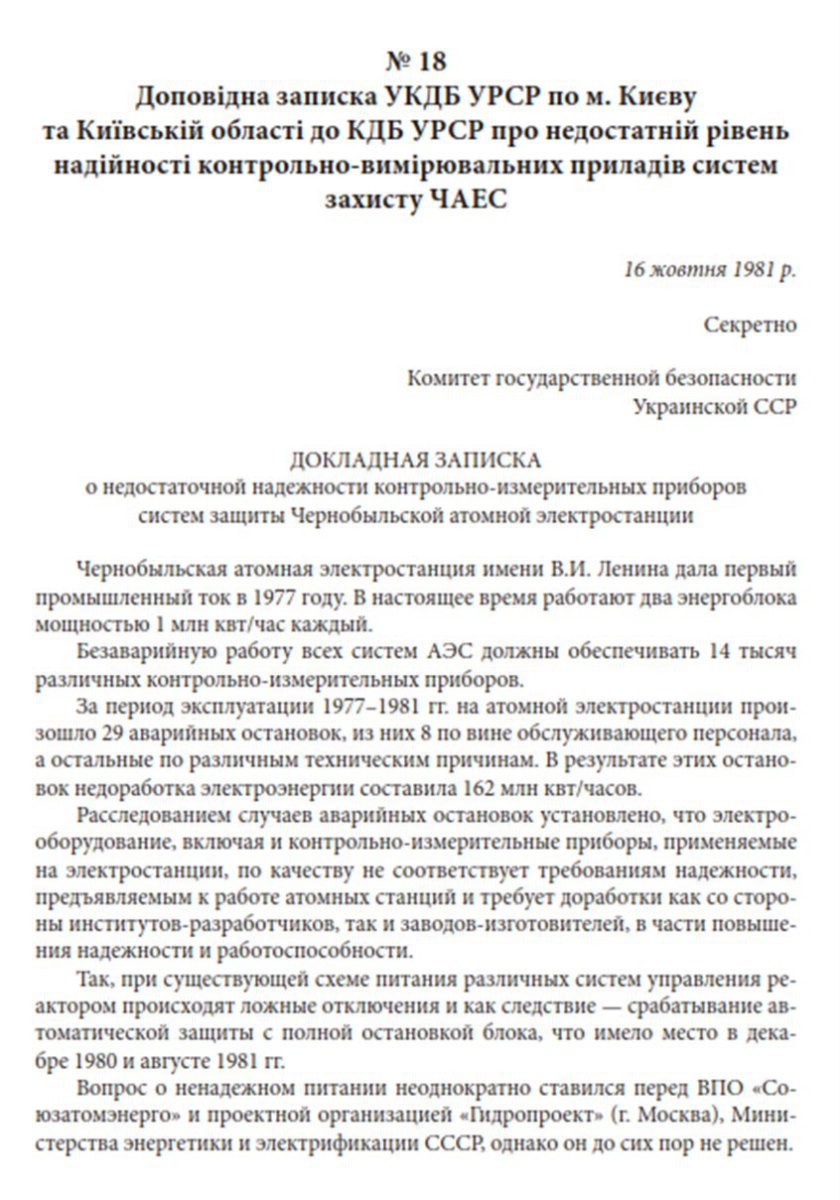
But let’s go back to 1986. At that time, alongside the public prosecutor’s investigators, KGB representatives were working to determine whether the explosion at the Chornobyl Nuclear Power Plant had been an act of sabotage by a foreign enemy. By early May, they were already having doubts. A joint report by the heads of the operational-investigative groups of the KGB of the USSR and the KGB of the Ukrainian SSR to the Lubyanka in Moscow stated that the accident occurred during a routine test, the aim of which was to determine how far the reactor’s capabilities could be extended. This is evidently where the assumption that the reactor was intended for the production of nuclear weapons originates. However, materials provided by the SBU archives do not confirm this.
Writer and former diplomat Yuriy Shcherbak, an author of studies on the history of the Chornobyl disaster, says that the nuclear power plant was not built for the production of nuclear weapons, but rather the opposite: the plant was fuelled by what remained after the manufacture of nuclear weapons. “The reactor installed at the Chornobyl nuclear power plant was manufactured in the US and was originally intended for the production of weapons-grade plutonium,” says Yuriy Shcherbak. “All nuclear power plants are a product of the nuclear military complex.”
Most of the expert reports conducted after the accident state that the cause of the accident was a rupture in the cooling system pipes, caused by the rapid evaporation of water. After this, the steam became uncontrollable and began to accelerate the reactor. A critical surge in power led to the explosion and destruction of the fourth power unit.
On 7 May 1986, specialists from the Operational-Technical Directorate of the KGB of the USSR concluded that the force of the explosion was equivalent to 50–60 tonnes of TNT. Following this, the theory of a terrorist attack was definitively ruled out. The statement by KGB representatives read: ‘The cause of the radiation accident was the incorrect actions of the plant’s personnel following the initial fire and the failure or damage to the safety systems. Leaving aside the technical details, which are difficult to judge, the majority view is that the overall cause of the accident was the poor work ethic of the nuclear power plant staff. This is not a question of qualifications, but of work culture, internal discipline and a sense of responsibility.”
‘It is quite likely that reactor control was entrusted to qualified and responsible personnel. However, the nuclear power plant’s staff includes a large number of support personnel whose level of training leaves much to be desired. These workers perform auxiliary functions, but the accumulation of individual minor errors could, in the aggregate, have led to unforeseeable consequences. Among the possible causes of the accident, the rush to commission the fourth power unit is cited. It is said that it was commissioned ahead of schedule for the CPSU Congress, and now the reactor had to be shut down for further work...’ — concluded the KGB.
After two weeks of investigating the circumstances, the investigators began to emphasise the decisive role of the human factor in the Chornobyl tragedy. This was both true and untrue at the same time. But for the Soviet authorities, it was easiest to place the blame on the Chornobyl plant workers. The plant’s management received a guilty verdict. In 1987, Chornobyl NPP head Viktor Bryukhanov, Chief Engineer Mykola Fomin and Deputy Chief Engineer Anatoliy Dyatlov were sentenced to up to ten years’ imprisonment. Shift supervisor Borys Rogozhkin received five years, reactor shop supervisor Oleksander Kovalenko three years, and State Atomic Energy Supervision inspector Yuriy Laushkin two years’ imprisonment.
By the late 1980s, the International Atomic Energy Agency had also adopted the ‘human factor’ theory. However, in 1993, the agency reviewed its own conclusions and rejected most of them. In the 2000s, the IAEA revisited its analysis of the accident and identified design flaws in the reactor as the primary cause. Taken together, the Chornobyl explosion was caused by a dangerous reactor, insufficiently qualified and informed staff, and obvious errors made by this staff due to a lack of knowledge about the operation and safety of the reactor.
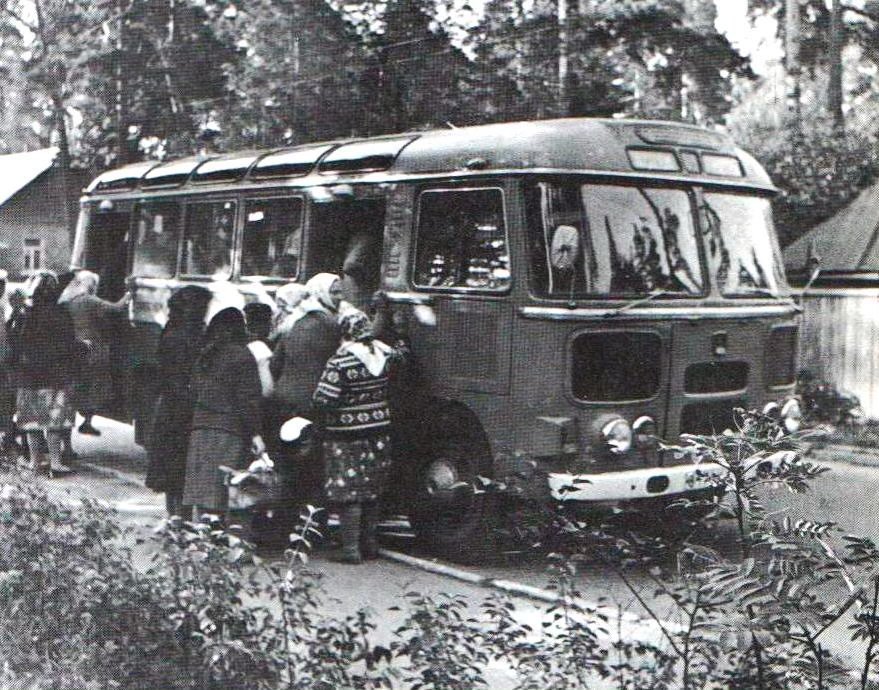
In the aftermath of the tragedy
The blanket classification of everything that could be classified played a cruel trick on the KGB. The secret service was required to present the Soviet government with its own vision of what should be done next with the destroyed reactor. It is unclear why this task fell to the KGB rather than to the relevant specialist departments. KGB officers cautiously questioned physicists in Kyiv and eventually proposed to the authorities that a ‘research institute for the study and prediction of the long-term effects of elevated radiation levels on living organisms’ be established in the contaminated zone. In doing so, the authors of the idea drew on the experience of the 1957 Kyshtym accident in the closed city of Chelyabinsk-40.
Chelyabinsk-40 was once called Ozersk, but the use of this place name was prohibited in any documents. Therefore, in secret reports, the accident was referred to as the Kyshtym accident — after the nearby town of Kyshtym. On 29 September 1957, a huge container for radioactive waste exploded in Chelyabinsk-40. The contamination affected an area of 23,000 km² with a population of 270,000 people in the Chelyabinsk, Sverdlovsk and Tyumen Regions of Russia. The truth about the incident was hushed up, and the East Ural State Nature Reserve was hastily established at the site of the explosion. There were no research institutes there, only an exclusion zone, the sort that would later be created around Chornobyl.
But that is a story for another time. For now, KGB agents continue to report on shortcomings in the work — this time regarding the clean-up of the accident’s aftermath. In the Soviet Union — a nuclear superpower — there was a shortage of sanitary decontamination stations, dosimeters and other essential items. The population of the USSR is uninformed about iodine prophylaxis; they sell, buy and consume milk, meat and butter contaminated with radioactive substances. Evacuees and accident liquidators are living in unacceptable conditions; they lack personal protective equipment. Temporary burial sites for radioactive materials are constructed in breach of technical standards, and decontamination work on the streets of Kyiv is carried out improperly. The KGB reports all this through the usual channels to the top, right up to the Communist Party leadership, but such reports, as before, have no effect whatsoever.
The Soviet system of governance is stagnating; it is overly politicised and fixated on myths about its own power (particularly nuclear power), the leading role of the Party, and the self-sacrificing labour of the ordinary Soviet worker. In reality, however, this ship, which is slowly sinking, is not being steered by anyone: neither the CPSU, nor the KGB, nor the middle management.
The working class — the ‘builders of communism’ — consists of poor, demotivated, poorly educated people. They live in barracks, waiting for a meagre wage and for at least some food to be delivered to the local shop. Their productivity is extremely low, their drive for self-improvement is non-existent, and their morale is undermined by the need to steal whatever they can at work. The authorities are focused on the arms race, confrontation with the Western world and the search for internal enemies. A colossus with feet of clay is just waiting for a push to topple and shatter into pieces.
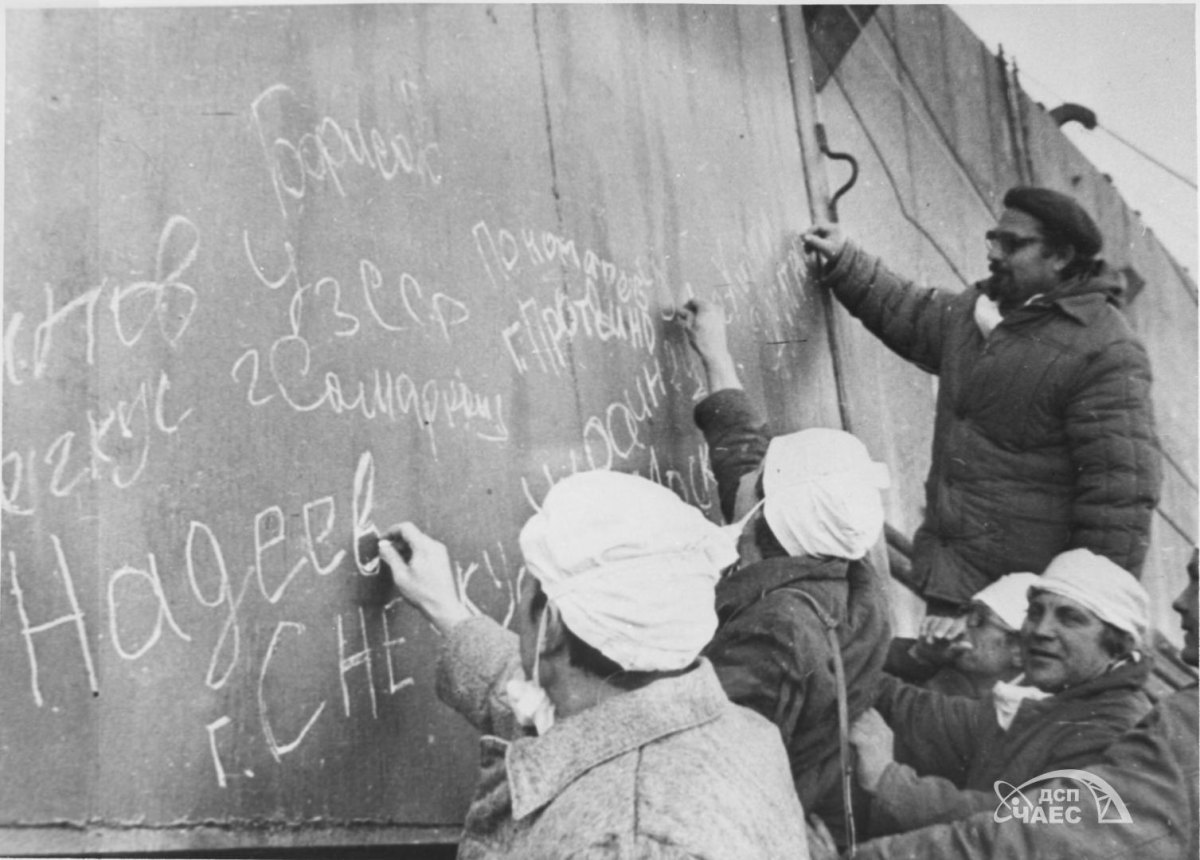
The catalyst for this was the accident at the Chornobyl Nuclear Power Plant, the 40th anniversary of which we are marking today. Of course, this was by no means the only factor, and certainly not the decisive one, in the collapse of the USSR, but it did play a part. If only because information about the tragedy was either suppressed or based on outright lies. The citizens of the Soviet Union did not forgive the country for these lies. And the events of the following years — right up to 1991 — were a clear confirmation of this.
LB.UA would like to thank the SBU archives for providing the materials.