






Contracted funding
In 2025, around 200 contracts for the construction and development of veteran spaces were signed through Prozorro, totalling UAH 946 million. The largest share — UAH 836 million — was allocated to building veteran hubs from scratch. A further UAH 29 million went towards reconstruction, and UAH 42 million to major and current repairs. The remaining funds were spent on furniture, project documentation and related services.
By value, 94% of procurements were conducted through open tenders with special conditions, while only 6% were direct awards. In practice, however, there was no real competition — each tender attracted just a single bidder.
State funding and unrealistic timelines
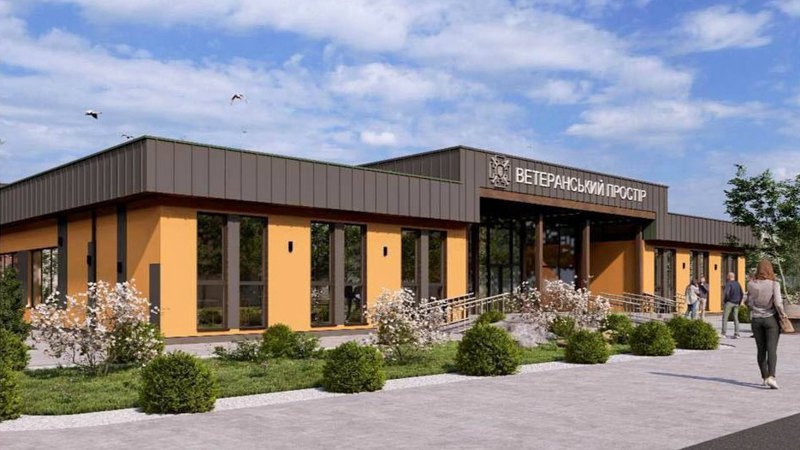
Nearly half of all contracted funds came from the state budget. In the summer of 2025, the government allocated UAH 446 million in subsidies for the development and construction of veteran spaces in seven regions of Ukraine. All these projects were to follow a unified architectural concept and shared operational principles. The spaces are designed to be inclusive and accessible, featuring shelters, ramps, facilities for people with disabilities and assistive technologies. At the same time, projects could be adapted to local needs.
Funding was provided to Zhytomyr, Transcarpathia, Ivano-Frankivsk and Kyiv regions, as well as the communities of Kremenchuk, Lutsk and Kryvyy Rih. Each received UAH 63.74 million, with additional contributions expected from local budgets. The subsidy also came with a number of conditions. In particular, projects were initially required to be completed by 1 December 2025. However, none had been finished by that date. In most procurements, contracting authorities set unrealistic deadlines from the outset, likely to formally comply with the programme’s funding requirements. In reality, meeting these deadlines was impossible, leading to subsequent amendments and extensions. On 9 December last year, the subsidy conditions were revised, extending project deadlines to 30 April 2026.
How veteran hubs are being built: regional cases
DOZORRO analysts examined the seven most expensive tenders for veteran hub construction and identified potentially inflated prices for construction materials in six of them. The probable overpayment is UAH 37.3 million. The analysts sent their calculations to the contracting authorities and asked them to bring prices in line with the market.
Bucha
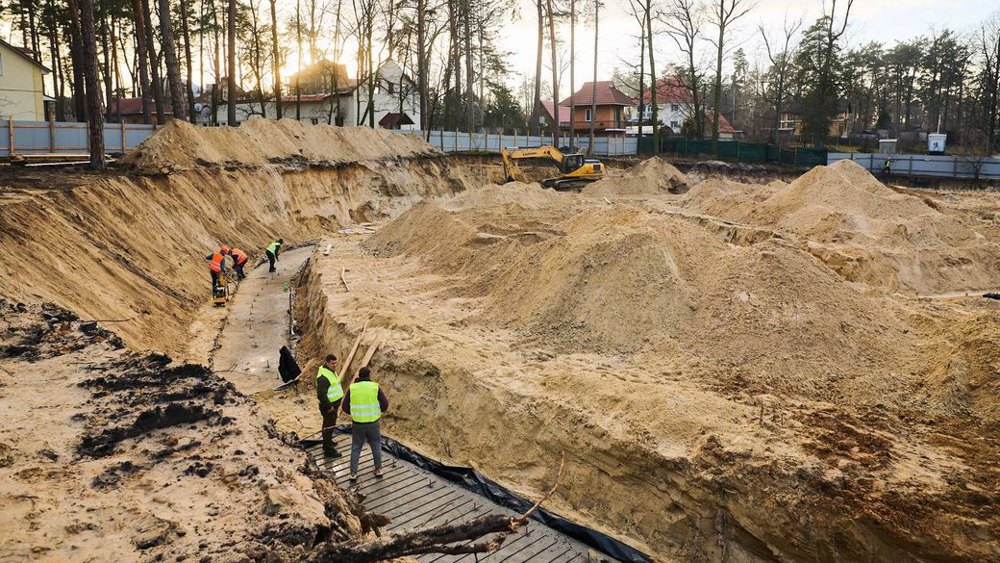
Ukraine's most expensive veteran hub is being built in Bucha for UAH 140 million. In October last year, the Department of Regional Development of the Kyiv Regional State Administration signed the contract with the Construction Initiatives consortium. The contract price is dynamic. Works were initially to be completed by the end of 2026, but in March the deadline was already extended to the end of January 2027. The consortium was formed in summer 2025 and includes Systemgroup Plus, TK Lazurit, Drivebud, and BK M-Bud. The ultimate beneficiary is Denys Niunko.
The future veteran hub will consist of two blocks. The first will house a gym for physical recovery; the second and main block will house offices for psychological and social support, rooms for individual work, a coworking space, and conference rooms. The design also includes a cafe, a reception, a children's area, changing rooms, showers, and restrooms.
A retaining wall, a foundation slab, and brick walls of the gym are already in place on the site, along with the foundation slab of the main building. Crews are currently digging the pit for the shelter, installing foundations for the entrance groups of the main building, and leveling the ground around the retaining wall. The department has already paid the consortium UAH 52 million for completed works.
Analysts did not identify significant potential overstatements in the estimate for this project. At the same time, some materials are listed in the documentation without detailed specifications. The analysts asked the procuring entity to clarify these data but received no response. Because of this, it is impossible to definitively assess potential overpayments for individual items. However, for the materials that could be identified, the analysts did not record significant deviations from market prices. The State Audit Service also found no violations during its monitoring of the procurement.
Kremenchuk
In Kremenchuk, the veteran hub is being built at the corner of Flotska and Velyka Naberezhna Streets. The UAH 132.9 million contract was signed in November last year by the executive committee of the Kremenchuk City Council with the private company Ukrekospetsproekt. The company is owned by Stanislav Savichev.
The hub is being built next to a lake, tennis courts, a football field, and a swimming pool — facilities planned to be integrated into the veterans' physical and medical rehabilitation system. Inside, there will be rooms for seminars, lectures, and group and individual work, as well as a reception, changing rooms, restrooms, and a kitchen area. Adaptive sports will receive particular attention, with outdoor sports grounds also planned.
The initial timeline for construction was optimistic, to say the least. Works were to be completed by November 20 — ten days after the contract was signed. The parties later signed an additional agreement and extended the project to March 2026, and then to April. At what stage the works now stand is unknown, as the procuring entity did not respond to our inquiry. In December, however, it transferred UAH 54 million to Ukrekospetsproekt for the procurement of construction materials.
By the analysts' estimates, the project's estimate points to a possible overpayment of UAH 5.2 million. The procuring entity offered no explanation in response to our letter. However, the contract price is fixed, so without an additional agreement, Kremenchuk City Council will not be able to adjust the cost of materials in the work acceptance certificates.
The largest possible overpayments are on concrete, linoleum, and membrane. Questions also arose around the price of RKP-350B roofing ruberoid. It is listed in the estimate at UAH 187.20 per sq.m (all prices here and below include VAT). On the market, the same material sells for five times less. Kromizol, for example, offers it at UAH 35.40 per sq.m, and Cube at UAH 41.10 per sq.m. The Kremenchuk price for ruberoid is also the highest among the regions where veteran hubs are being built. For comparison, in Uzhhorod the contractor plans to supply it at UAH 38.53 per sq. m, and in Zhytomyr at UAH 94.24 per sq.m.
The analysts also flagged excessive requirements in the tender documentation of the Kremenchuk City Council executive committee. It required numerous permits, declarations, and ISO 9001 certificates, some of which are not mandatory for this type of work. In practice, such conditions can hamper competition.
The State Audit Service also had questions about the procurement. It found that the Kremenchuk City Council executive committee should have rejected Ukrekospetsproekt's bid but did not. The company's documents had numerous issues — unconfirmed experience, missing mandatory documents, and violations of the goods localization requirements. The auditors ordered the procuring entity to terminate the contract. It disagreed and is challenging the decision in court.
Kryvyy Rih
In Kryvyy Rih, the veteran hub is being built in Pokrovskyi district, near the 44th quarter. In September, the Capital Construction Department of the Kryvyy Rih City Council executive committee signed a contract with Sapsan-KR LLC, owned by Bohdan Lymanskyy. The works are valued at UAH 132.2 million. The same pattern of deadline extensions driven by state-program funding applies here.
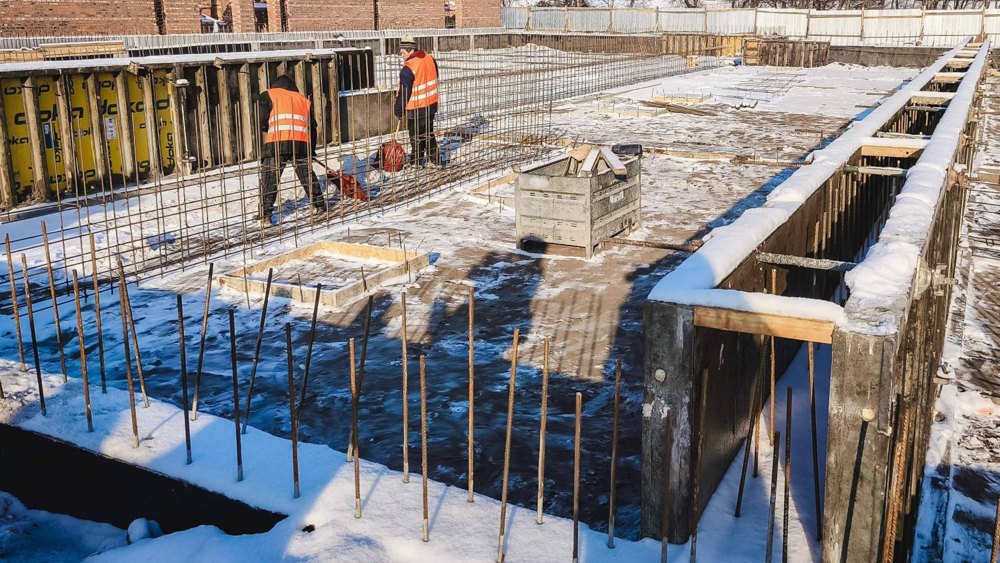
The project provides for offices for a psychologist and a social worker, a conference room, a gym, a children's area, and a cafe. The contractor has already completed about half of the works: it has built the foundation, brick walls, reinforced concrete beams, and gym columns. Installation of the modular shelter is in its final stages, and engineering networks are being laid. The procuring entity has already paid the contractor UAH 55 million.
DOZORRO analysts reviewed the estimate and identified a potential overpayment of UAH 5.3 million, mostly on paving slabs and tactile paving. The contracting authority responded that the project had passed expert review and received a positive opinion, and that there were no grounds for an additional agreement. But expert organizations do not check prices for individual construction materials; they only assess the overall justification of costs within the project. At the same time, the contract price is dynamic, so it may still be adjusted during execution.
In the tender documentation, the analysts also noticed a potentially discriminatory requirement — the provision of a site inspection report to be signed by the procuring entity itself. Without that signature, a bidder is automatically unable to participate in the tender. Such a requirement makes it easy to screen out unwanted bidders.
Uzhhorod
Another city building a veteran hub is Uzhhorod. UAH 129.5 million was contracted for its construction in October. The contract price is fixed. The Service for Local Roads and Infrastructure Development in Transcarpathian Region selected Experience M Factory LLC as the contractor. The company is owned by Nataliya Sapyolkina. The veteran hub will be built on Heroyiv 128-i Bryhady Street, with a multifunctional stadium next to it for sports and active rehabilitation. Works were initially to be completed by the end of 2026 but were later extended to the end of January 2027.
Our analysis of this procurement points to a probable overpayment of UAH 11.5 million. The largest possible overpayments are on concrete and rebar. Responding to our letter, the Service for Local Roads and Infrastructure Development in Transcarpathian Region stated that the design documentation had passed expert review and received a positive opinion, and that it saw no grounds for reducing prices. DOZORRO filed a letter with the prosecutor's office regarding a criminal offense, as the contractor has already been paid UAH 45 million for completed works.
In the procuring entity's tender documentation, the analysts found a potentially discriminatory requirement — a mandatory site inspection report. The same condition as in Kryvyy Rih creates additional barriers to tender participation.
The State Audit Service also reviewed the procurement. Auditors found that the Service for Local Roads and Infrastructure Development in Transcarpathian Region had, without valid grounds, declared Experience M Factory LLC the winner, although its bid did not meet the requirements. The company failed to submit some mandatory documents, used "equivalent" equipment without confirming its specifications, and did not submit documents on the origin of goods. The auditors ordered the procuring entity to terminate the contract, but it refused and is challenging the decision in court.
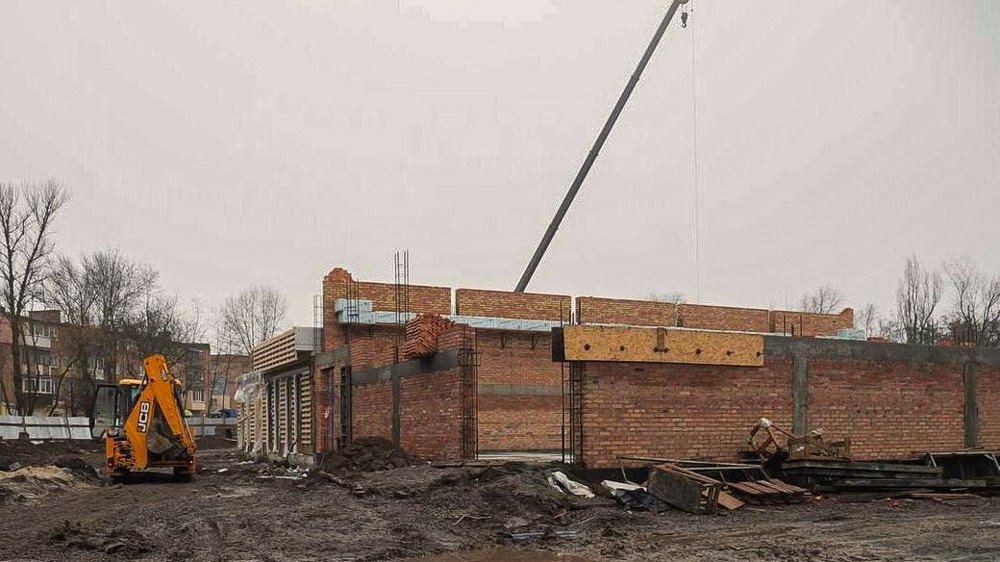
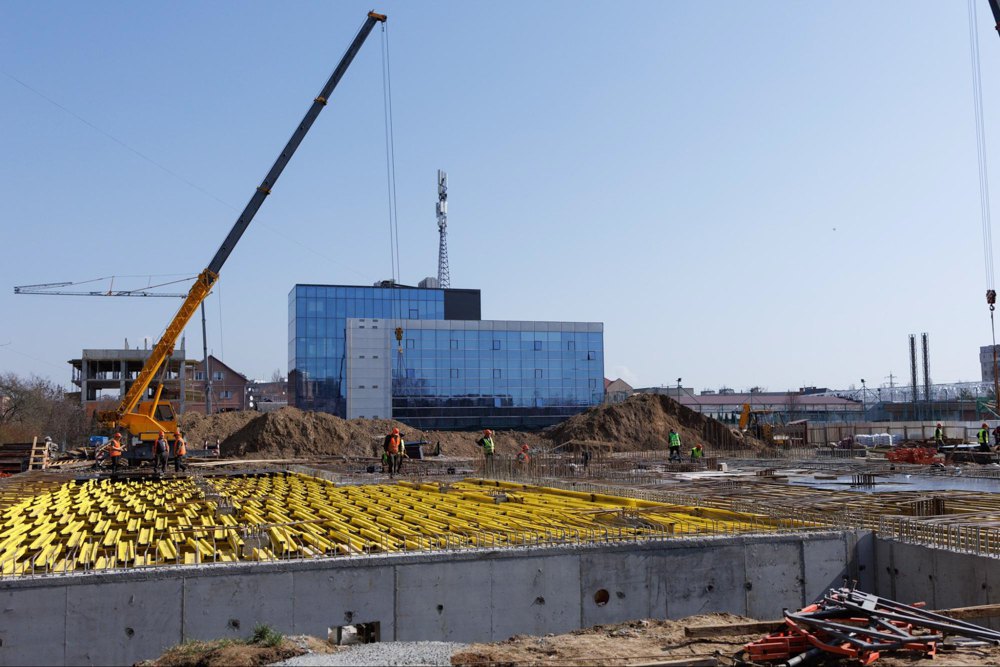
Experience M Factory LLC has already completed the foundation and the shelter and has moved on to wall construction. Construction of the veteran hub in Uzhhorod.
Ivano-Frankivsk
In Ivano-Frankivsk, the veteran hub is being built at 57 Bohdana Khmelnytskoho Street. In October, Budinvest, a municipal enterprise of the Ivano-Frankivsk Regional Council, signed a contract with Step-Solar LLC, which valued the works at UAH 111.27 million. The company is owned by Ivan Baranovych. The veteran hub was to be built by the end of 2026, but in February the deadline was already extended to the end of 2027.
Later, on November 17, the procuring entity signed another contract — for UAH 6.28 million. That procurement was explained by the need to supply an additional scope of works from the same contractor.
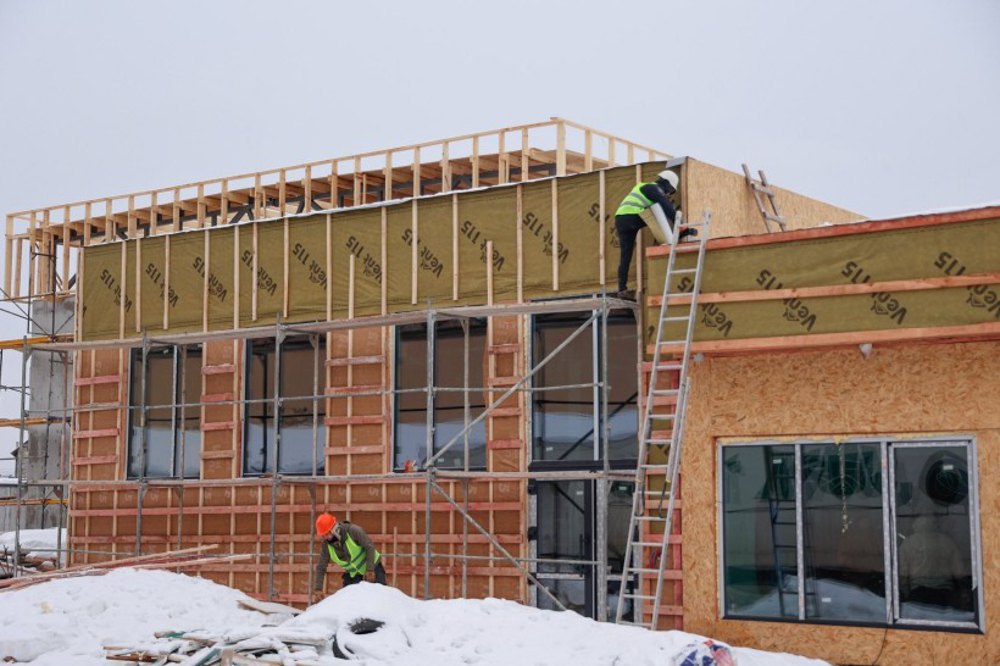
The future center will include sports zones for physical rehabilitation and recovery, consultation rooms for psychological, legal, and social assistance, and children's areas. The walls and columns have already been built, the administrative building's roof is in place, windows have been installed, and the shelter and the gym's metal frames have been assembled. Ventilation, heating, and air conditioning installation is being completed, and wall finishing is underway. About 75% of the works have been completed overall. The municipal enterprise has already paid Step-Solar LLC UAH 76 million for these works.
Most of the high-value items are listed in the estimate in general terms — ceramic tiles, linoleum, doors, and so on. Without precise specifications, their actual cost cannot be verified. As a result, the analysts were able to identify only UAH 1 million in probable overpayment in the main contract and about UAH 600,000 more in the additional one. At the same time, the price in both contracts is fixed, so it cannot simply be corrected in the acceptance certificates. We have sent a second letter to the procuring entity and are awaiting a reply. The first time, it extended the review period for our inquiry but never provided a response.
The State Audit Service reviewed this procurement as well. No violations were found during the tender, but problems emerged in the signed contract. The amount of inflation costs did not match the estimate, and the work schedule was not adjusted after the price change. As a result, the auditors ordered the procuring entity to bring the documents into compliance — Budinvest published an updated schedule.
Zhytomyr
The veteran hub in Zhytomyr is being built at 101-a Chudnivska Street. The UAH 102.4 million contract was signed in September last year by the Department of Regional Development of the Zhytomyr Regional State Administration with Trading and Industrial Company Tsentr Komplekt LLC. The company is owned by Zhanna Opanasyuk.
The facility was initially to be handed over by the end of the year, but in December the deadline was extended — works are now to be completed by April 30, 2026.
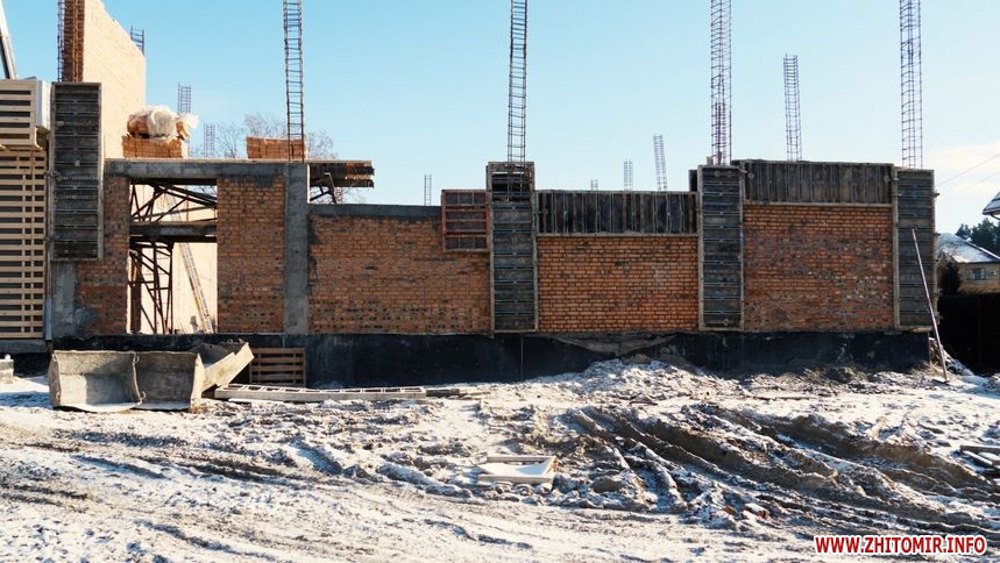
The contractor has already installed external electricity, sewer, and water networks. The above-ground part is being completed, and installation of the shelter structures has begun. The contractor has so far been paid UAH 65 million for completed works.
The analysis of the construction tender points to a probable overpayment of UAH 6.4 million, in particular on concrete, rebar, and brick. In its reply to DOZORRO, the procuring entity stated that the design documentation had passed expert review and received a positive opinion. In addition, the contract price is dynamic.
The State Audit Service did not skip this procurement either. Its monitoring found that the winner had not provided a proper manufacturer's quality certificate (ISO), as required by the tender documentation. The department failed to notice this non-compliance and did not give the bidder a chance to correct it. The auditors ordered the Department of Regional Development of the Zhytomyr Regional State Administration to hold the responsible officials to disciplinary or financial liability — the procuring entity withheld the authorized person's bonus for one month.
Lutsk
In October, the Capital Construction Department of the Lutsk City Council contracted the construction of a veteran hub to Volynekobud LLC. The contract value was UAH 81.8 million. The hub is being built on Konyakina Street, not far from the city district court. The contractor undertook to complete the building by November 20. Given the unrealistic timeline, however, the contract was extended to the end of April 2026.
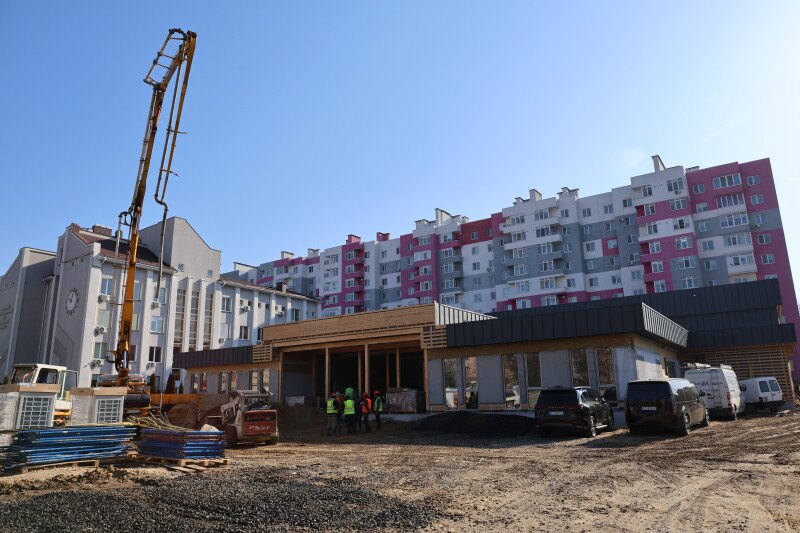
The center will include a sports complex with a gym and a fitness room, rooms for veterans to meet, spaces for psychologists and legal support, and a small cafe. The walls have already been built and the roof structure assembled, the floors have been insulated, and a screed has been poured. Engineering networks are now being laid, and interior and exterior finishing works are underway. The Capital Construction Department has already paid Volynekobud LLC UAH 68 million for completed works. Volynekobud LLC is owned by Mykhaylo Shypelyk and Andriy Hrynchuk.
DOZORRO analysts' review of the procurement points to a probable overpayment of UAH 7.3 million. At the same time, the contract price is dynamic. The largest overstatements relate to roofing panels, sand, and insulation. The procuring entity did not respond to our letter asking it to bring prices in line with the market.
The tender also contained potentially discriminatory requirements — only a bidder recognized as critical to the economy during a special period could win. Since this status is not established by law as a qualification criterion, such a condition restricts competition.
The State Audit Service reviewed the Lutsk City Council procurement — the contract had been signed with violations. The work schedule did not clearly set out stages or deadlines. As a result, the procuring entity was ordered to amend the contract, and it later published an updated schedule.
Brief conclusions
The analysis of veteran hub procurements points to systemic problems in the construction market. There was no competition in the seven largest tenders — a pattern typical of the industry in general, not only of this segment. In addition, the documentation contained potentially discriminatory requirements that narrowed the pool of potential contractors, as well as unrealistic work deadlines that were essentially impossible to meet.
A significant share of the estimates also shows signs of inflated prices for construction materials. DOZORRO analysts estimate that, in the reviewed procurements alone, probable overpayments could reach UAH 37.3 million. Such inflated prices are not isolated cases but another recurring problem in construction projects. They stem from the absence of unified approaches to determining construction costs already at the design stage, as well as insufficient state oversight and transparency.
At the same time, individual cases show that procurement at market prices is possible. With realistic estimates and transparent tender procedures, overstatements can be avoided and budget funds spent efficiently.
***This material is funded by the European Union. Its content is the sole responsibility of Transparency International Ukraine and does not necessarily reflect the views of the European Union.