







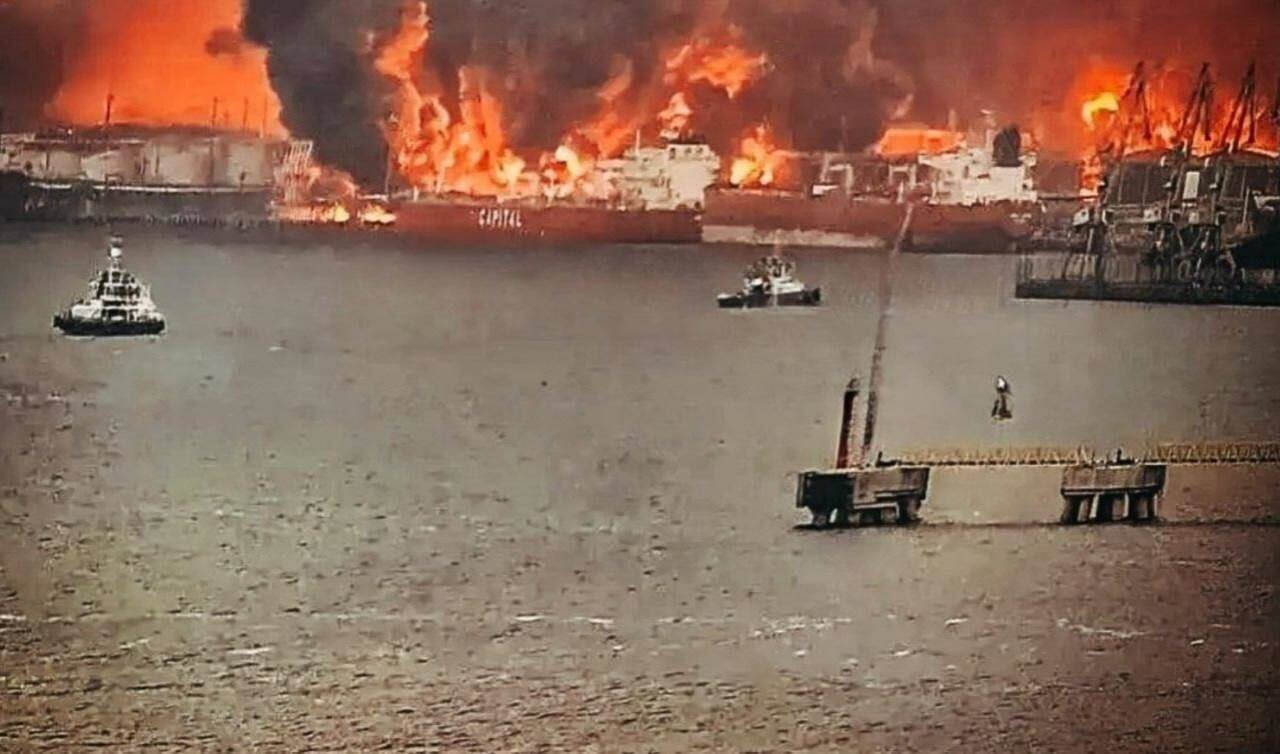
The patrol icebreaker Purga, which took on water and listed onto its side, is a blow to Moscow’s Arctic ambitions. Your Admiralty Shipyards and the plant in Vyborg are under enemy fire. Hello, “special military operation going to plan” — what Arctic bases and Northern Sea Route carrying 100 million tonnes of cargo are we even talking about?
Hopefully, Norway, Sweden and Finland will appreciate the maths: there’s no need to spend $50 billion on new flotillas and squadrons. It’s enough to invest a few hundred million in guided munitions and Ukrainian ballistic systems — and the Russian fleet will be lying alongside the pier, like the Black Sea Fleet.
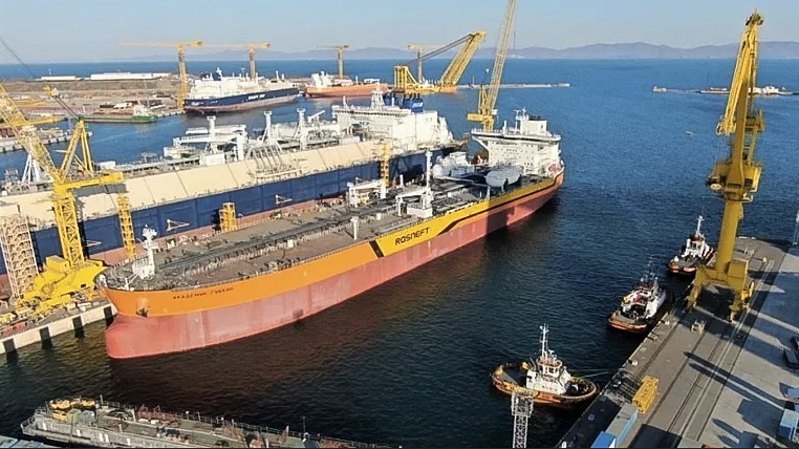
In the Black Sea, the oil tanker Altura from the shadow fleet was attacked. The vessel, flying the flag of Sierra Leone, was en route from Novorossiysk to Istanbul, according to tracking data. The tanker, carrying one million barrels of Urals crude (roughly $65–70 million), is a prime target — and is now drifting with a damaged stern.
Meanwhile, Russia’s shadow fleet (nearly 600 rusting vessels) faces interception in the English Channel: the United Kingdom has authorised the stopping, inspection and confiscation of ships. Logistics are becoming prohibitively expensive: chartering and insurance for shadow tankers are already eating up to 30% of cargo value.
Events are snowballing. Each one ripples outward, hitting the Russian economy. The model they relied on for 50 years — pumping gas and oil via pipelines to premium European markets (over 150 billion cubic metres of gas annually) — is dead. Gazprom has turned from a key cash cow and geopolitical weapon into a loss-making black hole, closing the year with a net loss of 629 billion roubles — for the first time in 25 years.
Redirecting these volumes to Asia is physically impossible — there are no pipelines. Power of Siberia pumps a paltry 22 bcm, while China is in no hurry to fund Power of Siberia 2, demanding domestic Russian pricing.
Add to this the paralysis of international transactions. Even when oil is sold to India, the proceeds come in billions of rupees (peaking at the equivalent of nearly $40 billion) that end up stuck in Indian accounts — they cannot be withdrawn or freely converted. At best, they can be spent on spices and pharmaceuticals.
Amid the threat of secondary US sanctions, payments are delayed for months and even friendly Chinese, Turkish and Arab banks block them. Trade is sliding back into barter and grey crypto schemes, where transaction fees reach 5–7% and eat up all margins.
And we keep striking. Methodically striking with drones flying 1,000+ km at established flows in the Black Sea region and now in the Baltic (which accounts for 40% of their seaborne oil exports).
Harsh times call for harsh decisions. Want to keep advancing? We will mobilise 30,000 people a month, lower the conscription age, hire legionnaires from Latin America and Africa, ramp up production to over a million FPV drones and hundreds of thousands of mines. You’ll be hanging on tangled wire in anti-tank ditches, losing an entire army corps (plus hundreds of armoured vehicles) over a winter — for the sake of seven kilometres of progress. You’ll take ruins a year later, only to find a new defensive line behind them and even more trained drone operators.
Want to try total mobilisation, cutting people off from Telegram and YouTube (while running a key central bank rate at 16–20%, which effectively kills civilian business)? Fine — we’ll keep targeting oil and gas transshipment, cutting your revenues. The National Wealth Fund, whose liquid portion has already halved, will soon be driven to zero.
Next comes a series of brutal budget cuts, the printing press switched on, and people pawning family jewellery for Chinese food. You might manage to capture the ruins of a few more cities. But those ruins contain no millions of shells, no drone production facilities, no “Flamingo” or “Neptune” systems, and no people.
There is only shattered brick, mines, and guaranteed HIMARS and ATACMS strikes on any attempt to rebuild — as was the case at Donetsk Airport.
Want to dig into a deep defence? We are ramping up missile production — the same missiles that punched a 30-metre hole in workshops producing Iskanders (leaving you able to produce a pitiful seven in ten days instead of dozens). We are testing our own ballistic systems and scaling up drones — we now launch at least as many in a salvo as your Shaheds. Solid-fuel production will be deployed in Denmark. As for electronics, they are largely civilian components — you won’t hit them with missiles.
We can turn this into a war of cities — and then it won’t just be the 450,000 residents of Belgorod left without heat and electricity.
You have already lost access to premium Western technologies. Substitution now runs entirely through China — but that means a hard vendor lock-in. Chinese companies know Russia has nowhere else to go: they’ve captured over 60% of your car market, selling vehicles at two to three times their domestic price. They supply third-tier hardware with steep markups, refuse to transfer technology, and take resources at a 30% discount. What follows is systemic degradation: cars produced without modern systems (ABS, airbags), aircraft assembled by cannibalising 20–30% of the existing fleet. It’s a rollback of infrastructure by 20 years.
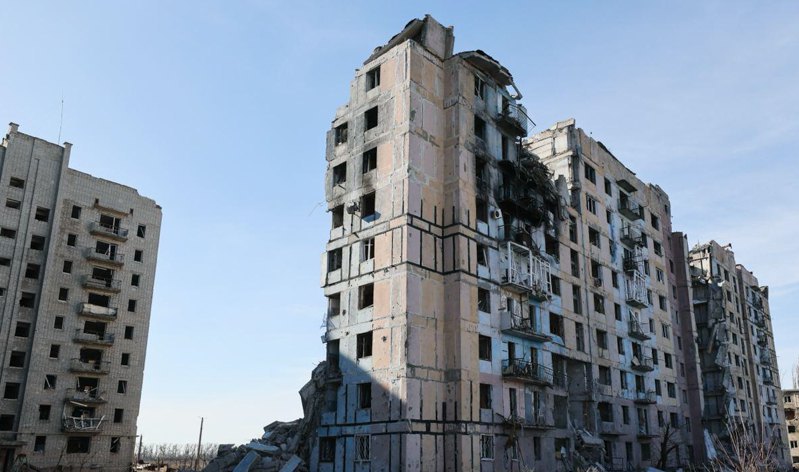
Millions dead and maimed, a generation set back economically, children’s future buried under the ruins of Avdiivka — are you insane?
You have room to retreat — one-seventh of the land. Try keeping 20% of your population off the streets without proper sewage, where public toilets are outdoors and a janitor’s salary in the EU feels like a distant dream. We have nowhere to fall back. The more you pressure us, the more blood is spilled — and the more hits will come in response, fuelling Ukraine’s mobilisation.
Want to negotiate a ceasefire? Welcome to the table. No? Then burn in hell. Burn like Ust-Luga.