






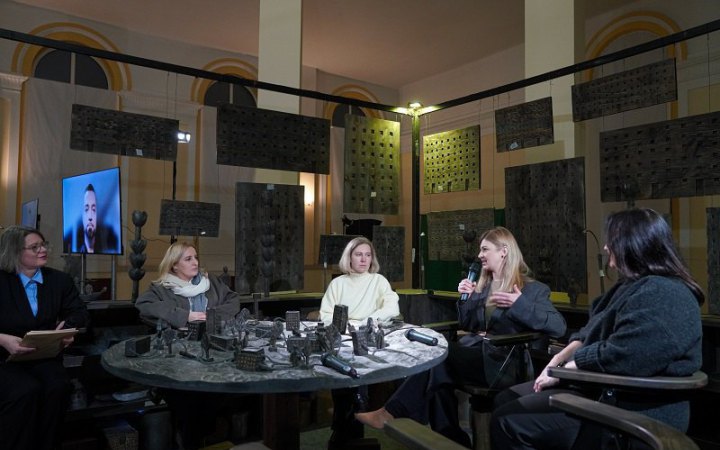
“We need to say it honestly: not all cultural institutions are valuable”
Oksana Dashchakivska: I would like to open this discussion with a thought by Nobel laureate Douglass North: today, we live in a world shaped by the institutions we built yesterday. A large share of our institutions are still Soviet in origin, but after the Maydan, in an effort to rebuild this system, a number of new institutions emerged. In your view, which needs of the past do they address, and which needs of the present do they fail to meet?
Anastasiya Obraztsova: I would say they address the need to operate according to certain rules. This matters when we talk about resilience and sustainability. But if we rely only on rules, there is a risk of stagnation. On the other hand, if there is only dynamism, the institution becomes unstable — a balance is needed. Overall, our institutions meet the need for bureaucracy, in a good sense, but they do not fully meet the need to adapt to rapid change. That said, the Ukrainian Cultural Foundation, for example, does have some room for flexibility and reflection in response to constantly evolving needs.
Yuliya Khomchyn: We are a new institution, created already in independent Ukraine. We address the need for a strategic approach: we initiate the development of strategies, promote bottom-up change, and meet the need to implement cultural policy at the local level in a strategic way.
Anna Pohribna: I would like to say a few words in defence of institutions that originate from the Soviet period — museums, for instance. It is very important that they fulfilled a preservation function, even if they lack innovative approaches or audience engagement strategies.
At the same time, all of us here represent institutions that emerged relatively recently, and it is difficult for us to speak about continuity. What we lack is the ability to respond flexibly to change, the ability to act as fully fledged subjects, to set our own goals, and to analyse our audiences.
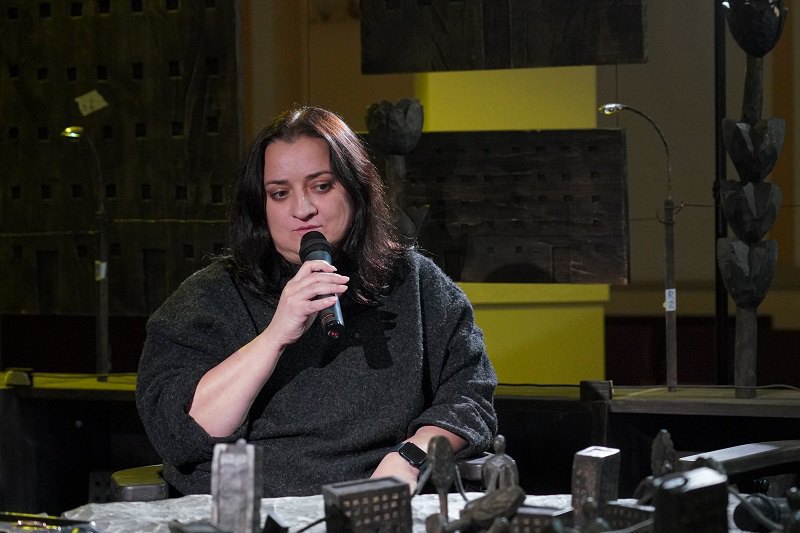
Ilona Demchenko: Indeed, there are many institutions that are a Soviet legacy, they provide continuity, and that matters. But at the same time, we have to be honest: not all of these cultural institutions are valuable. I worked for many years with grant programmes and evaluated thousands of applications, so I can say with confidence that a large share of the institutions applying simply do not meet contemporary challenges. And those who apply are usually the most capable ones, so one can only imagine the situation with the rest. Clearly, the need for reform is overdue — a reform that would allow us to get rid of dead weight.
Volodymyr Sheyko (joining remotely): The deepest rupture that has accompanied us throughout all the years of independence is the gap between the superstructure of new institutions and their Soviet foundation, laid on management principles of the 1930s. This is a very dangerous rupture, because the successes of new institutions are based on the enthusiasm of their leaders and teams, and on the support of the cultural community. In other words, this is a very fragile system that can be easily and quickly destroyed. At the same time, such institutions are a minority among the thousands of other organisations within the cultural infrastructure. And whether they are actually needed by the cultural sector as a whole remains an open question.
In the post-Maydan period, institutions took on the role of policy-makers, because governing bodies were unable to produce policies themselves. This concerned resource allocation, cultural diplomacy, museum projects, book publishing. We formulated these policies for ourselves and forced governing bodies to accept them and that is a major achievement.
Oksana Dashchakivska: If we talk about cultural diplomacy, was there a gap between how Ukraine and Russia were perceived abroad and what we wanted to communicate about ourselves?
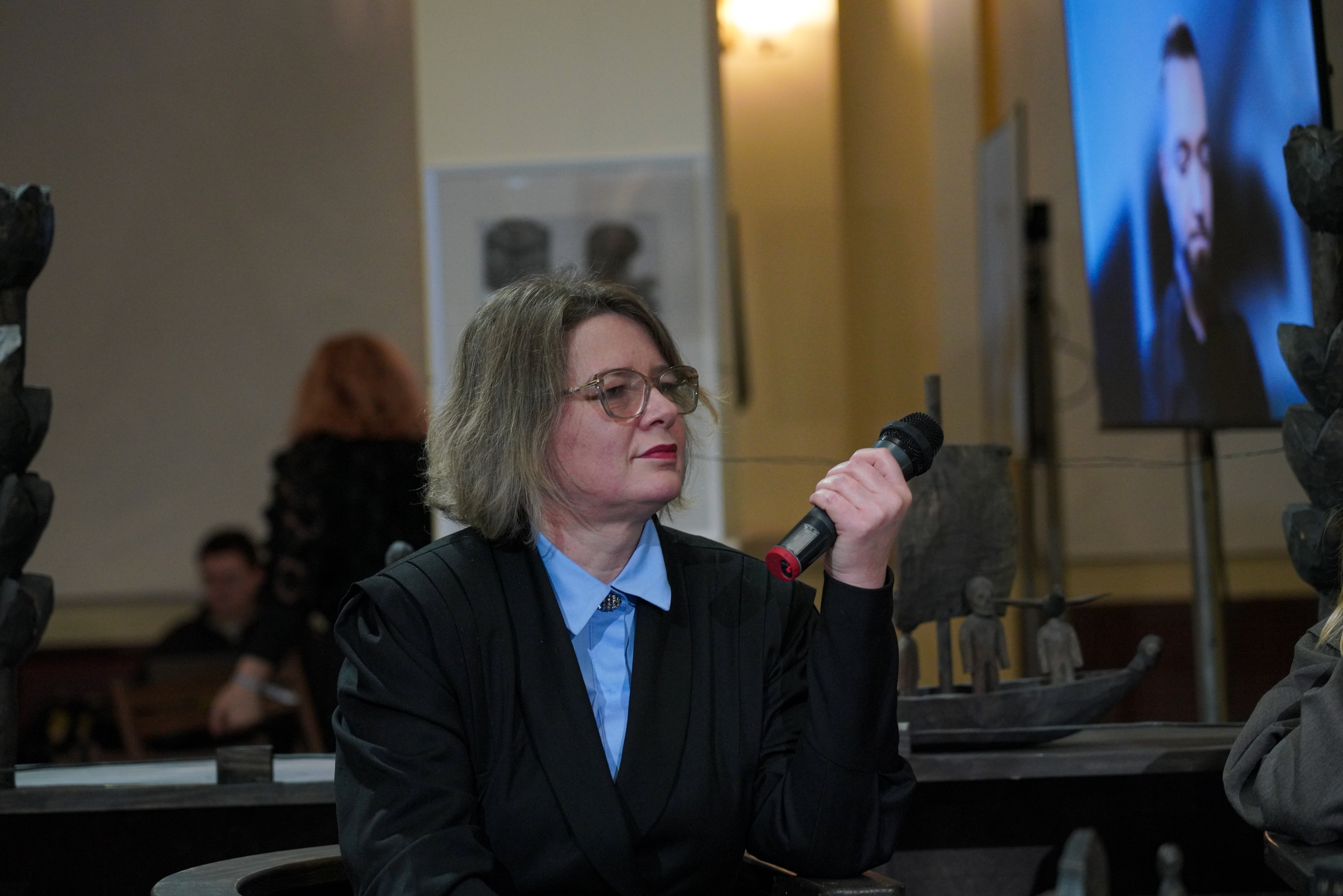
Volodymyr Sheyko: It was rather a gap between how Ukraine sees itself, what it wants to talk about, and what should actually be communicated to foreign audiences, and what they are ready to hear. This differs from country to country, and what seems beautiful and meaningful to us does not always work for a specific audience. Because cultural diplomacy is not about showing yourself, it is about achieving a change in attitudes and behaviour.
We thoroughly research the audiences in every country we work with. We have an analytical department that has already carried out extensive work. We studied attitudes towards Ukraine, levels of awareness of specific Ukrainian figures, analysed Russia’s methods in this field, examined the corpus of Ukrainian studies and the needs of those communities. We also looked at sensitive and taboo topics that exist in every society and are better avoided to prevent mistakes.
Oksana Dashchakivska: Such research takes a lot of time, and creating a cultural product based on it takes even more. Do we actually have that much time? And are we managing to build connections?
Volodymyr Sheyko: In reality, correcting mistakes takes even more time. As for connections, I can cite a recent example of our cooperation with Brazil, South Africa, and Indonesia. Our research enabled us to establish close contact with opinion leaders, influencers, and diplomats: we came to them not to talk about ourselves, but to ask about them. That creates a completely different type of relationship. These are now our partners, and we can rely not on one-off events “we dropped by for an hour” — but on an ongoing dialogue.
Oksana Dashchakivska: I’d like to ask Anastasiya. You noted that institutions are about frameworks. But your task is to provoke art, to develop the capacity to create new forms. How can these things be reconciled?
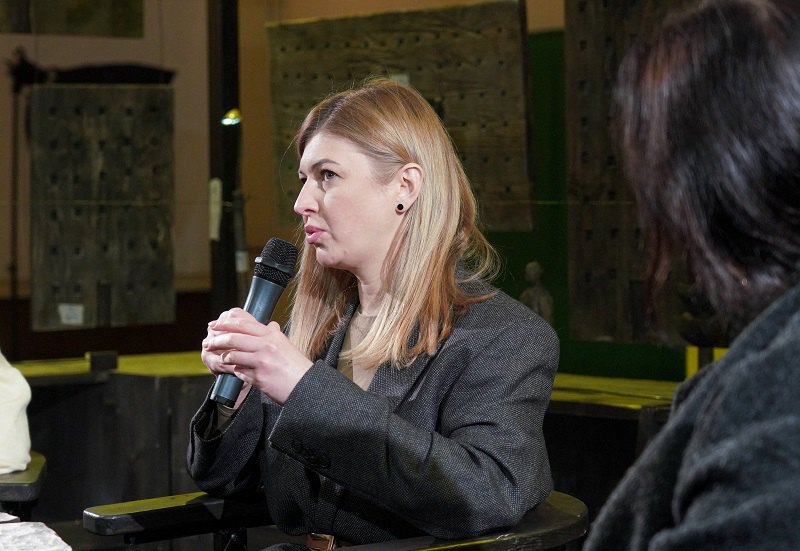
Anastasiya Obraztsova: It would be a wonderful institution if all we had to do was provoke, I can already imagine those KPIs! But of course, we must operate within rules: our applicants need to know that they can rely on our system, and that requires clear frameworks. At the same time, it is impossible to regulate everything through norms; there must always be room for freedom of expression. You cannot issue a state commission for cultural content.
That is why we try to diversify our programmes. For example, when USAID funding collapsed, we stepped in to support media. We try to do this in a way that does not compete with other programmes and does not force competition between representatives of large cities and small communities.
“A separate institution dealing with cultural strategy is a major advantage — but also a challenge”
Oksana Dashchakivska: We’ve arrived at a conversation about the connection between strategies, policies, and concrete outputs. Yuliya, could you talk about bottom-up and top-down change, and the role institutions play in these processes?
Yuliya Khomchyn: We had experience with bottom-up change when we worked to integrate our city’s cultural development strategy into the national one. The reverse direction did not work as well — for instance, we spoke about the need for regional cultural funds, but that proposal was not taken into account. We talk a lot about local contexts, and although we all formally operate within the same legislative framework, in reality we face very different challenges.
Oksana Dashchakivska: The case of Lviv’s Institute of Cultural Strategy is unique. Have you considered scaling it to other regions?
Yuliya Khomchyn: Scaling might make sense, but it is even more important to promote a strategic approach to culture as such. Lviv can afford a separate Institute of Cultural Strategy because it is a large city. But not everywhere needs a whole institution. We have received requests to scale from Vinnytsya, Kharkiv, Odesa, and Rivne — cities that either already have their own strategies or have begun developing them. Of course, having a dedicated institution focused on cultural strategy is a huge advantage, but it also comes with challenges — staffing, for example. Even now, it is difficult for us to find a cultural analyst.
Oksana Dashchakivska: Anastasiya, can you imagine a dedicated programme within the Ukrainian Cultural Foundation to support cultural strategies?
Anastasiya Obraztsova: I can. We are generally in great need of analytics and research — not only artistic projects.
Oksana Dashchakivska: I’d like to turn to the experience of the Mystetskyy Arsenal. It is a living, multidisciplinary space. How did you manage not to become just another Palace of Culture?
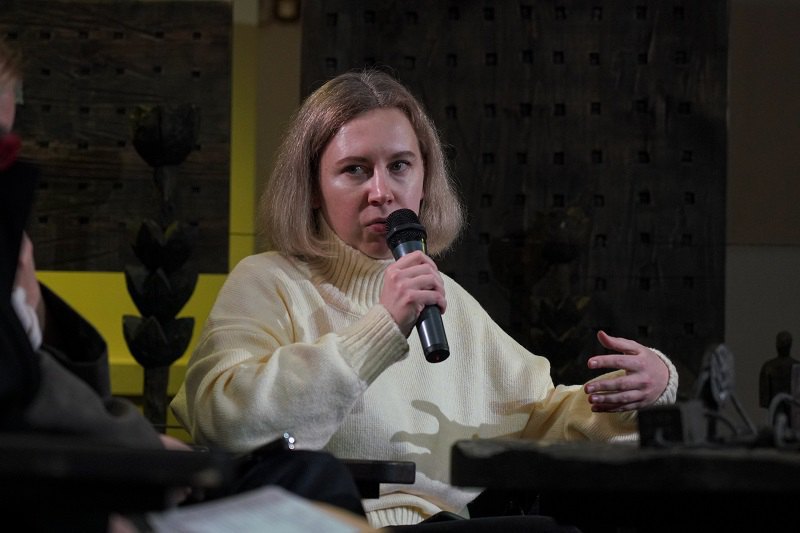
Anna Pohribna: I honestly cannot imagine how we could have become just another Palace of Culture — that scenario simply didn’t exist for us. There were scenarios like creating a “Ukrainian Louvre,” a large gallery space, or a successful state enterprise (which is our status for now, and that comes with revenue expectations).
We have a mission understood by the team. We develop projects in line with it and discuss them internally — that’s crucial for healthy institutional development. We also have a museum component, which makes the Mystetskyy Arsenal unique and imposes obligations to preserve the collection. After the start of the full-scale invasion, we also took on the function of international representation — through Book Arsenal projects at festivals and exhibitions in European museums. At the same time, we maintain focus on interdisciplinarity and engaging diverse professional audiences.
Oksana Dashchakivska: Let’s talk about Jam Factory. This institution collaborates both with the municipality and many international partners. Ilona, how do you manage to remain a space of diversity in a country where there’s such a strong demand for unity?
Ilona Demchenko: First, Jam Factory is a private institution, so certain things are easier for us than for colleagues in state institutions. But of course, we don’t work in a vacuum — we are dependent on the community, the city, and the country.
In our society, the space for discussion is shrinking rapidly. Exhaustion, which should unite us, instead divides us. So it’s crucial for our institution to remain a place where discussions on the most sensitive topics, those not addressed elsewhere — are possible. It’s easier for us to do this, but we also can’t detach from the reality around us. Finding this balance is an ongoing process. We feel the external pressure on everyone’s work growing, and that is a major challenge.
Oksana Dashchakivska: What topics do you consider the most sensitive? This platform was created precisely for such discussions, and just now in the previous discussion, servicewomen spoke openly about their experiences.
Ilona Demchenko: Yes, and I know there was a discussion about that discussion itself: how to make it sensitive, how to bridge the gap between speakers and audience.
As for topics we explored at Jam Factory — for instance, conscription, mobilization, and the broad spectrum of societal reactions to them. The challenge is how to voice this spectrum while staying within boundaries.
“At the start of the full-scale invasion, the state sector showed cowardice and apoliticism. And that is a huge loss for all of us.”
Oksana Dashchakivska: New institutions rely less on legal frameworks and more on the work of their leaders and teams. But for institutional sustainability, resources are needed, and during wartime these must be sought from partners. This, in turn, blurs boundaries and makes the nature of institutions hybrid. How do you maintain stability and develop new rules of interaction?
Volodymyr Sheyko: My task is to introduce UI practices (strategy, content selection, external communications, internal processes) into the framework of legal regulations that govern our activities. There is some irony here: we started by fighting bureaucratic rules, but now we are obliged to work with them.
Ilona raised an important issue of self-censorship and self-limitation: the independent sector is much freer than the state sector, which at the start of the full-scale invasion showed cowardice and apoliticism. That is a huge loss because it is in the cultural and artistic sector that complex issues can be addressed — not in toxic spaces like Facebook.
Anastasiya Obraztsova: We would gladly take on difficult topics — those already explored by the non-state sector — and reinforce them with bureaucratic structures.
Yuliya Khomchyn: A strong connection with society and community support is very important. This is the foundation of an institution and the basis for building new partnerships and networks, which in turn help sustain values — even if the institution itself disappears for some reason.
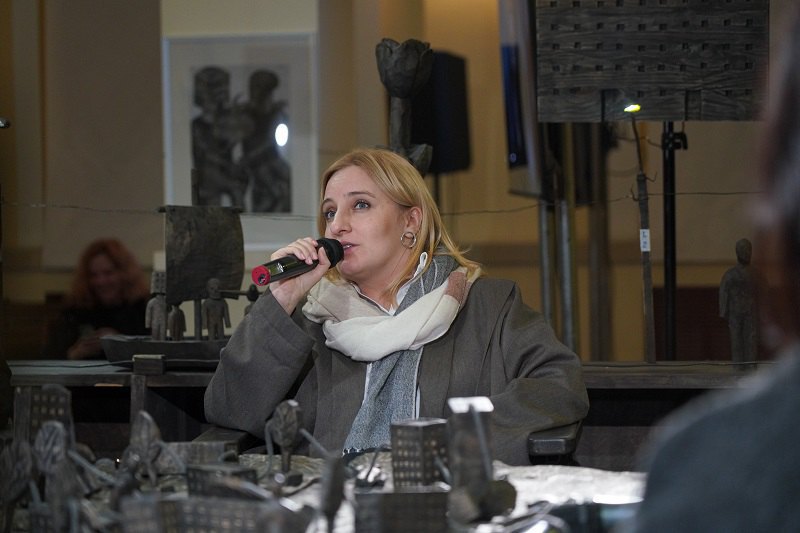
Oksana Dashchakivska: The Institute of Cultural Strategy demonstrates continuity – from “Dzyga,” the first Ukrainian cultural hub.
Yuliya Khomchyn: Yes, and we feel a certain mission to continue developing the ideas that once emerged in the “Dzyga” environment. The Culture Congress is also a continuation of that.
Anna Pohribna: After the start of the full-scale invasion, we didn’t know if we could preserve the institution, weren’t sure that the state could ensure stability. So we decided to create an NGO of Arsenal staff. Now we are included in a program that works with the heritage of frontline territories, and we can provide subgrants to organizations from those areas. And when you have weekly online meetings about specific projects, it creates an incredibly strong network, strong connections.
Ilona Demchenko: I agree that networks are exactly what has already helped us and will continue to help. The question of survival is becoming increasingly acute, and horizontal networks are becoming more important.
Oksana Dashchakivska: Presumably, these networks should also include cultural education institutions and European practices: residencies, the creative economy. Because right now, it seems we lack the capacity for the cultural European integration we aspire to. And we need to accept that institutions will emerge and disappear. For example, what will happen to institutions after the war? Experience from other communities shows that brotherhoods and guilds will be needed as a way to restore the economy. A coalition of cultural activists is probably an example of such a brotherhood-sisterhood. But we will still need many, many different guilds.
I want to conclude this conversation with another thought from Douglass North: institutions are a deviation of human society, but it is precisely they that make us stronger and allow us to survive in troubled times.
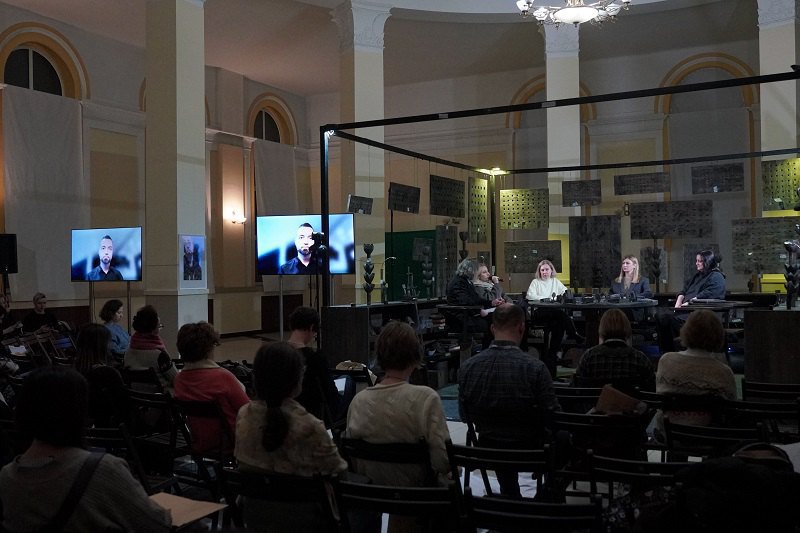
The project Territories of Culture is launched in partnership with the company “Persha Pryvatna Brovarnya” and is dedicated to exploring the history and transformation of Ukrainian cultural identity.