






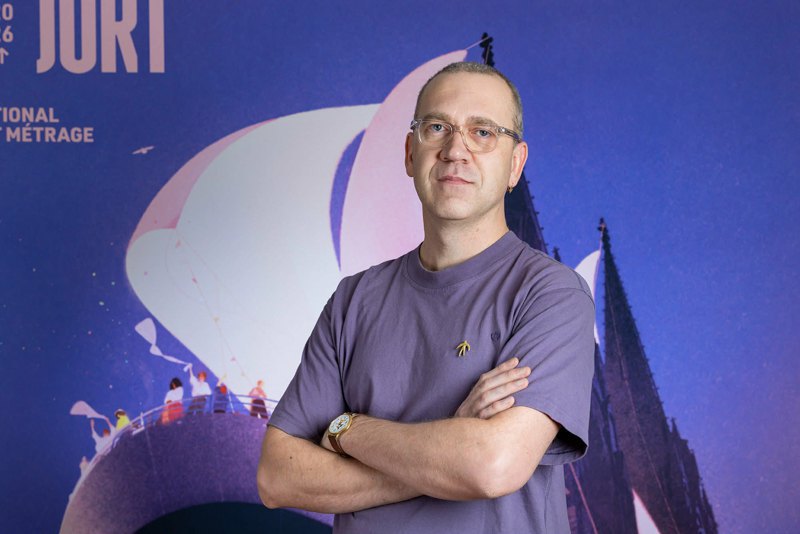
Mykyta, tell us about your film Kyiv Cake: what ‘recipe’ did you follow to make it, and what journey did you have to undertake to get there?
I used to make no-budget films, but my previous film was funded by the State Film Agency — a short film called Love. And now, during the invasion, I’ve made the film Kyiv Cake, which was 98% funded by Estonia. I also received a small amount of money from the Cultural Capital fund, which helped me create a short animated sequence and numerous sketches. I presented everything in Estonia, which is why I was granted the funding.
The film’s plot is a family story: a father, mother and their son live in Dnipro, in a residential area, on the eve of the invasion. Generally speaking, the idea was born from the stories of various people I saw around me. The father in my film goes abroad to work; so many people did that before the full-scale invasion.
Once the invasion had begun, I realised that in the film’s finale I had to show that the problems which had previously seemed so important to us weren’t really that important at all. We had a wonderful life; it’s only now that we’re living in some sort of hell… So I wanted to show that contrast between the past and the present.
Could you tell us about your collaboration with the renowned Estonian director Priit Pärn?
Priit Pärn (one of Estonia’s most famous animation directors, a cartoonist and artist, regarded as a cult figure in European auteur animation. — Ed.) and Olga Pärn, his wife — are friends of mine and helped me secure funding in Estonia. We communicated a lot during the invasion; they wrote to me, asking: ‘How are you there? What’s the news? How are things going?’ And I mentioned one day that I had a script that had stalled, and they suggested I apply for funding in Estonia.
So, thanks to the Pärns, I got it. They introduced me to their producer and the studio staff; we worked online. I was in Dnipro as the director, and they were all in Estonia; I sent them the files over the internet.
And I’d just been invited to teach at Dnipro College of Arts, where they’d launched a new programme in Audiovisual Arts. We’d been working on it for a long time, and then in 2022 they offered me a job. But we didn’t have any teaching programmes for these courses. So I turned to Pärn; he has vast experience in this field — he’s been teaching for 30 years in both Estonia and Japan, and has been invited to teach all over the place. His students are geniuses; they’ve been nominated for Oscars and make brilliant films. We held ten online meetings together. Thank goodness he supported me, found the time, and we met once a week on Zoom; he gave me assignments, I completed them myself to get a feel for how to do it properly, then he assessed them and told me how to work with students. Of course, I couldn’t just take his system and transplant it to Dnipro, but I built my own based on it, refining it intuitively, because it inspired me so much. And now I teach based on Priit Pärn’s system.
The word ‘multyk’ (cartoon) is often used to refer to animation. Is there really a difference between that and an animated film?
‘Multyk’ is a Soviet, Russian term; we should move away from it. Nobody in the world understands that word; it’s correct to say ‘animated film’. Animation, animated film, short animated film. Directors take a bit of offence when people say: ‘So, you’ve made a new cartoon.’ It’s somewhat demeaning, as if it were something childish, something not very serious, so professionally and correctly, one should say ‘animated film’.
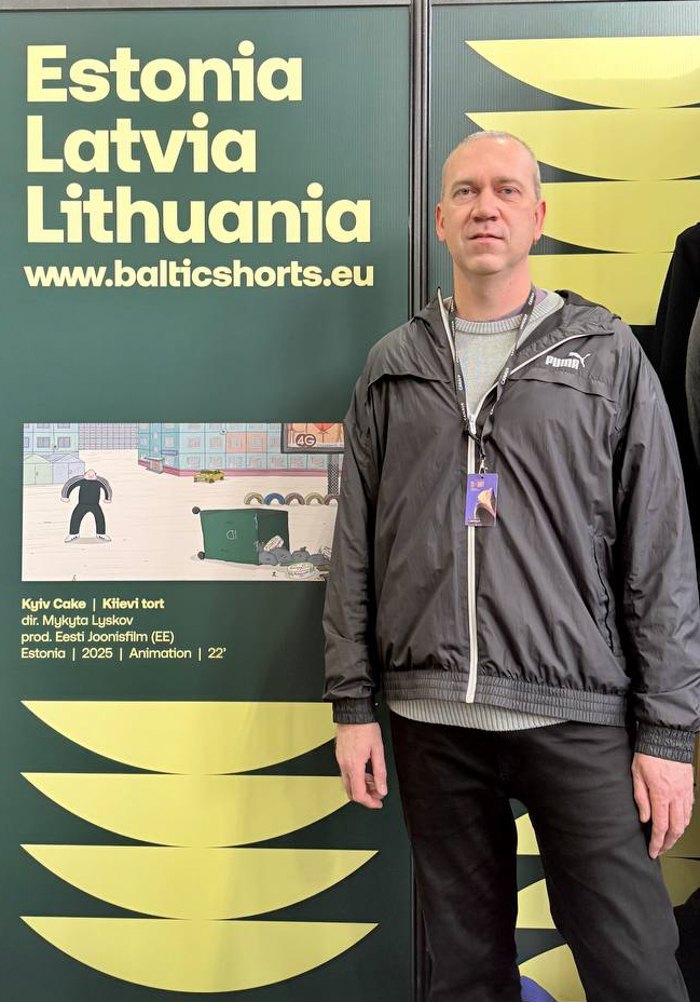
How can an animated film convey the traumatic and complex emotional experiences we are currently going through? What possibilities does animation offer?
Like any art form—such as cinema in general or painting—animation can tackle a wide variety of subjects. There is documentary animation, which recounts a story that actually happened in real life. I like symbolism, when a person watches a film and figures things out for themselves. It’s like a little puzzle, and they become a sort of co-author of the film. So there are endless possibilities, and animation can tackle any subject: painful, joyful, or traumatic.
Ukraine used to have the Krok festival, its own animation school, and wins at international festivals (such as the Berlinale). What is the situation now? Have these achievements been lost?
There was a Ukrainian school. It was sustained by a few teachers: Oleh Syvokon — a well-known director who taught at the Karpenko-Karyy University; Olena Kasavina; Oleh Pedan was still working. On a few enthusiasts who worked for a pittance and passed on their experience. Stepan Koval received an award at the Berlinale. But these are all isolated cases.
Now the teachers have grown old, some are no longer working. And a teacher’s salary is so meagre it’s laughable, because you’re basically working just for food.
It’s hanging on by a thread… There are plenty of opportunities to learn online now, with various courses available. Lots of people are doing animation on their own — they haven’t studied anywhere, and they’re doing quite well.
Somehow it isn’t flourishing, but it isn’t dying either.
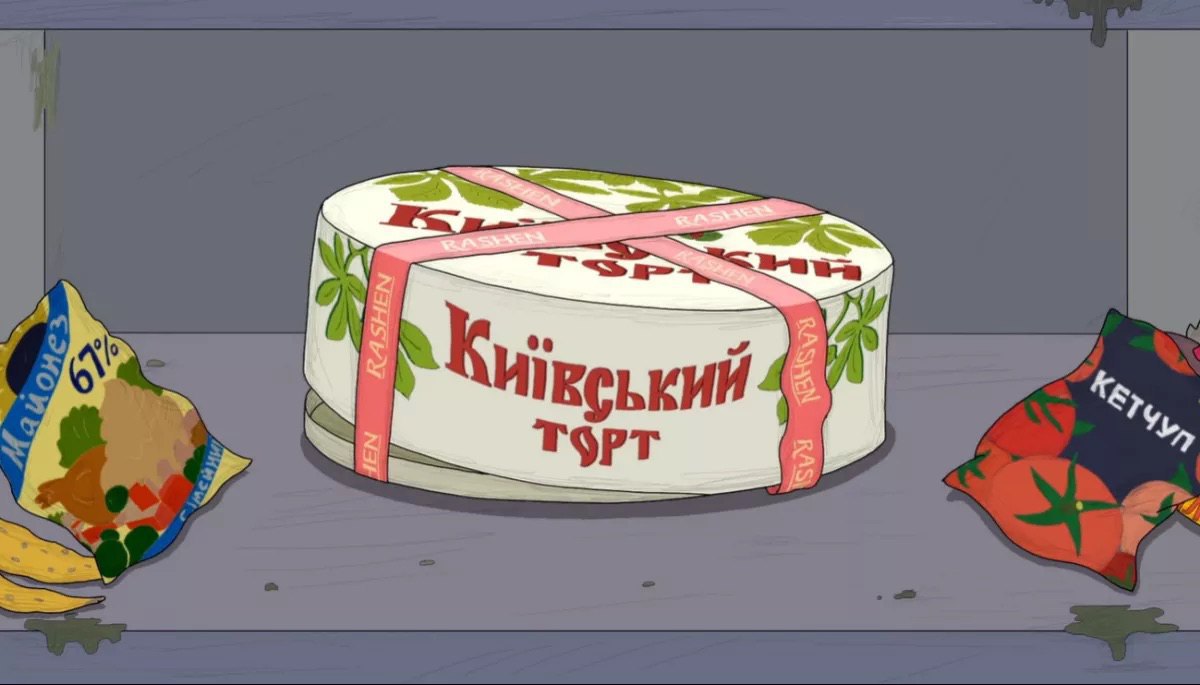
With the development of artificial intelligence, where videos and texts can be produced in a matter of seconds, isn’t this a challenge for animation? Could AI come along and take over everything?
Back in the 90s, animators were worried that computers would take over and that hand-drawn animation, which was so wonderful back then, would disappear. But it didn’t disappear; it improved, it changed, and more possibilities emerged. I’m quite optimistic about this. So far, I don’t see AI being able to come up with a more interesting plot than a human can. Because humans draw on their life experience, whereas AI doesn’t have that…
In animation, particularly hand-drawn animation, artificial intelligence can be a great help. It will speed up work on animated films and reduce production costs.
For example, creating my animated film Kyiv Cake took almost two years of work. And it’s psychologically very difficult to do the same thing for years on end. I hope that with the development of AI, this process will be shorter.
Tell us, what are the current global trends in animation?
I make auteur animation, that is, creative work aimed more at adults. The trend is sincerity, honest, subjective stories.
Your subjective story, your subjective view of some event in life. Here, we’ve always believed that animation should be about something, teach a lesson, be profound. It’s a Soviet influence: there must be some meaning and purpose in your work. But in reality, there’s long been a demand for subjectivity in Europe. It’s as if we’ve climbed into the author’s head and looked at the world through their eyes. That’s the coolest thing.
Have you received any feedback on your film from viewers or fellow animators in Europe yet?
There’s a website called Letterboxd, dedicated to cinema, where you can leave reviews under films. My Kyiv Cake is listed there, and I read the reviews. Generally, people in different countries understand it and take it in their stride.
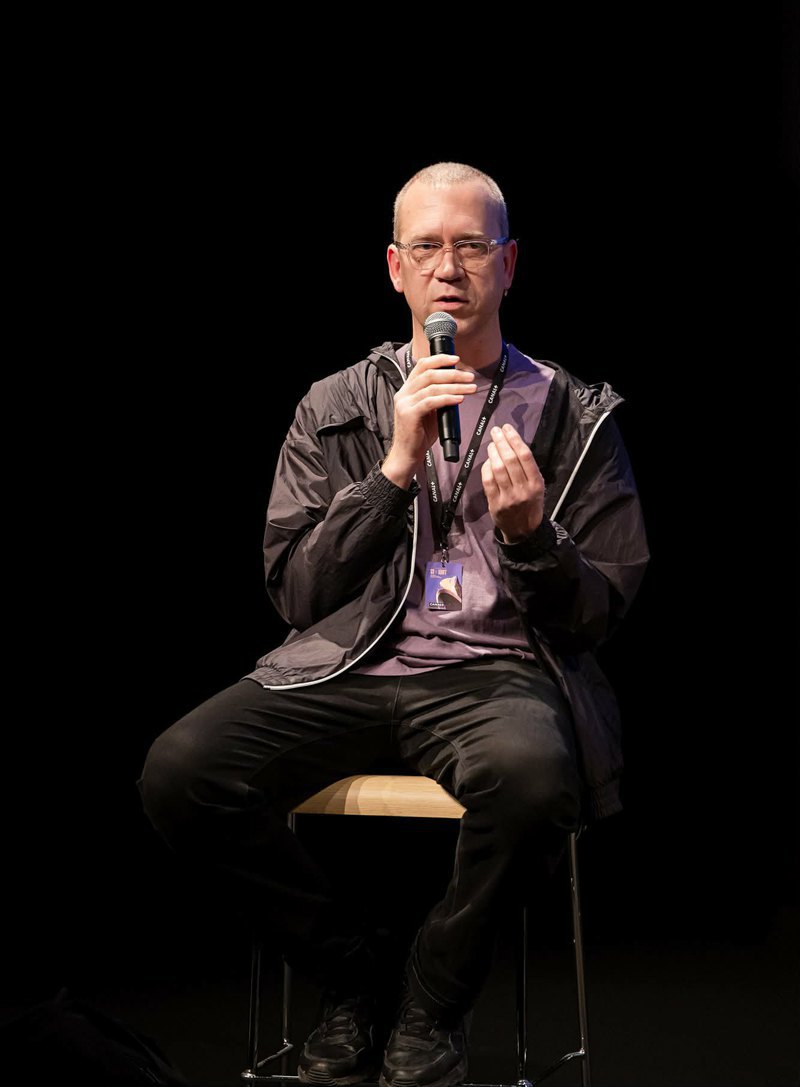
People say your work stands out for its blend of black humour, urban themes and surrealist aesthetics. What do you think?
Black humour has always been my saving grace. Looking at life from this perspective allows me to keep my distance from the horrors that unfold in life — and it makes things easier. The same goes for surrealism. What is it? It’s some strange thing in a real setting, that is, a combination of the unreal and the real. It also helps to make the story deeper. As I said, I love it when the viewer watches and deciphers my film; I give hints, and they have to figure it out for themselves. In the film Kyiv Cake, the father turns into a bird and flies off over the horizon. The viewer has to work out that he’s gone abroad to earn a living.
As for urban life: I’ve spent most of my life in a residential area and realise it’s simply a separate universe. There are people there who have never heard of contemporary art exhibitions, or anything else for that matter. It’s a world in a bubble, and I find it interesting to tell stories about it too. And it turns out that people abroad think about this too and recognise themselves in it.
Mykyta, where do you find the strength to create amidst constant anxiety and shelling?
It’s actually very difficult. When I was working on Kyiv Cake, the working day started at 9 am every morning. But I’d only slept for three hours — there was shelling at night, and I’d wake up. My eyes are red, my head aches terribly, but I have to work. That’s why I don’t want to make my next film in such conditions, for example.
I’ll do something else. Right now I’m writing a book on the history of Ukrainian animation, teaching, and drawing my own stuff—nothing too serious, nothing too big or grand.
I need a break. It’s impossible to work under such stress. It’s very difficult.
Finally, tell us about the book you’re writing.
I’ve never written any books, but the art director of the festival in Ottawa suggested I do so. He really likes our animation; we’ve spoken a lot, and he’s constantly writing books on the history of world animation. So half the book will be about the history of Ukrainian animation, which he’ll write, whilst I’m conducting interviews with animators.
The book will be in English for now, but I think we’ll definitely publish it in Ukrainian next year, because 2027 marks the 100th anniversary of Ukrainian animation—the first animated film was made in Odesa in 1927.
The main plan is to survive…